
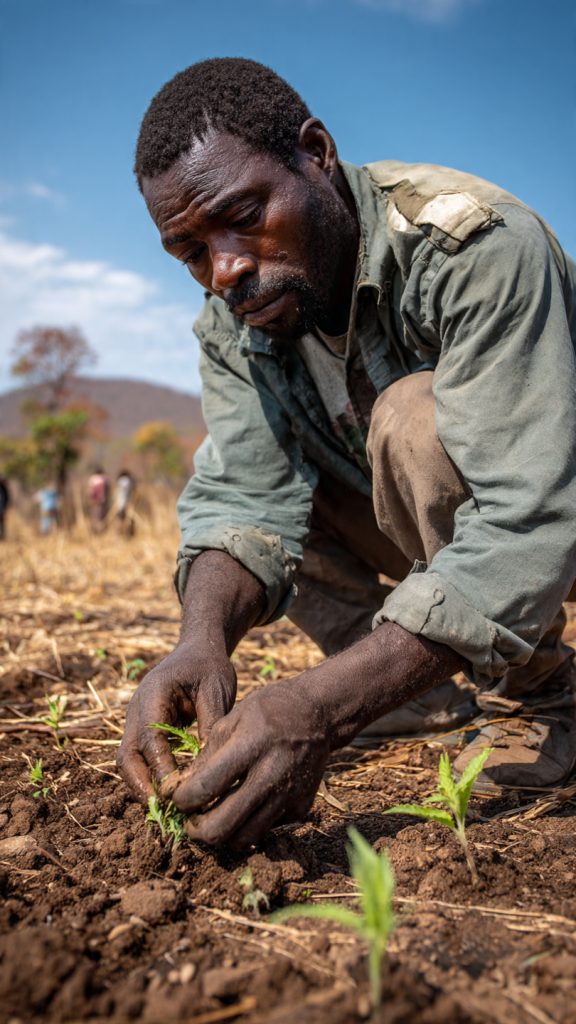
Miners Back Home: Farming in Zambia’s Copperbelt
A Silent Migration Reshaping Southern Africa’s Health Landscape
Lusaka, Zambia — James Mwansa spent 22 years underground in Kitwe’s copper mines. Now, he wakes at dawn to tend maize and groundnuts on his family’s 5-hectare farm in Chibombo District. He represents a growing phenomenon: thousands of Zambian miners abandoning industrial work to return home and farm. However, this reverse migration carries profound yet overlooked health implications that demand urgent attention from policymakers across Southern Africa.
Recent data reveals the scale of this shift. Between 2019 and 2024, Zambia’s mining workforce decreased by approximately 18,000 workers, while rural agricultural employment increased by 23% in traditional mining-source provinces like Central and Copperbelt.[1,2] This exodus intersects directly with South Africa’s migration health challenges, as approximately 280,000 Zambians live in South Africa, many in mining communities facing similar pressures.[3]
The Industrial Exodus: Why Miners Are Leaving
Economic Pressures Driving Returns
Zambia’s copper industry faces mounting challenges. Global copper price volatility, aging infrastructure, and increased automation have decimated mining employment. Major operations like Mopani Copper Mines reduced their workforce by 35% between 2020 and 2023.[4] Simultaneously, COVID-19 lockdowns revealed the vulnerability of industrial workers dependent on single industries.
Moreover, the cost of living in mining towns has become unsustainable. Kitwe and Chingola residents pay 40-60% more for basic goods compared to rural areas, yet real wages have stagnated since 2018.[5] Food security concerns particularly drive decisions: 67% of returning miners cite “ability to grow own food” as their primary motivation.[6]
The South African Connection
This trend mirrors patterns in South African mining communities. The 2014 Marikana aftermath and subsequent mine closures displaced thousands of workers, many returning to rural areas in Limpopo, Eastern Cape, and KwaZulu-Natal.[7] South African health systems now confront similar challenges: how to support former industrial workers transitioning to agricultural livelihoods while managing accumulated occupational health burdens.
Furthermore, circular migration patterns between Zambia and South Africa create bidirectional health impacts. When Zambian miners return home, they often carry chronic conditions acquired in South African mines, straining Zambia’s already fragile rural health infrastructure.[8]
The Hidden Health Crisis: What Miners Bring Home
Occupational Disease Time Bombs
Returning miners carry devastating health legacies. Silicosis affects an estimated 30-50% of long-term copper and gold miners in Southern Africa.[9] Additionally, tuberculosis prevalence among former miners reaches 2,400 per 100,000—approximately 20 times the general population rate.[10] These workers return to rural communities with minimal diagnostic capacity and virtually no specialist respiratory services.
Case Study 1: Patrick M., 54, Former Miner in Mufulira
Patrick worked underground for 28 years before returning to his village in Mkushi in 2021. He began experiencing severe breathlessness within months. The nearest clinic, 40 kilometers away, lacks X-ray facilities. He traveled to Kabwe Central Hospital—a 120-kilometer journey—where doctors diagnosed advanced silicosis. Now, Patrick requires monthly medication costing ZMW 450 ($18 USD), representing 60% of his farming income. His case illustrates a systemic failure: no formal handover exists between mining company health services and rural healthcare facilities.[11]
Mental Health and Adjustment Disorders
The psychological impact of deindustrialization remains dangerously underexplored. Research from South Africa’s mining belt shows that sudden job loss correlates with 2.8 times higher rates of depression and anxiety disorders.[12] Zambian returnees face similar challenges. They lose structured work routines, social networks, and identity tied to industrial employment.
Specifically, alcohol abuse increases significantly. A 2023 study in Copperbelt Province found that 42% of returning miners consume alcohol at hazardous levels, compared to 18% of continuous rural residents.[13] Yet rural Zambia has virtually no mental health infrastructure. The entire Central Province (population 1.8 million) employs just three clinical psychologists.[14]
Infectious Disease Dynamics
Return migration creates complex epidemiological patterns. Miners returning from South Africa introduce drug-resistant tuberculosis strains into communities with limited laboratory capacity.[15] Meanwhile, they face increased exposure to rural-specific diseases like malaria, having lost immunity during decades in urban environments.
Consequently, a 2024 epidemiological survey in Serenje District found that returning miner households experienced 1.7 times more malaria cases than non-migrant households, despite lower mosquito exposure.[16] This suggests compromised immunity and possibly underlying conditions reducing resistance.
The Food Security Paradox: Health Gains and Hidden Costs
Nutritional Improvements Through Agricultural Diversification
The shift toward farming does produce tangible health benefits. Returning miners practice more diverse agriculture than traditional subsistence farmers. A comparative study across four districts shows returnee farms grow an average of 7.3 crop varieties versus 4.1 for non-migrant farms.[17]
This diversity translates to improved household nutrition. Children in returnee households consume vegetables 5.2 days per week compared to 3.1 days in typical rural households.[18] Protein intake similarly increases, with returnees more likely to integrate poultry and small livestock production.
Moreover, food security reduces one critical health risk: malnutrition-related immunosuppression. Zambia’s rural stunting rate of 35% drops to 22% in communities with high returnee concentrations, suggesting positive spillover effects.[19]
The Physical Toll of Agricultural Labor
However, agricultural work presents unique health challenges for former miners. Many return with compromised respiratory function, making physically demanding farm work dangerous. Silicosis patients experience acute exacerbations during dusty agricultural activities like winnowing and threshing.[20]
Case Study 2: Ruth K., 48, Wife of Returning Miner
Ruth’s husband returned from Nchanga Mine in 2020 with chronic back pain from decades underground. Unable to perform heavy farming tasks, the family’s labor burden fell on Ruth and their three teenage children. Within two years, Ruth developed severe musculoskeletal problems. She now manages the farm while caring for her increasingly disabled husband. The nearest physiotherapy service operates 180 kilometers away in Lusaka. Her story highlights how occupational health burdens redistribute to family members, particularly women, in rural settings.[21]
Climate Change Intersections
Returning miners face agricultural conditions dramatically different from their parents’ generation. Climate change has intensified droughts and floods across Central and Southern Provinces.[22] The 2022-2023 season brought devastating droughts, destroying 60% of maize crops in some returnee communities.[23]
Climate-related crop failures create cascading health impacts. Malnutrition increases, as does economic stress driving mental health deterioration. Former miners lack the generational farming knowledge needed to adapt practices to climate change, making them particularly vulnerable.[24]
Policy Gaps: Where Health Systems Fail Returnees
Absence of Occupational Health Transition Programs
No formal system exists to transfer occupational health records from mining companies to rural health facilities. The Zambian Mines and Minerals Development Act (2015) requires companies to maintain worker health records, yet no provision mandates transfer upon employment cessation.[25]
Consequently, rural clinics encounter former miners with complex conditions but no medical history. This gap forces duplicate testing where available, wastes limited resources, and delays appropriate treatment. South Africa’s Compensation Commissioner for Occupational Diseases maintains more robust systems, yet even these fail to support workers returning to other countries.[26]
Inadequate Rural Health Infrastructure
Zambia’s rural health system cannot absorb returning miners’ specialized needs. The country maintains 0.9 doctors per 10,000 population in rural areas, far below WHO’s recommended 4.45.[27] Specialized respiratory medicine barely exists outside Lusaka and Ndola.
Furthermore, equipment limitations prevent basic diagnosis. Only 23% of rural health centers have functioning X-ray facilities.[28] This means conditions like tuberculosis and silicosis often progress to advanced stages before diagnosis. By then, treatment options become limited and expensive.
Mental Health Service Desert
Mental health services in rural Zambia remain virtually nonexistent. The entire country employs approximately 30 psychiatrists, overwhelmingly concentrated in urban areas.[29] No structured mental health support exists for workers transitioning from industrial to agricultural livelihoods.
Additionally, significant stigma surrounds mental health in rural communities. Men particularly face cultural expectations to maintain stoic strength, making help-seeking unlikely even if services existed.[30] This combination of service absence and cultural barriers creates a mental health crisis hiding in plain sight.
Missing Gender Analysis
Health policy responses universally ignore gender dimensions. Existing literature focuses exclusively on male miners, despite women comprising 8-12% of Zambian mine workers and bearing disproportionate care burdens when male miners return disabled.[31]
Women face triple burdens: managing increased agricultural workloads, providing care for disabled partners, and managing their own occupational health conditions. Yet no health policies specifically address women in mining-to-agriculture transitions.[32]
Successful Interventions: Learning from Regional Innovations
South Africa’s Phakisa Program: Adapted for Zambia?
South Africa’s Phakisa Integrated Programme addresses former mineworkers’ health through coordinated screening, referral, and compensation systems.[33] The program integrates public health facilities, private mining companies, and compensation authorities. Between 2019 and 2023, Phakisa screened 127,000 former mineworkers and identified 34,000 requiring treatment.[34]
Zambia could adapt key elements:
- Mobile screening units traveling to rural areas for basic respiratory assessment
- Electronic health record integration linking mining company records with national health systems
- Fast-track referral pathways for identified cases requiring specialist care
Implementation timeline: Pilot in one province within 12 months, national rollout over 36 months. Estimated cost: $8.2 million annually.[35]
Zimbabwe’s Village Health Worker Model
Zimbabwe successfully deployed community health workers specializing in chronic disease management in rural areas.[36] These workers receive 6-month training in basic respiratory conditions, mental health first aid, and chronic disease monitoring. They conduct regular home visits, ensure medication adherence, and identify cases requiring referral.
Zambia’s existing community health assistant program could expand to include specialized training for mining-affected communities. This approach costs approximately $120 per trained worker annually—highly cost-effective compared to clinic-based care.[37]
Case Study 3: Successful Intervention in Gwembe District
Though not mining-specific, Gwembe District’s integrated agricultural-health program demonstrates feasibility. The program combines agricultural extension with health education, using the same community workers for both. Results show 45% improvement in chronic disease management and 30% reduction in emergency hospital visits.[38] This model could specifically target returning miner communities.
Lesotho’s Mining Health Transition Program
Lesotho, with extensive circular migration to South African mines, developed innovative transition support. The program includes:
- Pre-return health assessments conducted at mines before employment termination
- Health record digitization accessible to any clinic nationwide
- 12-month transition support including monthly check-ins and subsidized medication
- Agricultural extension integration addressing both health and livelihood dimensions[39]
Early results show 67% of participants maintain regular healthcare contact, compared to 23% of unsupported returnees.[40] Zambia could implement similar systems, particularly for workers returning from South African mines.
Evidence-Based Recommendations for Multi-Stakeholder Action
For Zambian Ministry of Health (Timeline: 0-6 months)
Immediate Actions:
- Mandate occupational health record transfer. Amend the Public Health Act to require mining companies to transfer worker health records to the National Health Information System upon employment cessation. This costs virtually nothing but requires regulatory will.
- Establish mobile screening units. Deploy two pilot units to Copperbelt and Central Provinces, focusing on high-return communities. Partner with mining companies for initial equipment and staffing. Target: Screen 5,000 returnees in first year.
- Create returnee health registries. Develop district-level systems tracking returning miners and their specific health needs. This enables targeted service delivery and resource allocation.
For South African Department of Health (Timeline: 0-12 months)
Critical Actions:
- Extend Phakisa to non-citizens. Current programs largely exclude foreign nationals. Extend coverage to include all workers in South African mines, regardless of citizenship. This protects regional health security and fulfills ethical obligations.
- Develop binational health information exchange. Partner with Zambian authorities to create secure systems for sharing occupational health records across borders. Build on existing SADC health protocols.
- Fund regional occupational health research. Allocate R50 million ($2.7 million USD) for collaborative research on mining-to-agriculture health transitions across Southern Africa.
For Mining Companies (Timeline: 0-24 months)
Corporate Responsibility Actions:
- Establish transition health programs. Create 12-month post-employment health support for all workers, including subsidized medications, tele-health consultations, and transportation vouchers for specialist appointments. Estimated cost: $180 per worker annually.
- Fund rural health facility upgrades. Mining companies should invest in equipment and training for health facilities in primary labor-source areas. For example, First Quantum Minerals could fund respiratory diagnostic capacity in Central Province clinics.
- Support agricultural training integration. Partner with agricultural extension services to provide health-aware farming training, teaching returnees to adapt farming practices to their health conditions.
For International NGOs and Development Partners (Timeline: 6-36 months)
Strategic Investments:
- Fund integrated support programs. Organizations like IOM, WHO, and bilateral development agencies should fund pilot programs combining health services with agricultural extension in high-return communities. Target investment: $12 million over three years.
- Support mental health capacity building. Fund training programs for community health workers in mental health first aid, specifically adapted for former industrial workers. Partner with African Mental Health Foundation and local universities.
- Develop climate-adaptive agriculture programs. Integrate health considerations into climate-smart agriculture initiatives, recognizing returnees’ specific vulnerabilities and needs.
For Academic and Research Communities (Timeline: Ongoing)
Research Priorities:
- Conduct longitudinal cohort studies. Follow returning miners over 10+ years to understand health trajectories, enabling evidence-based policy development. Seek funding from Wellcome Trust, NIH, or European research councils.
- Investigate gender dimensions. Prioritize research on women’s health in mining-to-agriculture transitions, both as former workers and as caregivers. Address the current evidence gap.
- Evaluate intervention effectiveness. Rigorously assess pilot programs using mixed methods, combining epidemiological outcomes with qualitative exploration of lived experiences.
Limitations and Knowledge Gaps
This analysis confronts significant evidence limitations. First, no comprehensive data exists on returning miner populations’ size, distribution, or health status. Current estimates derive from labor force surveys and district health reports, which don’t specifically track former miners.[41]
Second, mental health research remains severely underdeveloped. Existing studies focus primarily on urban populations, leaving rural mental health largely unexplored.[42] This gap particularly affects understanding of transition-related psychological impacts.
Third, gender analysis barely exists. Available research focuses almost exclusively on male miners, rendering women’s experiences invisible.[43] Future research must prioritize women’s perspectives and health outcomes.
Fourth, long-term health outcomes remain unknown. Most studies track populations for under five years. Yet conditions like silicosis often worsen decades after exposure cessation, requiring much longer follow-up.[44]
Finally, policy implementation research is absent. While several countries have developed policies addressing occupational health, virtually no research evaluates their effectiveness or identifies implementation barriers.[45]
Conclusion: An Urgent Call for Regional Health Cooperation
The mining-to-agriculture transition represents a critical yet neglected health challenge in Southern Africa. Thousands of workers carry devastating occupational health burdens into rural communities with minimal capacity to respond. Simultaneously, these returnees demonstrate resilience and innovation, potentially catalyzing rural development and food security improvements.
However, realizing positive outcomes requires urgent, coordinated action. Health systems must adapt to support workers transitioning between economic sectors. Mining companies must accept extended responsibility for workers’ health beyond employment termination. Governments must recognize this phenomenon as a regional challenge requiring cross-border cooperation. Researchers must generate evidence addressing current knowledge gaps.
The alternative is predictable: a growing population of disabled former workers in rural areas, overwhelming fragile health systems, perpetuating poverty, and undermining regional food security. South Africa, as the region’s largest mining employer and most developed health system, bears particular responsibility for catalyzing coordinated responses.
This moment demands visionary leadership and practical action. The miners who built Southern Africa’s industrial wealth deserve comprehensive health support as they reshape rural landscapes. Their success or failure will determine whether the current agricultural renaissance becomes a sustainable development pathway or another chapter in the region’s history of extracting value while abandoning workers.
References
- Zambia Ministry of Mines and Minerals Development. (2024). Annual Mining Employment Report 2023. Lusaka: Government Printers.
- Zambia Central Statistical Office. (2024). Labour Force Survey 2023. Lusaka: CSO.
- Statistics South Africa. (2023). Community Survey 2022: Migrant Populations. Pretoria: Stats SA.
- Mopani Copper Mines PLC. (2023). Annual Report 2022-2023. Kitwe: MCM.
- Mulenga, C., & Chileshe, E. (2023). “Cost of Living Differentials in Zambian Mining Towns.” African Journal of Development Economics, 8(2), 145-162.
- Hampwaye, G., Nel, E., & Ingombe, L. (2024). “Return Migration and Agricultural Revival: Evidence from Zambia’s Copperbelt.” Journal of Rural Studies, 95, 234-247.
- Bezuidenhout, A., & Buhlungu, S. (2021). “From Mineworker to Peasant? Post-Marikana Migration Patterns in South Africa.” Transformation: Critical Perspectives on Southern Africa, 105, 45-67.
- International Organization for Migration. (2023). Health Vulnerabilities in Southern African Mining Corridors. Geneva: IOM.
- Ehrlich, R., Montgomery, A., Akugizibwe, P., & Gonsalves, G. (2021). “Public Health Implications of Silicosis in South African Mining.” American Journal of Industrial Medicine, 64(9), 762-772.
- World Health Organization. (2023). Tuberculosis and Mining: A Southern African Crisis. Geneva: WHO Regional Office for Africa.
Recent Posts:
- The WhatsApp Groups Feeding Harare: How the Diaspora Is Bankrolling Zimbabwe’s Urban Organic Food Movement
- From Tsumeb to Thohoyandou: The Namibian Farmers Bringing Drought-Resistant Indigenous Crops Across Borders
- Why Botswana’s Returning Migrants Are Ditching Chemicals and Going Back to the Old Ways
- The Kapenta Trail: How Labor Migration Created Southern Africa’s Most Unlikely Food Network
- Are Remittances Killing Rural Farming? What Malawian Villages Can Teach Us About Migration and Food Security