
WhatsApp Remittances and Health: The Cost of Feeding Families Across Borders
Money From Abroad, Vegetables at Home, and the Economics of Eating Clean
A 32-year-old electrician from Harare never thought he would leave Zimbabwe. Nevertheless, economic collapse forced him out. Today, he lives in Cape Town’s informal settlements, working casual jobs. However, his WhatsApp notifications tell a different story. His mother messages him daily from Harare: “No maize at the market today.” Meanwhile, his sister asks: “Can you send groceries this week?” His digital banking app connects him to Mukuru, an app that ships organic vegetables directly to his family’s doorstep—2,000 kilometers away.
This scene repeats across South Africa’s cities. In July 2024, the South Africa-Zimbabwe corridor recorded 32,309 movements, constituting 92% of all migration flows across Zimbabwe’s official border points. Furthermore, in 2021, approximately 37% of Zimbabwe’s remittance inflows came from neighboring South Africa. Consequently, these financial lifelines don’t just feed families—they reshape health outcomes, food systems, and migration patterns throughout Southern Africa.
Yet here’s the paradox: while Zimbabwean migrants send food home through WhatsApp-enabled platforms, they themselves face severe food insecurity in Johannesburg, Cape Town, and Durban. Moreover, studies highlight the vulnerability of Zimbabwean migrants to food insecurity due to factors ranging from precarious employment, low incomes, and the pressure of remitting to household members left back home.
The Double Burden: Food Insecurity Here, Feeding Families There
Understanding the Remittance-Health Paradox
Zimbabwean migrants are significantly more food insecure than other low-income households, primarily due to pressures that include remittances of cash and goods back to family in Zimbabwe. Consequently, this creates a dangerous health paradox. Migrants sacrifice their own nutrition to support relatives. As a result, they develop malnutrition, chronic diseases, and mental health conditions.
In Johannesburg’s Alexandra township, research reveals stark realities. Specifically, vulnerable migrants have long grappled with deep-rooted challenges such as unstable employment, low income, exploitation, discrimination, exclusion, xenophobia, hostility, harassment, restrictive immigration policies and limited access to essential services such as health care, education, and other social support systems, all of which aggravate their food insecurity.
The Digital Revolution in Food Remittances
Nevertheless, technology has transformed how migrants support families. Apps such as Mukuru and Malaicha.com have emerged as key platforms for sending groceries directly to families in Zimbabwe, leveraging mobile technology to enable migrants to bypass physical transport channels. Indeed, these platforms exploded during COVID-19 lockdowns.
Consider these statistics:
- Mukuru facilitated 52% of Zimbabwe’s US$2 billion in diaspora remittances recorded in 2024
- Additionally, Mukuru delivered 700,000 utility messages to customers in South Africa in June alone
- Digital and mobile technology-based services for transferring groceries and food are accessible to informal traders and undocumented migrants because of flexibility in identification documents
Subsequently, WhatsApp has become the primary coordination tool. Migrants use group chats to:
- Compare grocery prices across vendors
- Share delivery experiences with Mukuru and Malaicha
- Coordinate bulk orders for extended families
- Exchange nutrition advice for children back home
- Report food shortages in specific Zimbabwean districts
The Health Consequences of Remittance Pressures
In Cape Town’s Delft settlement, a 38-year-old female migrant explains her dilemma. She earns R2,500 monthly as a domestic worker. However, she sends R1,200 home for her children’s school fees and food. Consequently, she eats once daily. She skips meals. As a result, she develops anemia. She delays seeking healthcare because clinic visits cost transport money.
Notably, female migrants and their dependents experienced considerable deterioration in their food security during COVID-19, with continued exposure to Zimbabwe’s ongoing crisis, worsening circumstances before and during the pandemic and increased remitting pressures making this cohort especially susceptible to pandemic shocks.
Documented Health Impacts:
Nutritional deficiencies: Migrants report consuming cheap, ultra-processed foods while sending fresh produce and protein home. Therefore, they develop:
- Iron-deficiency anemia (particularly among women)
- Vitamin deficiencies
- Protein-energy malnutrition
- Obesity paradoxically coexisting with micronutrient deficiencies
Mental health crisis: Studies found heightened food insecurity and elevated risks of mental health issues among refugees in Durban, South Africa. Specifically, anxiety, depression, and chronic stress emerge from:
- Constant financial pressure to remit
- Guilt about eating when families hunger
- Fear of failing to send money
- Xenophobic violence trauma
- Uncertain legal status
Chronic disease progression: In addition, food insecurity accelerates non-communicable diseases. Migrants consume high-sodium, high-sugar processed foods. Furthermore, they skip medications. They avoid healthcare due to costs and documentation fears.
Policy Gaps: When Migration Meets Healthcare
South Africa’s National Health Insurance: Exclusion by Design
The 2020 Border Management Authority Act, the 2023 National Health Insurance Act and the 2024 draft White Paper on Citizenship, Immigration, and Refugee Protection increasingly tie access to healthcare to documentation and legal status, contradicting constitutional guarantees.
Significantly, the NHI Act, signed May 15, 2024, creates a tiered system:
- South African citizens: Full coverage
- Permanent residents: Full coverage
- Refugees: Full coverage
- Asylum seekers: Emergency services and notifiable conditions only
- Undocumented migrants: Emergency services and notifiable conditions only
- Children of asylum seekers/undocumented migrants: Basic healthcare services
This policy architecture ignores realities. Many Zimbabwean migrants live in legal limbo. Specifically, they await asylum hearings for years. Additionally, they possess expired permits. They work informally. Consequently, they avoid healthcare until crises emerge.
Documentation as a Barrier to Health
Migrants reported that healthcare workers asked for valid permits to access healthcare, and eleven out of 13 interviewed participants reported that the form of employment available for migrants is casual labor, which is ad hoc, insecure and less remunerative compared to formal employment.
In Pretoria’s Nellmapius, undocumented migrants describe healthcare gatekeeping:
- Clinic staff demand passports or permits before registration
- Security guards turn away undocumented patients
- Emergency departments charge out-of-pocket fees immediately
- Referrals to specialists require valid documentation
- Fear of deportation prevents healthcare-seeking
The Cost of Exclusion
Undocumented migrants are relying on the South African public healthcare system for treatment of non-communicable and communicable diseases, surgery and medical emergency services, yet the influx of migrants into South Africa is met with hostility, distrust and suspicion resulting in episodes of xenophobia replicated in the healthcare system.
Subsequently, public health consequences include:
- Late-stage disease presentations: Migrants delay care until conditions become life-threatening
- Tuberculosis transmission: Untreated TB spreads through crowded informal settlements
- Maternal mortality risks: Pregnant women avoid antenatal care
- HIV/AIDS progression: Fear prevents testing and antiretroviral adherence
- Vaccine-preventable disease outbreaks: Children miss immunizations
The Urban Food Security Crisis in South Africa’s Cities
Johannesburg, Cape Town, Durban: Three Cities, One Crisis
Cities like Johannesburg, Cape Town, and Durban have seen significant population increases as individuals and families leave rural areas in search of employment, with 22.9% of internal migrants flocking to urban areas in search of economic relief.
Johannesburg: Alexandra and Hillbrow
Zimbabwean migrants concentrate in Alexandra township and Hillbrow. In particular, food access challenges include:
- Limited formal retail outlets selling affordable fresh produce
- Dominance of spaza shops offering ultra-processed foods
- High transport costs to reach markets with fresh vegetables
- Xenophobic attacks targeting migrant-owned food vendors
- Inflated prices in informal settlements
Case Study 1: Maria’s Food Desert (Anonymized)
Maria, 29, lives in a backyard shack in Alexandra. She works as a cleaner. Unfortunately, the nearest supermarket lies 4 kilometers away. Transport costs R15 each way. Consequently, she shops weekly but can only carry limited items. Fresh vegetables spoil before she finishes them. As a result, she buys instant noodles, white bread, and processed meats. Meanwhile, she sends R800 monthly via Mukuru for her children’s food in Harare.
Her health deteriorates. Specifically, she develops hypertension. Additionally, she gains weight. She feels constantly fatigued. Yet she cannot afford both healthy food for herself and remittances for her children. Ultimately, she chooses her children.
Cape Town: Khayelitsha and Delft
The pandemic greatly intensified pre-pandemic economic challenges, significantly impacting vulnerable populations, including impoverished households and migrants, with widespread economic disruption characterized by layoffs, job losses, reduced working hours, and heightened income instability.
Durban: Challenges in KwaZulu-Natal
Studies found heightened food insecurity and elevated risks of mental health issues among refugees in Durban, South Africa. Notably, Durban presents unique challenges:
- Higher unemployment among migrants
- Limited social networks compared to Johannesburg
- Greater distance from Zimbabwe increases remittance urgency
- Port-related informal economy offers unstable employment
The COVID-19 Amplification Effect
Nearly 30% of internal migrant respondents lost their jobs and remained out of work for many months, with one third indicating that their pre-pandemic income had declined, with 13% estimating that it had declined by more than 50%. Indeed, the pandemic worsened everything.
Food insecurity mechanisms during COVID-19:
- Income collapse: Job losses decimated remittance capacity
- Food price inflation: Basic goods became unaffordable
- Supply chain disruptions: Fresh produce became scarce
- Lockdown restrictions: Informal food vendors faced arrests
- Border closures: Traditional remittance channels stopped
In fact, food insecurity increased dramatically during the pandemic, with 90% agreeing that the pandemic had caused great economic hardship for the household and 80% saying that household economic conditions were worse now than before the pandemic.
Zimbabwe’s Economic Crisis: The Push Factor
Understanding the Home Country Context
An estimated 6 million people are expected to be food insecure in Zimbabwe during the peak of the 2024-2025 lean season, with 1.7 million people (35 percent of the urban population) expected to be food insecure in 2024.
Zimbabwe faces multiple crises simultaneously:
- Hyperinflation: Food prices skyrocket weekly
- Currency instability: The Zimbabwe dollar depreciated 235-335% in May-June 2023
- Agricultural failure: El Niño-induced drought destroyed crops
- Unemployment: 80% of workforce operates informally
- Political instability: Disputed elections drive emigration
Historical trends indicate domestic and international remittances to poor households increase during shocks like El Niño, though poor households will likely receive less remittances as household members in South Africa face poor macroeconomic conditions and high living costs.
The Remittance Dependency Trap
Case Study 2: The Ndlovu Family Network (Anonymized)
The Ndlovu family illustrates remittance complexity. The eldest son works in Johannesburg. Similarly, his sister works in Cape Town. Their mother and three siblings remain in Bulawayo. Subsequently, the working siblings created a WhatsApp group called “Family Support.”
Every month, they coordinate:
- Who sends what amount
- Whether to send cash or groceries via Mukuru
- Which family members need urgent support
- How to split school fees and medical costs
- Updates on Zimbabwe’s food availability
However, this system creates pressure. The Johannesburg brother works construction. Some months, he earns nothing. Yet family expectations remain constant. Consequently, he skips meals. Additionally, he delays healthcare. He develops chronic stress.
Based on research between 2010 and 2020, remittances promoted consumerism without sustainable investment that can structurally transform the economy, with dependence on remittances entrenching the culture of migration at the local level.
The WhatsApp Economy: How Digital Platforms Work
The Mukuru Ecosystem
Mukuru offers affordable and reliable financial services to a customer base of over 16 million across Africa, Asia and Europe, serving clients across physical and digital channels, by various payment methods (cash, card, wallet) as well as a range of engagement platforms including WhatsApp, USSD, contact centre, App, website, agents and a branch and booth network.
How migrants use Mukuru:
- WhatsApp initiation: Migrants message Mukuru via WhatsApp Business
- Product selection: Choose from groceries, cash, airtime, or bill payments
- Payment: Pay via cash deposit, bank transfer, or debit card
- Delivery confirmation: Family receives SMS notification
- Collection: Recipients collect at 250+ branches or receive home delivery
Beyond Cash: Food as Remittance
Nearly half (43%) of participants reported sending food in response to requests from family members, with one-third (33%) transferring food because of high food prices or short supply. Specifically, migrants send:
- Staple foods: Maize meal, rice, cooking oil, sugar, salt
- Protein sources: Tinned fish, dried beans, beef
- Fresh produce: Vegetables, fruits (for urban recipients)
- Specialty items: Baby formula, diabetic foods, chronic disease medications
WhatsApp groups facilitate:
- Price comparisons: “Mukuru vs. Malaicha: which is cheaper?”
- Product reviews: “The vegetables arrived fresh”
- Fraud warnings: “This agent stole my money”
- Bulk ordering: “Let’s combine orders for lower fees”
- Nutrition sharing: “These foods boost immunity”
The Hidden Costs
Despite digital efficiency, challenges persist:
- Transaction fees: 5-9% on most transfers
- Exchange rate losses: Hidden fees in currency conversion
- Limited rural access: Not all areas have delivery
- Documentation barriers: Some services require IDs
- Technology gaps: Older family members struggle with digital systems
Case Study 3: The Cost of Caring (Anonymized)
Thabo sends R1,500 monthly to his mother in rural Masvingo. Specifically, he uses Mukuru’s grocery service. Transaction fees consume R135. Additionally, exchange rate losses add R75. His mother receives groceries worth approximately R1,290. That’s 14% lost to transaction costs.
Moreover, Thabo earns R4,000 monthly working security in Durban. After remittances, rent (R800), transport (R400), and utilities (R200), he has R1,100 for 30 days. That’s R37 daily. Consequently, he cannot afford nutritious food. Eventually, he develops diabetes.
Intersectional Vulnerabilities: Who Suffers Most?
Gender Dimensions
Female migrants and their dependents experienced considerable deterioration in their food security, with many migrant households in poorer urban neighborhoods already facing food security challenges before COVID-19 due to crisis-living.
Women face compounded vulnerabilities:
- Lower wages: Domestic work pays less than male-dominated sectors
- Childcare costs: Single mothers bear additional expenses
- Sexual harassment: Workplace exploitation remains common
- Healthcare needs: Pregnancy and reproductive health require resources
- Cultural expectations: Pressure to send more to extended family
Female-headed migrant households show:
- Higher rates of severe food insecurity
- Greater mental health burden
- Lower healthcare utilization
- Higher remittance obligations
- More unstable housing situations
Documentation Status Matters
Documented migrants (permits, refugee status):
- Access primary healthcare facilities
- Register for social grants if qualifying
- Work formal jobs with benefits
- Send remittances through regulated channels
- Face less harassment and exploitation
Undocumented migrants:
- Fear healthcare facilities due to deportation risk
- Work cash-only informal jobs
- Pay higher remittance fees through informal channels
- Cannot access any social support
- Experience severe health disparities
Four migrants believed that the lack of documentation particularly visa or permit and passport contributed to the myriad challenges they faced, with healthcare workers asking for valid permits to access healthcare.
Age and Life Stage
Young single migrants (18-30):
- Send remittances to parents and siblings
- Face peer pressure to support extended family
- Develop health problems from overwork
- Lack health literacy about nutrition
- Engage in risky coping strategies
Middle-aged migrants (31-50):
- Support children in Zimbabwe and aging parents
- Face chronic disease onset without treatment
- Carry heaviest remittance burden
- Experience maximum work-life stress
- Cannot afford preventive healthcare
Older migrants (51+):
- Develop serious chronic conditions
- Face age discrimination in employment
- Cannot reduce remittances despite lower income
- Lack retirement planning capacity
- Experience social isolation
Nationality and Ethnicity
While focusing on Zimbabweans, patterns extend to other African migrants. Similarly, Somali, Congolese, and Nigerian migrants face similar challenges, compounded by:
- Language barriers in healthcare
- Different cultural health beliefs
- Varying remittance corridor efficiencies
- Distinct xenophobia patterns
- Different home country food systems
Evidence-Based Solutions: What Actually Works
1. Healthcare Policy Reform (0-24 months)
Immediate Actions (0-6 months):
Clarify NHI eligibility: The Department of Health must issue clear directives to all provinces. Healthcare workers need training on treating migrants. Therefore:
- Publish multilingual posters in clinics explaining rights
- Establish confidential reporting for denied care
- Train frontline staff on constitutional healthcare rights
- Create “access facilitators” at major migrant-serving clinics
- Implement monitoring systems tracking documentation requests
Strengthen primary healthcare access: Unlike many regional neighbors, South Africa has tried to develop urban planning legislation that actively incorporates food access as a core component, for example, integrating food retail within residential and commercial zones through efforts to support township economies in Cape Town and Johannesburg. Similarly, apply this thinking to healthcare:
- Establish mobile clinics in informal settlements
- Partner with migrant community organizations for outreach
- Provide after-hours services for informal workers
- Remove documentation requirements for primary care
- Subsidize transport costs to healthcare facilities
Medium-term Actions (6-24 months):
Develop migration-specific health programs:
- Nutrition screening and supplementation for food-insecure migrants
- Mental health services addressing remittance stress and trauma
- Chronic disease management for migrants with interrupted care
- Maternal health programs for pregnant migrant women
- Multilingual health education campaigns
Implement data collection: South Africa lacks comprehensive data on migrant health. Therefore:
- Add migration status fields to health information systems
- Ensure anonymity to protect undocumented migrants
- Track health outcomes by documentation status
- Monitor xenophobia incidents in healthcare settings
- Evaluate policy impacts on migrant health equity
2. Food Security Interventions (0-18 months)
Community-Based Solutions:
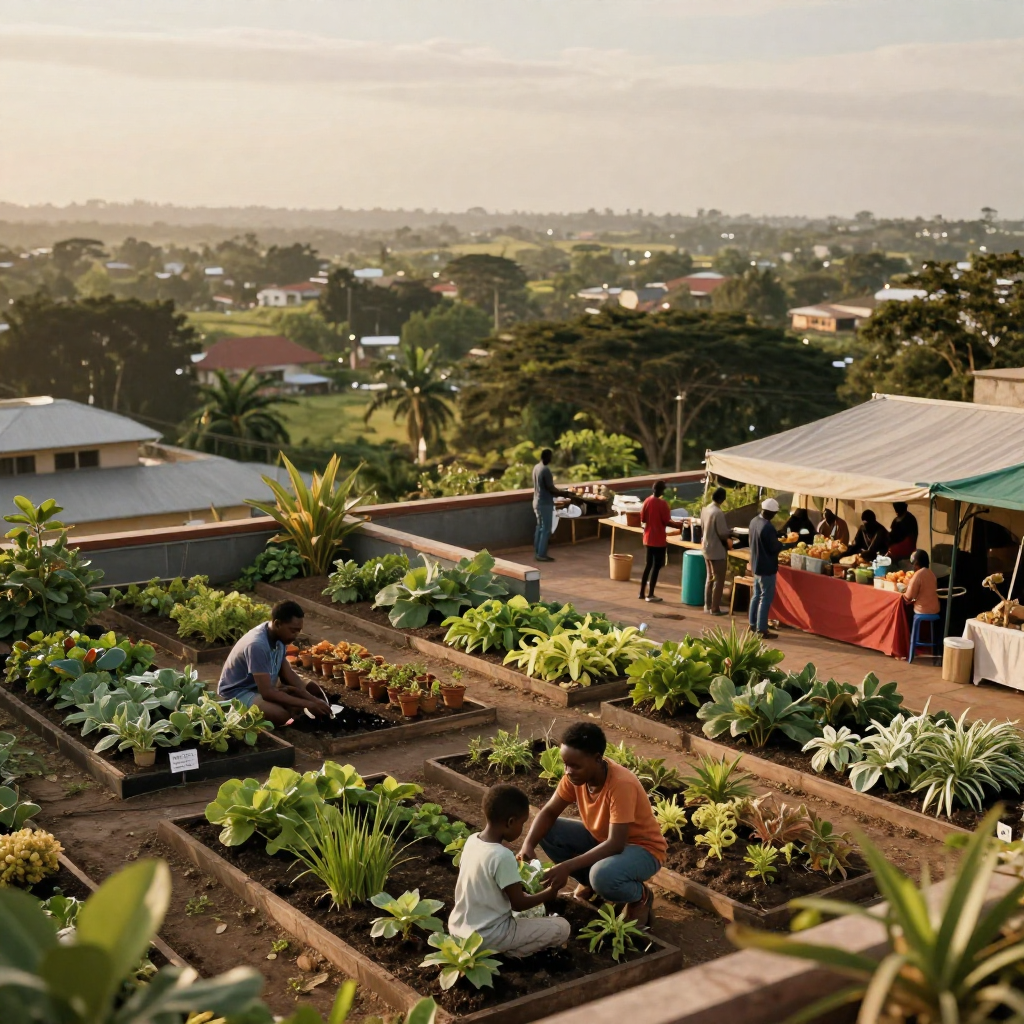
Urban agriculture expansion: Cities should support migrant-led food gardens:
- Allocate vacant municipal land for community gardens
- Provide water access and basic infrastructure
- Offer seedlings and training programs
- Create farmers’ markets near informal settlements
- Connect urban farmers with formal supply chains
Successful Example: In Cape Town’s Philippi, a community garden project involving Zimbabwean and South African participants produces vegetables for 200 families. Subsequently, participants reduce food expenditure by 40%. Additionally, they improve dietary diversity. They build social cohesion.
Food voucher programs: Partner with remittance platforms:
- Mukuru and Malaicha could offer food vouchers
- Migrants send vouchers instead of cash
- Recipients redeem at designated retailers
- Systems track nutritional value of purchases
- Prices controlled to prevent exploitation
Policy-Level Interventions:
Social protection extension: Currently, migrants cannot access most social grants. However, food assistance should not discriminate:
- Extend food parcels to all food-insecure residents regardless of nationality
- Allow documented migrant children to access school feeding programs
- Create emergency food assistance not linked to citizenship
- Partner with NGOs and faith-based organizations
- Implement during crisis periods (droughts, pandemics, economic shocks)
Given the catastrophic impact of the pandemic on migrant food security, problems that led to cancellation of the government’s pandemic food relief program need to be understood and addressed in planning for future pandemic preparedness, with proposals including distributing food hampers to mitigate food insecurity in times of crisis.
3. Remittance Corridor Improvements (6-36 months)
Reduce Transaction Costs:
South African and Zimbabwean governments should cooperate:
- Cap remittance fees at 3% (World Bank target)
- Eliminate currency conversion markups
- Create government-backed digital remittance platform
- Subsidize food remittances to incentivize nutritional support
- Offer tax deductions for remittance senders
Financial inclusion: Mukuru’s DTMFI license enables expansion to underserved groups such as SMEs, people with disabilities, women, youth and rural communities, aligning with Zimbabwe’s National Financial Inclusion Strategy. Similarly, South Africa needs similar expansion:
- Allow undocumented migrants to open basic bank accounts
- Create documentation-light financial products
- Partner with fintech platforms serving migrants
- Protect migrants from predatory lending
- Provide financial literacy training
Support Sustainable Development in Zimbabwe:
Remittances alone won’t solve Zimbabwe’s problems. Therefore:
- International community should support economic stabilization
- Create investment incentives for diaspora business development
- Facilitate productive remittance use (not just consumption)
- Support agricultural recovery in Zimbabwe
- Address political factors driving migration
4. Integrated Service Models (12-36 months)
One-Stop Migrant Centers:
Establish centers in Johannesburg, Cape Town, and Durban offering:
- Primary healthcare services
- Legal assistance with documentation
- Nutrition counseling and food parcels
- Mental health services
- Financial literacy training
- Employment assistance
- Remittance services at reduced fees
- Community support groups
Successful Model: Scalabrini Centre in Cape Town provides integrated services to migrants. Indeed, evaluation shows:
- 65% of clients access healthcare they previously avoided
- 45% reduction in food insecurity among participants
- 70% report reduced anxiety about documentation
- Community relationships strengthen
- Healthcare costs decrease through prevention
Partnership Approaches:
Government-NGO-Private Sector Collaboration:
- Department of Health provides clinical services
- NGOs offer community outreach and legal support
- Remittance companies fund nutrition programs
- Research institutions evaluate effectiveness
- Migrant organizations lead peer support
Stakeholder Responsibilities and Implementation Timeline
For National Government (Department of Health)
Immediate (0-6 months):
- Issue NHI implementation directive protecting migrant healthcare access
- Launch nationwide anti-xenophobia campaign in healthcare facilities
- Establish migrant health monitoring system
- Allocate budget for migrant health services
Short-term (6-18 months):
- Develop migration health policy framework
- Pilot integrated migrant health centers in three cities
- Create training curriculum on migration health for healthcare workers
- Establish partnerships with remittance platforms for health promotion
Medium-term (18-36 months):
- Scale successful pilot programs nationally
- Integrate migration health into medical school curricula
- Implement regular xenophobia audits in healthcare facilities
- Evaluate and refine policies based on evidence
For Provincial Departments (Gauteng, Western Cape, KwaZulu-Natal)
Immediate:
- Map migrant populations and healthcare access points
- Identify high-need informal settlements
- Deploy mobile clinics to underserved areas
- Train provincial healthcare staff on migrant rights
Short-term:
- Establish provincial migrant health task forces
- Create province-specific implementation plans
- Partner with local NGOs and community organizations
- Monitor healthcare access and quality metrics
For Local Government (Metropolitan Municipalities)
Immediate:
- Allocate land for urban agriculture projects
- Support community food gardens in informal settlements
- Improve food retail infrastructure in townships
- Address xenophobic violence against migrant vendors
Short-term:
- Integrate food security into urban planning
- Create migrant-inclusive social cohesion programs
- Support informal food systems serving migrants
- Establish local food security monitoring
For Healthcare Providers and Facilities
Immediate:
- Review patient registration processes removing documentation barriers
- Display multilingual posters on healthcare rights
- Report xenophobic incidents to management
- Create migrant-friendly service protocols
Short-term:
- Train all staff on cultural competence and migration health
- Establish patient advocacy programs
- Partner with community health workers from migrant communities
- Monitor and address discriminatory practices
For NGOs and Civil Society
Immediate:
- Document healthcare access barriers
- Provide legal assistance for healthcare rights violations
- Offer community health education
- Operate food distribution programs
Short-term:
- Advocate for policy reform
- Conduct research on migrant health outcomes
- Build partnerships across sectors
- Support community-led solutions
For Remittance Companies (Mukuru, Malaicha, Others)
Immediate:
- Reduce transaction fees on food remittances
- Offer nutrition guidance with grocery services
- Partner with health organizations for information dissemination
- Create loyalty programs rewarding nutritious food purchases
Short-term:
- Develop health-focused remittance products
- Fund nutrition programs in migrant communities
- Support research on remittance-health links
- Invest in rural delivery infrastructure in Zimbabwe
For Research Institutions
Immediate:
- Conduct rapid assessments of migrant food security and health
- Establish migration health research centers
- Train graduate students in migration health research
- Publish accessible policy briefs
Short-term:
- Evaluate pilot programs and interventions
- Conduct longitudinal studies on health trajectories
- Research remittance impacts on sender and receiver health
- Document best practices and lessons learned
For International Organizations
Immediate:
- Provide technical assistance for policy development
- Fund emergency food assistance programs
- Support NGO service delivery
- Facilitate regional dialogue on migration health
Short-term:
- Fund research on South-South migration health
- Support Zimbabwe’s economic recovery
- Advocate for migrant health rights
- Share best practices from other contexts
Addressing Research Gaps and Limitations
What We Still Don’t Know
Despite growing research, critical gaps remain:
Longitudinal health data: Most studies provide snapshots. Specifically, we lack data on:
- How health changes over migration duration
- Long-term impacts of food insecurity on chronic diseases
- Intergenerational health effects on migrant children
- Health outcomes after return migration to Zimbabwe
Mental health research: Studies found heightened food insecurity and elevated risks of mental health issues, yet we need:
- Prevalence studies of depression, anxiety, PTSD
- Culturally appropriate mental health interventions
- Understanding of resilience factors
- Impact of remittance stress on mental wellbeing
Nutrition epidemiology: We lack detailed data on:
- Dietary intake patterns among migrants
- Micronutrient deficiency prevalence
- Relationship between food spending and health outcomes
- Effectiveness of nutrition interventions
Healthcare utilization: Questions remain about:
- True rates of healthcare avoidance due to documentation fears
- Quality of care received when accessed
- Health outcomes for migrants vs. citizens
- Cost-effectiveness of migrant health interventions
Remittance impacts: Research focuses on receivers. However, we need more on:
- Health consequences for remittance senders
- Optimal remittance amounts and frequencies for both parties
- Role of different remittance types (cash vs. food)
- Long-term sustainability of remittance-dependent systems
Study Limitations
Current research faces methodological challenges:
Sampling difficulties: Undocumented migrants fear participation. Therefore:
- Studies may underrepresent most vulnerable
- Self-selection bias affects findings
- Sample sizes remain small
- Generalizability uncertain
Measurement challenges:
- Food insecurity tools developed for other contexts
- Health outcome data often self-reported
- Documentation status difficult to verify
- Remittance amounts may be underreported
Ethical concerns:
- Research participation risks exposing undocumented status
- Informed consent complicated by power dynamics
- Benefits of participation often minimal
- Trauma of discussing experiences
Research Priorities for 2025-2030
High Priority:
- Nationally representative survey of migrant health in South Africa
- Longitudinal cohort study following migrants over 10 years
- Evaluation of NHI implementation impacts on migrant health access
- Cost-effectiveness analysis of migrant health interventions
- Participatory action research with migrant communities
Medium Priority:
- Qualitative research on healthcare experiences
- Study of successful integration models
- Research on children of migrants
- Investigation of return migration health impacts
- Analysis of COVID-19 lessons learned
The Path Forward: A Call for Coordinated Action
The WhatsApp groups feeding Harare represent both crisis and innovation. Zimbabwean migrants leverage digital technology to support families across borders. Nevertheless, they sacrifice their own health in the process. Moreover, South African health policy increasingly excludes them from care.
This situation demands urgent, coordinated response. Fortunately, the solutions exist:
- Ensure universal healthcare access regardless of documentation
- Expand food security programs to all residents
- Reduce remittance costs and support sustainable development
- Address xenophobia in healthcare and communities
- Conduct research to guide evidence-based policy
Key Takeaways for Policymakers
- Migrants are not burdens; they are contributors: Zimbabweans send billions in remittances, sustaining regional economies. Furthermore, their labor powers South African industries. Therefore, their health matters economically and morally.
- Health and food security are interconnected: You cannot address one without the other. Consequently, migrants need both adequate nutrition and healthcare access.
- Documentation barriers harm everyone: Untreated infectious diseases spread. Additionally, late-stage disease presentations cost more. Prevention saves money.
- Digital platforms offer opportunities: Partner with remittance companies. Moreover, leverage technology for health promotion. Use existing infrastructure creatively.
- Regional cooperation is essential: South Africa and Zimbabwe share fates. Supporting Zimbabwe reduces migration pressure. Ultimately, collaborative solutions benefit both nations.
Final Reflection
Behind every WhatsApp notification sending vegetables to Harare sits a migrant in Johannesburg, Cape Town, or Durban—often hungry, frequently sick, always worried. Indeed, these individuals deserve more than being caught between two countries’ failures. Specifically, they deserve healthcare. They deserve food security. They deserve dignity.
The solutions outlined here can work. However, they require political will, adequate resources, and sustained implementation. Most importantly, they require recognizing migrants as human beings with rights, not problems to be managed or threats to be controlled.
As South Africa implements its National Health Insurance, as Zimbabwe struggles with economic recovery, and as digital platforms continue transforming remittance systems, we have a choice. We can allow the current crisis to deepen, or we can build integrated systems that protect health, ensure food security, and support human flourishing across borders.
The WhatsApp groups will keep buzzing. Ultimately, the question is: will our health systems answer the call?
Sources
- Crush, J., & Tawodzera, G. (2016). Migration and food security: Zimbabwean migrants in urban South Africa. Urban Food Security Series No. 23.
- Tawodzera, G. (2024). Narratives of Food Consumption and Food Insecurity: Zimbabwean Migrants in Windhoek, Namibia. MiFOOD Paper No. 32.
- World Food Programme. (2024). Zimbabwe Country Brief. https://www.wfp.org/countries/zimbabwe
- Crush, J., et al. (2025). Feeding hope: Zimbabwean migrants in South Africa and the evolving landscape of cross-border remittances. ScienceDirect.
- FEWS NET. (2023). Zimbabwe Food Security Outlook, December 2023 to May 2024.
- Mukuru. (2024). Mukuru Annual Report 2023-2024. https://www.mukuru.com
- Tawodzera, G., Crush, J., & Caesar, M. (2022). Food Insecurity and Food Remittances among Zimbabwean Migrants in Urban South Africa. African Human Mobility Review, 8(1), 78-95.
- South African Government. (2024). Border Management Authority Act 2 of 2020. Government Gazette No. 43536.
Recent Posts:
- The WhatsApp Groups Feeding Harare: How the Diaspora Is Bankrolling Zimbabwe’s Urban Organic Food Movement
- From Tsumeb to Thohoyandou: The Namibian Farmers Bringing Drought-Resistant Indigenous Crops Across Borders
- Why Botswana’s Returning Migrants Are Ditching Chemicals and Going Back to the Old Ways
- The Kapenta Trail: How Labor Migration Created Southern Africa’s Most Unlikely Food Network
- Are Remittances Killing Rural Farming? What Malawian Villages Can Teach Us About Migration and Food Security