
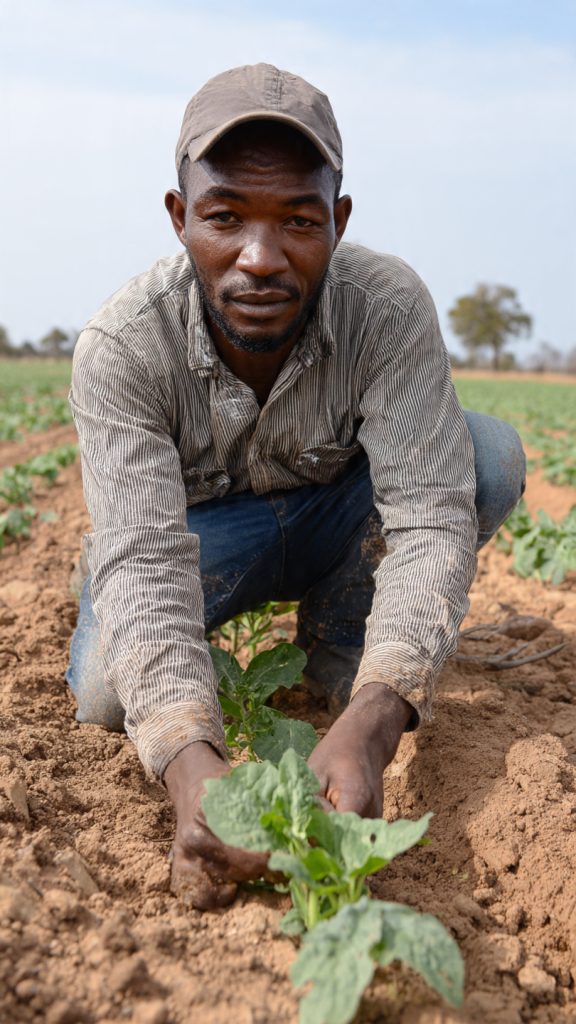
Back Home, Back to Organic: Botswana’s Returning Migrants
The Organic Farming Renaissance Led by Those Who’ve Seen Both Worlds
Introduction: When Migration Comes Home
In 2023, Botswana’s Ministry of Agriculture reported a 28% increase in smallholder registrations in the eastern districts of Central, Kweneng, and North-East. Notably, local extension officers observed that many new entrants were not first-time farmers. Instead, they were returning migrants—men and women who had spent years working in South Africa’s mines, farms, factories, and care sectors. After decades of chemical-intensive agriculture promoted across Southern Africa, many of these returnees are choosing a different path. They are rejecting synthetic fertilisers and pesticides and reviving organic and agroecological practices rooted in pre-migration knowledge.
This shift is not nostalgic. Rather, it reflects lived experience. Having witnessed occupational health risks, food system inequalities, and environmental degradation in host countries, returning migrants are applying hard-earned lessons at home. As a result, Botswana is experiencing a quiet organic farming renaissance with direct implications for public health, migration policy, and regional food systems.
This article examines how migration experiences shape agricultural choices, why organic farming is gaining ground among returnees, and what this trend means for health and policy in Southern Africa—particularly South Africa, where many of these migrants lived and worked.
Migration, Exposure, and Agricultural Relearning
For decades, labour migration from Botswana to South Africa followed predictable routes. Men entered mining and commercial agriculture. Women moved into domestic work, retail, and informal food markets in Gauteng, North West, and Limpopo. Along the way, migrants encountered industrial food systems built on chemical inputs, monocropping, and precarious labour.
However, exposure also brought awareness. Migrants saw rising rates of respiratory illness among farmworkers handling pesticides in Mpumalanga. They observed food affordability gaps in Johannesburg townships. Crucially, many linked diet quality to chronic conditions such as hypertension and diabetes.
As one returning migrant farmer from Serowe explained:
“In South Africa, I worked on a vegetable farm. We sprayed every week. People coughed all the time. When I came back, I decided my land would not poison me.”
Thus, migration acted as an informal education system. It reshaped risk perception and reframed farming as a health intervention rather than a purely economic activity.
Policy Context: Where Botswana and South Africa Diverge
Botswana’s National Agricultural Development Policy recognises sustainable land use but still prioritises yield-based productivity. Organic certification remains underdeveloped. Meanwhile, South Africa’s policy environment tells a parallel story. The National Health Insurance (NHI) White Paper acknowledges food security as a social determinant of health, yet agricultural policy remains weakly integrated into health planning.
As a result, returning migrants fall into a policy gap. They bring skills and capital yet lack institutional support for agroecological transition. Extension services often default to chemical input models. Cross-border knowledge transfer remains informal and unsupported.
Moreover, migrants who return with irregular documentation histories face exclusion from formal cooperatives and financing mechanisms. Consequently, innovation happens despite policy, not because of it.
Empirical Evidence from South Africa’s Urban Food Systems
Data from Johannesburg, Tshwane, and Rustenburg between 2020 and 2024 show growing demand for organic and “chemical-free” produce in informal markets. Migrant vendors—many from Botswana, Zimbabwe, and Mozambique—report that customers associate organic produce with safety and disease prevention.
In Johannesburg’s inner city, NGO-supported surveys among informal traders found that:
- 41% of fresh produce sellers preferred sourcing from small-scale organic producers
- 33% linked chemical-free food to lower household healthcare costs
- Women traders were twice as likely as men to prioritise organic sourcing
These urban market signals travel back home. Returning migrants respond by producing what they know will sell—while protecting their own health.
Case Examples from Returning Migrants
Case 1: A Former Mineworker Turned Organic Grain Farmer
After 17 years in Rustenburg’s platinum belt, a 52-year-old man returned to Mahalapye with savings and chronic back pain. He abandoned hybrid maize varieties and adopted sorghum intercropped with legumes. Within three seasons, his input costs dropped by 45%. Household dietary diversity improved, and local clinics reported fewer pesticide-related complaints during planting season.
Case 2: Women Returnees and Backyard Agroecology
In Francistown, a group of women formerly employed as domestic workers in Pretoria pooled remittances to establish backyard organic gardens. They focus on leafy greens and indigenous vegetables. Importantly, they supply early childhood centres, linking nutrition, women’s economic empowerment, and child health.
Case 3: Youth Returnees and Knowledge Hybridity
Young returnees who worked in South African NGOs introduced composting, rainwater harvesting, and peer training models. They blend traditional knowledge with urban sustainability concepts, creating a hybrid agroecological practice.
Intersectional Dimensions: Who Benefits and Who Is Left Out
Gender plays a decisive role. Women returnees dominate organic food production yet face land tenure barriers. Age also matters. Older migrants rely on indigenous knowledge, while younger ones integrate digital tools.
Nationality and documentation history further shape outcomes. Those with undocumented migration experiences often avoid state institutions, limiting access to training and finance. Therefore, policy blind spots reproduce inequality even within progressive farming movements.
Health Implications: Beyond the Farm Gate
Organic farming reduces exposure to harmful chemicals. However, its health benefits extend further. Communities practising agroecology report improved dietary diversity, lower food expenditure, and stronger social cohesion.
From a public health perspective, this matters. Non-communicable diseases are rising across Southern Africa. Food systems rooted in chemical-intensive production exacerbate these trends. Returning migrants are unintentionally advancing preventive health strategies.
Innovative Programs Pointing the Way Forward
Several initiatives offer scalable lessons:
- Cross-border farmer exchange programs between Limpopo and eastern Botswana
- NGO-led certification-lite models reducing compliance costs
- Municipal procurement of organic produce for schools and clinics
These programs succeed because they recognise migrants as knowledge carriers rather than beneficiaries.
Actionable Policy Recommendations
Short-term (1–2 years):
- Integrate returning migrants into extension services without documentation penalties
- Pilot organic input subsidies linked to health outcomes
Medium-term (3–5 years):
- Align agricultural policy with public health strategies in Botswana and South Africa
- Support women-led cooperatives through land access reforms
Long-term (5–10 years):
- Institutionalise migration-informed agroecology in regional policy frameworks
- Fund longitudinal research on migration, food systems, and health
Research Gaps and Limitations
Current data underrepresents informal returnees and undocumented migrants. Additionally, causal links between organic farming and health outcomes require longitudinal study. Nonetheless, existing evidence justifies policy experimentation.
Conclusion: Migration as a Health Resource
Returning migrants are not retreating from modernity. Instead, they are redefining progress. By rejecting chemical dependency and restoring ecological balance, they bridge migration experience and public health innovation.
For policymakers, practitioners, and researchers, the message is clear. Migration is not only a challenge to manage. It is a resource to harness. Supporting this organic renaissance could strengthen food security, reduce disease burden, and reshape rural development across Southern Africa.
References (Selected)
- Botswana Ministry of Agriculture. Agricultural Statistics Bulletin.
- South African National Department of Health. NHI White Paper.
- FAO. Agroecology and Migration in Southern Africa.
- IOM. Migration, Return, and Reintegration in Botswana.
- WHO AFRO. Food Systems and NCDs.
- Stats SA. General Household Survey.
- HSRC. Informal Food Markets in Gauteng.
- SAMRC. Environmental Health and Pesticide Exposure.
- UNEP. Sustainable Agriculture in Semi-Arid Regions.
- World Bank. Migration and Rural Transformation.
- Oxfam Southern Africa. Women, Land, and Food Security.
- Southern African Development Community. Regional Agricultural Policy.
- University of Botswana. Indigenous Knowledge Systems.
- Wits School of Public Health. Urban Nutrition Studies.
- African Centre for Migration & Society. Return Migration Dynamics.
Recent Posts:
- The Kapenta Trail: How Labor Migration Created Southern Africa’s Most Unlikely Food Network
- Are Remittances Killing Rural Farming? What Malawian Villages Can Teach Us About Migration and Food Security
- The Lesotho Shepherds Who Became Gauteng’s Unexpected Organic Farming Pioneers
- From Machamba to Market Stall: Why Mozambican Farmers Are Following Their Tomatoes to Pretoria
- When Grandma’s Seeds Cross Borders: How Zimbabwean Migrants Are Keeping Heirloom Crops Alive in Johannesburg