
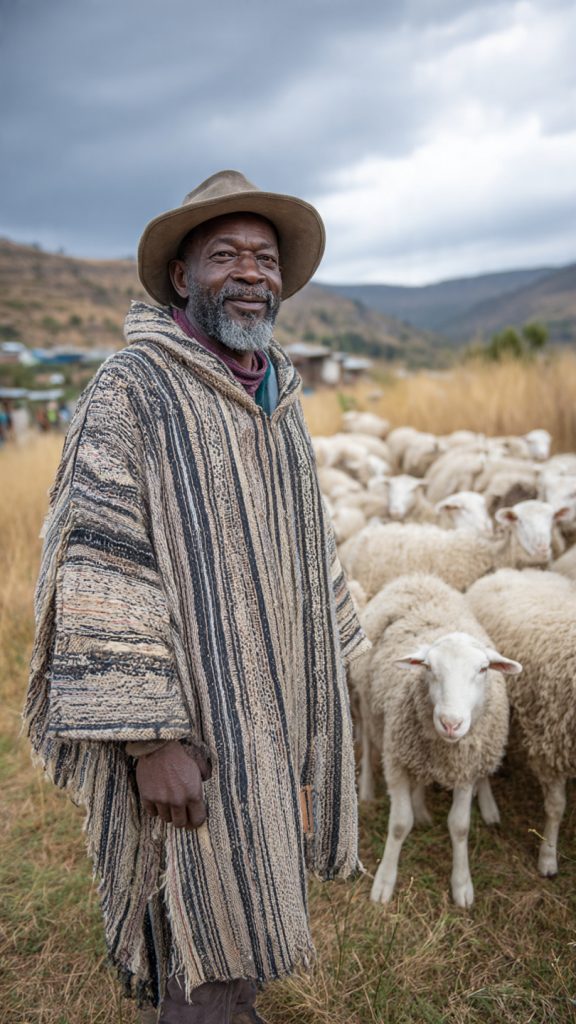
Mountain Agriculture Meets Urban Health: The Complex Health Landscape of Lesotho’s Migrant Farmworkers in Gauteng
Introduction: A Crisis Hidden in Plain Sight
Across the agricultural belts surrounding Johannesburg and Pretoria, an estimated 350,000 Basotho migrants cultivate the food systems that sustain South Africa’s most urbanised province. Former mountain shepherds, seasonal harvesters, and, increasingly, innovators in urban organic agriculture now form the backbone of peri-urban farming in Gauteng. Yet, despite their economic importance, these workers remain among the province’s most health-vulnerable populations.
At the same time, South Africa is attempting to advance Universal Health Coverage through the National Health Insurance (NHI) scheme. However, for migrant farmworkers from Lesotho, health risks are shaped by a convergence of structural exclusion, precarious labour, and fragmented policy responses. As a result, individual vulnerability translates into wider public-health insecurity.
Recent analysis of Census 2022 data confirms Lesotho as one of the top four migrant-sending countries to South Africa, with Gauteng hosting the largest concentration. Nevertheless, migrant farmworkers remain largely invisible in mainstream health planning. They exist in a policy grey zone shaped by documentation uncertainty, exploitative working conditions, and health systems ill-equipped for mobile populations.
The COVID-19 pandemic exposed these vulnerabilities with particular clarity. Although farmworkers were classified as “essential,” many Basotho migrants experienced disproportionate infection risk, limited access to testing and care, and profound economic hardship when border closures severed family and support networks.
Against this backdrop, this analysis explores the intersection of migration, agriculture, food systems, and health among Lesotho’s farmworkers in Gauteng. In doing so, it identifies critical policy failures while highlighting evidence-based interventions capable of transforming outcomes for one of Southern Africa’s most marginalised migrant communities.
The Migration–Health Nexus
From Mine Compounds to Market Gardens
Historically, Lesotho–South Africa migration was dominated by male labour migration to the gold mines. Over time, however, this pattern has shifted dramatically. Contemporary migration flows are increasingly feminised, more permanent, and spread across diverse economic sectors, particularly agriculture.
According to the International Organization for Migration’s 2023 estimates, more than 179,000 Basotho currently work in South Africa. Importantly, women now comprise a substantial proportion of these flows, reflecting broader changes in household survival strategies and labour demand.
Within Gauteng, agricultural employment has become a critical destination. Urban and peri-urban farms supplying Johannesburg and Pretoria increasingly rely on migrant labour. Yet, as research by Jinnah (2017) and de Gruchy and Vearey (2020) demonstrates, these workers are typically positioned at the most precarious end of the labour market.
Consequently, migrant farmworkers often experience:
- Seasonal and temporary contracts
- Dependence on substandard employer-provided housing
- Weak access to labour protections
- Documentation insecurity following the lapse of Lesotho Special Permits
- Geographic isolation from health facilities
- Language barriers and limited health literacy
Gauteng’s Urban Food System Pressures
Gauteng’s role as South Africa’s economic hub intensifies these challenges. The province accommodates nearly half of the country’s internal migrants while simultaneously facing rising food insecurity. Alarmingly, approximately 18% of Gauteng households experience hunger.
Rapid urbanisation further strains health and food systems. For example, Tembisa alone absorbs an estimated 10,000 new migrants each month. Within this context, research by Mazenda et al. (2022) identifies unemployment, income insecurity, education level, and household size as key drivers of food insecurity—factors that disproportionately affect migrant farmworkers.
Paradoxically, those who produce food for Gauteng’s 16 million residents often struggle to feed themselves. This “farmworker paradox” reflects deep structural inequities within South Africa’s dual food system, where commercial abundance coexists with household-level deprivation.
A Syndemic Health Burden
Occupational and Environmental Risks
Recent syndemic research highlights how farmworkers face interacting clusters of disease that amplify overall health risk. For Basotho migrants in Gauteng’s agricultural zones, these risks are both occupational and structural in nature.
Communicable Diseases
Tuberculosis (TB): Overcrowded housing, poor ventilation, and limited screening elevate TB risk. Moreover, the 2025 termination of USAID funding—previously covering 14% of South Africa’s TB budget—has weakened outreach services that once reached farmworker populations.
HIV: While national HIV programmes exist, access remains uneven. Mobile livelihoods disrupt continuity of antiretroviral therapy, while documentation barriers further undermine care retention.
COVID-19: During the pandemic, communal living, shared transport, and inability to physically distance heightened exposure. Despite essential-worker status, protection and care were often inadequate.
Non-Communicable Diseases
Urban migration reshapes dietary patterns and physical activity. National policies recognise migrants as high-risk for NCDs such as hypertension and diabetes. Nevertheless, food insecurity among farmworkers produces nutritional contradictions that policy has yet to address.
Chemical and Physical Exposure
Daily agricultural labour entails pesticide exposure, heat stress, and musculoskeletal injury. In the absence of occupational health services, these risks accumulate over time, producing long-term disability and lost income.
Mental Health and Psychosocial Stress
Beyond physical illness, psychosocial distress is pervasive. Family separation, fear of deportation, xenophobia in healthcare settings, and social isolation collectively undermine mental wellbeing. Yet, mental health services remain largely inaccessible to farm-based migrant workers.
Gendered and Reproductive Health Vulnerabilities
Women now constitute approximately 40% of Basotho migration flows. Despite this, migration and health policies remain insufficiently gender-responsive.
Pregnant farmworkers face multiple barriers, including documentation checks, fear of facility-based discrimination, and the risk of job loss if maternity leave is requested. At the same time, transnational caregiving responsibilities expose families in Lesotho to heightened vulnerability, as evidenced by recent reports of increased sexual violence affecting children left behind.
Policy Gaps and Systemic Failures
The NHI Paradox
South Africa’s Constitution guarantees the right to health for all persons. Similarly, the NHI Bill commits rhetorically to universal coverage. In practice, however, migrants without secure documentation are restricted to emergency and notifiable condition care.
This contradiction produces several systemic failures:
- Ambiguity around what constitutes an “emergency”
- Exclusion from chronic disease management
- Absence of preventive and promotive care
As a result, continuity of care for TB, HIV, and NCDs is routinely disrupted.
Health System Capacity Constraints
Even for citizens, Gauteng’s health system faces shortages of staff, medicines, and infrastructure. For migrant farmworkers, these constraints intersect with distance, transport costs, language barriers, and discriminatory treatment—collectively discouraging care-seeking.
Agricultural Policy Disconnects
While food security remains a national priority, agricultural policy rarely integrates worker health. Weak enforcement of labour standards, limited regulation of farm housing, and absence of mobile health services perpetuate risk.
Promising Models and Innovations
Community-Based Outreach
Initiatives by Médecins Sans Frontières and the IOM demonstrate that migrant-responsive, farm-based services improve early detection and treatment uptake. Crucially, community health workers drawn from migrant communities enhance trust and cultural relevance.
Urban Agriculture Co-Benefits
Urban agriculture projects in Johannesburg show that participation in food production can improve dietary diversity, psychosocial wellbeing, and household food security. Although not designed as health interventions, these initiatives reveal opportunities for integrated programming.
Strengthened Recommendations
Health Sector Actions
Immediate priorities include clarifying NHI access at primary-care level, deploying mobile clinics to agricultural zones, and developing Sesotho-language health materials. Over the medium term, cross-border health coordination with Lesotho and migrant-inclusive chronic care models are essential.
Migration and Labour Governance
Documentation regularisation, streamlined agricultural work permits, and firewall protections between healthcare and immigration enforcement are critical. Without these safeguards, health inclusion will remain aspirational.
Agricultural Sector Responsibilities
Employers must meet minimum standards for housing, sanitation, and occupational safety. At the same time, incentives for farms implementing worker-health programmes could accelerate uptake.
Conclusion: From Margins to Mandate
Basotho migrant farmworkers sustain Gauteng’s food systems while bearing disproportionate health burdens. This paradox is not inevitable. Evidence demonstrates that inclusive, mobile, and community-led health interventions are both feasible and effective.
Ultimately, health equity requires delinking care from documentation, integrating agriculture and health policy, and centring migrant voices in solution design. South Africa’s constitutional commitments demand nothing less.
The tools exist. The evidence is clear. What remains is decisive action to ensure that those who feed the city can live and work in health and dignity.
Recent Posts:
- From Machamba to Market Stall: Why Mozambican Farmers Are Following Their Tomatoes to Pretoria
- When Grandma’s Seeds Cross Borders: How Zimbabwean Migrants Are Keeping Heirloom Crops Alive in Johannesburg
- How Should South Africa’s National Health Insurance (NHI) Address Migrant Health Coverage to Protect Public Health?
- What Are the Cross-Border Health Coordination Challenges Between South Africa and Neighboring SADC Countries?