
Cross-Border Farming and Pretoria’s Tomato Trade
The Untold Story of How Organic Produce Is Reshaping Migration Patterns
A Border-Crossing Food System in Motion
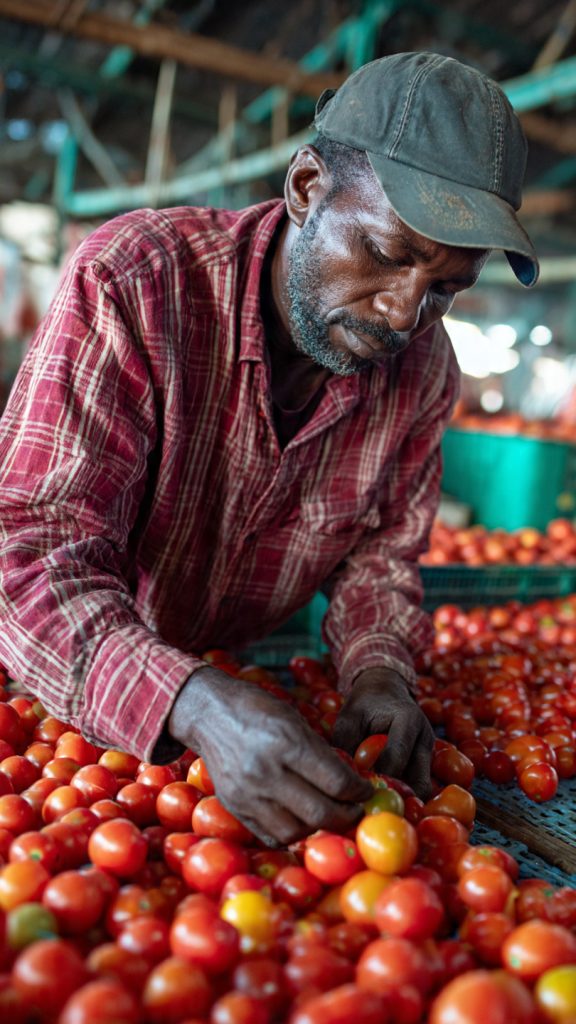
In 2023, informal markets in Pretoria North and Marabastad recorded a visible rise in fresh tomatoes, leafy greens, and chillies traced back to southern Mozambique. At the same time, border authorities at Lebombo noted sustained circular migration by small-scale farmers rather than once-off job seekers. These two trends connect. Increasingly, Mozambican farmers are not just exporting produce. They are following it. As organic food demand rises in South African cities, migration patterns now mirror informal food supply chains.
This shift matters for public health and policy. Food systems shape livelihoods, mobility, and health risks. Yet South Africa’s migration and health policies still treat agricultural migrants as generic low-skilled workers. Consequently, they miss the complex links between informal trade, nutrition, and cross-border mobility.
This article examines how organic produce markets are driving migration from Mozambican machambas (smallholder farms) to Pretoria’s market stalls. It analyses policy gaps, health implications, and emerging solutions, while centring migrant voices and urban realities.
The Political Economy of Organic Produce Migration
Why Farmers Are Moving With Their Crops
Several forces push Mozambican farmers southward. First, climate variability has reduced predictable yields in Gaza and Maputo provinces. Second, local markets offer limited price stability for organic produce. Meanwhile, Pretoria’s informal and semi-formal markets offer higher margins, faster turnover, and cash payments.
Rather than rely on middlemen, many farmers now travel with their produce. This strategy allows direct sales, quality control, and relationship-building with stall owners. As a result, migration becomes short-term, circular, and commodity-driven.
Moreover, South Africa’s urban consumers increasingly associate Mozambican produce with “natural” or “chemical-free” farming. Although certification remains rare, trust-based organic claims carry economic value in township and inner-city markets.
Gendered and Generational Dynamics
Women play a central role in this system. In southern Mozambique, women dominate small-scale horticulture. However, men more often undertake cross-border travel due to documentation barriers and safety concerns. Young adults, especially those aged 18–30, increasingly accompany older traders to learn routes and market practices.
As a result, migration patterns now reflect household strategies rather than individual job searches. These dynamics complicate traditional labour migration models used in policy planning.
Health Implications Along the Supply Chain
Mobility, Risk, and Access to Care
Cross-border produce traders face layered health risks. Long travel times, overnight border queues, and informal accommodation increase exposure to infectious diseases. Limited access to water and sanitation at markets further heightens risk.
Despite this, migrants rarely seek care in South Africa unless emergencies arise. Fear of fees, discrimination, or arrest discourages clinic use. Consequently, untreated chronic conditions such as hypertension and diabetes often worsen.
Healthcare providers in Tshwane report frequent late presentations among foreign traders. These cases strain emergency services and undermine preventive care goals.
Nutrition Paradox in Urban Markets
Ironically, migrants who supply fresh produce often struggle with food security themselves. High living costs in Pretoria force traders to prioritise remittances over balanced diets. Thus, those sustaining urban nutrition systems remain nutritionally vulnerable.
This paradox exposes a blind spot in urban health planning. Policymakers celebrate informal food systems for affordability, yet overlook the health of those who sustain them.
Policy Analysis: Where Systems Fall Short
Migration and Trade Policy Disconnects
South Africa’s migration framework does not recognise small-scale cross-border traders as economic contributors. Short-term visas rarely accommodate repeated travel with goods. As a result, traders rely on informal arrangements that increase exploitation and bribery risks.
Similarly, agricultural trade policies focus on large exporters. They ignore informal organic flows that supply low-income urban populations. This exclusion limits opportunities for regulation, support, and health surveillance.
Health Policy Gaps
The National Health Act affirms access to basic care for all. However, implementation remains uneven. In practice, documentation requests still block access at primary care level. Language barriers and lack of migrant-sensitive services compound exclusion.
Furthermore, municipal health plans rarely integrate migration data into service planning. Consequently, clinics near markets remain under-resourced despite high demand.
Lived Experiences From the Field
Case Example 1: Circular Trade and Chronic Illness
A 52-year-old tomato farmer from Xai-Xai travels to Pretoria twice a month. He sells directly to stall owners near Church Square. Although he has hypertension, he avoids clinics due to cost fears. Over time, his condition worsens, affecting his ability to travel and trade.
Case Example 2: Young Women in Informal Markets
Two sisters in their twenties accompany their aunt to Pretoria to sell leafy greens. They sleep behind the stall to save money. While they earn more than at home, they face harassment and lack access to reproductive health services.
Case Example 3: Market-Level Solidarity
In Mamelodi East, Mozambican and South African traders pool money for emergencies. This informal safety net fills gaps left by formal systems. However, it remains fragile and undocumented.
Emerging Innovations and Promising Practices
Market-Based Health Outreach
Some NGOs now run mobile clinics near major markets. These services offer basic screening, referrals, and health education without documentation barriers. Early evaluations show improved trust and earlier care-seeking.
Cross-Border Trader Permits
Pilot initiatives between border authorities and trader associations have tested low-cost, short-duration permits. These permits reduce harassment and stabilise travel patterns. While limited, they demonstrate feasibility.
Community-Led Data Collection
Migrant associations increasingly collect data on member health needs. When shared with municipalities, this information improves local planning. Importantly, it empowers migrants as knowledge holders rather than passive subjects.
Actionable Policy Recommendations
Short-Term (0–12 Months)
- Deploy mobile health services at high-volume markets in Tshwane.
- Issue clear national guidance prohibiting denial of primary care based on nationality.
- Establish municipal migrant health focal points.
Medium-Term (1–3 Years)
- Create a recognised cross-border small trader visa category.
- Integrate migration indicators into district health information systems.
- Support trader associations with health promotion grants.
Long-Term (3–5 Years)
- Harmonise regional food trade and migration policies within SADC.
- Invest in climate-resilient agriculture to reduce forced mobility.
- Institutionalise migrant-inclusive urban health planning.
Research Gaps and Limitations
Evidence on informal organic trade remains limited. Most data relies on local studies and NGO reports. Future research should quantify health outcomes along informal food chains and evaluate policy pilots at scale.
Conclusion: A Call to Act Across Sectors
Mozambican farmers are not simply chasing markets. They are responding rationally to climate stress, food demand, and policy gaps. Their movement sustains urban nutrition while exposing systemic blind spots.
Health policymakers must therefore engage food systems, migration governance, and urban planning together. NGOs should scale market-based health interventions. Researchers must document these hidden supply chains. Finally, municipalities should recognise that the journey from machamba to market stall is also a public health pathway.
Selected References (2020–2025)
- Statistics South Africa. Migration and Labour Force Reports.
- South African Department of Health. National Health Act and policy circulars.
- IOM Southern Africa. Informal Cross-Border Trade Reports.
- FAO. Climate Change and Smallholder Agriculture in Southern Africa.
- WHO AFRO. Migration and Health Framework.
- SADC Secretariat. Regional Labour Migration Policy Framework.
- Médecins Sans Frontières. Migrant Health Access Briefs.
- African Centre for Migration & Society. Informal Economies Research.
- City of Tshwane. Integrated Development Plans.
- Southern African Trust. Food Systems and Mobility Studies.
- World Bank. Informal Trade and Urban Food Security.
- HSRC. Urban Health and Migration Studies.
- Oxfam Southern Africa. Gender and Informal Trade.
- Wits School of Public Health. Migration Health Publications.
- UNDP. Human Mobility and Climate Adaptation Reports.