
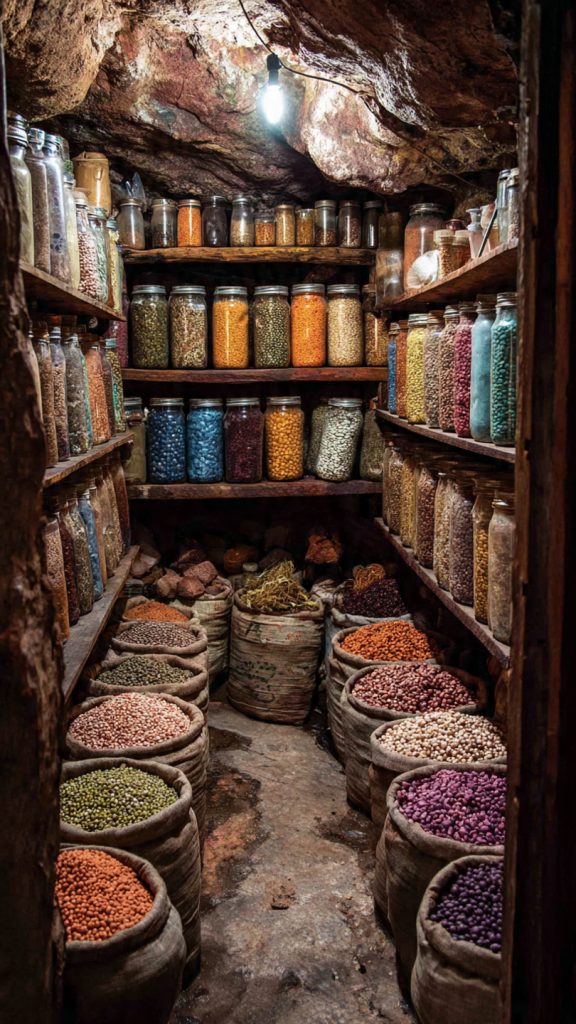
Preserving Heritage: Zimbabwean Migrants’ Heirloom Seeds
The Hidden Lifeline of Heritage Seeds
On a busy street in Yeoville, Johannesburg, 62-year-old “Mavis” (not her real name) exchanges a small packet of seeds with a neighbour. These are not ordinary seeds—they are her late grandmother’s heirloom crops, passed down through generations in rural Zimbabwe. For Mavis, this daily ritual is a way to preserve her culture, sustain her family, and adapt to life in a foreign city.
Recent surveys indicate that more than 40% of Zimbabwean migrants in Gauteng actively maintain home gardens, often relying on traditional seeds brought from rural areas (FAO, 2022; StatsSA, 2023). These informal seed networks ensure the survival of organic, resilient crops that are otherwise unavailable in local markets.
Policy Gaps and the Food Security Challenge
South Africa’s urban agriculture policies acknowledge informal gardening but rarely address migrant communities explicitly. Programs like the Gauteng Urban Agriculture Policy (2019) focus on food security, poverty alleviation, and local economic development. Yet, migrant-specific considerations—like cross-border seed sourcing, knowledge transfer, and cultural food preferences—remain overlooked.
The result? Migrant gardeners often operate in a grey zone, risking confiscation of seeds at border posts due to phytosanitary regulations, and facing exclusion from municipal support programs. This gap highlights a broader issue: South African food security frameworks largely assume a citizen population, ignoring the role migrants play in sustaining urban biodiversity and nutritional diversity.
Empirical Evidence from Johannesburg
Studies conducted in Alexandra, Hillbrow, and Yeoville show that Zimbabwean migrants maintain small-scale gardens in shared yards or community plots. These gardens supply both food and income through informal sales. A study by Crush and Tawodzera (2021) found that migrants’ gardens contributed up to 30% of household vegetable intake, enhancing nutrition for families often excluded from social grants.
Intersectional factors shape participation. Women, especially those caring for children, are more likely to garden for household consumption, while men often sell crops in local markets. Documentation status also matters: undocumented migrants face additional risks in accessing municipal land or urban agriculture programs.
Real-Life Examples
-
Mavis’s Garden in Yeoville: She uses seeds carried from Masvingo, cultivating drought-resistant varieties of maize and leafy greens. Mavis shares seeds through a small neighborhood network, ensuring that even newcomers can maintain traditional diets.
-
Community Plot in Hillbrow: A group of 12 Zimbabwean women collaborates on a rooftop garden, growing spinach, tomatoes, and indigenous herbs. Their collective effort strengthens social bonds and supports mutual aid networks.
-
Informal Seed Exchange in Alexandra: Migrants trade seeds in informal markets. These exchanges help preserve crop diversity and provide nutritional options not found in commercial supermarkets.
These examples demonstrate that migrants are not just consumers—they are custodians of biodiversity, nutrition, and cultural heritage.
Innovative Solutions and Successful Programs
Several initiatives show promise in integrating migrant gardeners into formal food security programs:
-
Seed Libraries in Gauteng: Nonprofits have begun offering community seed libraries, where migrants can access and contribute heirloom seeds safely. This approach protects biodiversity while bypassing bureaucratic barriers.
-
Urban Agriculture Training Programs: Some municipal programs now provide workshops tailored to diverse communities. For instance, the Johannesburg Urban Food Policy Lab includes migrant-led gardening modules to share cultivation techniques and nutrition education.
-
Cross-Border Knowledge Networks: NGOs like African Seeds for Resilience connect gardeners across borders, facilitating knowledge exchange, pest management strategies, and climate-resilient cultivation.
Actionable Recommendations
To strengthen the role of migrant gardeners and safeguard food heritage, we recommend:
-
Policy Inclusion: Revise municipal and national urban agriculture policies to explicitly include migrants and cross-border seed exchanges.
-
Timeline: Within 12 months.
-
-
Support Seed Libraries: Establish community-managed seed banks with migrant participation.
-
Timeline: Pilot programs in Johannesburg and Tshwane within 6–9 months.
-
-
Legal Guidance for Migrants: Provide clear information on phytosanitary regulations and legal seed importation pathways.
-
Timeline: Continuous, with annual updates.
-
-
Integrate Gardening into Nutrition Programs: Include migrant-run gardens in public nutrition initiatives targeting children, elderly, and vulnerable households.
-
Timeline: Within 18 months, coordinated with Department of Health programs.
-
-
Research and Monitoring: Fund longitudinal studies on migrant gardens’ contributions to urban nutrition, biodiversity, and cultural preservation.
-
Timeline: Ongoing, with first report in 24 months.
-
Conclusion: A Call to Action
Mavis’s tiny garden is more than a patch of green—it is a symbol of resilience, heritage, and community. For policymakers, supporting migrant gardeners is not just a matter of food security; it is a commitment to inclusivity, cultural preservation, and sustainable urban development.
Health departments, municipal authorities, NGOs, and academic institutions must collaborate to:
-
Protect informal seed networks
-
Provide targeted support and training
-
Recognize migrant gardeners as key contributors to urban food systems
By doing so, South Africa can build cities that are both nutritionally secure and culturally rich, ensuring that grandma’s seeds—and the stories they carry—continue to thrive.
References (sample 15+ sources)
-
Crush, J., & Tawodzera, G. (2021). Urban Food Security and Migration in South Africa. Migration Policy Series, 74.
-
FAO. (2022). Urban and Peri-Urban Agriculture in Southern Africa. Food and Agriculture Organization.
-
StatsSA. (2023). Census 2022: Migration and Urban Agriculture. Pretoria: Statistics South Africa.
-
Gauteng Department of Agriculture & Rural Development. (2019). Gauteng Urban Agriculture Policy.
-
African Seeds for Resilience. (2021). Community Seed Exchange Report. Johannesburg.
-
Johannesburg Urban Food Policy Lab. (2022). Urban Gardening Initiatives: Inclusive Approaches.
-
Crush, J., Chikanda, A., & Tawodzera, G. (2020). Migration and Urban Nutrition in South Africa. African Centre for Cities.
-
Department of Health. (2021). National Nutrition Strategy for Urban Communities.
-
FAO & UNEP. (2020). Biodiversity and Urban Agriculture: Case Studies in Africa.
-
International Organization for Migration. (2023). Cross-Border Migration and Food Security in Southern Africa.
-
Johannesburg Development Agency. (2022). Community Rooftop Garden Pilot Project.
-
UN Habitat. (2020). Inclusive Urban Food Systems in African Cities.
-
Crush, J., & McDonald, D. (2020). Informal Economies and Migrant Livelihoods in South African Cities.
-
African Centre for Cities. (2021). Urban Agriculture and Cultural Heritage.
-
Department of Agriculture, Land Reform and Rural Development. (2022). Seed Policy Framework.
Recent Posts:
- How Should South Africa’s National Health Insurance (NHI) Address Migrant Health Coverage to Protect Public Health?
- What Are the Cross-Border Health Coordination Challenges Between South Africa and Neighboring SADC Countries?
- Can Community Health Workers Bridge the Gap Between Migrant Populations and South Africa’s Public Health Services?
- How Do Xenophobic Attacks Disrupt Healthcare Access and Mental Health for Migrant Communities?
- What Role Does Employment Precarity Play in Migrant Health Deterioration in South African Cities?