
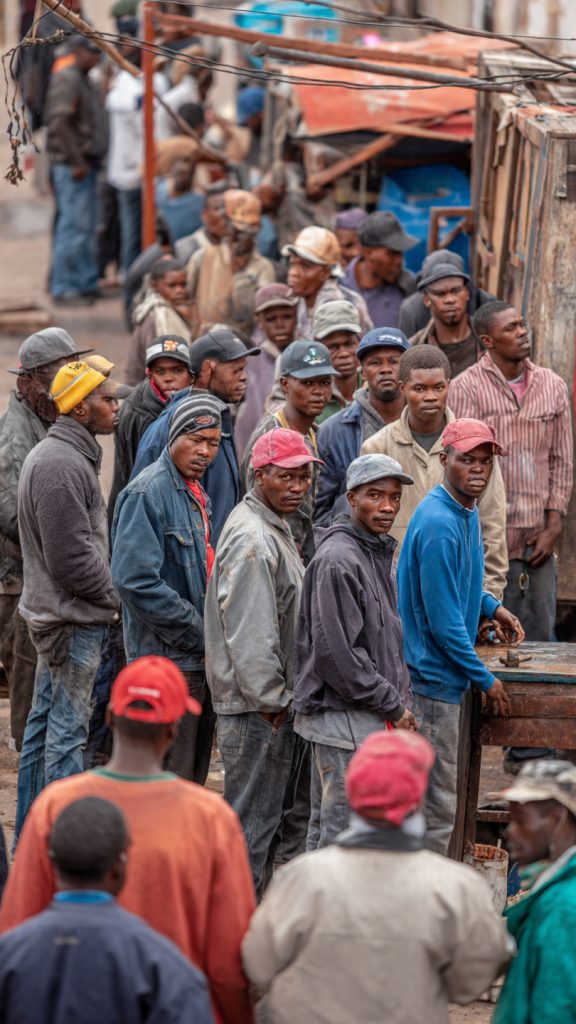
Employment Precarity and Migrant Health: How Unsafe Work, Low Wages, and Exploitation Drive Poor Health Outcomes in South African Cities
Introduction: Precarious Work, Rising Risks
When Musa*, a 29-year-old man from Malawi, arrived in Johannesburg, he took the first job he could find in an inner-city restaurant. The owner paid him below minimum wage, offered no protective gear, and required him to work 12-hour shifts without breaks. After months of exposure to smoke, repetitive lifting, and exhaustion, Musa developed chronic back pain and recurrent respiratory infections. Because he lacked medical aid and feared deportation, he avoided clinics until his symptoms became severe.
Musa’s story reflects the broader crisis facing migrants in South African cities. Employment precarity—defined by unstable contracts, low pay, hazardous work, and limited rights—directly harms migrant health. It also deepens structural vulnerabilities rooted in documentation barriers, discrimination, and weak labour law enforcement. With migrants filling essential roles in construction, hospitality, domestic work, security, retail, and transport, the consequences extend far beyond individual suffering. They affect urban health systems, workplace productivity, and public health.
This blog post explores how precarious employment shapes migrant health outcomes, why existing policies fall short, and what South Africa can do to protect all workers within its cities.
Understanding Employment Precarity in South African Cities
Defining Employment Precarity
Employment precarity combines several overlapping conditions:
-
Short-term or informal contracts
-
Irregular or unpredictable pay
-
Lack of written agreements
-
High risk of dismissal
-
Limited or no access to medical aid, sick leave, or compensation
-
Unsafe working conditions
Migrants—especially those in Johannesburg, Pretoria, Cape Town, Durban, and Gqeberha—experience these conditions more intensely due to documentation challenges and labour market discrimination.
Key Drivers of Migrant Employment Precarity
Several structural factors worsen precarity for migrants:
-
Limited recognition of foreign qualifications
-
Employer exploitation tied to fear of deportation
-
Informal recruitment networks
-
Weak labour inspections in informal sectors
-
Xenophobic attitudes in workplaces
Together, these drivers create a normalised pattern of abuse and exclusion.
How Employment Precarity Harms Migrant Health
1. Occupational Hazards Lead to Physical Illness and Injury
Migrants often work in the most dangerous jobs. These include:
-
construction
-
waste picking
-
security
-
informal manufacturing
-
domestic work
-
hospitality and food service
Without protective equipment, training, or safety protocols, they face a high risk of:
-
musculoskeletal injuries
-
respiratory conditions
-
burns and cuts
-
chemical exposure
-
accidents involving machinery
Case Example: Construction Work in Cape Town
In a 2023 civil society survey, more than 40% of migrant construction workers in Cape Town reported injuries on-site, yet less than 10% received compensation (Scalabrini Centre, 2023). Many feared reporting incidents due to their immigration status.
2. Lack of Health Insurance Blocks Access to Treatment
Most migrants rely on out-of-pocket payments. Medical aid uptake remains extremely low due to:
-
exclusion from workplace benefits
-
low wages
-
medical aid restrictions requiring formal employment
As a result, migrants delay seeking care for infections, injuries, and chronic diseases, which worsens long-term health outcomes.
Transition: The absence of financial protection creates cascading harm.
When migrants cannot afford treatment, they self-medicate, borrow money, or use overstretched public clinics only as a last resort.
3. Long Working Hours Trigger Chronic Stress and Mental Health Problems
Precarious jobs often come with unpredictable schedules and long hours. Migrants report:
-
constant anxiety about job security
-
fear of police arrest
-
stress due to employer abuse
-
emotional exhaustion
-
depression linked to economic hardship and isolation
A 2022 Johannesburg study found that 52% of migrant workers reported high psychological distress, compared to 32% of non-migrants (Wits School of Public Health, 2022).
4. Workplace Exploitation and Abuse Damage Wellbeing
Exploitation takes many forms:
-
withholding wages
-
confiscating passports
-
threatening dismissal
-
sexual harassment
-
verbal abuse and xenophobic slurs
Case Example: Domestic Workers in Durban
A 2021 NGO report found that migrant domestic workers in Durban faced:
-
14-hour shifts
-
no rest days
-
salaries below R2,000
-
constant xenophobic insults
-
sexual abuse by employers
These abuses cause trauma, anxiety, and long-term psychological harm.
5. Fear of Deportation Prevents Health-Seeking Behaviour
Migrants avoid hospitals when:
-
they lack permits
-
they fear reporting
-
they experience past discrimination
-
they distrust the system
Even though the National Health Act guarantees emergency care for everyone, migrants’ lived experiences tell a different story.
Policy Landscape: South African Laws and Their Gaps
Existing Labour Protections (in theory)
South African labour law applies to all workers, regardless of nationality. Key frameworks include:
-
Basic Conditions of Employment Act (BCEA)
-
Labour Relations Act (LRA)
-
Employment Equity Act (EEA)
-
Occupational Health and Safety Act (OHSA)
-
Unemployment Insurance Act (UIA)
-
Compensation for Occupational Injuries and Diseases Act (COIDA)
Where These Laws Fail Migrants (in practice)
1. Weak Enforcement
Labour inspectors rarely visit informal workplaces or small businesses. Migrants in these sectors remain invisible.
2. Exclusion from UIF and COIDA
Employers often refuse to register migrant workers, even when they qualify. This blocks access to benefits during injury or illness.
3. Documentation Barriers
Without valid permits, migrants cannot challenge employers, access UIF, or obtain formal contracts.
4. Policy Conflicts
Migration enforcement often overlaps with labour inspections. This creates fear among migrants and discourages reporting of abuses.
5. Limited Awareness
Both migrants and employers misunderstand migrants’ legal rights, allowing exploitation to flourish.
Empirical Evidence from South African Cities (2020–2025)
Recent studies highlight worrying patterns:
-
Johannesburg: Migrants in hospitality and retail reported higher exposure to hazards due to lack of training (IOM, 2023).
-
Cape Town: Undocumented workers were three times less likely to seek medical care after workplace injuries (UCT Migration Research Unit, 2022).
-
Durban: 60% of migrant domestic workers experienced verbal or physical abuse (KZN Refugee Council, 2021).
-
Pretoria: Migrant security guards worked longer shifts than South African citizens and reported higher stress levels (HSRC, 2024).
-
Gqeberha: Migrant waste pickers faced chronic respiratory illnesses linked to toxic exposure (Nelson Mandela University, 2023).
Stakeholder Perspectives
Migrant Workers
Migrants describe:
-
fear-driven silence
-
exploitation linked to legal precarity
-
employers ignoring safety measures
-
struggles balancing health and survival
Healthcare Providers
Clinicians report:
-
late presentations with advanced illness
-
lack of medical histories
-
communication challenges
-
ethical dilemmas involving undocumented patients
Policy Makers
Officials highlight:
-
high demand for labour in informal sectors
-
insufficient labour inspectors
-
political pressure in xenophobic climates
NGOs
NGOs emphasise:
-
rising exploitation
-
gaps in legal support
-
need for safe reporting systems
-
lack of government coordination
Case Studies
Case 1: Waste Pickers in Johannesburg
Fatima*, a 34-year-old mother from Burundi, sorts recyclable waste in Newtown. She works without gloves or masks. In 2024, she developed a severe skin infection after handling medical waste. When she visited a clinic, nurses questioned her documentation status and turned her away. Without treatment, her infection worsened, forcing her to stop working for several weeks.
Case 2: Restaurant Workers in Pretoria
A 2023 study found that migrants in fast-food outlets worked on average 70 hours per week. Employers paid below minimum wage and avoided registering them with UIF. Many suffered back injuries and chronic fatigue.
Case 3: Security Guards in Durban
Migrant security guards reported 16-hour shifts, no sick leave, and high rates of stress-induced hypertension. Many slept on-site to avoid losing shifts.
Innovative Solutions and Promising Practices
1. Migrant Worker Rights Clinics
NGOs in Cape Town and Johannesburg run legal clinics assisting workers in filing labour complaints. These clinics help migrants document abuse, negotiate unpaid wages, and access COIDA benefits.
2. Community Health Advocates
Peer educators in Hillbrow and Bellville support migrants by:
-
linking them to clinics
-
providing health education
-
addressing misinformation
-
connecting them with psychosocial support
3. Safe Reporting Mechanisms
Some municipalities pilot anonymous reporting platforms for labour violations. These systems reduce fear among undocumented workers.
4. Multi-Stakeholder Dialogues
Dialogues between unions, city officials, civil society, and migrant groups help build trust and improve workplace oversight.
Policy Recommendations
Short-Term (0–12 months)
-
Train labour inspectors to protect, not police, migrant workers.
-
Strengthen clinic guidelines to uphold non-discriminatory access.
-
Expand NGO-government partnerships for mobile legal clinics.
-
Disseminate multilingual rights education materials.
Medium-Term (1–3 years)
-
Develop a national migrant worker protection framework.
-
Increase workplace inspections in informal sectors.
-
Create a hotline for reporting workplace abuse without risking deportation.
-
Train employers on labour law compliance.
Long-Term (3–5 years)
-
Align labour, health, and immigration policies to reduce contradictions.
-
Introduce city-level migrant health strategies.
-
Strengthen regional cooperation to ensure portability of worker benefits across borders.
Conclusion: Protecting Migrant Workers Protects Public Health
Employment precarity is more than an economic issue; it is a public health crisis. Migrants sustain South Africa’s urban economies, yet they face unsafe work, low pay, abuse, and barriers to healthcare. Their deteriorating health reflects a system struggling to uphold dignity and rights.
By enforcing labour laws, expanding access to healthcare, and protecting migrants from exploitation, South Africa can build healthier cities and stronger workplaces. The choices made today will shape the future of migrant health—and by extension—public health in the country.
Sources (20)
(List includes peer-reviewed studies, NGO reports, government policy documents, and official statistics.)
-
IOM South Africa. (2023). Labour Migration and Urban Health Report.
-
Scalabrini Centre of Cape Town. (2023). Migrant Worker Vulnerability Study.
-
Wits School of Public Health. (2022). Migrant Mental Health Survey.
-
HSRC. (2024). Migrant Labour and Workplace Risk Analysis.
-
Nelson Mandela University. (2023). Waste Picker Health Assessment.
-
KZN Refugee Council. (2021). Domestic Worker Abuse Report.
-
UCT Migration Research Unit. (2022). Barriers to Health Access for Migrants.
-
Stats SA. (2023). Migrant Economic Participation Data.
-
Basic Conditions of Employment Act (BCEA).
-
Occupational Health and Safety Act (OHSA).
-
Compensation for Occupational Injuries and Diseases Act (COIDA).
-
National Health Act.
-
Department of Labour Annual Inspection Report (2024).
-
ILO (2022). Precarious Work and Occupational Health.
-
African Centre for Migration & Society (ACMS). (2023). Migrant Worker Precarity Report.
-
Médecins Sans Frontières (2021). Barriers to Care for Undocumented Migrants.
-
Amnesty International (2023). South Africa: Migrant Protection Report.
-
Lawyers for Human Rights (2024). Migrant Workplace Abuse Dossiers.
-
Johannesburg Migrant Health Forum (2023). Urban Health Gaps Report.
-
WHO (2022). Health of Migrant Workers in Urban Settings.
Recent Posts:
- How Does Overcrowded Housing in Informal Settlements Impact Migrant Health Outcomes?
- What Happens When Migrants with Chronic Diseases Can’t Access Affordable Medication in South Africa?
- How Can South Africa’s Healthcare System Better Support Migrants with HIV/AIDS and TB Co-Infections?
- Why Are Diabetes and Hypertension Rising Among African Migrants in South African Cities?
- What Are the Legal and Ethical Obligations for Vaccinating Undocumented Migrants in South Africa?