
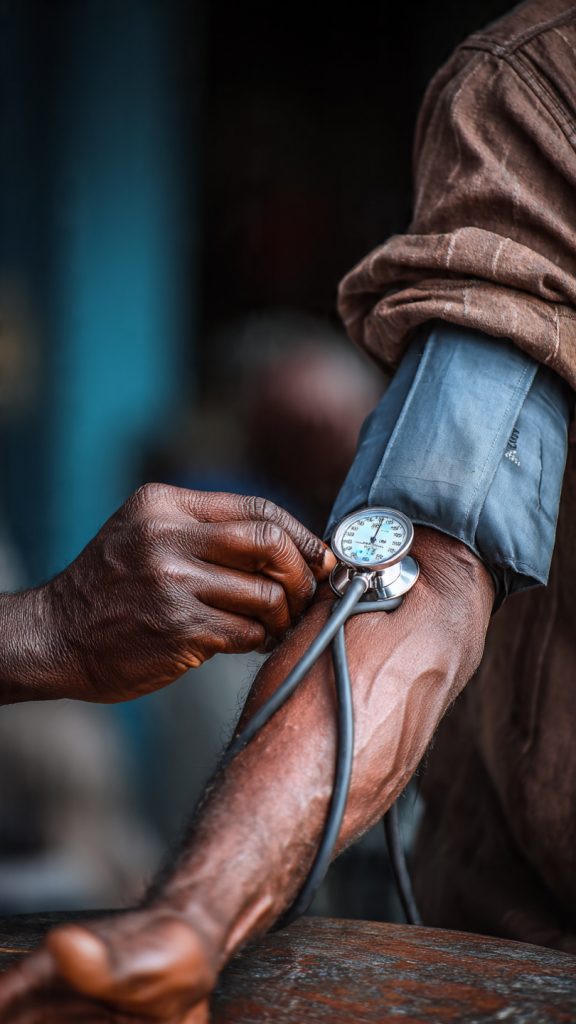
Health Risks Rising: Diabetes and Hypertension in African Migrants
A Compelling Start — Changing Lives, Growing Risks
When 32‑year-old “Aisha” (pseudonym) moved from a rural district in Zimbabwe to Johannesburg in 2022, she believed she was chasing promise: work, education for her children, a better life. Over three years she shifted from walking long distances and eating garden-fresh vegetables to long hours standing in a spaza shop, buying instant noodles and sugary drinks, and rarely exercising. In early 2025, Aisha was diagnosed with hypertension — a disease she had never worried about in the countryside.
Her experience is not unique. As urbanisation and migration reshape South Africa’s demography, chronic noncommunicable diseases (NCDs) — especially type‑2 diabetes and hypertension — are becoming more common among urban residents. For many migrants, the very opportunity that drew them to cities now carries hidden health costs.
Understanding the Problem: Trends, Transitions, and the Migrant Experience
NCDs Rise in an Urbanising South Africa
-
National-level data and local studies reveal a steady rise in NCDs. For example, among people living with HIV (PLHIV) in South Africa between 2005–2017, hypertension increased from 11.8% to 14.3%. PubMed+1
-
A 2022 screening of adults in informal settlements found alarmingly high rates of cardiometabolic risk: obesity, elevated blood pressure, and pre‑diabetes/diabetes — a clear signal of the growing burden among urban poor communities. diabetesjournal.co.za+1
-
Experts warn that informal‑settlement dwellers and disadvantaged urban groups face a “double burden”: persistent infectious diseases (e.g., HIV, TB) and rising NCDs. PMC+1
Thus, South Africa’s epidemiological transition — shifting from predominance of infectious diseases to increasing chronic illnesses — is well underway.
Migration, Urbanisation and Changing Lifestyles
Migration and urbanisation often bring changes that affect health in profound ways:
-
Moving to cities often means adopting more sedentary work, using transport instead of walking, and losing the physical labour and active lifestyles common in rural settings. PLOS+2SpringerLink+2
-
Dietary transition is common: migrants frequently shift from traditional diets (fresh, locally grown produce) to more processed foods, cheap fast food, high in salt and refined carbohydrates — driven by price, convenience, and limited time. UWCScholar+2ScienceDirect+2
-
Psychosocial stresses increase: migrants often face unstable housing (informal settlements or cramped rentals), limited social networks, precarious employment, and uncertainty about documentation — all of which contribute to chronic stress, a known risk factor for hypertension. PMC+2ResearchGate+2
-
Informal settlement living adds environmental pressures — overcrowding, poor infrastructure, limited access to healthy food, and inadequate services like water, sanitation — further undermining health resilience. ResearchGate+2UWCScholar+2
Hence, migration and urban living alter both energy balance (diet + activity) and stress, creating fertile ground for NCDs.
What the Evidence Says — Migrants, Morbidity, and Variation
Despite plausible pathways, empirical evidence on NCD burden among migrants in South Africa paints a complex picture.
Mixed but Worrying Findings
A large population-based survey across 508 wards in Gauteng Province (home to Johannesburg and Tshwane) found that both internal (from other SA provinces) and external migrants (born outside South Africa) actually reported lower odds of self-reported hypertension and diabetes than non-migrants. PMC+2PubMed+2
-
Specifically: external migrants had odds ratio (OR) ~ 0.60 for hypertension and ~ 0.53 for diabetes compared with non-migrants. PMC
-
The authors suggest a “healthy‑migrant effect”: healthier individuals are more likely to migrate. PMC+1
Yet — and critically — the same study documented substantial variation across wards, and effect modification by age, race, and socioeconomic status (SES). PMC+1
Meanwhile, more recent work focusing on migrant women living in urban settings finds elevated blood pressure associated with migration and urban residence. ResearchGate+1
Also, studies screening residents of informal settlements (many of whom are migrants or low‑income urban dwellers) detect high levels of metabolic risk factors — obesity, elevated blood pressure, and glucose dysregulation. PMC+2ResearchGate+2
Moreover, among people living with HIV, a 2023 meta-analysis showed a pooled hypertension prevalence of 25.5% and diabetes prevalence of 6.1% — underlining that as PLHIV live longer, they increasingly acquire NCDs, regardless of rural/urban origin. SpringerLink+1
Interpretation and Limits
In effect, while some older data suggested migrants in Gauteng had lower self-reported NCD burden, more recent and context‑sensitive studies (especially among women, informal settlement dwellers, and PLHIV) point to growing metabolic risk. Differences likely reflect heterogeneity among migrants (age, sex, origin, time since migration), socioeconomic conditions (employment, housing, access to care), and how / whether chronic diseases are diagnosed or self‑reported.
Self-report is a major limitation — many migrants, especially undocumented or uninsured, may lack access to screening and diagnosis. That suggests official lower prevalence among migrants may hide underdiagnosis.
Also, cross-sectional studies cannot capture how risk evolves over time: the “healthy migrant effect” may give way to “acculturation penalties” — i.e., deteriorating health after years of urban living.
Thus, the data point to marked uncertainty — but also to serious risk.
Why Migrants Are Particularly Vulnerable — Key Drivers
From epidemiological, social, and structural viewpoints, several factors converge to raise NCD risk among African migrants in South African cities:
-
Dietary transition and nutrition stress
-
Shift toward cheap, processed, high-salt/high-sugar foods due to cost, access, and convenience. UWCScholar+2ScienceDirect+2
-
Limited access to fresh produce, especially for those living in informal settlements or working long hours without stable income. ResearchGate+2PMC+2
-
Unhealthy dietary patterns cluster with other risk behaviours (e.g., smoking, alcohol) in stressed, marginalized populations. ScienceDirect+1
-
-
Reduced physical activity and sedentary work
-
Urban jobs tend to be more sedentary than rural livelihoods. PLOS+1
-
Informal‑settlement residents often lack safe spaces for recreational activity; overcrowding and poor infrastructure hamper exercise. ResearchGate+1
-
-
Psychosocial stress, social isolation, and precarious living
-
Migrants frequently experience unstable housing (shared rooms, informal settlements), insecure employment, and lack of social networks — all contributing to chronic stress, itself a risk factor for hypertension. ResearchGate+2PMC+2
-
Gender dynamics matter: several studies show migrant women are at especially high risk of elevated blood pressure after migration. ResearchGate+1
-
-
Barriers to health care and underdiagnosis
-
Migrants, especially undocumented or low-SES, may lack access to health services, routine screening, or continuity of care. Public health infrastructure often overlooks informal‑settlement populations. ResearchGate+2PMC+2
-
As a result, self-reported prevalence underestimates true burden; undiagnosed or uncontrolled NCDs may be widespread.
-
-
Intersecting vulnerabilities: HIV, obesity, age, gender, socioeconomic status
-
For migrants living with HIV, as ART extends life expectancy, risk of NCDs (diabetes, hypertension) increases. SpringerLink+1
-
Overweight and obesity — themselves rising among urban poor and informal‑settlement dwellers — amplify risk for hypertension and type‑2 diabetes. diabetesjournal.co.za+2PMC+2
-
The effect of migration on NCD risk is not uniform: age, gender, race/ethnicity, and socioeconomic status modify association. PMC+2PubMed+2
-
Policy Gaps and Barriers: What’s Failing Migrants
Despite growing evidence of NCD risk among migrants, South Africa’s current health and urban policies fall short in several ways:
-
Lack of routine surveillance for NCDs in migrant and informal‑settlement populations. Most national surveys miss undocumented migrants or those without stable addresses. This undercounts NCD burden and undermines resource allocation.
-
Fragmented care models: HIV, TB, and other communicable disease programmes remain siloed from NCD care. For migrants living with HIV or TB, integrated chronic care (including hypertension, diabetes) remains rare.
-
Limited access to healthy diets and safe spaces for physical activity in low-income urban areas and informal settlements. Urban planning and housing policies rarely prioritize nutritional needs or safe community infrastructure.
-
Inadequate health promotion and preventive services targeted at migrants. Language, cultural differences, lack of documentation, and unstable employment further hinder health education, screening, and follow-up.
-
Insufficient gender-sensitive and intersectional approaches. Migrants face varying vulnerabilities depending on gender, age, origin, legal status — but policies rarely acknowledge this heterogeneity.
Without targeted action, the rising tide of NCDs among migrants could deepen health inequities, worsen system burdens, and undermine public health gains.
Illustrative Cases (Anonymised Examples)
-
Case 1: “Joseph”, a 45‑year-old internal migrant from Eastern Cape to Johannesburg. Over five years, his job changed from farm labour (high physical activity) to a night-shift security guard (sedentary, irregular meals). He rarely ate fruit/vegetables; consumed cheap processed food at night; gained weight; developed hypertension and high fasting blood sugar. Because he lacked medical aid and documentation, he only accessed care when a friend referred him to a free clinic — by then his hypertension was poorly controlled.
-
Case 2: “Mary”, a 29‑year-old female migrant from Limpopo working in a domestic job in Tshwane. She lives in a shared, cramped room in an informal settlement. Long hours at work, combined with social isolation, lead her to rely on fast food and sugary drinks. Stress from uncertain contract status and lack of social support contributed to raised blood pressure detected at a community screening — but she received no follow-up.
These examples echo common patterns documented in qualitative studies of migrant women in urban South Africa. ResearchGate+1
Innovative and Promising Approaches
Some emerging practices and proposals offer hope for countering this rising NCD risk among migrants:
-
Integrated HIV–NCD care models: Given growing comorbidity (e.g., HIV with hypertension/diabetes), integrating chronic disease management into existing HIV clinics can improve identification and treatment of NCDs among migrants and marginalised populations. Evidence supports this especially among aging PLHIV in South Africa. SpringerLink+1
-
Community-based screening and outreach in informal settlements: Research shows substantial undiagnosed cardiometabolic risk among informal‑settlement dwellers — screening campaigns, mobile clinics, and community health worker programmes can help reach migrants who don’t access formal health facilities. diabetesjournal.co.za+2PMC+2
-
Urban planning & housing upgrades that embed health promotion: Upgrading informal settlements to improve housing quality, reduce overcrowding, and provide safe spaces (green spaces, community centres) can support healthier lifestyles. Reviews recommend a “health-in-all‑policies” approach for rapidly urbanising African cities. ResearchGate+1
-
Culturally sensitive health education & lifestyle interventions: Tailoring interventions to migrants’ backgrounds (language, dietary habits, gender roles) may improve acceptance and effectiveness. Gender-sensitive models are especially important, given higher risk among migrant women. ResearchGate+1
Recommendations: What Stakeholders Can Do — Now
| Stakeholder | Action | Timeline (short‑ to medium‑term) |
|---|---|---|
| National & Provincial Health Departments | Expand NCD surveillance to include migrants, informal‑settlement dwellers, undocumented persons. Fund regular community-based screening campaigns. | 0–2 years |
| Municipal Authorities & Urban Planning Departments | Prioritise upgrading of informal settlements (housing quality, green spaces, safe walkways). Integrate “healthy cities” principles into urban development plans. | 1–4 years |
| Health Service Providers & NGOs | Develop integrated care models combining HIV, TB, and NCD services. Use community health workers to reach migrant and underserved populations. | 0–3 years |
| Community Organisations & Migrant Associations | Conduct peer-led health education on healthy diets, physical activity, stress management. Advocate for inclusive health services and documentation‑insensitive access. | 0–2 years |
| Researchers & Academics | Prioritise longitudinal studies on migrants’ cardiometabolic health, disaggregated by age, sex, nationality, documentation status. Evaluate interventions in informal settings. | 0–5 years |
Conclusion: A Call to Action
As South Africa continues to urbanise, and as internal and external migration reshapes its cities — from Johannesburg to Pretoria, from Cape Town to eThekwini — the health challenges evolve. The rising burden of diabetes and hypertension among migrant and urban poor communities reflects not just biological risk, but structural inequality: poor housing, limited access to healthy food, precarious livelihoods, and weak health systems.
Policymakers, urban planners, health providers, NGOs, and community leaders must act now. They must adopt inclusive, integrated, and context-sensitive approaches — bridging communicable and noncommunicable disease care, embedding health in urban development, and prioritising equity for migrants.
Without bold action, the promise of the city may come at the cost of its people’s health. But with coordinated, well‑targeted interventions, we have an opportunity to shape cities that uplift wellbeing — for migrants and long-term residents alike.
Research Gaps and Limitations
-
Most evidence remains cross-sectional and often relies on self-reported diagnoses, which underestimates undiagnosed NCD burden.
-
There is limited disaggregated data on migrants by country of origin, documentation status, gender, and time since migration.
-
Few longitudinal studies examine how cardiometabolic risk evolves over time among migrants.
-
There is scant research on the effectiveness of integrated NCD/HIV care or urban planning interventions in reducing disease burden in migrant-dense, informal urban settings.