
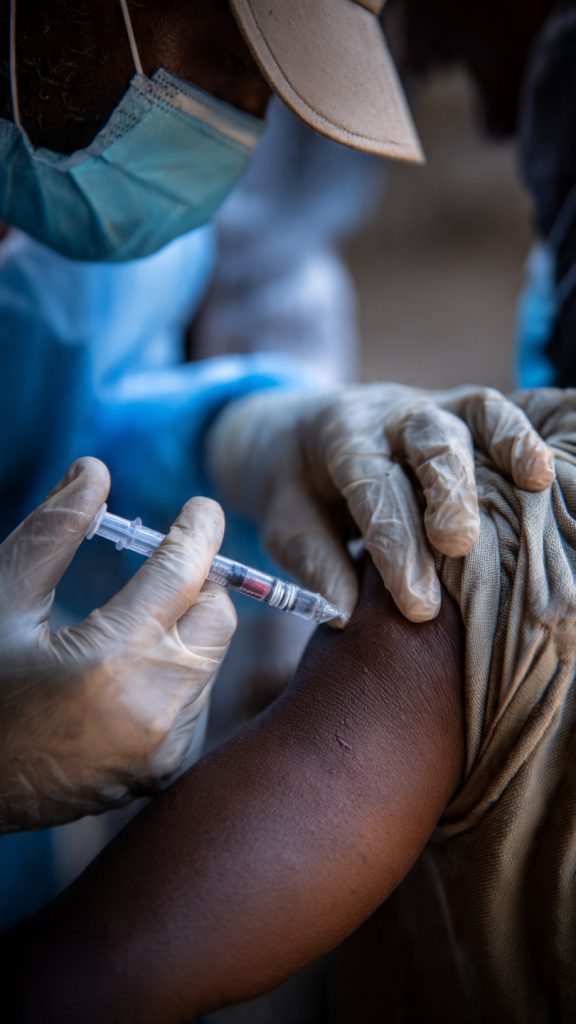
Legal and Ethical Obligations for Vaccinating Undocumented Migrants in South Africa: Human Rights Frameworks, Public Health Priorities, and Policy Gaps
A 32-year-old Zimbabwean woman, eight months pregnant, stands outside Hillbrow Clinic in Johannesburg. She carries her expired asylum seeker permit—rendered useless by bureaucratic delays at the Department of Home Affairs. Inside, a nurse turns her away: “Go back and give birth in your own country.”
This scene, documented in multiple clinics across Gauteng in 2023, reveals a stark reality. South Africa’s constitutional promises collide with institutional discrimination, leaving millions of undocumented migrants vulnerable to vaccine-preventable diseases. As a result, the country faces not just a human rights crisis but also a significant public health threat that undermines disease control efforts for all residents.
The Constitutional Promise: Legal Frameworks Protecting Migrant Health Rights
South Africa’s Progressive Legal Architecture
South Africa’s Constitution establishes unequivocal healthcare rights. Section 27(1) states clearly: “Everyone has the right to have access to healthcare services, including reproductive healthcare.” The term “everyone” carries deliberate legal weight. Constitutional Court jurisprudence confirms this includes all persons within South Africa’s borders, regardless of nationality or documentation status.
Furthermore, Section 27(3) provides absolute protection: “No one may be refused emergency medical treatment.” This provision contains no qualifiers based on citizenship or immigration status. The South African Human Rights Commission (SAHRC) reinforced this in July 2025, stating that denying healthcare based on nationality or documentation status is “unethical, unlawful, and inconsistent with South Africa’s obligations under both domestic and international human rights law.”
The National Health Act: Translating Rights into Services
The National Health Act (No. 61 of 2003) operationalizes these constitutional rights. Section 4(3) mandates free healthcare services for specific vulnerable populations:
-
All pregnant and lactating women
-
All children under six
-
Anyone requiring emergency medical treatment
Importantly, none of these stipulations depend on immigration status.
International Human Rights Commitments
South Africa is a signatory to several agreements reinforcing migrant healthcare rights, including:
-
ICESCR
-
CERD
-
Convention on the Rights of the Child
-
Refugees Act (1998)
During the COVID-19 pandemic in February 2021, President Cyril Ramaphosa confirmed that vaccination would not discriminate based on nationality or residence status.
The Implementation Gap: When Policy Meets Practice
The Gauteng Health Crisis of 2020–2023
During the COVID-19 pandemic, Gauteng’s Department of Health introduced guidelines that reclassified most migrants as full-paying patients, contradicting national legislation. These actions resulted in avoidable suffering.
Illustrative Case Examples
-
Pregnant Woman Denied Care
A diabetic pregnant woman from the DRC was asked to pay R5,000 upfront at Charlotte Maxeke Hospital. -
Loss of Life Due to Denial
A two-year-old boy died after swallowing poison because a hospital denied treatment due to lack of documentation. -
Clinic-Level Discrimination
A Zimbabwean woman, eight months pregnant, was turned away from both Jeppe and Hillbrow Clinics and told to “go back home.”
The Legal Challenge and Court Victory
In April 2023, the Gauteng High Court declared the 2020 provincial policy unlawful. The judgment reaffirmed:
-
All pregnant women and children under six have the right to free healthcare.
-
Provincial policies cannot contradict national law.
-
Facilities must display posters clarifying these rights.
Persistent Non-Compliance
Despite legal clarity, discrimination continued through 2023 and into 2025. Cases from civil society revealed ongoing:
-
Forced payments
-
Detention of mothers and newborns
-
Open xenophobic harassment
Vaccination Access: Where Rights and Public Health Intersect
Constitutional and Legislative Basis for Vaccination
Vaccination falls squarely within healthcare rights under Section 27. The EPI-SA’s principle—”reach and protect every child”—must apply to every child in South Africa, regardless of documentation.
Barriers During COVID-19
The Electronic Vaccination Data System (EVDS) required ID numbers or valid permits, effectively excluding undocumented migrants. Many migrants consequently felt excluded, as confirmed by a 2024 BMC Public Health study documenting:
-
Perceptions of discrimination
-
Prevalent myths and misinformation
-
Hesitancy fuelled by mistrust
-
Large sections of migrant populations left unvaccinated
Public Health Imperatives
Vaccinating undocumented migrants is essential because:
1. Preventing Disease Outbreaks
Outbreaks in 2023—including measles, diphtheria, and cholera—demonstrate that excluding any group undermines disease control.
2. Cost-Effectiveness
Treating outbreaks is far more expensive than preventive vaccination.
3. Health System Sustainability
Exclusion leads to avoidable emergencies, overwhelming hospitals unnecessarily.
Geographic Disparities: Unequal Realities Across South Africa
Johannesburg: The Epicenter
Reports from Hillbrow, Jeppe, and Charlotte Maxeke document systemic denial of care for migrants. Migrant men study data from 2024 showed highly dispersed living locations, making targeted vaccination difficult.
Tshwane: Expired Documentation and Access Barriers
Even after MSF facilitated registrations, hospitals demanded R10,000–R30,000 upfront for childbirth.
Cape Town and Border Towns: Similar Patterns, Less Documentation
Migrant exclusion occurs, though with fewer documented cases. Rural migrants face stronger xenophobia and weaker healthcare access.
Intersectional Vulnerabilities: Who Is Most Affected?
Pregnant Women
These women face combined medical, financial, and documentation vulnerabilities. Exclusion undermines maternal mortality progress.
Children
Children born to undocumented migrants face:
-
Disrupted vaccination
-
Risk of statelessness
-
Exclusion from school vaccination programs
Migrants Facing GBV
Fear of deportation deters reporting abuse or seeking post-violence care.
Older Migrants
Many worked decades yet cannot access preventive care due to documentation failure.
Stakeholder Perspectives: What the System Looks Like from the Ground
Healthcare Workers
Studies show clinicians often apply “medical xenophobia” because of confusing directives—not always individual prejudice.
Migrants Themselves
Interviews reveal:
-
Fear of seeking care
-
Discrimination
-
Severe financial constraints
Civil Society
SECTION27, Lawyers for Human Rights, MSF, and others intervene—but their reach remains limited.
Government
Statements support migrants, but actual implementation remains inconsistent.
Policy Gaps and Systemic Failures
The Documentation Trap
Home Affairs backlogs, corruption, and failed digital systems prevent migrants from maintaining valid permits.
Migration-Invisibility in Health Systems
National strategies rarely mention migrant health, resulting in large vaccination gaps.
Weak Monitoring and Accountability
There is inadequate data collection, complaint handling, and consequences for unlawful denials.
The Resource Burden Myth
Migrants comprise only about 6.5% of the population. No evidence shows they overwhelm health services. Underfunding—not migrant use—drives shortages.
Innovative Solutions and Promising Best Practices
Community-Based Vaccination Approaches
Mobile units, culturally competent community health workers, and peer educators overcome fear and logistical barriers.
Removing Documentation Barriers
Acceptance of expired permits and clear protection against deportation reduce fear-based exclusion.
Addressing Vaccine Hesitancy
Trusted community leaders and multilingual campaigns increase uptake.
Cross-Border Health Models
The SADC HIV/TB continuity model could extend to routine vaccination.
International Learning: Uganda’s Example
Inclusive refugee health policies improve outcomes and reduce transmission.
Recommendations for Action
National Government
Immediate (0–3 months):
-
Clarify that vaccination is permitted regardless of documentation
-
Launch multilingual rights awareness campaigns
-
Enable vaccination without ID requirements
Short Term (3–12 months):
-
Train all facility staff
-
Audit Gauteng and other provinces
-
Strengthen complaint pathways
Medium Term (1–3 years):
-
Integrate migrant health into national disease strategies
-
Expand regional continuity initiatives
-
Reform Home Affairs to reduce administrative barriers
Provincial Departments
-
Publicize rights posters in all facilities
-
Create compliance monitoring systems
-
Ensure disciplinary accountability
Civil Society Actors
-
Intensify community education
-
Assist in complaint reporting
-
Partner in mobile vaccination delivery
Healthcare Facilities
-
Implement migrant-friendly training
-
Stop unlawful payment demands
-
Deliver services based strictly on law
Conclusion
South Africa’s constitutional framework is clear: every person within its borders has the right to healthcare, including vaccination. When migrants are excluded from vaccination programs, the consequences ripple across society—fueling disease outbreaks, increasing healthcare costs, and undermining public health objectives.
Bridging the gap between law and practice requires political will, clear policy directives, accountability structures, and proactive community-based strategies. Ultimately, inclusive vaccination policies are not acts of charity; they are constitutional obligations, human rights commitments, and public health necessities.
Recent Posts:
- How Does Incomplete Vaccination Coverage Among Cross-Border Migrants Threaten Disease Outbreaks in South African Communities?
- Are Migrant Children in South Africa Falling Through the Cracks of National Immunization Programs?
- What Are the Ethical and Policy Implications of Excluding Non-Citizens from Food Security Interventions in South Africa?
- How Do Social Networks and Community Organizations Mediate Food Access and Health Outcomes for African Migrants?
- What Is the Impact of Climate Change and Food System Disruptions on African Migrant Livelihoods and Food Security in South Africa?