
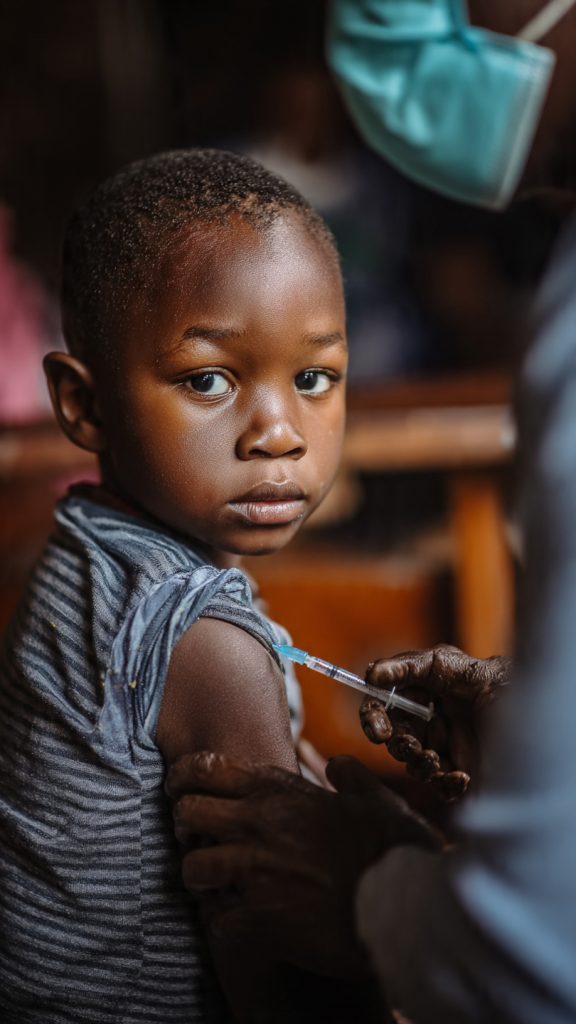
Incomplete Vaccination Among Migrants and Disease Risks in South Africa
Opening — a warning from 2025
In 2025, National Institute for Communicable Diseases (NICD) data reported over 1,900 confirmed measles cases in South Africa by November, with the majority concentrated in urban provinces such as Gauteng. NICD+2IOL+2 Meanwhile, ongoing cross‑border migration — both regional and international — continues to bring newcomers from countries with different immunization histories into densely populated townships and informal settlements across metropolitan areas such as Johannesburg, Tshwane and Ekurhuleni.
In such settings, incomplete vaccination coverage — especially among migrants whose immunization status is unknown or undocumented — threatens to reverse decades of public health progress. This post examines how gaps in immunization among cross‑border migrants could fuel outbreaks of measles, polio or exacerbate transmission of infectious diseases such as Tuberculosis (TB), with a particular focus on urban settlements in South Africa.
Background: Vaccination coverage and public health in South Africa
-
The South African routine immunization schedule, managed under the Expanded Programme on Immunisation (EPI), includes vaccines for measles, polio, and other vaccine‑preventable diseases. WHO | Regional Office for Africa+1
-
However, the target for herd immunity — generally ≥ 95% coverage for the first and second dose of the measles‑containing vaccine (MCV1 & MCV2) — remains unmet. In 2021, national coverage was estimated at 87% (MCV1) and 82% (MCV2), rising modestly to 86% for both in 2022 — still below the threshold required to prevent sustained measles transmission. World Health Organization+1
-
The decline in routine immunization during and after the COVID‑19 pandemic has worsened the problem. In response to resurging measles, the government and World Health Organization South Africa conducted a mass measles vaccination campaign in 2023 targeting children aged 6 months to 15 years. WHO | Regional Office for Africa+1
-
On polio, although South Africa and the broader African Region were certified wild‑polio free in 2020, regional risks persist. Environmental surveillance remains critical given circulating vaccine‑derived poliovirus (cVDPV) detected in surrounding countries. WHO | Regional Office for Africa+2NICD+2
These gaps point to a system that remains vulnerable — especially in areas with high-density living, population movement, and inadequate health infrastructure.
Why cross‑border migration matters for vaccination gaps
Migrants often have lower or unknown immunization coverage
Evidence from global research shows that migrant children tend to have lower vaccination completion rates than host populations. A meta‑analysis in the Middle East and North Africa found only 36% of migrant children was fully vaccinated according to national schedules; measles‑containing vaccine (MCV) drop‑out rates were substantial. PMC
Although similar data remain limited for South Africa, qualitative and quantitative studies highlight that non‑South African migrants in urban settings face structural barriers to healthcare access: legal or documentation issues, fear of deportation, low income, absence of medical insurance, and lack of stable housing. MDPI+1 Such barriers likely affect uptake of routine childhood immunizations, catch-up campaigns, or adult vaccination services.
Mobility and internal migration complicate surveillance and continuity of care
Even for people diagnosed with TB — not strictly vaccine‑preventable but deeply relevant to migrant health — internal migration undermines care continuity. A recent national study linking laboratory data from the National Health Laboratory Service (NHLS) with migration flows found that 16% of individuals with laboratory‑confirmed TB had clinic visits in more than one municipality. Nature+1
These shifts undermine effective disease monitoring, contact tracing, post‑treatment follow‑up, and completion of therapy — thus sustaining transmission risks. For vaccine‑preventable diseases, similar patterns of movement make it harder to track immunization status, deliver catch‑up doses, and ensure adherence.
Urban settlements amplify risk
Most cross‑border or internal migrants settle in dense urban or peri‑urban areas — informal settlements, townships, shared housing in inner‑city zones. In places like Hillbrow, Alexandra, parts of Soweto in Johannesburg, overcrowding, poor ventilation and limited access to health services create conditions favourable for disease spread — measles, polio, TB alike. MDPI+1
Frequent contact, mixed age groups, mobility — all exacerbate the risk. When under‑immunized or susceptible individuals cluster, even a few introductions (e.g., via migrant children or adults) can spark outbreaks.
Recent evidence of resurgence — measles & polio threats
Measles comeback since 2022
-
The 2022–2023 measles outbreaks affected eight of nine provinces. World Health Organization+1
-
By late 2025, Ghana statistics show a worrying trend: over 1,237 confirmed measles cases by early October. NICD+1
-
Many cases occurred in children under 14, often with unknown vaccination status. For example, in the 2022–2023 outbreaks, 79.1% of confirmed cases had unknown vaccination status. World Health Organization
-
The national measles campaign in 2023 — open to children up to 15 years — was vital. Still, achieving 95% coverage remains elusive. WHO | Regional Office for Africa+1
These outbreaks illustrate that sub‑optimal coverage and population mobility — including migration — can dismantle herd immunity, even in countries with long-running vaccination programmes.
Polio remains a latent threat
-
While South Africa detected no polioviruses of programmatic importance in recent surveillance, the region remains vulnerable. NICD+1
-
The 2024 report from the International Health Regulations Emergency Committee for polio notes that population displacement and high concentrations of under‑immunized children drive risk for cVDPV outbreaks. World Health Organization+1
-
Given regular cross‑border movement across Southern Africa — including migrants from countries with active cVDPV circulation — even a single imported case could trigger local spread in under‑immunized clusters.
Thus, while wild polio remains at bay, the risk of resurgence via vaccine‑derived or imported poliovirus persists — especially among migrant communities.
Intersectional vulnerabilities: who is most at risk?
Incomplete immunization among migrants does not affect all equally. Several intersecting factors worsen vulnerability:
-
Documentation status: Undocumented migrants may avoid public clinics due to fear of detention or deportation. Studies in Johannesburg found many non‑South African migrants lack medical aid, rely on public services, yet face legal or social barriers. MDPI
-
Socioeconomic status: Low income, unemployment, and crowded, informal housing—common among migrant and refugee populations—limit ability to travel to clinics or stay for multiple follow-up visits. MDPI+1
-
Age and family structure: Migrant children — often in large households — may miss routine immunizations. Adults may lack awareness or access to catch-up vaccination, especially in the absence of targeted programmes.
-
Mobility and transience: Frequent moving between municipalities or across borders disrupts vaccination schedules, follow-up, and surveillance, leading to unknown immunization status. Nature+1
-
Gender: Some evidence suggests younger women (under 20) in migrant TB cases had higher migration rates — implying potential gendered patterns in health service disruption. Nature
Combined, these intersecting inequalities foster pockets of susceptibility — precisely where outbreaks can ignite.
Illustrative (anonymized) case studies
-
“Amina,” a 3‑year-old child in Alexandra Township, Johannesburg
Amina was born in Zimbabwe and moved to Johannesburg with her mother two years ago. The mother lacks South African documentation, works informal shifts, and cannot afford private healthcare. Amina missed routine immunization appointments and — because of frequent moves within informal housing — never received the second measles dose (MCV2). In 2023’s national measles campaign, her mother did not receive notices; as a result, Amina remains unvaccinated. This gap placed her at risk in a community where multiple households share cramped rooms — a potential trigger for outbreak clusters. -
“Samuel,” a 28‑year-old male migrant from Mozambique diagnosed with TB
Samuel began TB treatment in his home province, but migrated to Gauteng in search of work. He registered at a public clinic in Johannesburg but dropped out due to unstable employment and lack of transport fare. His treatment lapsed for months, increasing risk of relapse, drug resistance, and onward TB transmission — possibly including drug-resistant strains — in crowded rental housing with other migrants. This mirrors findings that internal migration among diagnosed TB patients correlates with rising TB incidence in destination municipalities. Nature+1 -
Mixed‑age migrant family in a township near Tshwane
A family of five from Mozambique — two parents, three children — moved to a dormitory-style accommodation in a peri‑urban township. The two younger children missed scheduled polio and measles booster vaccinations. With polio environmental surveillance in the region and frequent cross‑border traffic, they remain unprotected. Their crowded living situation also raises the risk for rapid transmission if poliovirus (wild or vaccine‑derived) is introduced.
These examples capture how migration, poverty, housing, documentation and health system gaps intersect to undermine immunization and disease control.
Policy Gaps — where South Africa’s system falls short
1. Insufficient targeting of migrants in immunization programmes
The national EPI and periodic catch-up campaigns do not systematically identify or target migrant children and adults. As a result, many remain unvaccinated or under-immunized — especially if documentation is lacking or last known location lies outside their origin country’s health system.
2. Weak surveillance in migrant-dense areas
Current disease surveillance (measles, polio, TB) relies on health‑seeking behaviour, lab confirmation, and follow-up — systems that assume stability and registration with local clinics. Frequent migration, irregular housing, and lack of formal registration disrupt this chain. The challenge is especially acute for environmental polio surveillance, where migrant clusters may escape detection between sampling rounds.
3. Lack of continuity of care for mobile patients
As shown by TB research, cross‑municipality movement undermines treatment continuity and increases disease spread. Nature+1 For vaccine-preventable diseases, similar mobility disrupts catch-up vaccination, revaccination, and herd immunity maintenance.
4. Gaps in data and research on migrant immunization
There is little peer-reviewed data on immunization coverage among cross-border migrants in South Africa — a blind spot that undermines evidence-based planning. Most research focuses on TB or HIV in migrants; immunization studies remain rare.
5. Structural and socio‑legal barriers to access
Documentation status, fear of legal consequences, lack of information, and socioeconomic constraints deter migrants from accessing public health services — especially preventive ones such as vaccination.
Why this matters now — the confluence of epidemiology, migration, and urban inequality
-
The 2025 spike in measles cases across urban provinces shows that even a few lapses in coverage can trigger widespread outbreaks. NICD+2NICD+2
-
Regional polio risk remains non-trivial. The regional polio emergency committee warns that displacement and under-immunized children, especially among migrant or displaced populations, drive cVDPV outbreak risk. World Health Organization+1
-
High internal mobility, especially among younger adults (20–39 years) and in crowded urban settings, arms infectious agents — measles, polio, TB — with potent transmission networks. Nature+2PMC+2
-
Intersectional vulnerabilities (gender, age, documentation status, poverty) cluster among migrants, compounding risk beyond what standard epidemiological models capture.
In short: South Africa may remain formally immunized — but pockets of vulnerability, especially among migrants, can fuel outbreaks that undermine national control efforts.
Innovative and promising practice — what works elsewhere or already within SA
-
The 2023 national measles vaccination campaign — led by the National Department of Health (NDoH) with support from WHO South Africa — showed that catch-up campaigns covering broad age ranges (6 months to 15 years) can help close immunity gaps. WHO | Regional Office for Africa+1
-
Environmental surveillance and wastewater poliovirus monitoring — as done by the reference polio laboratory in South Africa — remain critical to detect importations early and respond rapidly. NICD+1
-
Recent epidemiological modelling in South Africa underscores the link between internal migration and TB incidence increases, offering a data‑driven precedent for integrating migration metrics into disease surveillance and programme planning. Nature+1
-
Community-based and NGO‑led outreach programmes targeting migrants and undocumented populations — especially in urban settlements — have improved trust and access to health services (though documentation remains limited: more evaluation needed).
These examples suggest that with political will and targeted strategies, it is possible to reduce vulnerability among migrants and strengthen disease control.
Actionable Recommendations (2026–2028)
| Stakeholder | Action | Timeline |
|---|---|---|
| National & Provincial Health Authorities (NDoH, Provincial DoHs) | Integrate migrant-sensitive strategies into EPI and catch-up campaigns: map migrant‑dense areas, extend outreach to informal settlements, and include undocumented migrants. | Plan in 2026; implement in 2027–2028 |
| Expand environmental surveillance for polio and strengthen measles/rubella surveillance in urban settlements with high migrant influx. | Immediately (2025), then continuous | |
| Include migration metrics (cross-municipality, cross-border) in national disease surveillance and immunization coverage reporting. | Revise data systems 2026; pilot 2027 | |
| Local Governments & Municipalities (e.g. Johannesburg metro, Tshwane, Ekurhuleni) | Collaborate with community leaders, NGOs, migrant associations to run targeted “catch‑up vaccination days” in migrant‑dense neighbourhoods. | Start pilot in 2026; biannual thereafter |
| Provide mobile clinics to improve access in informal settlements, especially for children and working adults. | 2027–2028 | |
| NGOs, Community-based Organisations, Migrant Networks | Conduct awareness campaigns about the importance of vaccination; offer support to undocumented migrants to access public health services without fear. | 2026 onward |
| Researchers & Academics | Conduct mixed-methods studies on immunization coverage among cross-border and undocumented migrants in South Africa; track barriers to access and propose context-sensitive interventions. | Funding calls in 2026; studies 2027–2028 |
| Donors & International Partners (WHO, UNICEF, Gavi, etc.) | Provide technical and financial support for catch-up campaigns, mobile clinics, and surveillance expansion — prioritizing migrant and under-immunized populations. | 2026–2029 funding cycles |
Conclusion & Call to Action
Incomplete vaccination coverage among cross‑border migrants — compounded by internal mobility, legal precarity, poverty and crowded urban living — creates fault lines in public health protection across South Africa.
If we fail to proactively address these gaps, we risk more frequent and severe outbreaks of measles, potential polio resurgence, sustained TB transmission and emergence of drug-resistant TB clusters.
Policymakers must recognise migration not as a peripheral issue, but as central to immunization strategy and disease control. Provincial and local health authorities — in collaboration with NGOs, migrant networks and international partners — need to adopt migrant‑sensitive immunization, surveillance and outreach policies.
Researchers must also fill existing evidence gaps on immunization coverage among migrants, while civil society must mobilise to support equitable access.
Ultimately, protecting public health in South Africa — particularly in its dense urban centres — requires equity, inclusion, and data‑driven governance. Lives, children’s futures, and the health system itself depend on it.
Limitations & Research Gaps
-
There is no comprehensive national data quantifying immunization coverage specifically among cross‑border or undocumented migrants in South Africa.
-
Existing research tends to focus on TB or HIV among migrants; immunization coverage remains understudied.
-
The effects of migration on non‑vaccine‑preventable diseases (e.g., TB) are better studied than those for measles or polio; more work is needed to model how migrant-linked immunity gaps translate into outbreak risk.
-
Implementation of migrant‑sensitive programmes may face political, social and resource barriers — these must be studied and addressed.
Addressing these gaps requires targeted funding, political commitment, and engagement with migrant communities as partners, not just as recipients
Recent Posts:
- Are Migrant Children in South Africa Falling Through the Cracks of National Immunization Programs?
- What Are the Ethical and Policy Implications of Excluding Non-Citizens from Food Security Interventions in South Africa?
- How Do Social Networks and Community Organizations Mediate Food Access and Health Outcomes for African Migrants?
- What Is the Impact of Climate Change and Food System Disruptions on African Migrant Livelihoods and Food Security in South Africa?
- How Effective Are Current South African Food Assistance Programs in Reaching and Supporting African Migrant Communities?