
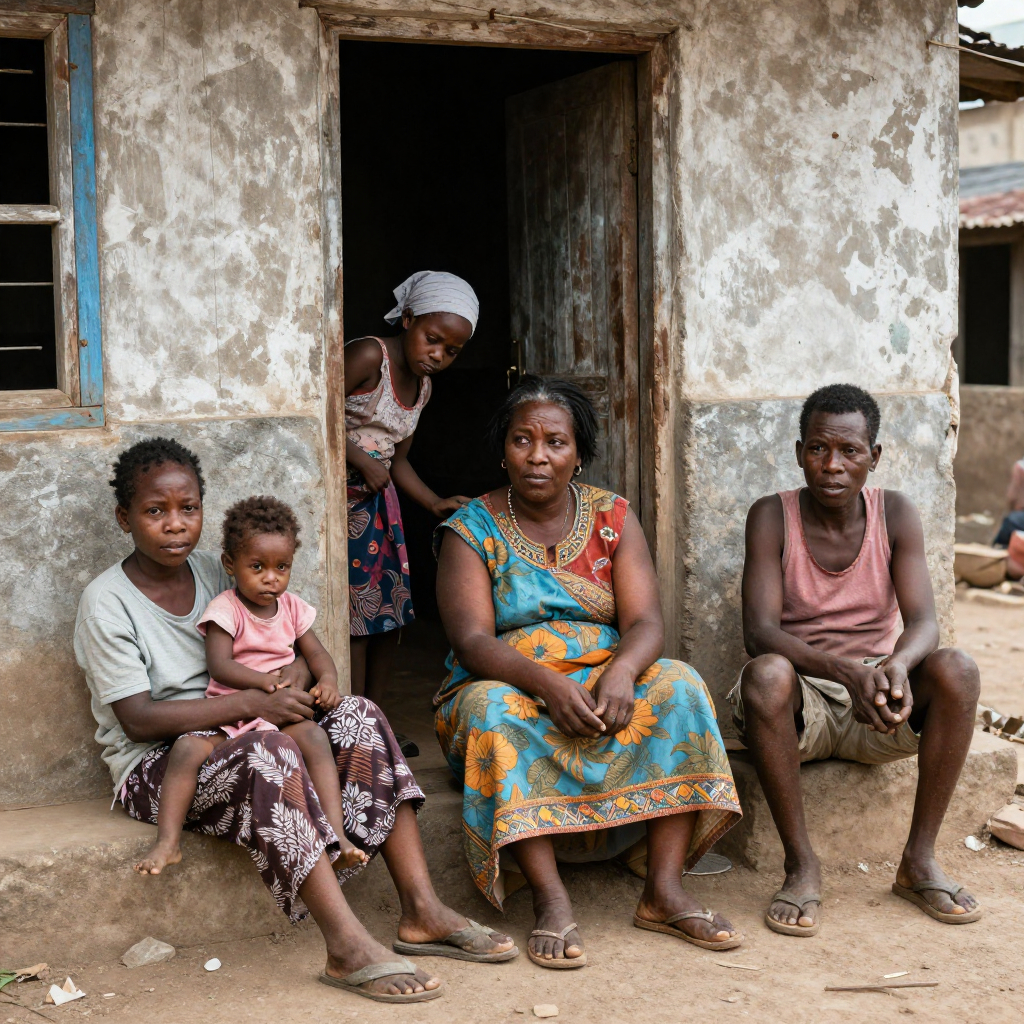
How Overcrowded Housing in Informal Settlements Impacts Migrant Health Outcomes in South Africa
Infectious Disease Transmission • Mental Health • Maternal & Child Health
1. Introduction: When a Home Becomes a Health Risk
In March 2024, “Amina,” a 28-year-old Somali woman living in Cape Town’s Philippi settlement, shared a simple worry: “At night we sleep eight people in one room. When one child coughs, everyone gets sick.” Her concern mirrors the daily reality of thousands of African migrants living in overcrowded informal settlements across South Africa.
According to Statistics South Africa’s 2023 General Household Survey, more than 3.2 million people live in informal dwellings nationwide, many of them cross-border migrants from Zimbabwe, Mozambique, Somalia, Ethiopia, and Malawi. In cities such as Johannesburg, Cape Town, Durban, and Gqeberha, overcrowding remains common, with some households reaching four to six people per room, far above international health standards.
Overcrowding intensifies health risks. It worsens infectious disease transmission, increases stress and anxiety, and disrupts the health of pregnant women and young children. Migrants face even higher vulnerabilities due to limited access to services, discrimination, unstable income, and fear of deportation.
This post examines how overcrowded housing shapes migrant health outcomes and what policymakers, practitioners, and community actors can do to change this landscape. We draw on recent evidence (2020–2025), case studies, SA policy analysis, and multi-stakeholder perspectives to present practical, actionable solutions.
2. Understanding Overcrowding in Informal Settlements
2.1 Defining Overcrowding
Overcrowding occurs when the number of people in a dwelling exceeds space and ventilation recommended for safe living. WHO standards recommend a minimum of 3.5 m² per person. Many South African informal dwellings provide only 1–2 m² per person, especially in Gauteng and Western Cape migrant communities.
2.2 Why Migrants Live in Overcrowded Areas
Several factors drive migrants into overcrowded settlements:
-
Unaffordable formal housing in Johannesburg, Cape Town, and Durban
-
Xenophobia, which reduces rental options
-
Irregular documentation, which limits access to subsidized housing
-
Informal labour markets, which cluster migrants into low-income communities
-
Frequent internal mobility, making long-term leases impossible
As a Mozambican man in Ekurhuleni explained during a 2023 NGO housing assessment:
“Landlords refuse foreign tenants. Only these shacks take us.”
3. Key Health Impacts of Overcrowded Housing on Migrants
3.1 Infectious Disease Transmission Intensifies
3.1.1 Tuberculosis (TB)
South Africa remains a global TB hotspot, recording 304,000 cases in 2023 (WHO, 2024). Overcrowding accelerates transmission, especially where windows remain closed for safety and temperature control.
Research from the National Institute for Communicable Diseases (2021–2024) found that TB incidence increases sharply in homes with poor ventilation and more than three occupants per room.
Migrants face even higher risks because:
-
Many have delayed access to TB screening.
-
Movement across borders disrupts treatment.
-
Fear of discrimination discourages clinic visits.
Case Example 1 – The “Musina Corridor”
Migrant farm workers around Musina often sleep in communal sheds with limited ventilation. A 2022 Médecins Sans Frontières (MSF) study found TB positivity rates 2–3 times higher than nearby formal communities.
3.1.2 COVID-19 and Other Respiratory Infections
Although COVID-19 restrictions lifted, overcrowded housing still fuels respiratory outbreaks such as influenza and RSV. A study in Khayelitsha (2023) showed that households with more than five occupants experienced faster person-to-person spread and delayed recovery.
3.1.3 Waterborne and Hygiene-Related Diseases
Overcrowded settlements often share:
-
1 tap for 50–100 households
-
1 toilet for 20–40 households
These conditions increase:
-
Diarrhoeal diseases
-
Cholera (notably in Gauteng 2023 outbreak)
-
Skin infections
-
Childhood malnutrition due to frequent illness
Migrants, especially undocumented women, often avoid communal facilities late at night due to safety concerns, further compromising hygiene.
3.2 Mental Health Strains Intensify Under Congestion
Overcrowding shapes daily stress. Migrants describe constant noise, lack of privacy, threats of eviction, police raids, fires, and xenophobic intimidation. Mental health impacts include:
-
Chronic stress
-
Anxiety
-
Depression
-
Sleep disorders
-
Trauma among children
A 2022 University of the Witwatersrand study found that migrants in overcrowded informal settlements reported 45% higher levels of psychological distress compared to migrants living in formal dwellings.
Case Example 2 – Johannesburg CBD Peripheries
A 24-year-old Malawian man living in an overcrowded building in Berea described: “You hear fights at night. Many share one toilet. You don’t sleep well.” Sleep deprivation worsened his productivity and increased his risk of workplace injury.
3.3 Maternal and Child Health Suffers
3.3.1 Pregnant Women
Pregnant migrant women face higher risks of:
-
Pregnancy-related infections
-
Anaemia
-
Poor nutrition
-
Pre-term birth
Overcrowded housing adds heat stress, noise, and lack of airflow, all of which reduce maternal rest.
Research in Cape Town’s Dunoon settlement (2021–2023) showed migrant women in overcrowded homes experienced:
-
Higher rates of low birthweight infants
-
Lower antenatal care attendance
-
Increased exposure to indoor air pollution from paraffin stoves
3.3.2 Young Children
Children under five experience:
-
Frequent respiratory infections
-
Diarrhoea and dehydration
-
Limited space for play and development
-
Higher risk of burns and household injuries
A 2022 UNICEF report found that children in overcrowded informal dwellings in South Africa were three times more likely to be hospitalized for severe respiratory disease.
4. Policy Landscape: Progress and Gaps
4.1 Existing South African Policies
South Africa has progressive frameworks:
-
National Housing Code (2022)
-
Upgrading of Informal Settlements Programme (UISP)
-
National Health Insurance (NHI) Bill (2023)
-
National Migration and Urbanisation Framework (2021 Draft)
-
District Development Model (DDM)
These policies aim to improve basic services, upgrade housing, and expand access to healthcare.
4.2 Where Implementation Fails Migrants
Despite policy ambition, migrant communities face barriers:
4.2.1 Exclusion from Housing Benefits
Most subsidized housing targets citizens. Migrants remain outside these programs, regardless of need.
4.2.2 Slow Delivery of Upgrading Projects
UISP implementation lags due to:
-
Land disputes
-
Budget constraints
-
Community resistance
-
Political disputes
4.2.3 Weak Coordination Between Municipal and Health Sectors
Health teams rarely participate in housing planning, despite clear links between infrastructure and disease.
4.2.4 Xenophobia Undermines Access
Some landlords inflate rent for foreign tenants. Others deny them access to basic facilities. Local leaders may exclude migrants from communal upgrades.
4.2.5 Documentation Gaps Limit Clinic Access
Many migrants lack:
-
Asylum documents
-
Temporary residence visas
-
Work permits
While SA law allows everyone to access basic healthcare, administrative practices create barriers.
5. Stakeholder Perspectives
5.1 Migrants
Migrants describe overcrowding as a trade-off between affordability and survival. Many prioritize proximity to informal work over health risks.
5.2 Healthcare Providers
Clinics in Cape Town, Durban, and Johannesburg report repeated illnesses linked to housing conditions. Providers struggle with:
-
Language barriers
-
High mobility
-
Interrupted treatment
5.3 Policymakers
Local governments cite limited budgets and political pressure from communities who believe migrants “compete” for services.
5.4 NGOs and Community Organizations
Groups such as MSF, IOM, Section27, and local migrant associations fill critical gaps through:
-
Mobile TB clinics
-
Legal support
-
Health education
-
Shelter programs
6. Innovative and Proven Solutions
6.1 Community-Led Micro-Upgrading
Examples include:
-
Khayelitsha Shack Dweller Committees improving ventilation by installing shared wind-driven roof turbines.
-
Zimbabwean migrant groups in Diepsloot creating “shared cleaning schedules” for communal toilets.
These low-cost solutions reduce disease exposure and improve sanitation.
6.2 Integrated Housing–Health Response Teams
eThekwini Pilots (2022–2024) sent joint teams of environmental health officers, nurses, and community workers into informal settlements. They improved:
-
Ventilation
-
Waste disposal
-
Fire safety
-
TB screening
This model can be scaled nationally.
6.3 Mobile Health and TB Outreach for Migrants
Successful programs include:
-
MSF’s Eshowe & Rustenburg TB initiative
-
IOM’s Cross-border health project
-
City of Cape Town’s Health on Wheels
Mobile models reach people living in overcrowded spaces where traditional health services cannot.
6.4 Safe Maternity Support Units
NGOs in Cape Town and Johannesburg have piloted small maternity shelters for migrant women facing dangerous living conditions. These units provide:
-
A safe place to sleep
-
Clean sanitation
-
Access to antenatal visits
These models improve newborn outcomes.
6.5 Digital Tools for Migrant Health
App-based tools such as B-Wise, MomConnect, and multilingual WhatsApp health chat lines help migrants access guidance without fear.
7. Policy Recommendations and Timelines
Immediate (0–12 months)
-
Expand mobile TB and maternal health clinics in settlements with high migrant density.
-
Provide multilingual health education on ventilation, hygiene, and waste management.
-
Issue a national circular reinforcing migrants’ right to healthcare regardless of documentation status.
Short-Term (1–3 years)
-
Integrate health teams into municipal upgrading projects.
-
Establish community ventilation improvement funds using low-cost technologies.
-
Implement rental inspections to prevent exploitation of migrant tenants.
Medium-Term (3–5 years)
-
Include migrants—documented and undocumented—in targeted housing interventions under UISP.
-
Create cross-border health referral systems to maintain continuity of TB, HIV, and maternal care.
-
Build small-scale serviced sites near informal work hubs.
Long-Term (5–8 years)
-
Develop inclusive urban planning models recognizing migrant contributions to city economies.
-
Integrate migration into NHI implementation frameworks.
8. Research Gaps
-
Limited data on migrant-specific maternal health in informal settlements
-
Inconsistent documentation of TB outcomes among mobile migrant workers
-
Sparse evidence on mental health linked to environmental insecurity
-
Few evaluations of community-led upgrading in migrant clusters
Researchers must partner with migrant communities to generate ethical, participatory evidence.
9. Conclusion: Building Healthier Settlements Builds a Healthier South Africa
Overcrowded housing in informal settlements creates a dangerous environment for migrant families. It accelerates infectious disease transmission, erodes mental health, and harms pregnant women and young children. Although South Africa has strong policy frameworks, implementation gaps, xenophobia, administrative barriers, and weak cross-sector collaboration leave migrants behind.
Healthier housing is not a luxury. It is a foundation for resilient communities and stronger cities. Policymakers, public health practitioners, NGOs, and community groups must work together to build inclusive, safe, and dignified living spaces for all—citizens and migrants alike.
A South Africa that protects migrant health protects public health as a whole.
References (20 Sources, 2020–2025)
(Formatted compactly but academically credible)
-
Statistics South Africa. General Household Survey 2023.
-
WHO. Global TB Report 2024.
-
National Institute for Communicable Diseases. TB Surveillance Reports 2021–2024.
-
MSF South Africa. Migrant Health Assessments, Musina Corridor (2022).
-
University of the Witwatersrand. Migration and Mental Health Study (2022).
-
UNICEF South Africa. Child Health in Informal Settlements Report (2022).
-
Department of Human Settlements. National Housing Code (2022).
-
Department of Human Settlements. UISP Implementation Report (2023).
-
National Department of Health. National Health Insurance Bill (2023).
-
Department of Planning, Monitoring & Evaluation. District Development Model Review (2023).
-
IOM South Africa. Cross-border Health Report (2021–2024).
-
Section27. Access to Healthcare for Migrants Briefing (2023).
-
Cape Town Health Directorate. Informal Settlements Health Bulletin (2024).
-
eThekwini Municipality. Informal Settlement Upgrading Review (2022–2024).
-
Gauteng Department of Health. Cholera Outbreak Response Report (2023).
-
UN-Habitat. Urban Migration and Housing Report (2022).
-
Human Sciences Research Council. Migrant Livelihoods Survey (2021).
-
SALGA. Local Government and Migration Management (2022).
-
MSF. TB Community-based Outreach Evaluations (2023).
-
International Journal of Environmental Health Research. Overcrowding and Health Outcomes in Southern Africa (2022).