
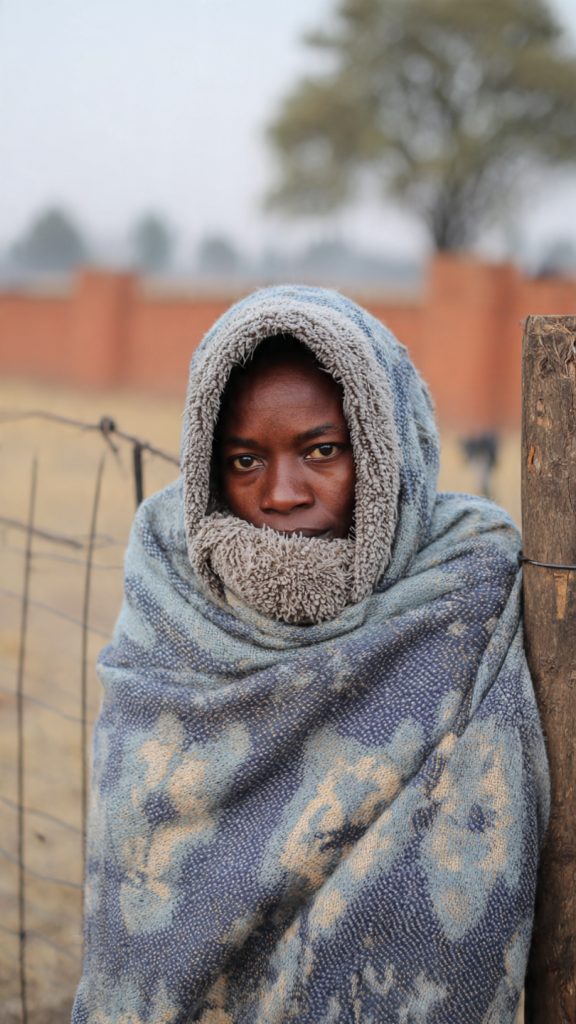
A Growing Crisis Without Clear Protection
In early 2023, Cyclone Freddy swept across southern Africa and displaced hundreds of thousands of people in Mozambique, Malawi, and Madagascar. Entire villages flooded. Crops failed. Families fled across borders searching for food, shelter, and medical care. Yet many of those people did not qualify for legal refugee protection.
Climate displacement is rising rapidly across the region. According to the Internal Displacement Monitoring Centre (IDMC), weather-related disasters displaced more than 2.1 million people in sub-Saharan Africa in 2023 alone. Southern Africa increasingly faces droughts, floods, cyclones, and heat waves linked to climate change.
However, international law does not recognize “climate refugees” as a formal legal category. As a result, people fleeing climate disasters often fall through protection gaps.
Southern Africa now faces a critical question: Do existing legal frameworks protect people displaced by climate change?
This article examines the region’s legal architecture, policy gaps, and health implications. It also analyzes how governments, NGOs, and regional bodies can respond.
Climate Change and Migration in Southern Africa
Environmental Pressures Are Increasing
Climate change intensifies migration pressures across southern Africa. Several environmental trends drive displacement:
-
Persistent drought in Zimbabwe, Zambia, and Botswana
-
Severe cyclones in Mozambique and Malawi
-
Flooding in low-lying coastal regions
-
Desertification affecting rural livelihoods
The Intergovernmental Panel on Climate Change (IPCC) reports that southern Africa is warming at twice the global average rate. Rainfall patterns have also become unpredictable.
Consequently, rural communities face crop failures and water shortages. Many households lose their livelihoods.
Migration becomes a survival strategy.
Recent studies show that thousands of rural residents from Zimbabwe and Mozambique move toward major South African cities such as Johannesburg, Cape Town, and Durban following drought seasons.
However, legal systems rarely recognize climate displacement as a protection category.
International Refugee Law: A Structural Gap
The 1951 Refugee Convention
The global refugee protection regime stems from the 1951 Refugee Convention and its 1967 Protocol Relating to the Status of Refugees.
These instruments define refugees as people who flee persecution based on:
-
race
-
religion
-
nationality
-
political opinion
-
membership in a particular social group
Climate change does not appear in this definition.
As a result, people fleeing drought, flooding, or storms rarely qualify for refugee status.
Courts across the world have begun exploring climate-related asylum claims. Yet most cases still fail to meet the persecution threshold required under international law.
Regional Protection Mechanisms in Africa
The OAU Refugee Convention
Africa expanded refugee protection through the 1969 OAU Convention Governing the Specific Aspects of Refugee Problems in Africa.
This convention broadened the refugee definition to include people fleeing:
-
external aggression
-
occupation
-
foreign domination
-
events seriously disturbing public order
Some scholars argue that climate disasters could qualify as “events seriously disturbing public order.” However, governments rarely interpret the clause this way.
As a result, climate-displaced people still struggle to access formal protection.
SADC Regional Policy Efforts
The Southern African Development Community (SADC) has acknowledged climate mobility challenges. Several policy frameworks address climate adaptation and disaster risk reduction.
Key instruments include:
-
SADC Climate Change Strategy and Action Plan (2020–2030)
-
SADC Disaster Risk Reduction Strategy
-
SADC Migration Policy Framework
However, none establish a legal status for climate-displaced persons.
Instead, governments rely on temporary humanitarian responses.
South Africa’s Legal Framework
The Refugees Act
South Africa regulates asylum through the Refugees Act 130 of 1998.
The Act incorporates both:
-
the 1951 Refugee Convention
-
the 1969 OAU Convention
In theory, the broader African definition could cover climate displacement. In practice, asylum officers rarely apply the law in this way.
Consequently, climate migrants often apply for asylum but receive rejection letters.
Immigration Law and Temporary Protection
Migrants who do not qualify for asylum must use the Immigration Act 13 of 2002.
However, this law focuses on:
-
skilled migration
-
business visas
-
family reunification
It does not address disaster-driven displacement.
Temporary protection programs sometimes emerge during crises. For example, South Africa introduced special permits for Zimbabweans after economic collapse and drought. Yet these programs remain ad hoc and politically sensitive.
Public Health Implications of Climate Displacement
Climate displacement creates significant health challenges.
Migrants often arrive in urban areas with limited access to housing, sanitation, and healthcare.
Research conducted in Johannesburg, Cape Town, and Durban between 2021 and 2025 shows several patterns:
-
Increased tuberculosis risk in overcrowded housing
-
Interruptions in HIV treatment continuity
-
Rising malnutrition among migrant children
-
Mental health trauma linked to disaster and displacement
The World Health Organization warns that climate migration will increase disease vulnerability across African urban centers.
Healthcare providers also face legal uncertainty. Many migrants lack documentation and fear seeking care.
Case Studies From Southern Africa
Case Study 1: Drought Migration From Zimbabwe
Between 2019 and 2024, severe drought devastated rural farming communities in southern Zimbabwe.
A Zimbabwean farmer from Masvingo described the situation:
“The rains stopped. Our crops died. We had no food left.”
He eventually crossed into South Africa and settled in Johannesburg.
However, he struggled to obtain legal status. Authorities rejected his asylum claim because drought did not qualify as persecution.
Without documentation, he worked informal jobs and delayed seeking healthcare.
Case Study 2: Cyclone Displacement in Mozambique
Cyclones Idai and Freddy caused catastrophic flooding in central Mozambique.
A Mozambican mother displaced by the storms moved to Durban with relatives.
She reported several challenges:
-
lack of legal documentation
-
limited access to public healthcare
-
fear of deportation
Local NGOs helped her access maternal health services. However, long-term protection remains uncertain.
Case Study 3: Flood Migration to Cape Town
Flooding in southern Malawi displaced thousands of households in 2022 and 2023.
A young Malawian worker relocated to Cape Town to find employment.
He described the migration decision clearly:
“The river destroyed our home. We had nowhere else to go.”
Yet immigration officials classified him as an economic migrant.
Emerging Legal Innovations
Some governments and international organizations have begun experimenting with new approaches.
The Kampala Convention
Africa adopted the Kampala Convention, the world’s first legally binding treaty addressing internal displacement.
The convention recognizes disasters and climate change as displacement drivers. However, it only protects internally displaced persons, not cross-border migrants.
Climate Mobility Initiatives
Several international initiatives also address climate displacement:
-
**International Organization for Migration Climate Mobility programs
-
**Platform on Disaster Displacement policy frameworks
-
African Union climate migration dialogues
These initiatives encourage regional cooperation. However, they lack binding legal enforcement.
Policy Gaps in Southern Africa
Several structural gaps persist.
1. No Legal Definition of Climate Refugees
Current laws do not recognize people displaced by environmental change.
2. Weak Regional Coordination
SADC policies emphasize adaptation but ignore cross-border displacement governance.
3. Limited Data Systems
Many governments lack reliable migration and climate displacement data.
4. Urban Health System Strain
Cities receive migrants without adequate housing or health infrastructure.
5. Documentation Barriers
Undocumented migrants avoid healthcare due to deportation fears.
Innovative Solutions and Emerging Programs
Despite these challenges, several promising initiatives exist.
NGO-Led Health Access Programs
Organizations such as Doctors Without Borders and Médecins Sans Frontières support migrant healthcare services in urban clinics.
Programs in Johannesburg and Cape Town provide:
-
TB screening
-
HIV treatment continuity
-
maternal health services
These interventions demonstrate the value of community-based health outreach.
Regional Climate Adaptation Initiatives
SADC has also launched climate resilience programs focused on:
-
drought-resistant agriculture
-
early warning systems
-
disaster preparedness
Such measures reduce displacement pressures.
However, they cannot eliminate climate migration entirely.
Policy Recommendations
Southern Africa must move beyond emergency responses. Policymakers should implement coordinated legal reforms.
Short-Term (1–2 Years)
-
Create temporary protection visas for disaster-displaced migrants.
-
Ensure healthcare access regardless of documentation status.
-
Improve climate displacement data systems.
Health departments should collaborate with migration authorities to track climate-related mobility.
Medium-Term (3–5 Years)
-
Develop a SADC climate mobility protocol.
-
Expand urban health capacity in migrant-receiving cities.
-
Integrate climate migration into national adaptation strategies.
Regional cooperation will reduce policy fragmentation.
Long-Term (5–10 Years)
-
Establish a regional legal category for climate-displaced persons.
-
Strengthen climate adaptation programs in rural areas.
-
Develop planned relocation frameworks.
These strategies would reduce forced migration and improve protection.
Research Gaps
Despite growing interest, several knowledge gaps remain.
Researchers need better data on:
-
health outcomes among climate migrants
-
gendered impacts of environmental displacement
-
child protection risks in climate migration
-
long-term urban integration patterns
More interdisciplinary research will improve policy responses.
Conclusion: Time for Legal Innovation
Climate displacement is no longer a future problem. It is already reshaping migration patterns across southern Africa.
Yet current legal frameworks lag behind reality.
International refugee law does not recognize climate migrants. Regional frameworks remain incomplete. National policies rely on temporary and inconsistent measures.
Southern Africa must therefore develop innovative legal protections for climate-displaced populations.
Governments should collaborate with regional institutions, NGOs, and research institutions to design new protection mechanisms.
Without such reforms, millions of people displaced by climate change may remain legally invisible.
The climate refugee question is not theoretical anymore.
It is a policy challenge that demands urgent action.
References
-
Internal Displacement Monitoring Centre (2024) Global Report on Internal Displacement
-
Intergovernmental Panel on Climate Change (2023) Sixth Assessment Report
-
World Health Organization (2023) Climate Change and Health in Africa
-
International Organization for Migration (2024) World Migration Report
-
Platform on Disaster Displacement (2023) Climate Mobility Framework
-
UNHCR (2024) Global Trends in Forced Displacement
-
SADC Climate Change Strategy and Action Plan (2020–2030)
-
South Africa Refugees Act 130 of 1998
-
South Africa Immigration Act 13 of 2002
-
African Union (2009) Kampala Convention
Recent Posts: