
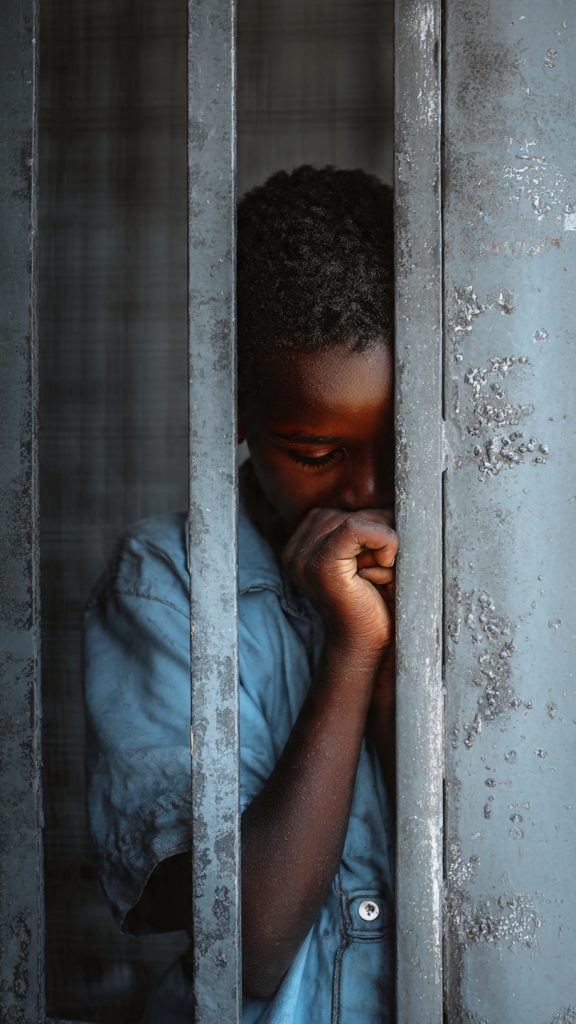
A Growing Policy and Public Health Concern
Across the Southern African Development Community (SADC), governments increasingly face pressure to manage migration while protecting human rights. Yet migrant children remain among the most vulnerable groups within immigration control systems. Detention practices in several SADC countries often expose children to severe health, psychological, and social risks.
Recent global estimates show that governments detain hundreds of thousands of children for immigration-related reasons each year. Although reliable regional data remains limited, evidence suggests that immigration detention facilities in Southern Africa continue to hold children alongside adults or in unsuitable conditions. In South Africa alone, civil society organizations documented multiple cases of undocumented migrant minors being held in immigration detention between 2020 and 2024.
Consider the case of “Thabo,” a 15-year-old boy from Zimbabwe who crossed into South Africa unaccompanied after losing his parents. Border officials detained him at the Lindela Repatriation Centre outside Johannesburg for several days before social workers intervened. During that time, he had limited access to healthcare, schooling, or legal assistance. His story reflects a broader policy dilemma: how should states manage irregular migration while safeguarding the rights and wellbeing of children?
This blog examines detention practices affecting migrant children in SADC countries, with particular attention to South Africa. It also explores viable alternatives to immigration detention and provides practical recommendations for policymakers, public health professionals, and civil society organizations.
Migration Patterns and Child Mobility in Southern Africa
Southern Africa hosts one of Africa’s most dynamic migration corridors. People move across borders for work, education, family reunification, or protection from political instability. Children form a significant portion of these migration flows.
Between 2020 and 2025, South Africa remained the primary destination for migrants from Zimbabwe, Mozambique, Malawi, and the Democratic Republic of Congo. Many children migrate with families, but others travel alone due to economic hardship, family separation, or violence.
Unaccompanied minors often enter through informal border crossings. As a result, immigration authorities frequently classify them as undocumented migrants rather than children requiring protection. This classification increases the likelihood of detention.
Furthermore, children who travel with parents may also experience detention when families encounter immigration enforcement operations. Immigration raids in urban areas sometimes lead to temporary detention of entire families before status verification.
These practices raise serious concerns. International human rights law clearly states that immigration detention should never serve as a routine response for children.
Legal and Policy Framework Governing Migrant Children
International Standards
International law strongly discourages the detention of children for immigration purposes. Several frameworks establish this principle:
-
The UN Convention on the Rights of the Child (CRC)
-
The African Charter on the Rights and Welfare of the Child
-
Global Compact for Safe, Orderly and Regular Migration
These instruments emphasize that detention must be a measure of last resort and used for the shortest possible time. In practice, many experts argue that detention of migrant children should be eliminated altogether.
South African Legal Context
South Africa possesses one of the region’s most progressive child protection frameworks. Several laws are relevant to migrant children:
1. The Children’s Act (2005)
This law prioritizes the best interests of the child in all decisions affecting them.
2. The Immigration Act (2002)
This legislation regulates entry, detention, and deportation of undocumented migrants.
3. Refugees Act (1998, amended 2017)
The act provides protection mechanisms for asylum seekers and refugees.
Despite these protections, legal ambiguity remains. Immigration authorities sometimes treat undocumented migrant children primarily as immigration offenders rather than as vulnerable minors. As a result, enforcement practices occasionally conflict with child protection principles.
Detention Practices in SADC Countries
Several SADC countries maintain immigration detention facilities. However, oversight mechanisms and child protection safeguards vary significantly.
South Africa
South Africa operates the Lindela Repatriation Centre, the country’s largest immigration detention facility. Civil society organizations have documented cases where minors were temporarily held there before social services intervened.
Although official policy discourages child detention, implementation gaps persist. Delays in age verification or documentation often prolong detention periods.
Botswana
Botswana detains undocumented migrants in holding facilities before deportation. Reports indicate that children traveling with families may remain in detention until repatriation procedures conclude.
Mozambique
Mozambique acts primarily as a transit country. Migrants apprehended near borders sometimes stay in temporary detention facilities while authorities process repatriation.
Zambia
Zambia has strengthened child protection measures in recent years. However, reports still highlight instances where migrant children remain in detention due to limited shelter alternatives.
These patterns illustrate a regional challenge: many immigration systems lack specialized mechanisms for handling migrant children outside detention settings.
Health and Psychological Consequences of Detention
Detention environments create significant public health risks for children. Researchers consistently link immigration detention to negative physical and mental health outcomes.
Mental Health Effects
Children in detention frequently experience:
-
Anxiety
-
Depression
-
Post-traumatic stress symptoms
-
Sleep disturbances
Uncertainty about deportation and separation from family members often intensifies psychological distress.
Physical Health Risks
Overcrowded detention conditions may increase the risk of infectious diseases. Limited access to healthcare further compounds these vulnerabilities.
Public health studies in South African urban centers show that migrant populations already face barriers to healthcare access. Detention conditions may therefore worsen existing health inequalities.
Developmental Impacts
Detention interrupts education, social development, and emotional stability. For younger children, even short periods of confinement can disrupt cognitive and psychological growth.
Consequently, international experts increasingly classify immigration detention of children as a harmful practice with long-term consequences.
Evidence from South African Cities
Urban migration patterns provide important insights into the experiences of migrant children.
Johannesburg
Johannesburg hosts one of the largest migrant populations in the region. NGOs working in inner-city neighborhoods report frequent cases of undocumented children requiring legal and social assistance.
Community organizations have documented situations where children briefly entered immigration detention before referral to social services.
Musina
Musina, near the Zimbabwean border, serves as a major transit point for migrants. Shelters in the area regularly assist unaccompanied minors who previously encountered immigration detention.
Cape Town
In Cape Town, advocacy groups have highlighted challenges faced by migrant families during immigration enforcement operations. Although detention of children remains uncommon, the threat of detention creates fear and discourages families from seeking healthcare or education services.
These examples demonstrate how immigration enforcement policies can indirectly affect child wellbeing across major cities.
Case Examples from Civil Society Programs
Case Example 1: Community Shelter Support
An NGO operating in Musina assisted a group of unaccompanied minors intercepted near the border. Instead of remaining in detention, local authorities referred the children to a temporary shelter. Social workers then helped them apply for asylum and enroll in school.
Case Example 2: Family Documentation Assistance
In Johannesburg, legal aid organizations helped a Congolese family regularize their immigration status after authorities detained the parents during a workplace raid. Community advocates ensured that the children avoided detention and remained with relatives.
Case Example 3: Cross-Border Child Protection
A regional NGO collaborated with social services in Zimbabwe and South Africa to reunite an undocumented child with family members after border authorities intercepted the child during migration.
These cases demonstrate that alternatives to detention already exist in practice. However, governments must expand these programs.
Alternatives to Immigration Detention
Several countries worldwide have successfully implemented non-custodial approaches for migrant families and children. These models could inform policy reforms in SADC.
1. Community-Based Case Management
Case management programs assign social workers to migrant families. These professionals guide them through legal processes while ensuring compliance with immigration requirements.
Evidence from international programs shows that migrants participating in case management attend immigration hearings at high rates.
2. Open Reception Centers
Reception centers offer temporary accommodation and support services without restricting freedom of movement. Residents can access healthcare, education, and legal assistance while authorities process their cases.
3. Family Support Programs
Governments can collaborate with NGOs to provide housing and legal aid to migrant families awaiting immigration decisions.
4. Child Protection Referrals
Border officials should refer unaccompanied minors directly to child protection systems rather than immigration detention facilities.
These approaches protect children while allowing governments to manage migration effectively.
Policy Gaps and Implementation Challenges
Despite growing awareness, several structural barriers limit the adoption of alternatives to detention.
First, immigration authorities often lack specialized training on child protection.
Second, social services in border regions face resource constraints. Limited shelter capacity can lead authorities to rely on detention facilities.
Third, coordination between immigration departments, social services, and NGOs remains inconsistent.
Finally, reliable data on detained migrant children remains scarce. Without accurate statistics, policymakers struggle to design targeted interventions.
Addressing these gaps requires coordinated regional action.
Policy Recommendations
Immediate Actions (0–12 Months)
-
Prohibit immigration detention of children in law and practice.
-
Establish clear referral protocols between immigration authorities and child protection services.
-
Train border officials on child rights and protection frameworks.
Medium-Term Reforms (1–3 Years)
-
Expand community-based case management programs in major migration corridors.
-
Increase funding for shelters assisting migrant children.
-
Develop standardized regional data systems on migrant child protection.
Long-Term Strategies (3–5 Years)
-
Harmonize migration policies across SADC countries.
-
Strengthen cross-border child protection mechanisms.
-
Integrate migrant child health services into national public health strategies.
Research Gaps and Future Directions
Although scholarship on migration health has expanded, significant knowledge gaps remain.
Researchers still lack reliable data on the number of migrant children detained across Southern Africa. More studies should also examine long-term health outcomes for children exposed to immigration enforcement systems.
Additionally, policymakers need rigorous evaluations of community-based alternatives to detention in African contexts.
Collaborative research partnerships between governments, universities, and NGOs could help generate this evidence.
Conclusion: A Call for Child-Centered Migration Governance
The detention of migrant children represents one of the most pressing human rights challenges within contemporary migration governance. Evidence from Southern Africa shows that detention practices often conflict with child protection principles and public health priorities.
However, alternatives already exist. Community-based programs, open reception centers, and strengthened child protection systems can provide effective solutions.
Policymakers must therefore prioritize reforms that place children’s wellbeing at the center of migration management.
Public health professionals can contribute by documenting health impacts and advocating for protective policies. NGOs can expand community support programs. Regional organizations can facilitate cooperation across borders.
Ultimately, protecting migrant children is not simply a legal obligation. It is also a public health imperative and a moral responsibility shared by governments, communities, and international partners.
References
-
United Nations Children’s Fund (UNICEF). 2022. Children on the Move in Southern Africa.
-
International Organization for Migration (IOM). 2023. Migration Trends in Southern Africa.
-
Department of Home Affairs South Africa. 2024. Immigration Enforcement Report.
-
Lawyers for Human Rights. 2023. Monitoring Detention at Lindela Repatriation Centre.
-
African Committee of Experts on the Rights and Welfare of the Child. 2021. Child Migration in Africa.
-
UNHCR. 2022. Global Trends in Forced Displacement.
-
Human Rights Watch. 2020. Immigration Detention and Child Rights.
-
WHO. 2023. Health of Refugees and Migrants in Africa.
-
Migration Policy Institute. 2024. Alternatives to Immigration Detention.
-
Southern African Migration Programme. 2021. Migration and Urbanization in South Africa.
Recent Posts:
- Family Separation and Reunification: Protecting Migrant Children’s Right to Family Unity
- Birth Registration and Identity Documentation for Migrant Children in SADC
- The Impact of Xenophobia on Migrant Children in South Africa and Beyond
- Child Trafficking and Smuggling in SADC Migration Routes: Prevention and Protection Strategies
- Healthcare Rights of Migrant Children: Navigating SADC Health Systems Without Documentation