
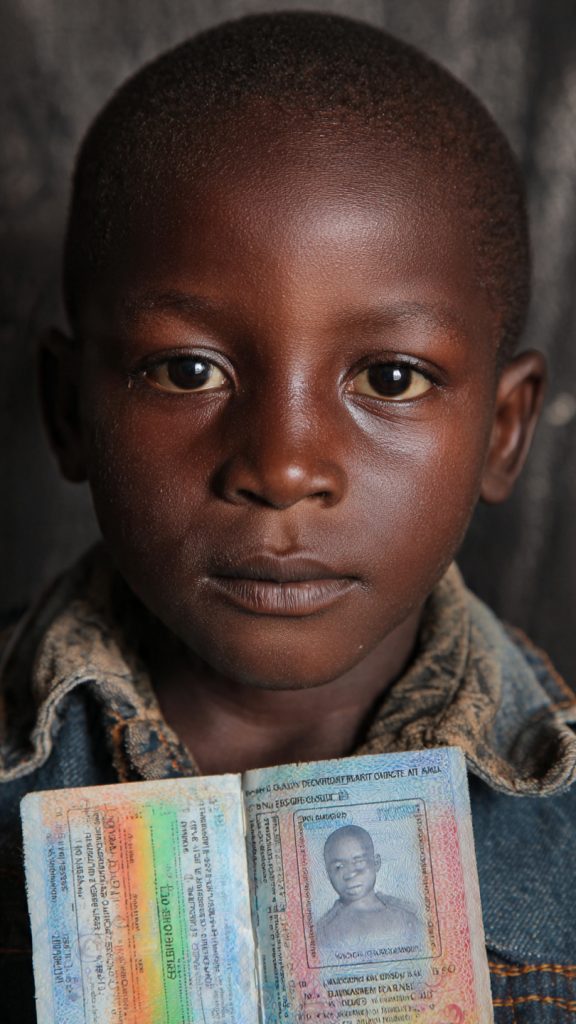
The Invisible Children of Migration
Across the Southern African Development Community (SADC), thousands of migrant children grow up without birth certificates or legal identity documents. This lack of documentation creates serious risks for their health, safety, and long-term development. According to the United Nations Children’s Fund (UNICEF), about 237 million children under five worldwide remain unregistered, and many live in sub-Saharan Africa. Within the SADC region, migration, displacement, and weak civil registration systems make the problem worse.
In South Africa, undocumented migrant children face barriers to healthcare, education, and social protection. Hospitals sometimes request identification before providing services. Schools may also require documentation for enrollment. As a result, many migrant children remain invisible within national systems.
A pediatric nurse working in Johannesburg’s inner-city clinics described the situation clearly:
“We treat children every day who have no birth certificates. Their parents fear approaching government offices. Without documents, these children remain excluded from many services.”
This blog post analyzes the policy gaps that affect birth registration for migrant children in SADC countries. It also explores public health consequences, real experiences from major South African cities, and practical solutions that governments and organizations can implement.
Why Birth Registration Matters for Public Health
Birth registration does more than establish nationality. It also connects children to health systems and social services.
Access to Healthcare Services
A birth certificate often becomes the first document used to access healthcare systems. In South Africa, public health policies guarantee basic healthcare for children regardless of nationality. However, administrative practices sometimes create obstacles.
The South African Department of Health states that children should receive healthcare services regardless of documentation status. Yet frontline workers may still request identification.
Without documentation, migrant children often face:
-
Delayed immunization schedules
-
Difficulties accessing HIV and TB testing
-
Barriers to chronic care services
-
Limited access to referral systems
These delays increase health risks and worsen disease outcomes.
Tracking Disease and Vaccination Coverage
Civil registration systems also support epidemiological surveillance. When births remain unregistered, public health systems struggle to estimate population size and vaccination coverage.
For example, vaccination programs in migrant-dense areas such as Hillbrow, Yeoville, and Mayfair in Johannesburg face difficulties tracking children who lack official records.
As a result, undocumented children may fall outside routine immunization programs. This gap increases the risk of outbreaks of preventable diseases such as measles and tuberculosis.
Migration and Documentation Challenges in SADC
Several structural factors affect birth registration for migrant families across the SADC region.
Cross-Border Mobility
Migration within SADC remains high. Economic opportunities in South Africa attract migrants from countries such as:
-
Zimbabwe
-
Mozambique
-
Malawi
-
Democratic Republic of Congo
Many migrants arrive without formal documentation. Others lose documents during migration journeys.
Children born after migration often remain unregistered because parents lack legal status.
Administrative Barriers
Civil registration systems in several SADC countries still rely on centralized processes. Parents may need to travel long distances to register births.
In South Africa, migrant parents must interact with the South African Department of Home Affairs. However, undocumented migrants often avoid these offices because they fear arrest or deportation.
This fear delays or prevents birth registration entirely.
Legal Complexity
Legal frameworks across the region vary widely. Some countries allow universal birth registration regardless of parental status. Others impose restrictions on foreign nationals.
In South Africa, the Births and Deaths Registration Act regulates birth registration. The law allows registration of children born in the country. However, administrative procedures often require parental documentation.
Consequently, many migrant parents cannot complete the process.
Policy Landscape in South Africa
South Africa has one of the most developed legal frameworks for child protection in Africa. Several policies recognize the rights of migrant children.
The Constitution and Child Rights
The Constitution of South Africa guarantees basic rights to all children regardless of nationality. Section 28 emphasizes children’s rights to healthcare, education, and protection.
This provision theoretically protects migrant children.
However, implementation remains inconsistent.
The Children’s Act
The Children’s Act reinforces child protection measures. It prioritizes the best interests of the child in all decisions affecting them.
The Act also supports access to social services and child welfare programs.
Nevertheless, undocumented children often fall through administrative gaps.
Birth Registration Policies
South Africa promotes early birth registration through the National Population Register. Hospitals frequently collaborate with the Department of Home Affairs to register births soon after delivery.
Yet migrant parents sometimes avoid these systems because they lack valid immigration documents.
Evidence from Major South African Cities
Urban centers host large migrant populations. These cities also reveal significant documentation gaps.
Johannesburg
Johannesburg remains the primary destination for migrants in southern Africa. Areas such as Hillbrow, Bere, and Rosettenville host many migrant families.
NGO surveys conducted between 2021 and 2024 found that many migrant children lacked birth certificates.
Healthcare workers reported several challenges:
-
Parents feared interacting with government offices
-
Language barriers complicated registration processes
-
Informal housing limited access to civil registration services
Cape Town
Cape Town also hosts large migrant communities, particularly from Zimbabwe and the Democratic Republic of Congo.
Community organizations reported delays in birth registration when mothers delivered outside hospitals or in informal settlements.
In some cases, families waited several years before registering children.
Durban
Durban’s port economy attracts migrants from across the region. Local NGOs identified similar barriers.
Documentation challenges frequently affected access to early childhood development programs and school enrollment.
Case Examples from Migrant Communities
Case Example 1: Delayed Registration in Johannesburg
A Zimbabwean mother gave birth in a Johannesburg clinic in 2022. She lacked a valid passport because it expired during the pandemic.
Although the hospital issued a birth notification, the mother could not register the birth. Officials required identification documents.
Two years later, the child still had no birth certificate. The mother worried that her child would struggle to enroll in school.
Case Example 2: Cross-Border Documentation Problems
A Congolese refugee family in Pretoria delivered their child at a public hospital. Their asylum documents had expired.
The Department of Home Affairs required valid permits before processing the birth certificate. As a result, the registration process stalled for months.
Case Example 3: Community Support in Cape Town
A migrant support organization in Cape Town assisted a Malawian family whose child lacked documentation.
Legal volunteers helped the parents navigate administrative procedures. Eventually, the child obtained a birth certificate.
This intervention allowed the child to enroll in school and access vaccination services.
The Role of Civil Society and NGOs
Several organizations support migrant families facing documentation barriers.
The Scalabrini Centre of Cape Town provides legal advice, advocacy, and social support for migrants. The center helps families navigate birth registration processes.
Similarly, the Médecins Sans Frontières supports migrant health programs in underserved urban communities.
These organizations play critical roles by:
-
Providing legal assistance
-
Educating migrants about documentation rights
-
Supporting community outreach programs
-
Advocating for policy reform
However, civil society programs cannot replace systemic policy changes.
Innovative Solutions and Successful Programs
Several strategies show promise for improving birth registration rates among migrant children.
Mobile Registration Units
Mobile civil registration units bring services directly to communities. Governments have used this approach in rural areas.
Expanding mobile services in migrant-dense urban neighborhoods could increase birth registration rates.
Hospital-Based Registration Systems
Hospitals can register births before mothers leave maternity wards.
This approach reduces bureaucratic barriers and increases registration rates.
However, health workers need clear guidelines to register births even when parents lack documentation.
Digital Civil Registration Systems
Digital registration platforms can streamline administrative processes.
Electronic systems reduce paperwork and improve data sharing between hospitals and civil registration offices.
Some SADC countries have already started implementing digital systems.
Community Education Programs
Community outreach programs also improve birth registration rates.
NGOs and migrant organizations can educate parents about:
-
Birth registration procedures
-
Documentation rights
-
Available legal assistance
These initiatives help build trust between migrant communities and public institutions.
Policy Recommendations
Effective solutions require coordinated action from multiple stakeholders.
Short-Term Actions (1–2 Years)
Government agencies should:
-
Issue clear guidelines allowing birth registration regardless of parental immigration status
-
Expand mobile registration units in migrant-dense areas
-
Train frontline health workers on migrant child rights
NGOs should strengthen community awareness programs and legal assistance initiatives.
Medium-Term Actions (3–5 Years)
Governments should:
-
Digitize civil registration systems across SADC countries
-
Improve cross-border cooperation on documentation
-
Integrate birth registration with public health programs
Regional bodies such as the Southern African Development Community should coordinate policy harmonization.
Long-Term Actions (5–10 Years)
Policymakers should develop regional frameworks for migrant child protection. These frameworks should guarantee birth registration regardless of migration status.
Additionally, governments should invest in stronger civil registration systems.
Research Gaps and Limitations
Despite growing research on migration health, several gaps remain.
First, data on undocumented migrant children remain limited. Many children remain outside official statistics.
Second, researchers need more longitudinal studies examining the long-term effects of documentation gaps on health and education.
Third, cross-country comparisons within the SADC region remain scarce.
Addressing these gaps will strengthen evidence-based policy making.
Conclusion: A Call to Action
Birth registration represents a fundamental step toward protecting migrant children’s rights. Without documentation, children face barriers to healthcare, education, and social protection.
South Africa already has strong legal frameworks supporting child rights. However, implementation challenges continue to exclude many migrant children from civil registration systems.
Governments, civil society organizations, and international agencies must work together to close these gaps.
Policymakers should prioritize inclusive birth registration policies. Healthcare providers should support documentation efforts during maternity care. NGOs should continue empowering migrant communities with legal information.
Ultimately, ensuring that every child receives a birth certificate strengthens both public health systems and human rights protections across the SADC region.
No child should remain invisible.
Key Sources
-
United Nations Children’s Fund – Global Birth Registration Data
-
World Health Organization – Civil Registration and Health Systems Reports
-
Southern African Development Community Migration Policy Framework
-
South African Department of Home Affairs Birth Registration Policies
-
South African Department of Health Child Health Policies
-
Statistics South Africa Civil Registration Data
-
Scalabrini Centre of Cape Town Migrant Documentation Reports
-
Médecins Sans Frontières Urban Migrant Health Programs
-
Crush J., Chikanda A. Migration Policy Research in Southern Africa
-
Landau L. Urban Migration and Health in Johannesburg
Recent Posts:
- The Impact of Xenophobia on Migrant Children in South Africa and Beyond
- Child Trafficking and Smuggling in SADC Migration Routes: Prevention and Protection Strategies
- Healthcare Rights of Migrant Children: Navigating SADC Health Systems Without Documentation
- Access to Education for Migrant Children in SADC Countries: Barriers and Solutions
- Unaccompanied Migrant Children in Southern Africa: Challenges and Protection Needs