
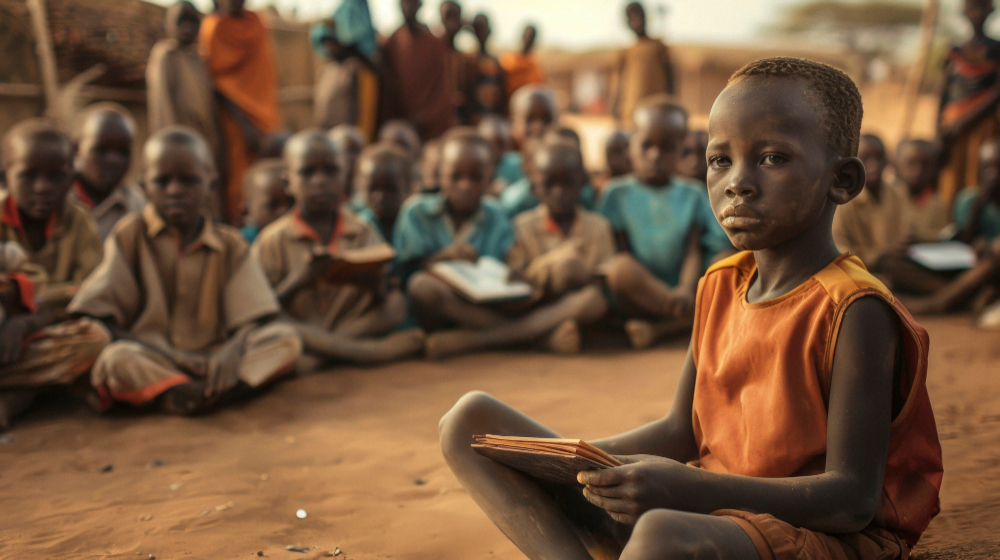
Education Access at a Critical Crossroads
Across Southern Africa, thousands of migrant children struggle to access education. The United Nations Children’s Fund (UNICEF) estimates that millions of children in migrant households across the Southern African Development Community (SADC) face disruptions in schooling. Many children either enroll late, attend irregularly, or drop out completely.
In South Africa, the situation reflects broader regional challenges. Government data and civil society reports indicate that migrant children in cities such as Johannesburg, Durban, and Cape Town often face administrative barriers, discrimination, and documentation requirements when trying to enroll in schools.
For example, in 2022 a Zimbabwean family living in Johannesburg’s inner city tried to enroll their 10-year-old daughter in a public school. School administrators initially rejected the application because the child lacked a birth certificate and valid study permit. Only after intervention from a local migrant rights organization did the school accept her.
Cases like this highlight a wider policy gap across SADC countries. While national laws often guarantee the right to education, implementation remains inconsistent. As a result, migrant children remain at risk of educational exclusion, long-term poverty, and social marginalization.
Therefore, policymakers, educators, and civil society organizations must address these barriers urgently.
Migration Patterns and the Growing Population of Migrant Children
Migration within Southern Africa has increased steadily over the past decade. Economic instability, climate pressures, and political crises continue to drive cross-border movement.
South Africa remains a major destination. Migrants from Zimbabwe, Mozambique, Malawi, the Democratic Republic of Congo, and Somalia settle primarily in urban areas where economic opportunities appear greater.
According to Statistics South Africa, international migrants accounted for approximately 4–5% of the national population in recent years. Many migrants arrive with children, while others reunite with families after relocation.
Consequently, schools in metropolitan areas now educate large numbers of migrant learners. Johannesburg’s inner city schools report particularly diverse classrooms where multiple languages and nationalities intersect.
However, education systems often struggle to adapt to these demographic changes. Limited resources, bureaucratic procedures, and uneven policy implementation continue to restrict access.
Legal and Policy Frameworks Governing Education Access
Regional Commitments within SADC
SADC member states formally recognize education as a fundamental right. Regional commitments include the SADC Protocol on Education and Training, which encourages equal access to schooling across member states.
Additionally, international agreements reinforce these obligations. These include the Convention on the Rights of the Child and the African Charter on the Rights and Welfare of the Child. Both frameworks emphasize universal access to basic education regardless of nationality.
Despite these commitments, implementation varies widely across countries.
South Africa’s Policy Environment
South Africa’s legal framework provides relatively strong protections for children’s education rights.
Key policies include:
-
The South African Constitution (Section 29) guarantees the right to basic education for everyone.
-
The South African Schools Act (1996) states that schools must admit children without unfair discrimination.
-
The Department of Basic Education Admissions Policy (2019) confirms that undocumented children should not be denied schooling.
These policies appear progressive. However, gaps between policy and practice remain significant.
Many school administrators still request identity documents, passports, or study permits before admitting learners. In some cases, officials misunderstand policy guidelines. In other situations, schools fear administrative penalties.
As a result, migrant families often rely on NGOs to mediate enrollment.
Major Barriers to Education for Migrant Children
Documentation Requirements
Documentation remains one of the most significant barriers to school access.
Many migrant children lack birth certificates, passports, or legal residency permits. Families may lose documents during migration or struggle to obtain replacements from their home countries.
Even though national policies discourage exclusion, schools often request documentation for administrative purposes. Consequently, children without papers experience delays or outright rejection.
This problem affects both documented and undocumented migrants.
Language and Curriculum Challenges
Language differences also complicate school integration.
Many migrant children speak languages such as Shona, Portuguese, Lingala, or French. However, South African schools typically teach in English or local languages like isiZulu or Sesotho.
Without targeted language support, migrant learners struggle academically. Teachers rarely receive specialized training for multilingual classrooms.
Therefore, children often fall behind despite strong academic potential.
Discrimination and Social Exclusion
Xenophobia and discrimination remain persistent concerns in some communities.
Several studies report that migrant learners sometimes face bullying from peers or negative attitudes from educators. These experiences affect both academic performance and psychological wellbeing.
For instance, Congolese and Somali learners in Johannesburg schools have reported verbal harassment related to nationality or accent.
Although many schools actively promote inclusion, uneven attitudes continue to shape migrant children’s experiences.
Economic Barriers
Even when schools allow enrollment, financial challenges can still limit participation.
Many migrant families work in informal employment sectors. Their income remains unstable, and transportation costs can become prohibitive.
School uniforms, textbooks, and examination fees also create additional burdens.
Consequently, some children attend irregularly or leave school entirely.
Evidence from Major South African Cities
Johannesburg
Johannesburg hosts one of the largest migrant populations in Southern Africa. Inner city schools in areas such as Hillbrow, Yeoville, and Berea report high numbers of migrant learners.
Local NGOs estimate that several schools serve classrooms where migrant students represent more than half of the learner population.
However, many children still struggle to secure placement due to overcrowding.
Cape Town
Cape Town schools have also seen rising numbers of migrant children, particularly from the Democratic Republic of Congo and Somalia.
Research conducted between 2020 and 2024 shows that language barriers significantly affect academic outcomes among these learners.
Schools with strong support programs demonstrate better integration outcomes.
Durban
Durban’s migrant communities include large populations from Mozambique and Malawi.
In this context, transportation costs and documentation issues remain the most common barriers to education access.
Local community organizations often provide legal assistance to help families navigate school admissions processes.
Case Studies from Migrant Communities
Case Study 1: Documentation Barriers
A 12-year-old Mozambican boy living in Johannesburg could not enroll in school for nearly a year. His parents lacked valid permits after their asylum applications expired.
Eventually, a migrant support NGO assisted the family. The organization helped them secure temporary documentation and facilitated school admission.
The child later rejoined Grade 5.
Case Study 2: Language Support Programs
In Cape Town, a community-based organization developed after-school language classes for French-speaking migrant learners from Central Africa.
The program focused on English literacy and academic vocabulary.
Within one year, participating students demonstrated measurable improvements in reading comprehension and classroom participation.
Case Study 3: Peer Mentorship Initiatives
In Durban, a local school introduced a peer mentorship system where older learners helped newly arrived migrant students adjust to the school environment.
The initiative reduced bullying incidents and improved attendance among migrant learners.
Innovative Solutions and Successful Programs
Community-Based Education Support
Several NGOs across South Africa provide tutoring, legal assistance, and language support programs.
These initiatives often bridge gaps between migrant families and public schools.
Moreover, community engagement strengthens trust between institutions and migrant communities.
Flexible Documentation Policies
Some provincial education departments have introduced flexible administrative guidelines.
These policies allow schools to admit learners while documentation issues are resolved.
This approach significantly reduces delays in school enrollment.
Teacher Training for Multicultural Classrooms
Education experts increasingly recommend specialized training for teachers working in diverse classrooms.
Training programs focus on:
-
multilingual education strategies
-
trauma-informed teaching approaches
-
anti-xenophobia awareness
Such initiatives improve both learning outcomes and classroom inclusion.
Policy Recommendations and Implementation Timelines
1. Strengthen Policy Enforcement (Short-Term: 1–2 Years)
Education departments should reinforce national admissions policies.
Officials must also train school administrators on documentation guidelines.
Monitoring systems can ensure schools follow inclusive enrollment practices.
2. Expand Language Support Programs (Medium-Term: 2–4 Years)
Governments and NGOs should develop language assistance programs in high-migration areas.
Schools can introduce bilingual support services or bridging courses for newly arrived learners.
3. Improve Data Collection on Migrant Learners (Medium-Term: 2–3 Years)
Accurate data remains limited. Education departments should therefore improve monitoring systems that track migrant student enrollment and educational outcomes.
Better data will support evidence-based policy development.
4. Strengthen Regional Cooperation (Long-Term: 4–6 Years)
SADC governments should coordinate education policies that facilitate cross-border schooling.
Regional agreements could support document recognition and student mobility across countries.
Research Gaps and Future Priorities
Despite growing attention to migration and education, several research gaps remain.
First, limited data exists on undocumented migrant children in public schools. Second, little research examines the long-term educational outcomes of migrant learners across SADC countries.
Finally, intersectional factors such as gender, disability, and nationality require deeper analysis.
Addressing these gaps will help policymakers design more inclusive education systems.
Conclusion: A Call to Action
Education represents one of the most powerful tools for social integration and economic mobility. However, migrant children across Southern Africa still face significant barriers to schooling.
Governments must therefore move beyond policy commitments and focus on implementation. Schools must adopt inclusive practices that accommodate linguistic diversity and administrative challenges.
At the same time, NGOs and community organizations should continue supporting migrant families through legal assistance, language programs, and advocacy.
If stakeholders act collaboratively, education systems across the SADC region can become more inclusive and equitable.
Ultimately, ensuring access to education for migrant children will strengthen social cohesion, economic development, and public health across Southern Africa.
References
-
UNICEF (2023). Migration and Children in Southern Africa.
-
Statistics South Africa (2023). Migration Profile Report.
-
Department of Basic Education (2019). National Admissions Policy.
-
Amnesty International (2021). Barriers to Education for Migrant Children.
-
Human Rights Watch (2022). Education Access and Documentation Requirements.
-
International Organization for Migration (2024). Migration Trends in Southern Africa.
-
UNHCR (2023). Education Access for Refugee and Migrant Children.
-
African Union (2022). Child Rights and Migration Report.
-
Save the Children (2021). Migrant Children and Education Access.
-
Southern African Migration Programme (2022). Migration and Urban Integration.
Recent Posts:
- Unaccompanied Migrant Children in Southern Africa: Challenges and Protection Needs
- Understanding Migrant Children’s Rights in SADC: Legal Frameworks and Protection Gaps
- SADC’s Climate-Education Crisis: Why Repeated Floods and Droughts Mean Millions of Children Are Missing School
- Cyclones, Conflict, and Kids: The Triple Threat Facing Children in Mozambique’s Cabo Delgado
- Can SADC Protect Climate-Displaced Children? A Critical Look at Regional Frameworks