
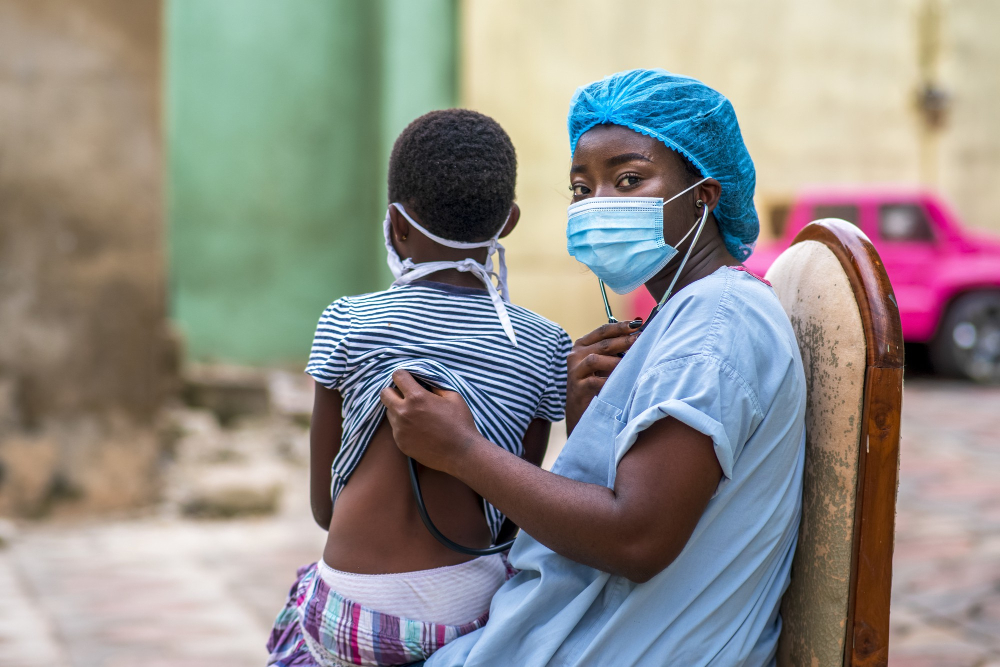
A Hidden Health Crisis
Across the Southern African Development Community (SADC), thousands of migrant children struggle to access basic healthcare. Many travel with families seeking work. Others arrive alone after conflict, poverty, or environmental shocks. Yet a large number lack identity documents, birth certificates, or legal residency papers.
In South Africa, migrants represent a significant share of urban populations in cities such as Johannesburg, Pretoria, and Durban. However, undocumented children often face serious barriers when they try to access public health services. According to estimates from the International Organization for Migration, migrant children frequently delay treatment because clinics request documentation they do not have.
Consequently, preventable illnesses such as tuberculosis, respiratory infections, and untreated injuries become common. In some cases, children only receive treatment when their conditions become severe.
Consider the experience of “Amina” (pseudonym), a 10-year-old child from Mozambique living in Hillbrow, Johannesburg. When she developed a persistent cough, her mother first avoided the local clinic. Staff members had previously asked for a passport and proof of residence. After several weeks, Amina’s condition worsened and she was diagnosed with tuberculosis.
Stories like Amina’s illustrate a wider policy problem. Although laws often guarantee care for children, real access remains uneven.
Therefore, policymakers must examine how documentation requirements, administrative practices, and systemic barriers affect migrant children’s healthcare rights across the SADC region.
Legal Framework: Children’s Right to Healthcare
Several international and regional legal instruments recognize healthcare as a fundamental right for all children.
First, the United Nations Convention on the Rights of the Child requires states to ensure that every child can access healthcare services without discrimination.
Second, the African Charter on the Rights and Welfare of the Child reinforces this obligation across the continent. It explicitly recognizes children’s rights to health services, survival, and development.
At the national level, South Africa’s Constitution offers strong protection. Section 27 states that everyone has the right to access healthcare services. Furthermore, Section 28 emphasizes that a child’s best interests must guide all decisions affecting them.
South African legislation also supports these protections. The National Health Act states that emergency treatment cannot be refused. In addition, the Children’s Act requires institutions to prioritize children’s welfare.
However, despite these legal guarantees, implementation remains inconsistent. Many frontline healthcare providers still request documentation before providing services. As a result, undocumented migrant children experience practical exclusion from the healthcare system.
Policy Gaps in South Africa’s Health System
Although legal protections exist, policy implementation reveals several gaps.
Documentation Requirements
First, administrative procedures often conflict with rights-based policies. Many public clinics request identity documents before opening patient files. While the policy does not require documentation for children’s care, frontline staff frequently follow informal practices.
Consequently, undocumented families may avoid health facilities altogether. Fear of discrimination or immigration enforcement further discourages them from seeking care.
Lack of Policy Awareness
Second, many healthcare workers remain unaware of the legal rights of migrant children. Research conducted in Johannesburg and Cape Town shows that staff training rarely covers migrant health policies.
As a result, interpretations vary widely between facilities. One clinic may treat undocumented children without hesitation. Another may deny treatment unless a passport or permit is presented.
Fragmented Service Coordination
Third, coordination between health, immigration, and social services remains weak. Migrant children often require integrated support, including vaccination programs, nutrition services, and documentation assistance.
However, these systems rarely communicate effectively. Therefore, vulnerable children frequently fall through institutional gaps.
Urban Evidence: Migrant Health Challenges in Major Cities
Large South African cities reveal the scale of the challenge.
Johannesburg
In Johannesburg, dense migrant communities live in neighborhoods such as Yeoville, Hillbrow, and Alexandra. Overcrowded housing conditions increase disease transmission, particularly for tuberculosis and respiratory infections.
Moreover, migrant families often rely on informal work. Because income remains unstable, transportation costs prevent many from visiting clinics regularly.
Cape Town
In Cape Town, migrant children from Zimbabwe, the Democratic Republic of Congo, and Somalia often live in informal settlements on the city’s outskirts. Long travel distances to clinics create another barrier.
Additionally, language differences complicate healthcare interactions. Without interpreters, medical consultations become difficult for both patients and providers.
Durban
In Durban, coastal migration routes bring new arrivals from neighboring countries. Many undocumented families live in temporary housing near industrial areas. These environments expose children to pollution and occupational hazards.
Consequently, respiratory illnesses and untreated injuries appear frequently in pediatric cases.
Case Examples from the Field
Example 1: Delayed Treatment for Tuberculosis
A healthcare NGO operating in Johannesburg documented multiple cases of delayed tuberculosis diagnosis among migrant children. One case involved a 12-year-old Zimbabwean boy who visited three clinics before receiving treatment. Each facility requested identification documents before registering him.
Eventually, a community health worker connected the family with a clinic familiar with migrant rights policies.
Example 2: Vaccination Barriers
In Cape Town, a Congolese mother struggled to vaccinate her infant because she lacked a birth certificate. Clinic staff initially refused to register the child.
However, an NGO later intervened and clarified national immunization guidelines. After the intervention, the clinic vaccinated the child without documentation.
Example 3: Language and Cultural Barriers
In Durban, Somali migrant families often encounter language barriers during consultations. Healthcare workers sometimes rely on family members to translate medical information.
While this approach offers a temporary solution, it raises ethical concerns regarding confidentiality and accuracy.
Intersectional Vulnerabilities
Not all migrant children experience the same level of risk. Several intersecting factors shape their healthcare access.
Gender
Girls often face additional barriers. For example, adolescent migrant girls may avoid clinics due to stigma related to reproductive health services.
Age
Younger children rely entirely on caregivers to navigate health systems. If parents fear deportation or discrimination, they may delay seeking care.
Nationality and Language
Children from non-English-speaking countries face communication challenges. Limited translation services further complicate medical consultations.
Documentation Status
Finally, documentation status remains the most significant barrier. Children without birth certificates or residency permits frequently encounter administrative obstacles.
Innovative Solutions and Promising Programs
Despite these challenges, several initiatives show promising results.
Community Health Worker Programs
Community health workers play a critical role in migrant neighborhoods. In Johannesburg, NGOs train community members to provide health education and referral services.
These workers help families understand their rights and guide them through clinic procedures.
Mobile Health Clinics
Mobile clinics operate in informal settlements where migrant populations concentrate. By bringing services directly to communities, these programs reduce transportation barriers.
Furthermore, mobile clinics often collaborate with migrant organizations to build trust with families.
NGO–Government Partnerships
Partnerships between NGOs and local health departments have improved access in several areas. For example, collaborative training sessions help healthcare providers understand migrant health policies.
These initiatives reduce confusion and encourage rights-based service delivery.
Policy Recommendations
Policymakers must address systemic barriers through coordinated action.
1. Strengthen Policy Awareness (0–12 months)
Health departments should introduce mandatory training on migrant healthcare rights for all frontline staff. Training modules must explain legal obligations and clarify documentation policies.
2. Standardize Administrative Procedures (1–2 years)
National guidelines should clearly state that children cannot be denied healthcare because of documentation status. Clinics must adopt uniform patient registration procedures across provinces.
3. Expand Community Health Programs (1–3 years)
Government agencies should scale up community health worker programs in migrant-dense neighborhoods. These workers can bridge communication gaps and improve health literacy.
4. Improve Data Collection (2–4 years)
Reliable data on migrant children’s health remains limited. Health information systems should track service use among migrant populations while protecting patient confidentiality.
5. Strengthen Regional Cooperation (3–5 years)
SADC governments should collaborate on migrant child health policies. Cross-border vaccination programs and information sharing can improve continuity of care.
Limitations and Research Gaps
Despite growing attention to migrant health, significant knowledge gaps remain.
First, many studies rely on small samples or NGO reports. Large-scale national data on migrant children’s health outcomes remains scarce.
Second, research often focuses on adult migrants rather than children. Consequently, policymakers lack detailed evidence on pediatric health needs.
Third, little research examines long-term health outcomes among undocumented migrant children. Future studies should address this gap.
Conclusion: A Call for Rights-Based Health Systems
Migrant children across the SADC region face significant barriers when accessing healthcare. Although legal frameworks guarantee their rights, implementation gaps persist.
Documentation requirements, administrative confusion, and systemic inequalities continue to exclude vulnerable children from essential services.
However, change remains possible. Community health programs, mobile clinics, and NGO partnerships already demonstrate effective solutions.
Therefore, governments, healthcare providers, and civil society organizations must work together to create inclusive health systems. Protecting migrant children’s health not only fulfills legal obligations but also strengthens public health outcomes for entire communities.
Ultimately, equitable healthcare access benefits everyone. When migrant children receive timely care, disease transmission declines, communities become healthier, and health systems become more resilient.
Recent Posts:
- Access to Education for Migrant Children in SADC Countries: Barriers and Solutions
- Unaccompanied Migrant Children in Southern Africa: Challenges and Protection Needs
- Understanding Migrant Children’s Rights in SADC: Legal Frameworks and Protection Gaps
- SADC’s Climate-Education Crisis: Why Repeated Floods and Droughts Mean Millions of Children Are Missing School
- Cyclones, Conflict, and Kids: The Triple Threat Facing Children in Mozambique’s Cabo Delgado