
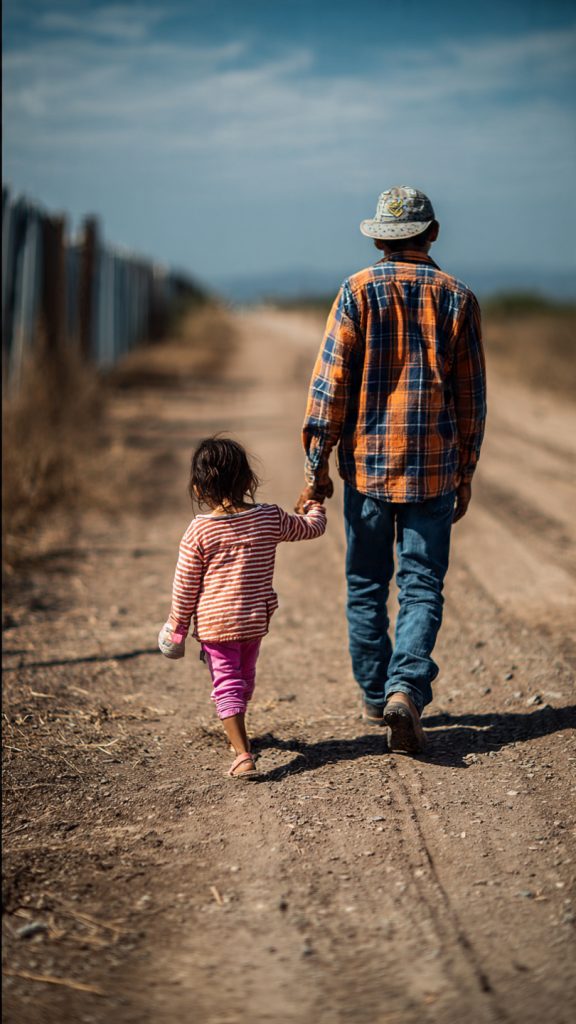
The Hidden Human Cost of Migration Policies
Across Southern Africa, migration often divides families. Parents leave home to seek safety or work. Children remain behind or travel separately. As a result, many migrant children grow up without one or both parents.
Globally, about 281 million people live outside their country of birth. A large share of them come from the Southern African Development Community (SADC) region. Many migrate to South Africa because of its relatively stronger economy and health system. However, migration pathways rarely protect family unity.
In Johannesburg, Cape Town, and Durban, service providers increasingly report cases of migrant children separated from parents due to border policies, deportations, detention practices, and documentation barriers.
For example, a Zimbabwean mother living in Johannesburg described how she waited three years to reunite with her two children who remained in Zimbabwe because visa processes were unclear and expensive. During that time, the children experienced severe anxiety and school disruptions.
Family separation is not only a social issue. It is also a public health concern. Research shows that children separated from parents face higher risks of:
-
Depression and anxiety
-
Interrupted education
-
Poor nutrition
-
Barriers to healthcare access
Protecting migrant children’s right to family unity therefore requires coordinated health, migration, and social protection policies.
Why Family Unity Matters for Migrant Children
Health and Psychological Impacts
Family separation strongly affects children’s mental health. Studies conducted by International Organization for Migration and UNICEF show that migrant children separated from caregivers often experience trauma, loneliness, and chronic stress.
Moreover, separation increases vulnerability to:
-
Exploitation and trafficking
-
Child labour
-
Homelessness
-
Violence and abuse
In migrant communities in Johannesburg’s inner city, NGOs report that many unaccompanied children struggle to access healthcare services. Clinics often require identification documents or parental presence.
As a result, children delay treatment for common illnesses such as tuberculosis and respiratory infections.
Educational and Developmental Consequences
Family separation also disrupts children’s education. When parents migrate first, children often remain with relatives. Later reunification may involve cross-border travel, documentation delays, and school transfers.
In Pretoria and Johannesburg, school administrators report increasing enrolment challenges among migrant children who arrive without guardianship documentation.
These disruptions can lead to:
-
Delayed school entry
-
Language barriers
-
Learning gaps
-
Social isolation
Therefore, family unity plays a key role in child development and social integration.
Policy Frameworks Protecting Family Unity
International Legal Protections
Several international frameworks recognise the right of children to live with their families.
The Convention on the Rights of the Child states that governments must ensure children are not separated from parents against their will, except when necessary for the child’s best interests.
Similarly, the International Convention on the Protection of the Rights of All Migrant Workers and Members of Their Families emphasizes family unity and protection for migrant workers’ children.
However, implementation remains uneven across many countries.
South African Legal Context
South Africa has strong constitutional protections for children’s rights. The Children’s Act 38 of 2005 prioritizes the best interests of the child in all decisions affecting children.
Additionally, the Refugees Act 130 of 1998 allows recognized refugees to apply for family reunification.
Despite these protections, practical barriers still prevent many migrant families from reuniting.
Policy Gaps and Implementation Challenges
1. Documentation Barriers
Many migrant parents cannot reunite with their children because they lack legal status.
For example, asylum processing backlogs remain a major challenge in South Africa. According to the Department of Home Affairs, thousands of asylum cases remain pending each year.
Without valid permits, parents struggle to sponsor children or cross borders safely.
2. Complex Immigration Procedures
Family reunification processes often require multiple documents, including:
-
Birth certificates
-
Passport verification
-
Proof of guardianship
-
Immigration permits
For migrant families fleeing conflict or economic hardship, obtaining these documents can be extremely difficult.
Parents may also face high administrative fees and long waiting periods.
3. Detention and Deportation Practices
Migration enforcement practices can also separate families.
In some cases, undocumented parents are detained or deported while children remain in South Africa. This situation creates legal and caregiving crises.
Advocacy organizations such as the Lawyers for Human Rights have documented several cases where children were temporarily left without guardians.
4. Limited Child Protection Coordination
Coordination between migration authorities and child protection systems remains inconsistent.
For example, social workers, border officials, and healthcare providers often lack shared protocols for managing unaccompanied migrant children.
Consequently, some children fall through administrative gaps.
Case Examples from South African Cities
Case 1: Reunification After Four Years
A Congolese father living in Johannesburg applied for asylum in 2019. His wife and children remained in Democratic Republic of the Congo.
Because of processing delays, he waited four years before receiving documentation that allowed him to sponsor his family.
During that time, his children missed school due to financial hardship.
Case 2: Unaccompanied Teen in Cape Town
A 15-year-old Zimbabwean boy crossed the border alone to join his mother working in Cape Town. Border authorities initially classified him as an unaccompanied minor.
Local NGOs helped facilitate legal reunification. However, the process took nearly eight months due to documentation verification.
Case 3: Deportation Separation in Durban
In Durban, an undocumented Mozambican father was deported during a police operation. His two children, born in South Africa, remained with neighbours for several weeks until relatives arranged cross-border reunification.
The incident exposed gaps in coordination between immigration enforcement and child welfare systems.
Innovative Solutions and Emerging Programs
Despite these challenges, several organizations are working to protect migrant family unity.
Community-Based Family Tracing
Programs led by the International Committee of the Red Cross support family tracing and reunification services across borders.
These initiatives use digital platforms to help separated families reconnect.
Legal Assistance for Migrant Families
Organizations such as the Scalabrini Centre of Cape Town provide legal support for migrants seeking documentation and family reunification.
Their programs help parents navigate complex immigration systems and obtain permits.
Child Protection Networks
Some municipalities are piloting multi-sector coordination platforms. These platforms bring together:
-
social workers
-
immigration officials
-
health providers
-
civil society organizations
Such collaboration helps identify vulnerable children earlier and facilitate reunification faster.
Policy Recommendations
Addressing family separation requires coordinated reforms across migration, health, and social protection systems.
Short-Term Actions (1–2 Years)
-
Simplify family reunification procedures
The Department of Home Affairs should streamline documentation requirements for migrant families. -
Develop child-sensitive migration protocols
Border officials should receive training on child protection and family unity principles. -
Strengthen legal aid services
NGOs and legal clinics should receive funding to support migrant families navigating reunification processes.
Medium-Term Actions (3–5 Years)
-
Create cross-border child protection agreements within SADC
Regional collaboration can improve tracing and reunification of separated children. -
Establish national data systems
South Africa should develop databases to track cases of separated migrant children. -
Integrate family unity indicators into migration policy
Monitoring frameworks should measure the impact of migration policies on children.
Long-Term Actions (5–10 Years)
-
Expand safe migration pathways
Labour migration agreements within SADC could allow families to migrate together. -
Strengthen social protection programs for migrant families
Inclusive policies can reduce economic pressures that force parents to migrate alone.
Research Gaps in Migration Health
Despite growing awareness, several knowledge gaps remain.
First, reliable data on family separation among migrant children in South Africa remains limited.
Second, few studies examine the long-term health outcomes of separated migrant children.
Finally, researchers rarely include children’s voices in migration policy analysis.
Addressing these gaps would strengthen evidence-based policymaking.
Conclusion: Protecting Children Through Family Unity
Migration will remain a defining feature of the Southern African region. However, policies must ensure that migration does not harm children’s wellbeing.
Family unity is not only a humanitarian principle. It is also essential for child health, education, and long-term development.
Governments, NGOs, and international organizations must therefore work together to protect migrant families.
Policymakers should prioritize simpler reunification procedures, stronger child protection systems, and regional cooperation.
Healthcare providers can also play a role by identifying separated children and linking them to support services.
Ultimately, protecting migrant children’s rights requires policies that recognize a simple truth: children thrive when they grow up with their families.
References
-
International Organization for Migration (2024) World Migration Report
-
UNICEF (2023) Children on the Move in Southern Africa
-
UNHCR (2024) Global Trends Report
-
Department of Home Affairs Migration Statistics Report (2024)
-
Statistics South Africa Migration Profile (2023)
-
Crush, J. & Tawodzera, G. (2021) Migration and Urban Vulnerability in South Africa
-
Vearey, J. et al. (2022) Migration and Health in Urban South Africa
-
Lawyers for Human Rights (2023) Detention and Deportation Report
-
Scalabrini Centre of Cape Town (2024) Migrant Rights Report
Recent Posts:
- Birth Registration and Identity Documentation for Migrant Children in SADC
- The Impact of Xenophobia on Migrant Children in South Africa and Beyond
- Child Trafficking and Smuggling in SADC Migration Routes: Prevention and Protection Strategies
- Healthcare Rights of Migrant Children: Navigating SADC Health Systems Without Documentation
- Access to Education for Migrant Children in SADC Countries: Barriers and Solutions