Migrant Nutrition

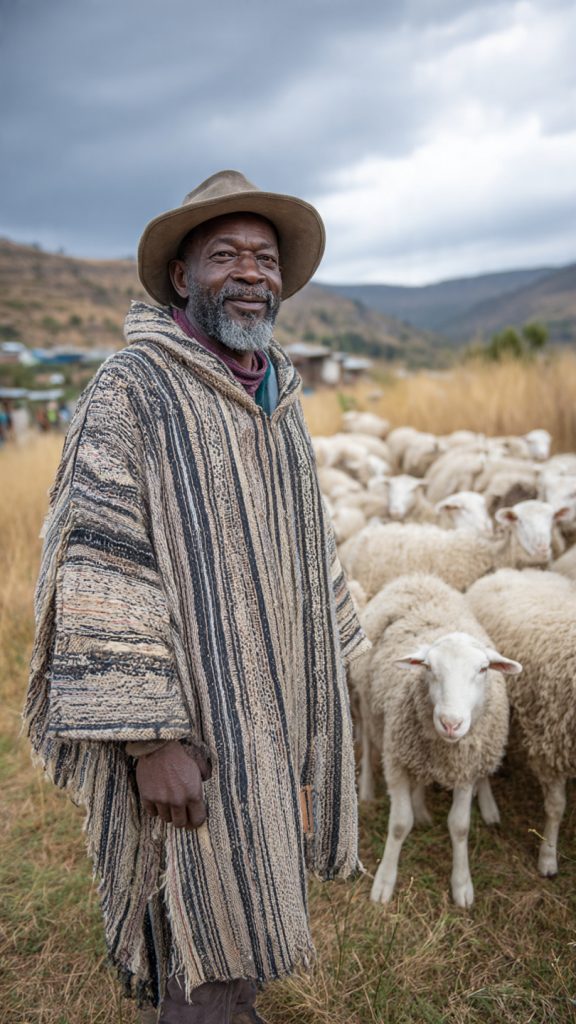
The Lesotho Shepherds Who Became Gauteng’s Unexpected Organic Farming Pioneers

Mountain Agriculture Meets Urban Health: The Complex Health Landscape of Lesotho’s Migrant Farmworkers in Gauteng Introduction: A Crisis Hidden in Plain Sight Across the agricultural belts surrounding Johannesburg and Pretoria, an estimated 350,000 Basotho migrants cultivate the food systems that sustain South Africa’s most urbanised province. Former mountain shepherds, seasonal harvesters, and, increasingly, innovators in […]

The Lesotho Shepherds Who Became Gauteng’s Unexpected Organic Farming Pioneers Read More »
Mozambican farmers, Mozambique–South Africa migration, cross-border migration, informal cross-border trade, organic produce trade, tomato value chain, smallholder agriculture, machamba farming, circular migration, food systems and migration, urban food security, informal markets Pretoria, Marabastad market, Tshwane informal economy, fresh produce supply chains, migrant livelihoods, agricultural migration, climate-induced migration, climate variability southern Africa, informal food systems, organic farming southern Africa, migrant traders, cross-border traders, SADC migration, regional food trade, undocumented migrants, migrant documentation status, health access for migrants, migrant health policy South Africa, National Health Act South Africa, primary healthcare access, health inequities migrants, market-based health outreach, mobile clinics informal markets, nutrition and migration, food insecurity among migrants, gendered migration patterns, women in informal trade, youth migration southern Africa, migrant remittances, informal market governance, urban public health Pretoria, municipal health planning, City of Tshwane IDP, NGO migrant health interventions, migrant associations, community-led initiatives, policy gaps migration health, evidence-based policy analysis, intersectionality migration health, ethical migration research

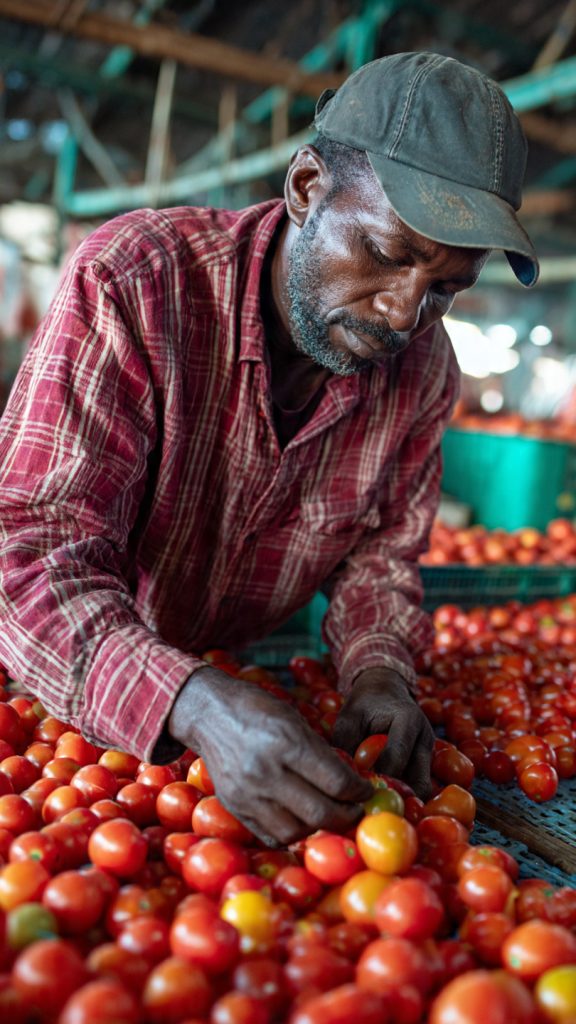
From Machamba to Market Stall: Why Mozambican Farmers Are Following Their Tomatoes to Pretoria

Cross-Border Farming and Pretoria’s Tomato Trade The Untold Story of How Organic Produce Is Reshaping Migration Patterns A Border-Crossing Food System in Motion In 2023, informal markets in Pretoria North and Marabastad recorded a visible rise in fresh tomatoes, leafy greens, and chillies traced back to southern Mozambique. At the same time, border authorities at

From Machamba to Market Stall: Why Mozambican Farmers Are Following Their Tomatoes to Pretoria Read More »

overcrowded housing, informal settlements, migrant health, South Africa migration, public health risks, infectious disease transmission, TB in migrants, HIV and migration, respiratory infections, diarrhoeal diseases, cholera outbreaks, mental health in migrants, psychological distress, maternal health, child health, low birthweight, antenatal care access, indoor air pollution, sanitation challenges, overcrowding health impacts, housing policy South Africa, UISP, National Housing Code, migrant access to healthcare, xenophobia and health, health system barriers, migrant documentation challenges, urban health, Cape Town informal settlements, Johannesburg informal settlements, Durban informal settlements, Musina migrant workers, ventilation and health, community upgrading, mobile clinics South Africa, TB outreach, migrant maternal shelters, health policy recommendations, African migrants, migrant women's health, child morbidity, migrant community perspectives, cross-sector collaboration, urban planning and health, settlement upgrading programs, health equity, vulnerable populations, migrant rights, safe housing initiatives.

How Does Overcrowded Housing in Informal Settlements Impact Migrant Health Outcomes?

How Overcrowded Housing in Informal Settlements Impacts Migrant Health Outcomes in South Africa Infectious Disease Transmission • Mental Health • Maternal & Child Health 1. Introduction: When a Home Becomes a Health Risk In March 2024, “Amina,” a 28-year-old Somali woman living in Cape Town’s Philippi settlement, shared a simple worry: “At night we sleep

How Does Overcrowded Housing in Informal Settlements Impact Migrant Health Outcomes? Read More »

diabetes among African migrants, hypertension among African migrants, noncommunicable diseases South Africa, NCDs in urban migrants, migrant health South Africa, chronic disease risk, dietary transition migrants, lifestyle changes migrants, informal settlement health, urban health disparities, migrant women health, cardiovascular risk migrants, South African health policy, migration and health, migrant access to healthcare, hypertension prevalence migrants, diabetes prevalence migrants, urbanisation health impact, psychosocial stress migrants, integrated NCD care, community health programs migrants, health inequities South Africa, public health interventions migrants, chronic disease screening migrants, migrant nutrition challenges, physical activity urban migrants, stress and hypertension migrants, migration health research gaps, inclusive healthcare policies, migrant-friendly health services

Why Are Diabetes and Hypertension Rising Among African Migrants in South African Cities?

Health Risks Rising: Diabetes and Hypertension in African Migrants A Compelling Start — Changing Lives, Growing Risks When 32‑year-old “Aisha” (pseudonym) moved from a rural district in Zimbabwe to Johannesburg in 2022, she believed she was chasing promise: work, education for her children, a better life. Over three years she shifted from walking long distances and

Why Are Diabetes and Hypertension Rising Among African Migrants in South African Cities? Read More »

vaccination rights South Africa, migrant vaccination barriers, undocumented migrants healthcare, immunisation policy South Africa, constitutional right to healthcare, Section 27 health rights, access to vaccines migrants, public health migration, migrant children immunisation, COVID-19 vaccination migrants, EPI-SA vaccination program, healthcare discrimination South Africa, xenophobia in healthcare, cross-border migrants South Africa, migrant public health risks, vaccination coverage gaps, migrant health rights, health system barriers migrants, legal entitlement to healthcare SA, migrant inclusion in public health, vaccination programme equity, healthcare access Constitution SA, migrant exclusion impact, migrant immunisation statistics, vulnerable populations vaccination, vaccination outreach strategies, rights-based public health, policy reform migrant healthcare, national immunisation challenges, SA Health Department migrant access, emergency healthcare undocumented, community health organisations migrants, migrant health surveillance, migrant disease prevention, immunisation legal framework South Africa

What Are the Legal and Ethical Obligations for Vaccinating Undocumented Migrants in South Africa?

Legal and Ethical Obligations for Vaccinating Undocumented Migrants in South Africa: Human Rights Frameworks, Public Health Priorities, and Policy Gaps A 32-year-old Zimbabwean woman, eight months pregnant, stands outside Hillbrow Clinic in Johannesburg. She carries her expired asylum seeker permit—rendered useless by bureaucratic delays at the Department of Home Affairs. Inside, a nurse turns her

What Are the Legal and Ethical Obligations for Vaccinating Undocumented Migrants in South Africa? Read More »

migrant health South Africa, cross-border migration, vaccination coverage, immunization gaps, measles outbreaks, polio resurgence, tuberculosis transmission, urban settlements, informal settlements, public health risk, herd immunity, undocumented migrants, child immunization, adult vaccination, migration health policy, National Department of Health South Africa, Expanded Programme on Immunisation (EPI), catch-up vaccination, migrant-sensitive healthcare, disease surveillance, environmental surveillance, vaccine-preventable diseases, health equity, healthcare access barriers, mobile clinics, NGO health programs, community-based vaccination, TB treatment continuity, immunization data gaps, high-density housing, infectious disease outbreaks, migrant children, health system strengthening, WHO South Africa, NICD reports, public health interventions, policy recommendations, cross-municipality migration, socio-economic vulnerability, ethical health provision, measles vaccination campaign, polio monitoring, migrant-inclusive health policy.

How Does Incomplete Vaccination Coverage Among Cross-Border Migrants Threaten Disease Outbreaks in South African Communities?

Incomplete Vaccination Among Migrants and Disease Risks in South Africa Opening — a warning from 2025 In 2025, National Institute for Communicable Diseases (NICD) data reported over 1,900 confirmed measles cases in South Africa by November, with the majority concentrated in urban provinces such as Gauteng. NICD+2IOL+2 Meanwhile, ongoing cross‑border migration — both regional and

How Does Incomplete Vaccination Coverage Among Cross-Border Migrants Threaten Disease Outbreaks in South African Communities? Read More »

migrant children South Africa, childhood immunisation, vaccine coverage, undocumented children, foreign nationals, public health, national immunisation program, vaccination barriers, healthcare access, xenophobia, informal settlements, mobile clinics, maternal and child health, health equity, vaccine-preventable diseases, measles vaccination, polio vaccination, pertussis vaccination, immunisation policy, South African health policy, Health Justice Initiative, SAPA statement, refugee children, asylum seekers, social determinants of health, healthcare inequality, catch-up immunisation, service delivery gaps, community health programs, migrant health research, health system capacity, clinic accessibility, language barriers, structural barriers, public health interventions, herd immunity, ethical health access, human rights, UN Convention on the Rights of the Child, provincial health departments, integrated child services, outreach vaccination programs, migration-disaggregated data, health policy recommendations, vulnerable populations, South African Department of Health, HIV testing, TB screening, healthcare trust, anti-migrant sentiment, health system governance, immunisation uptake, vaccine stock-outs.

Are Migrant Children in South Africa Falling Through the Cracks of National Immunization Programs?

Migrant Children and Immunisation Gaps in South Africa Opening: a worrying real-world snapshot When one thinks of immunisation in South Africa, the assumption is often that children — whoever they are — receive vaccines via the state’s well-established immunisation schedule. But for many migrant children, especially those whose parents are foreign nationals or undocumented, reality

Are Migrant Children in South Africa Falling Through the Cracks of National Immunization Programs? Read More »

South Africa, food security, non-citizens, migrants, refugees, asylum seekers, undocumented migrants, social assistance, social grants, food aid, humanitarian principles, human rights, constitutional rights, section 27, Khosa case, exclusion, policy gaps, public health, nutrition, malnutrition, child nutrition, gender, intersectionality, vulnerability, informal economy, urban migrants, Johannesburg, Cape Town, Durban, migrant households, social protection, community organizations, NGOs, urban agriculture, informal food trade, ethical implications, social cohesion, xenophobia, migration policy, government policy, social relief, SRD grant, food insecurity, dietary diversity, poverty, inequality, access to food, civil society, legal obligations, international law, human dignity, program implementation, policy reform, inclusive food systems, migrant resilience, emergency food relief, research gaps, evidence-based solutions, actionable recommendations.

What Are the Ethical and Policy Implications of Excluding Non-Citizens from Food Security Interventions in South Africa?

Excluding Non‑Citizens from Food Security in South Africa: Ethics and Policy Opening — A Case of Silent Hunger In late 2023, a family of Zimbabwean migrants living in a Johannesburg township reached out to a local NGO. The mother described how, after losing her informal‑sector job, her children went hungry for days because food parcels

What Are the Ethical and Policy Implications of Excluding Non-Citizens from Food Security Interventions in South Africa? Read More »

climate change, food security, African migrants, South Africa, urban food systems, migrant livelihoods, food system disruptions, vulnerability, adaptation strategies, food price volatility, urban agriculture, community gardens, informal settlements, migration health, social protection, food access, nutrition, gender dynamics, documentation status, intersectionality, Gauteng, Cape Town, Johannesburg, eThekwini, policy gaps, social safety nets, informal employment, climate resilience, food insecurity, staple crops, maize production, urban migration, migrant households, social capital, household welfare, food distribution, early warning systems, community-based interventions, NGOs, civil society, policy recommendations, sustainable development, health outcomes, malnutrition, mental health, livelihood strategies, government policy, municipal planning, empirical evidence, research gaps, equity, inclusion, social justice, adaptive programs, climate adaptation, disaster risk, urban poverty, food aid programs, livelihood diversification, emergency response, food availability, dietary diversity, nutrition security, low-income households, vulnerable populations, South African policy, migration policy, food price shocks, community solidarity, household coping strategies, informal sector workers, rural-urban migration, food accessibility, climate-driven shocks, urban resilience, early warning systems, urban planning.

What Is the Impact of Climate Change and Food System Disruptions on African Migrant Livelihoods and Food Security in South Africa?

Climate, Displacement and Hunger: Why Migrants in South Africa Are on the Frontline In 2023, a household survey in Gauteng found that migrant households in the region had markedly higher risk of food insecurity than native-born households — even after controlling for employment, household size, and other socioeconomic factors. Wiley Online LibraryAt the same time,

What Is the Impact of Climate Change and Food System Disruptions on African Migrant Livelihoods and Food Security in South Africa? Read More »

dietary acculturation, second-generation African migrants, South Africa, nutrition transition, obesity, type 2 diabetes, cardiovascular disease, non-communicable diseases, NCDs, metabolic risk, rural-to-urban migration, urbanization, gut microbiome, intergenerational health, child nutrition, adolescent diet, food insecurity, traditional diets, processed foods, fast food, sugary drinks, refined carbohydrates, health disparities, gender disparities, socioeconomic status, migration health, urban food environment, community-based nutrition programs, culturally sensitive interventions, public health policy, nutrition surveillance, migrant-sensitive policy, chronic disease prevention, metabolic syndrome, hypertension, abdominal obesity, health equity, school-feeding programs, social determinants of health, urban planning, community gardens, fresh produce access, food subsidies, health promotion, epigenetic effects, longitudinal cohort studies, intergenerational dietary patterns, nutrition education, health interventions, South African health policy, urban migrant health, adolescent metabolic risk, culturally tailored counseling, preventive health strategies, structural determinants of health, metabolic syndrome risk, migrant communities, health outcomes, diet-related chronic disease, nutrition policy gaps, intervention programs, migration-sensitive research, food deserts, low-income urban households.

What Are the Long-Term Health Implications of Dietary Acculturation for Second-Generation African Migrants in South Africa?

Long-Term Health Implications of Dietary Acculturation for Second-Generation African Migrants in South Africa Introduction: Migration and Metabolic Risk Consider a hypothetical child, born in Johannesburg to parents who migrated from rural Limpopo. At home, the family still eats traditional meals such as maize porridge (pap), leafy greens, and pulses. Outside the home, at school and

What Are the Long-Term Health Implications of Dietary Acculturation for Second-Generation African Migrants in South Africa? Read More »