
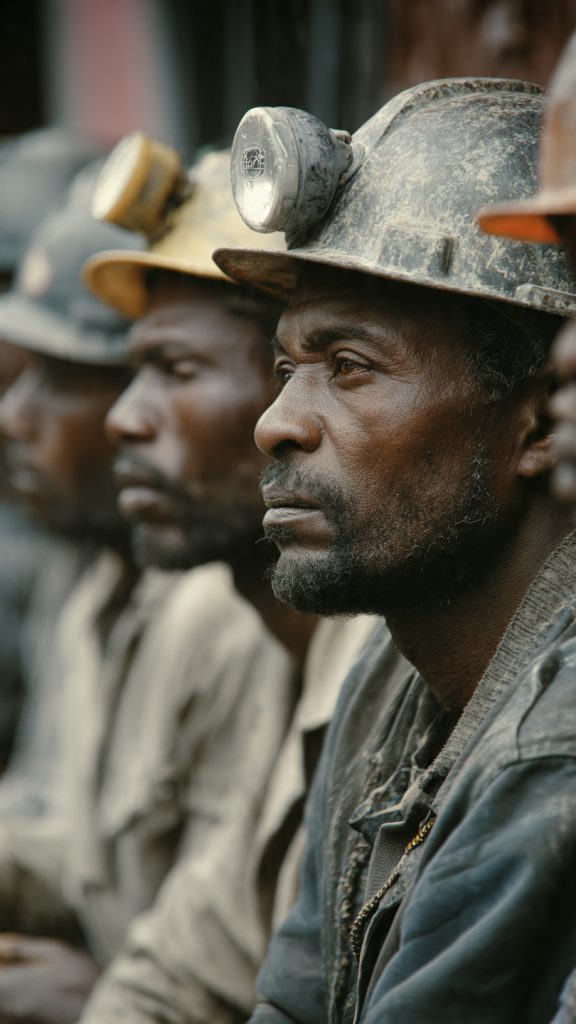
Remittance Flows from South African Mines to Mozambique during Economic Downturns
Migrant labour from Mozambique to South African mines has a long history. Mozambique remains among the top suppliers of migrant labour to South Africa . Many migrant miners send remittances back home, supporting households, livelihoods, and health expenditures. When South Africa’s mining sector faces a downturn, these remittance channels weaken, affecting health, welfare, and migration policy in both countries.
Mining Sector Stress and Employment
South Africa’s mining sector recently entered a technical recession. Output fell for consecutive quarters. Job losses reached around 10,000 workers in the first three quarters of 2024 . Mining contributes roughly 6% of South Africa’s GDP and employs nearly half a million people . As a result, Mozambican miners face job insecurity, wage cuts, or retrenchments, which reduce remittance capacity.
Remittance Patterns South Africa → Mozambique
South Africa → Mozambique is one of the largest remittance corridors in the SADC region (finmark.org.za). Remittance inflows to Mozambique grew from US $93 million in 2016 to US $454 million in 2021 (0.8% → 2.8% of GDP), then dropped to US $303 million in 2022 (sihma.org.za). Formal remittances declined by about 36% since 2022 (finmark.org.za). High transaction costs and informal flows make accurate measurement difficult (thedocs.worldbank.org).
Economic Recessions and Remittances
Employment and Wage Contraction
Mine closures or production cuts reduce migrant miners’ work hours. This drop in income directly limits their ability to send money home.
Return Migration and Disrupted Livelihoods
During the COVID‑19 lockdown, thousands of Mozambican miners were stranded, blocking income and remittances (clubofmozambique.com). Economic shocks often trigger partial or full return migration, further disrupting transnational livelihoods.
Shift from Formal to Informal Channels
Economic stress drives some migrants to use informal remittance channels. These routes may cost more and be less reliable. A 36% drop in formal remittances since 2022 suggests such a shift is likely (finmark.org.za).
Currency and Transfer Costs
Even employed migrants face reduced purchasing power due to exchange-rate volatility. South African mining wages often involve deferred payments, adding conversion risk for Mozambican miners (clubofmozambique.com).
Impact on Recipient Households
Households relying on remittances may experience income shortfalls, limited access to health care, and reduced nutrition. Remittances once accounted for nearly 3% of Mozambique’s GDP, so drops are significant (sihma.org.za).
Intersectional Vulnerabilities
-
Gender: Male miners dominate employment, but female remitters face specific risks like job loss and caregiving pressures (ffremittances.org).
-
Age: Younger migrants may find alternative work more easily, while older workers face higher job insecurity.
-
Nationality: Mozambican migrants mainly come from Maputo, Gaza, and Inhambane. Their remittances are critical for community support (voanews.com).
-
Documentation Status: Around 89% of SADC migrants in South Africa are undocumented . Undocumented workers often lose jobs faster, face exclusion from relief, and must rely on informal remittance channels.
Observations from the Corridor
-
Formal outflows from South Africa rose from R6 billion in 2016 to over R19 billion in 2024. Mozambique’s share decreased ~36% since 2022 .
-
COVID‑19 disrupted thousands of migrant miners’ incomes, showing how quickly remittance flows can change .
Health and Policy Implications
-
For migrants and households: Reduced remittances lower household resilience and access to nutrition, health care, and schooling .
-
For South African policy: Mining downturns push migrants into informal work, reducing access to occupational health services. Labour policy must protect migrant health during economic shocks.
-
For Mozambique: Financial-inclusion programs and social protection help households absorb shocks when remittances drop.
-
For regional cooperation: Bilateral agreements and infrastructure must anticipate downturns. High remittance costs remain a barrier .
Limitations and Research Gaps
-
No dataset isolates remittances specifically from Mozambican miners.
-
Informal flows remain largely unmeasured.
-
Intersectional data for miners are limited.
-
Causality between mining downturns and remittance declines is under-researched.
-
Health outcomes in recipient communities linked to remittance changes remain under-documented.
Calls to Action
South African policymakers and mining industry:
-
Include migrant workers in economic-shock planning.
-
Maintain occupational health services.
-
Promote low-cost, formal remittance channels.
Mozambican government and diaspora actors:
-
Monitor mining remittance flows.
-
Promote digital financial inclusion.
-
Support social protection in migrant-sending communities.
NGOs, health practitioners, researchers:
-
Study remittance changes and health impacts.
-
Disaggregate data by gender, age, and documentation.
-
Advocate for cross-border data sharing to guide evidence-based policy.
Conclusion
Recessions in South African mining reduce remittance flows to Mozambican households. These declines threaten household welfare, health, and community resilience. Coordinated action by policymakers, industry, civil society, and researchers is crucial. Strengthening formal remittance channels and protecting migrant health can buffer vulnerable households during downturns.
Recent Posts:
- What Sectors Are Experiencing Labor Shortages Due to Return Migration from South Africa to Lesotho and Eswatini?
- How Has Economic Insecurity in South Africa Changed Zimbabwean Migrants’ Job-Seeking Strategies Post-Pandemic?
- What Are the Long-Term Economic Effects of Beitbridge Border Restrictions on SADC Regional Migration Patterns?
- How Did COVID-19 Border Closures Between South Africa and Zimbabwe Impact Informal Cross-Border Traders?
- Can South Africa’s Healthcare System Sustain the Influx of Lesotho and Malawian Migrants During TB Outbreaks?