
Long-Term Economic Effects of Beitbridge Border Restrictions on SADC Regional Migration Patterns
Opening: Beitbridge – A Border Under Strain
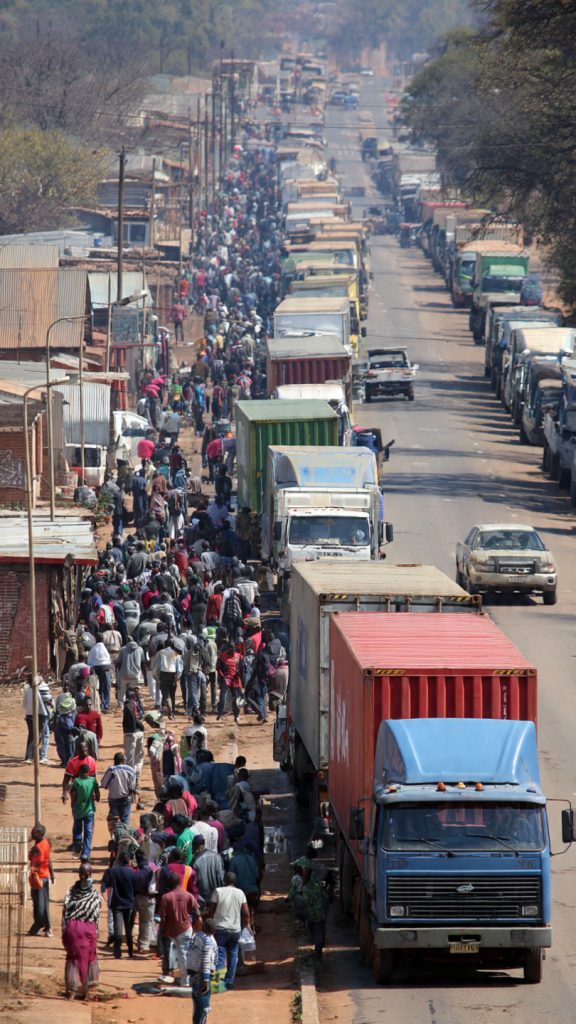
On 22 December 2021, the Southern African Development Community (SADC) reported that delays at five key border posts along the North-South Corridor—including the Beitbridge Border Post between Zimbabwe and South Africa—cost regional economies roughly R5 billion (US $330 million) over five months (news24.com).
While this figure focused on trade delays, migration patterns are equally affected. For health systems, labour mobility, and regional integration, the long-term economic and health impacts of border restrictions at Beitbridge raise critical policy questions.
This blog examines these effects on regional migration, labour markets, informal trade, and health systems, drawing on evidence from 2020–2025, South African policy contexts, and perspectives from migrants, healthcare providers, NGOs, and policymakers.
Policy Context: Understanding Beitbridge Restrictions
Strategic Role of Beitbridge
Beitbridge lies at the nexus of the SADC North-South Corridor, linking the port of Durban in South Africa through Zimbabwe to Zambia, Malawi, and the DRC (sadc.int). Its location means any operational or regulatory restriction can ripple across migration flows and regional economies.
Nature of Restrictions and Controls
Recent years saw stricter controls, delays, enhanced screening, and documentation requirements at Beitbridge:
-
During the COVID‑19 pandemic, health checks and disinfection procedures slowed cross-border movement (accord.org.za).
-
South Africa’s Border Management Authority (BMA), established in 2020 and operational in 2023, reflects increasing formalisation of border controls (protectionweb.co.za).
-
Zimbabwe tightened control over illegal crossings along the Limpopo River to curb smuggling and undocumented migration (heraldonline.co.zw).
Implications for Migration
These restrictions result in longer wait times, higher costs, and uncertain crossing legitimacy. Consequently, migrants may turn to informal or alternative routes. These dynamics affect migration volumes, remittances, informal trade, and access to health services.
Economic Impacts of Border Restrictions
1. Shift to Informal and Irregular Pathways
When formal crossings become burdensome, migrants often resort to informal routes. This increases vulnerability regarding documentation, labour rights, and health access.
Moyo & Nshimbi (2019) found that migrants using Beitbridge or Johannesburg’s inner city often faced harassment and informalisation (repository.up.ac.za).
Economic consequences include:
-
Migrants accepting lower wages in unregulated jobs, reducing formal contributions.
-
Expansion of informal cross-border trade outside tax frameworks, eroding fiscal revenue (citizen.co.za).
-
Reduced multiplier effects from remittances and skill transfer.
2. Labour Market Effects
South Africa relies on migrant labour in agriculture, hospitality, informal trade, and services. Border restrictions:
-
Delay or deter migration, creating labour shortages and increasing costs.
-
Increase undocumented employment, reducing worker protections and burdening health systems.
-
Reduce remittance flows, affecting household consumption in Zimbabwe (heraldonline.co.zw).
3. Informal Cross-Border Trade and Micro-Enterprises
Informal trade, often led by women and youth, suffers from increased costs and risks. A 2021 study noted that 40% of cross-border bus companies failed to reopen due to stricter Beitbridge controls (citizen.co.za).
Consequently:
-
Traders scale down or relocate, reducing economic activity.
-
Informal goods flow declines, affecting livelihoods across the region.
4. Health System and Human Capital Implications
Economic impacts influence health systems:
-
Fewer documented migrants access health services, while undocumented arrivals often present late with advanced conditions (timeslive.co.za).
-
Disruption of continuity of care (HIV, TB, NCDs) occurs with informal migration.
-
Reduced income and remittances worsen health outcomes, lowering productivity.
5. Regional Integration Setbacks
Persistent border inefficiencies undermine SADC objectives of free movement and trade facilitation:
-
Reduced labour mobility decreases matching of workers to demand.
-
Lower productivity gains from labour specialization and remittances occur.
-
Potential foreign investment and value chain development face delays.
Case Studies & Perspectives
Case 1: Female Zimbabwean Micro-Trader
M. S., 34, previously travelled weekly through Beitbridge to Musina. Stricter checks in 2021 reduced trips to biweekly, increased costs, and cut profits by 25%. She now operates alone, highlighting challenges for women in informal trade.
Case 2: Young Male Migrant Worker
T. M., 23, from Malawi, faced a three-week contract delay for seasonal citrus work due to border restrictions. He missed part of the harvest, reducing earnings and remittances.
Case 3: Health Provider Perspective
A nurse at Musina Hospital observed fewer documented migrants accessing antiretroviral therapy, while undocumented patients arrived later and in poorer health (timeslive.co.za).
Policy Analysis: Gaps and Intersectional Issues
Identified Policy Gaps
-
Limited migration flow data weakens planning.
-
Poor integration of migration, labour, and health policy leaves migrant needs unaddressed.
-
Documentation barriers limit access to formal work and social services.
-
Informal economy undervalued in policy discussions.
-
Gender and age dynamics overlooked, affecting vulnerable populations.
Intersectional Factors
-
Gender: Women face sexual violence and economic exclusion.
-
Age: Youth may miss seasonal employment due to delays.
-
Nationality/documentation: Zimbabwean, Malawian, and DRC nationals experience differential treatment.
-
Health status: Migrants with HIV, TB, or NCDs face care disruptions.
Ethical Considerations
Policies must adopt a human-rights lens, ensuring access to health services, labour protections, and migration regularisation.
Innovative Solutions & Program Models
Mobile Health Outreach
Médecins Sans Frontières (MSF) established a mobile clinic at Beitbridge, serving deportees and transit migrants with primary care including HIV/TB services (citizen.co.za).
Border-Corridor Labour Partnerships
A managed seasonal labour programme between South Africa and Zimbabwe could stabilise labour flows while ensuring permits, health screening, and insurance.
Digitised Documentation & Micro-Trader Support
E-permit systems and simplified border clearance for small traders would reduce costs and increase economic inclusion (theblast.co.zw).
Regional Health-Migration Data Integration
A SADC database linking border posts to health providers would improve planning for mobile populations and facilitate evidence-based interventions.
Actionable Recommendations & Timeline
South African Government
-
6 months: Dedicated small trader/migrant lane at Beitbridge.
-
12 months: Pilot seasonal labour migration scheme with Zimbabwe, including health protections.
-
24 months: Integrate health screening and continuity of care protocols at Beitbridge.
Zimbabwean Authorities
-
6 months: Audit informal crossings along the Limpopo and regularise routes.
-
12 months: Provide incentives for micro-traders to use formal border channels.
-
24 months: Develop a joint cross-border micro-enterprise corridor with South Africa.
NGOs & Public Health Actors
-
3 months: Map migrant micro-trader and worker populations.
-
9 months: Deploy mobile health outreach units for primary care and HIV/TB services.
-
18 months: Implement workshops for migrant traders on health, labour rights, and financial literacy.
SADC / Regional Institutions
-
12 months: Commission a regional study on migration flows through Beitbridge.
-
24 months: Establish a SADC Corridor Migration & Health Unit for monitoring and support.
Limitations & Research Gaps
-
Post-COVID (2020–2025) migration data for Beitbridge remains limited.
-
Disaggregated statistics by gender, age, and documentation status are sparse.
-
Little systematic evidence exists on health outcomes from border restrictions.
-
Economic modelling of long-term labour mobility losses needs development.
Conclusion & Call to Action
Beitbridge border restrictions affect trade and regional migration. They influence labour markets, informal trade, migrant health, and SADC integration.
Policy makers must view border management as migration and health policy. Public health practitioners must anticipate shifts in migrant vulnerabilities. NGOs should support gender-sensitive programmes and access to services. Researchers must generate robust longitudinal data.
Immediate action can transform Beitbridge from a bottleneck into a hub for resilient migration, inclusive trade, and healthier mobile populations.
References
-
SADC. “Southern African economies lose R5 bn in 5 months because of border delays.” News24, 2021. (news24.com)
-
Herald Online. “Zimbabwe infrastructure development saves SADC US$330 m.” 2024. (heraldonline.co.zw)
-
Moyo, I. & Nshimbi, C.C. “Border practices at Beitbridge Border and Johannesburg inner city.” 2019. (repository.up.ac.za)
-
The Citizen. “How migrants between Zimbabwe and SA access healthcare in border towns.” 2022. (citizen.co.za)
-
TimesLIVE. “How migrants who move between Zimbabwe and SA access healthcare in border towns.” 2022. (timeslive.co.za)
-
IOL. “Cosatu warns One Stop Border Bill’s silence on illegal migration and exports threatens jobs.” 2025. (iol.co.za)
-
Herald. “Zanu-PF cluster notes B/Bridge border challenges.” 2025. (allafrica.com)
-
SADC. “SADC conducts assessment study of Beitbridge Border Post.” 2025. (heraldonline.co.zw)
-
The Blast. “Beitbridge border clears trucks in 3-6 hours, SADC study finds.” 2025. (theblast.co.zw)
-
SADC. “Beitbridge Border Post Enhances Regional Trade Efficiency.” 2025. (sadc.int)
-
ACCORD. “COVID‑19 stresses Intra‑SADC Trade.” 2024. (accord.org.za)
-
ProtectionWeb. “Beitbridge trade efficiency praised by SADC.” 2025. (protectionweb.co.za)
-
The Citizen. “Border issues hurt SA and Zimbabwe’s economy.” 2019. (citizen.co.za)
-
Herald. “Impact of South Africa’s proposed budget on Zimbabwe.” 2024. (heraldonline.co.zw)
-
MSF South Africa. “Migrants detained en masse in SA – health risks.” 2025. (msf.org.za
Recent Posts:
- How Did COVID-19 Border Closures Between South Africa and Zimbabwe Impact Informal Cross-Border Traders?
- Can South Africa’s Healthcare System Sustain the Influx of Lesotho and Malawian Migrants During TB Outbreaks?
- What Barriers Do Mozambican Migrants Face When Accessing HIV/AIDS Treatment in South African Clinics?
- How Does Cross-Border Migration of Nurses and Doctors from Zimbabwe Affect South Africa’s Public Healthcare Capacity?
- What will Southern Africa’s migration landscape look like in 2050 if current climate trends continue, and how should policymakers prepare today?