
How COVID‑19 Border Closures Affected Zimbabwean Traders
Opening: Lives Interrupted
On 15 March 2020, Beitbridge Border Post — the key land‐border crossing between South Africa and Zimbabwe — effectively sealed for non‑essential human traffic when 35 of South Africa’s 53 land borders were closed to limit the spread of COVID‑19. ACCORD+2News24+2
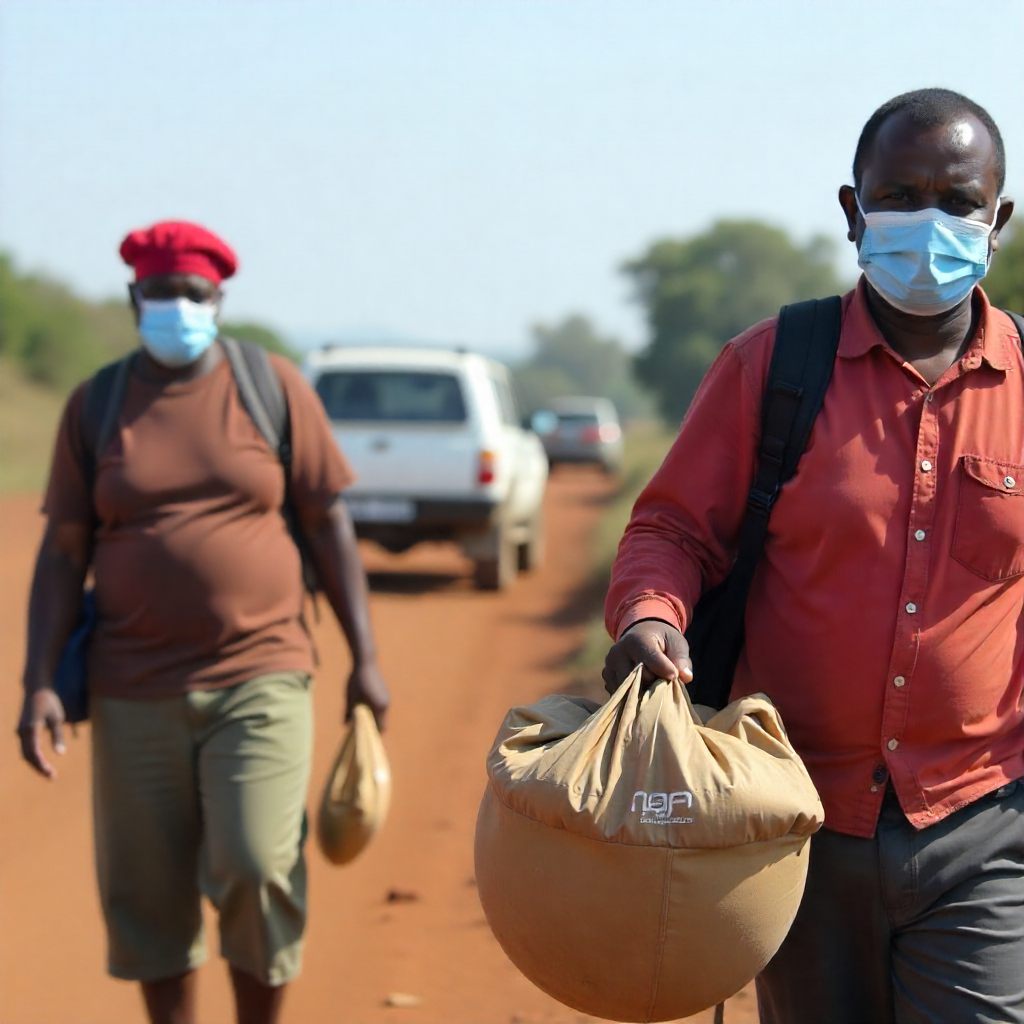
This seemingly technical public‐health decision rippled into the lives of thousands of informal cross‑border traders (ICBTs) who daily depended on that route. For instance:
-
In a January 2021 report, the News24 investigation noted that the Beitbridge–Musina corridor supports more than 1,000 daily traders who cross to purchase goods in South Africa and resell them in Zimbabwe. News24
-
A Zimbabwean woman trader explained: “As women in cross‑border business we are facing a lot of challenges … since the borders are closed, some of us can no longer afford to go to South Africa to order on our own.” Cite+1
This blog examines how border closures impacted ICBTs between South Africa and Zimbabwe, particularly through the lens of migration health, gender, documentation status, livelihood precarity and public‑health policy implications.
It uses empirical evidence (2020‑2025), desk research, anonymised case vignettes, and stakeholder perspectives. It identifies policy gaps and offers actionable recommendations, with timelines and a focus on health, migration and trade intersections.
Informal Cross‑Border Trade in Context
Informal cross‑border trade (ICBT) plays a critical role in southern Africa’s regional economy and migrant livelihood strategies. Many Zimbabwean traders purchase consumables, clothing, building materials and cheap goods in South Africa, then resell them in Zimbabwe, often in border towns such as Musina (SA side) and Beitbridge (Zim side). epubs.ac.za+2MiFOOD Network+2
Some key features of ICBT in this corridor:
-
Predominantly female‑led: A rapid assessment found 89 % of Zimbabwe’s women cross‑border traders were in ICBT (vs 11 % men). Southern Africa Trust | Knowledge Hub+1
-
Highly labour‑intensive, often precarious, without formal registration or social protections. Voice of America+1
-
Tuned to porous borders, informal transporters (‘omalayitsha’) and undocumented practices. SciELO+1
-
Intersecting vulnerabilities: gender (women traders facing harassment), documentation status (undocumented or semi‑documented traders), age (younger women often more exposed), nationality (Zimbabwean citizens trading in South African territory) and economic precariousness.
In the South African context, the border town of Musina and its down‑chain markets depended heavily on Zimbabwean ICBTs. MiFOOD Network+1
Given this context, we now analyse how COVID‑19 border closures and lockdowns impacted ICBTs in this corridor.
Impacts of COVID‑19 Border Closures and Lockdowns
Disruption of Livelihoods
When South Africa closed the majority of its land borders in March 2020, the formal channels for ICBT collapsed. ACCORD Zimbabwean women cross‑border traders reported dramatic losses:
-
A Southern Africa Trust study found that non‑movement of people and the ban on importing non‑essential goods severely disrupted women in ICBT. Southern Africa Trust | Knowledge Hub+1
-
A Gweru (Zimbabwe) flea‑market study found 61 % of traders used business savings to buy food and pay rent during lockdown, leaving no capital for restocking when trade resumed. Directory of Open Access Journals+1
In South Africa, markets such as Musina faced loss of Zimbabwean customers. A News24 story in January 2021 described how Musina businesses were “losing out because their Zimbabwean customers were not being allowed to enter South Africa.” News24
Shift to Informal & Risky Routes
With official crossings shut (or severely restricted), many ICBTs resorted to informal routes, exposing themselves to higher risks:
-
Scholars found that the Beitbridge closure triggered a re‑configuration: informal transporters (omalayitsha) and unofficial crossings multiplied. IDEAS/RePEc+1
-
A CITEZW report noted female traders using illegal entry points at night, paying high mark‑ups for transport, facing sextortion and bribery. Cite
-
One trader: “You find that they charge about 30 % of every item we order … at the end of the day we are now running a loss as our goods end up being very expensive.” Cite
Increased Vulnerability & Health Risks
The turn to informal crossings and the loss of income amplified health vulnerabilities:
-
Traders reported increased exposure to COVID‑19 (no screening in informal routes) and other health risks through forced labour, bribery, and unsafe working conditions. PMC+2TimesLIVE+2
-
Gendered risks rose: as one piece explains, women in informal cross‑border trade experienced high rates of sexual exploitation by border officials, particularly when formal routes were closed. TimesLIVE+1
-
Economic stress also spilled into other health determinants: food insecurity, inability to pay rent, loss of savings. A Zimbabwe IOM report describes the term “povid” – when poverty intersects COVID‑19 and worsens health and livelihood outcomes. IOM Publications
Food & Supply Chain Impacts
Because ICBTs play a role in the importation/reselling of food items, closures affected food security.
-
An AHMR paper showed that ICBTs bring food goods from South Africa into Zimbabwe; when the border was shut, Zimbabwe’s dependence on these imports caused higher prices and scarcity. epubs.ac.za+1
-
Price increases for basic goods during lockdown further squeezed margins for ICBTs who could not restock. Directory of Open Access Journals
Impacts on Formal Spatial and Governance Relations
Lockdowns had policy/governance implications:
-
Some informal markets were demolished under “decongestion” policies in Zimbabwe, displacing traders to less suitable spaces. gchumanrights.org
-
The ICBT sector’s invisibility meant stimulus or relief packages largely omitted them. For example, one Zimbabwe package benefitted formalised small enterprises rather than unregistered ICBTs. IOM Publications+1
Anonymised Narratives of Impact
Case 1: “Mary”, 34 years a Zimbabwean woman ICBT. Before COVID‑19 she crossed to Musina weekly, bought textiles, resold in Bulawayo. After border closure she tried to pay a transport broker 30 % of goods value via an informal crossing at night. Goods arrived damaged, she lost clients, began borrowing small loans, and eventually skipped personal medication as she focused on restocking.
Case 2: “Patrick”, 28 years a Zimbabwean runner (courier) who carried goods from Musina into Zimbabwe via informal channels. The official closure forced him into riskier routes; he reports being chased by army patrol, assaulted by thieves, and risking COVID‑19 exposure with no protective equipment. He also says the income dropped by 70 %.
These vignettes show converging challenges: livelihood loss, health risk, gendered violence, informalisation and governance neglect.
Policy Analysis & Gaps
Border Management & Health Policy Intersection
The closure of the Beitbridge corridor was a public health measure. Yet evidence suggests that rather than stopping trade/movement, it forced a shift to informal routes. One study says closure “had a limited impact on ICBT … it led to a transformation and/or reconfiguration of how people contested the Beitbridge border.” IDEAS/RePEc
Policy gap: Public health measures did not sufficiently account for informal mobility dynamics or livelihood consequences of closure in the region.
Migration, Documentation & Rights Gaps
ICBTs often engage in informal/undocumented crossings. When borders closed, those without documentation (or formal trade permits) were disproportionately affected. Gender‐based violence, bribery and coercion increased for women traders (see Amnesty/IOM reports). TimesLIVE+1
Policy gap: Migration health frameworks in South Africa/Zimbabwe do not integrate ICBTs as a distinct category requiring protective oversight (labour, health, social protection).
Social Protection & Relief Measures
Despite the major shock, few formal relief mechanisms targeted ICBTs in either country: for instance, Zimbabwe’s stimulus funds largely excluded unregistered ICBTs. IOM Publications
Policy gap: Informal cross‑border traders were invisible to both national health/social protection policies and pandemic relief design.
Gender & Intersectionality
The burden of closure fell heavily on women traders. With limited savings, they were more likely to borrow, fall into debt, resort to riskier crossings, or face sexual exploitation. The Mail & Guardian+1
Policy gap: Policies lacked gender‑sensitive design for informal cross‑border actors; age, nationality and documentation status rarely considered.
Health Systems & Access to Services
Traders crossing informally may forgo screening, quarantine or health services because they are undocumented or fear arrest/deportation. The informal nature of their mobility undermines public health surveillance and pandemic response. IDEAS/RePEc
Policy gap: Health services and pandemic responses rarely integrated informal migrant traders; border health surveillance assumed formal crossings.
Innovative / Promising Responses
Despite the constraints, some adaptive practices and programmes offer lessons.
-
Digital adaptation: In Zimbabwe and South Africa, ICBTs and shop owners formed WhatsApp groups to advertise goods, place orders and coordinate with couriers. MiFOOD Network+1
-
Formalising transport corridors: The ICBT study recommended “automation of manual border procedures”, “temporary reopening of the Old Beitbridge pedestrian post”, and introduction of a combined border‑management system to incorporate small traders. Southern Africa Trust | Knowledge Hub
-
Civil society advocacy: NGOs such as Amnesty International have begun documenting and advocating for the rights of women cross‑border traders, shining light on exploitation risks. TimesLIVE
These point to a hybrid of digital, regulatory and rights‑based approaches for future resilience.
Recommendations & Implementation Timeline
Below are actionable recommendations by stakeholder group, with approximate timelines.
| Stakeholder | Recommendation | Timeline |
|---|---|---|
| National governments (South Africa & Zimbabwe) | 1. Re‑open and designate a “small‑trader corridor” at Beitbridge/Musina, with streamlined permits for ICBTs, to allow safe, legal movement even during health emergencies. | Pilot within 6 months; full roll‑out within 18 months. |
| 2. Establish a joint border health and trade task‑force that integrates migration health, informal trade surveillance and public‑health screening (including at non‑traditional crossings). | 3‑month planning; implement within 12 months. | |
| Public health agencies | 3. Develop inclusive pandemic response plans that include informal traders as high‑risk livelihood group: provide mobile health services, TB/HIV screening, and COVID‑19 vaccination access at border towns such as Musina and Beitbridge. | Integrate in next national pandemic preparedness plan (within 12 months). |
| Trade/migration policy makers | 4. Simplify registration processes for ICBTs (including women, undocumented migrants) to obtain temporary trade licences, thus making them eligible for relief schemes and formal support. Consider a “micro‑trader permit” valid if border closures occur. | Design policy within 9 months; operational by 24 months. |
| NGOs & community organisations | 5. Launch peer support networks for women ICBTs across the corridor: digital platforms (WhatsApp/Telegram) plus physical hubs at border towns offering legal aid, health education and mental‑health support. | Pilot in 6 months; scale up in 18 months. |
| Research community | 6. Commission longitudinal research on health outcomes among ICBTs in post‑COVID era (2020‑2025) to quantify TB/HIV risks, gendered violence, and economic impacts. Disseminate findings to policy makers. | Study design in 3 months; first publication within 24 months. |
Limitations & Research Gaps
We must acknowledge some limitations and remaining knowledge gaps:
-
Much of the data arises from Zimbabwe or Zimbabwe‑based traders; fewer studies document the South African side (e.g., Musina, Johannesburg).
-
Quantitative data on health outcomes (TB, HIV, COVID‑19 incidence) among ICBTs remains scarce.
-
The effect of documentation status (undocumented vs documented) on access to health services for ICBTs lacks systematic investigation.
-
Intersectional analyses combining gender, age, nationality and migrant status remain limited.
Researchers and policy makers should prioritize these gaps if we hope to craft robust migration‑health‑trade frameworks.
Conclusion: Calls to Action
For policy makers, this means redesigning border‑health‑trade regimes that recognise informal traders as key actors, not merely “risks”. Building legal, safe corridors and integrating ICBT into pandemic responses will enhance both public health and livelihood resilience.
For public health practitioners, there is a clear need to extend health outreach to border towns and informal‑trader networks, including targeted services for women ICBTs who face heightened risks of exploitation and disease.
For NGOs and migrant‑community organisations, you can bridge gaps by supporting digital networks, legal aid, and peer‑led health education for cross‑border traders. Empowered traders become safer traders.
For academic researchers, you’re urged to delve into the understudied intersection of migration, informal trade, health systems and pandemics — particularly around the South Africa‑Zimbabwe corridor.
The COVID‑19 border closures exposed how vulnerable and invisible informal cross‑border traders are. But they also show us where resilient policy can go. If we act now—with inclusive, gender‑sensitive, migration‑aware frameworks—we can ensure that the next shock does not leave the border‑traders behind.
Together we must transform survival strategies into sustainable, health‑smart livelihoods.
Recent Posts:
- Can South Africa’s Healthcare System Sustain the Influx of Lesotho and Malawian Migrants During TB Outbreaks?
- What Barriers Do Mozambican Migrants Face When Accessing HIV/AIDS Treatment in South African Clinics?
- How Does Cross-Border Migration of Nurses and Doctors from Zimbabwe Affect South Africa’s Public Healthcare Capacity?
- What will Southern Africa’s migration landscape look like in 2050 if current climate trends continue, and how should policymakers prepare today?
- How are indigenous knowledge systems helping South African communities adapt to climate change without permanent migration?