
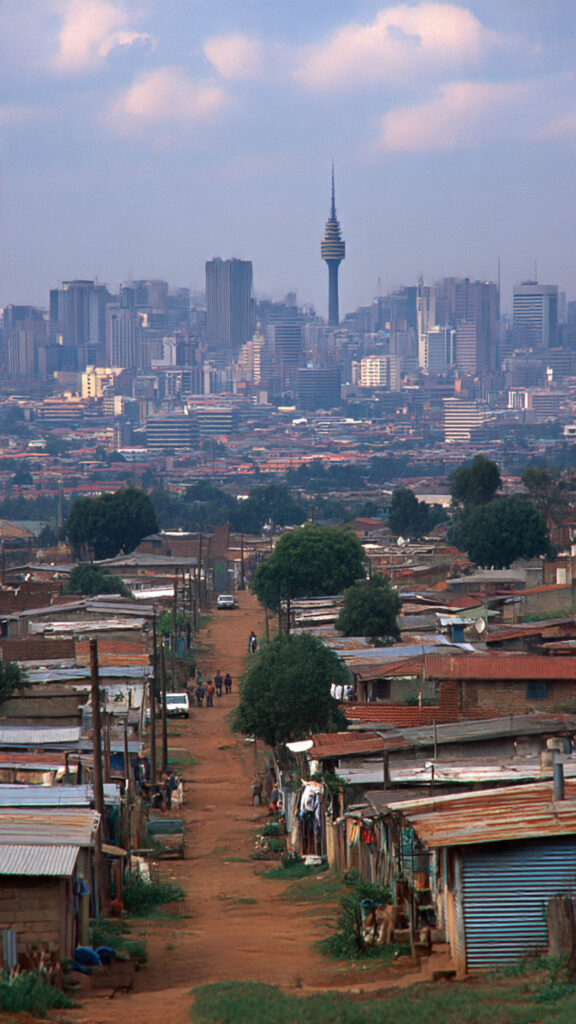
A Health Systems Perspective
When Numbers Tell Human Stories
Mariam arrived in Johannesburg from Zimbabwe in 2021. She was seven months pregnant. At the Rahima Moosa Mother and Child Hospital, she waited six hours before healthcare workers asked for her documentation. They spoke in isiZulu and seTswana—languages she didn’t understand. Eventually, staff members told her to return the next day. She gave birth at a friend’s home instead.
Mariam’s story isn’t unique. Over 40% of patients at Rahima Moosa are foreign nationals, both documented and undocumented. This single statistic reveals how profoundly migration has reshaped South African cities since 1994.
South Africa hosts approximately 2.9 million international migrants as of 2020, making it the region’s primary migration destination. Migrants comprise roughly 9% of the South African workforce, with 84% originating from SADC countries—primarily Zimbabwe, Mozambique, Lesotho, and Malawi.
Understanding the Migration-Health Nexus in Urban Centers
Geographic Concentration Creates Health Pressure Points
Between 2021 and 2026, Gauteng Province expects approximately 1,381,024 migrants, while Western Cape anticipates 492,427. These numbers concentrate overwhelmingly in Johannesburg, Pretoria, Cape Town, and Durban—cities now grappling with unprecedented healthcare demands.
In Gauteng’s Emfuleni subdistrict, 4% of the population was born outside South Africa. Male migrants slightly outnumber females at 53%, with most falling into the working-age bracket of 20-49 years.
Internal migration compounds these pressures. Southern Africa experiences some of the world’s highest urban growth rates, driven by both natural increase and rural-urban migration. Consequently, cities face dual challenges: serving established residents while accommodating new arrivals from within and beyond national borders.
The Constitutional Promise Meets Implementation Reality
South Africa’s legal framework appears progressive. The Constitution guarantees healthcare access to everyone regardless of nationality or legal status. Refugees and asylum seekers can access the same basic healthcare services as South African citizens, including free antiretroviral treatment for HIV.
The National Health Insurance Act, signed into law on May 15, 2024, promises coverage for South African citizens, permanent residents, refugees, certain categories of individual foreigners, and all children. However, asylum seekers, undocumented migrants, and foreigners will only receive coverage for emergencies and notifiable conditions.
Yet policy and practice diverge dramatically. Undocumented Zimbabwean migrants in Pretoria’s Nellmapius suburb reported discrimination, with healthcare workers prioritizing South Africans over foreign nationals. Nurses frequently communicated in vernacular languages migrants didn’t understand, creating additional barriers.
The Health System Strain: Separating Myth from Reality
Medical Xenophobia as Institutional Practice
Research in Gauteng public health facilities revealed that medical xenophobia occurs systematically. Healthcare providers witnessed discrimination against migrants at work, though they also indicated sensitivity to migrants’ health needs.
Healthcare workers face their own pressures. South Africa’s public healthcare system struggles with general shortages of medical personnel, facilities lacking beds, staff facing high workloads, and low morale among nurses. These challenges stem from post-apartheid governance shortcomings, mismanagement, corruption, and underfunding—not from migrant populations.
Debunking the “Migrant Burden” Narrative
Political leaders often scapegoat migrants for health system failures. Former Gauteng health officials claimed foreign nationals put pressure on hospitals because they weren’t budgeted for, calling this “the leading cause of overcrowding”.
However, non-nationals constitute no more than 8% of the total population. Most people moving to South Africa from the region seek work, suggesting no direct relationship between high mobility and healthcare utilization.
Despite contrary claims, distress migrants compose only 3.9% of the overall population. Yet the government deliberately scapegoats them for its failures to deliver on post-apartheid promises.
The Complex Health Profile of Migrant Populations
HIV, TB, and the Double Disease Burden
Migrant men in Johannesburg face particular risks for challenges engaging in HIV care. Research conducted between October and November 2020 at five sites where migrants gather revealed poor understanding of HIV service utilization patterns.
South Africa’s National Strategic Plan for HIV, tuberculosis, and sexually transmitted infections conceptualizes mobile populations, migrants, and undocumented foreigners as vulnerable for HIV and STIs, specifically mentioning labor migrants in big construction and infrastructure projects.
The reality proves more nuanced. Migration itself doesn’t cause disease. Instead, structural barriers—documentation challenges, language difficulties, discrimination, and fear of deportation—prevent migrants from accessing prevention and treatment services.
Mental Health in the Shadows
Mental health remains the most neglected dimension of migrant health in South African cities. Primary healthcare services prove poorly prepared for handling displaced populations, with migration impacting services through increases in mental health disorders alongside infectious diseases, reproductive health issues, and malnutrition.
Case Study One: Thabo’s Journey Through the Healthcare Maze
Thabo, a 32-year-old man from Malawi, worked construction in Johannesburg for four years. When he developed persistent cough and night sweats—classic TB symptoms—he delayed seeking care for three months. His reasons were multiple: expired documentation, previous negative experiences at clinics, inability to afford transport costs, and fear of deportation.
When Thabo finally presented to a clinic, healthcare workers initially refused service until he produced documentation. A sympathetic nurse eventually intervened. TB testing confirmed drug-sensitive tuberculosis. Thabo received treatment but struggled with adherence due to his mobile work schedule and lack of stable housing.
His story illustrates how documentation status, occupational mobility, housing instability, and healthcare system barriers interact to compromise both individual health and public health outcomes.
Case Study Two: Sarah’s Maternal Healthcare Experience
Sarah, a 26-year-old Zimbabwean woman with documented refugee status, became pregnant during her second year in Cape Town. Despite legal entitlement to maternal care, she faced multiple obstacles.
Healthcare workers at her local clinic questioned her documentation authenticity. They spoke predominantly in isiXhosa during consultations. Sarah missed several prenatal appointments because clinic hours conflicted with her informal sector work schedule. When complications arose during her seventh month, she presented to a district hospital where staff members were more accommodating.
Sarah delivered a healthy baby. However, her difficulties registering her child’s birth—requiring documentation she couldn’t easily obtain—meant her son remained without a birth certificate for eight months, complicating access to child health services.
Case Study Three: The Congolese Doctor Who Became a Patient
Dr. Jean, a qualified physician from the Democratic Republic of Congo, fled conflict in 2019 and sought asylum in Durban. Despite his medical credentials, foreign qualification recognition barriers prevented him from practicing. He worked as a security guard instead.
When Dr. Jean developed severe hypertension, he initially self-prescribed medication based on his medical knowledge. Financial constraints and humiliation at being treated as a patient rather than a colleague led him to avoid formal healthcare settings.
Eventually, Dr. Jean sought care at a Congolese-run private clinic in Johannesburg, where he felt understood without language barriers or discrimination. His case highlights how skilled migrants experience health system failures and how migrant-led health services fill critical gaps.
Policy Gaps Undermining Health Equity
Documentation as a Structural Determinant of Health
Financial difficulties prevented many migrants from maintaining documentation. Work permit applications proved expensive, with new passports costing over R3,500. Those with expired visas had to purchase border extensions for R300 monthly.
The Department of Home Affairs faced challenges considering asylum applications within 180 days, resulting in asylum-seekers receiving appointments a year or even two years later. Refugee Reception Office closures forced asylum-seekers to travel to Musina or Durban every three months to extend documents—an impossible burden for poor migrants.
The NHI Implementation Challenge
The National Health Insurance Act represents South Africa’s most ambitious health reform. However, its provisions limit coverage for asylum seekers, undocumented migrants, and foreigners to only emergencies and notifiable conditions.
This restriction contradicts universal health coverage principles and creates practical problems. Healthcare providers must determine immigration status—a role they’re neither trained nor equipped for. This requirement institutionalizes discrimination and undermines public health by discouraging migrants from seeking timely care.
Integration vs. Security: Competing Policy Logics
South Africa’s 2017 government report expressed concern about irregular migration of low-skilled or unskilled laborers from the SADC region, claiming it threatened economic stability and national sovereignty. Subsequently, the government implemented the Border Management Authority Bill of 2020 and moved the Department of Home Affairs to the Justice, Crime Prevention, and Security Cluster.
This securitization approach contradicts health-focused migration governance. Public health improves through inclusive policies, not enforcement-driven exclusion.
Innovative Solutions: What’s Working on the Ground
Community-Led Health Initiatives
The Johannesburg Migrant Health Forum represents a collaborative model bringing together organizations working in migration and health. They developed resources including ‘What are my rights?’ pamphlets for patients in Gauteng, available in English and French.
This peer-to-peer approach addresses information gaps while building trust between migrant communities and health services. Community health workers from migrant backgrounds prove particularly effective in bridging cultural and linguistic divides.
Migration-Aware Health Programming
Progressive healthcare facilities are adopting migration-aware approaches. These include:
Multilingual service provision: Employing interpreters or multilingual staff members reduces communication barriers. Some facilities use telephone interpretation services for less common languages.
Flexible documentation policies: Progressive facilities accept various forms of identification, including expired documents or asylum-seeker permits, recognizing that documentation challenges shouldn’t prevent emergency or essential care.
Evening and weekend clinics: Extended hours accommodate migrants working informal sector jobs who cannot attend during standard clinic times.
Mobile health services: Some NGOs operate mobile clinics in areas with high migrant concentrations, bringing services to vulnerable populations.
Private Sector Innovation
Migrant-operated private clinics, particularly those run by Congolese doctors in Johannesburg, successfully serve migrant communities by eliminating language barriers and reducing discrimination.
While private services address immediate needs, they also highlight public system failures. Sustainable solutions require public sector reform rather than privatization of migrant healthcare.
Legal Advocacy and Strategic Litigation
Organizations like Lawyers for Human Rights, Section27, and the Scalabrini Centre pursue strategic litigation to enforce migrants’ constitutional rights. In July 2023, civil society organizations condemned Gauteng health facilities’ defiance of laws and a recent court order regarding free access to healthcare for pregnant women.
These legal interventions establish precedents, raise awareness, and pressure government entities to align practice with policy. However, implementation remains inconsistent across provinces and facilities.
Intersectional Vulnerabilities: Who Falls Through the Cracks?
Gender Dimensions
Women migrants face unique challenges. Despite court orders, Gauteng health facilities continued denying services to pregnant foreign nationals. Maternal healthcare access determines not only women’s health but also child health outcomes and intergenerational wellbeing.
Women also experience higher rates of gender-based violence during migration journeys and in destination communities. Fear of deportation prevents many from reporting abuse or seeking post-violence healthcare.
Age-Related Vulnerabilities
While the NHI Act promises coverage for all children regardless of origin, implementation mechanisms remain unclear. Children born to undocumented migrants face particular challenges accessing birth registration, vaccination programs, and child health services.
Elderly migrants constitute a small but vulnerable population. They often lack family support networks, face language barriers, and experience difficulty navigating complex healthcare systems.
Nationality and Documentation Status
Not all migrants experience health system barriers equally. In 1996, South Africa offered permanent residence to approximately 180,000 SADC citizens who had lived in the country for at least five years. However, more recent programs for Zimbabweans, Lesotho citizens, and Angolans only granted temporary status with no permanent residence pathway.
This creates a hierarchy of access. Permanent residents face fewer barriers than those with temporary status, who in turn fare better than asylum-seekers, who experience less discrimination than undocumented migrants.
The Way Forward: Evidence-Based Recommendations
For National Government (Timeline: 2025-2026)
1. Amend the NHI Act to ensure universal coverage: Extend full NHI benefits to all residents regardless of immigration status. This aligns with WHO guidelines and constitutional principles.
2. Streamline documentation processes: Implement the 180-day asylum application deadline. Reopen Refugee Reception Offices in major urban centers. Reduce costs for work permits and documentation renewal.
3. Establish migration health units: Create dedicated units within the National Department of Health to develop migration-aware policies, provide technical support, and monitor implementation.
4. Launch national anti-xenophobia campaigns: Partner with civil society to combat discrimination in healthcare settings and communities.
For Provincial Health Departments (Timeline: 2025-2027)
1. Implement standardized training programs: Train all healthcare workers on migrants’ rights, cultural competency, and non-discrimination within 18 months.
2. Deploy multilingual staff and interpretation services: Recruit healthcare workers who speak common SADC languages. Contract telephone interpretation services for facilities serving diverse populations.
3. Establish monitoring mechanisms: Create confidential complaint channels for migrants experiencing discrimination. Investigate complaints within 30 days and implement corrective actions.
4. Develop province-specific migration health strategies: Gauteng and Western Cape should prioritize this given their high migrant populations.
For Metropolitan Municipalities (Timeline: 2025-2026)
1. Integrate migration into urban health planning: City development plans for Johannesburg, Cape Town, Durban, and Pretoria should explicitly address migration’s health implications rather than treating it only as a housing or security challenge.
2. Support community-based health programs: Fund NGOs and community organizations providing migrant health services. Expand successful models like the Johannesburg Migrant Health Forum to other cities.
3. Improve data collection: Implement systems capturing migration-related health data while protecting migrants’ privacy and avoiding discriminatory profiling.
For Healthcare Facilities (Timeline: Immediate)
1. Display rights information prominently: Post multilingual signage explaining migrants’ healthcare rights at all facilities.
2. Revise triage and admission procedures: Train staff to accept various documentation forms. Ensure no patient is turned away from emergency or primary healthcare due to documentation status.
3. Extend operating hours: Offer evening and weekend services to accommodate informal sector workers.
4. Create welcoming environments: Ensure staff treat all patients with dignity regardless of nationality.
For NGOs and Civil Society (Timeline: Ongoing)
1. Continue strategic litigation: Hold government accountable for implementing existing legal frameworks protecting migrants’ health rights.
2. Expand peer education programs: Train migrant community health workers to provide information, support healthcare access, and facilitate health system navigation.
3. Document systematic barriers: Conduct ongoing research documenting migrants’ healthcare experiences. Use evidence to advocate for policy changes.
4. Build coalitions: Strengthen partnerships among migrant rights organizations, health NGOs, professional associations, and affected communities.
For Academic and Research Institutions (Timeline: 2025-2028)
1. Prioritize migration health research: Investigate health outcomes, service utilization patterns, intervention effectiveness, and cost implications of migration-aware health programming.
2. Build local evidence: Current research relies heavily on cross-sectional studies. Conduct longitudinal research tracking migrant health trajectories over time.
3. Address research gaps: Study internal migration’s health impacts, mental health needs, non-communicable disease prevalence, and health-seeking behavior among diverse migrant populations.
4. Translate research to practice: Develop practical tools healthcare providers can implement. Partner with health departments to pilot and scale evidence-based interventions.
For International Development Partners (Timeline: 2025-2027)
1. Provide technical and financial support: Assist South Africa in implementing migration-aware health systems strengthening.
2. Facilitate regional cooperation: Support SADC member states in developing harmonized approaches to migrant health, including portable health records and mutual recognition of health insurance.
3. Fund innovation: Support pilot projects testing new service delivery models, documentation approaches, and community engagement strategies.
Confronting Difficult Truths: Limitations and Uncertainties
Data Deficiencies Undermine Evidence-Based Planning
Data capturing non-monetary remittances, skills transfer dynamics, and internal migration patterns remains inadequate. Internal remittance flows are common, but reporting suffers from existing data gaps.
Without reliable data, policymakers struggle to plan appropriately, resources get misallocated, and migrants remain invisible in health system planning.
The Research-Implementation Gap
Extensive research documents migrants’ healthcare barriers. Yet findings remain consistent over time with no unified governmental approach developed to address the issues. This indicates systemic inefficiencies in resolving healthcare access for undocumented migrants.
Academic research must translate more effectively into policy change and implementation. This requires stronger partnerships between researchers, policymakers, practitioners, and affected communities.
Xenophobia’s Persistent Shadow
Between 1994 and August 2024, xenophobic violence in South Africa resulted in 679 deaths, over 5,000 shops looted, and approximately 128,000 displacements.
Healthcare doesn’t exist in a vacuum. When communities experience poverty, unemployment, and service delivery failures, scapegoating becomes politically expedient. Addressing health equity requires confronting xenophobia’s root causes: inequality, exclusion, and failed governance.
Fiscal Constraints and Political Will
South Africa faces significant fiscal pressures. The NHI itself remains controversial, with concerns about affordability, governance, and implementation capacity. In this context, advocating for inclusive migrant coverage faces political resistance.
However, excluding migrants proves more costly than including them. Delayed care leads to complications, emergency room usage, and disease transmission—all more expensive than preventive care and early treatment.
Conclusion: Health Equity as a Foundation for Regional Integration
Post-apartheid migration from SADC countries has fundamentally transformed South African cities. Johannesburg, Pretoria, Cape Town, and Durban now function as regional urban centers serving populations from across Southern Africa.
This transformation brings opportunities: economic dynamism, cultural diversity, innovation, and regional integration. It also brings challenges: strained infrastructure, competition for resources, social tensions, and health system pressures.
The health sector stands at a crossroads. One path leads toward exclusion, enforcement, and “medical xenophobia”—an approach that undermines public health, violates constitutional principles, and damages South Africa’s regional leadership. The other path embraces inclusion, recognizing that health knows no borders and that protecting migrants’ health protects everyone’s health.
The evidence is clear. Legal frameworks exist. Innovative solutions work. What remains lacking is political will and coordinated implementation.
For health policymakers: Champion migration-aware health systems. Resist securitization. Implement existing legal protections.
For public health practitioners: Serve all patients with dignity. Challenge discriminatory practices. Advocate for systemic change.
For NGO workers: Continue documenting barriers. Expand community-based programs. Pursue strategic litigation.
For researchers: Generate actionable evidence. Build implementation partnerships. Address critical knowledge gaps.
South Africa’s constitution promises dignity, equality, and healthcare access to everyone within its borders. Three decades after apartheid’s end, the nation must decide whether this promise extends to all people or only to some.
The answer will determine not only migrants’ health but also South Africa’s future as a constitutional democracy and regional leader.
Recent Posts:
- What Role Do Digital Payment Platforms Play in Facilitating Remittances from South Africa?
- How Did the Discovery of Gold and Diamonds Shape Historical Migration Patterns to South Africa?
- What Skills and Expertise Do African Migrants Bring to South Africa’s Labour Market?
- How Do Remittance Costs from South Africa Compare to Other African Host Countries?