
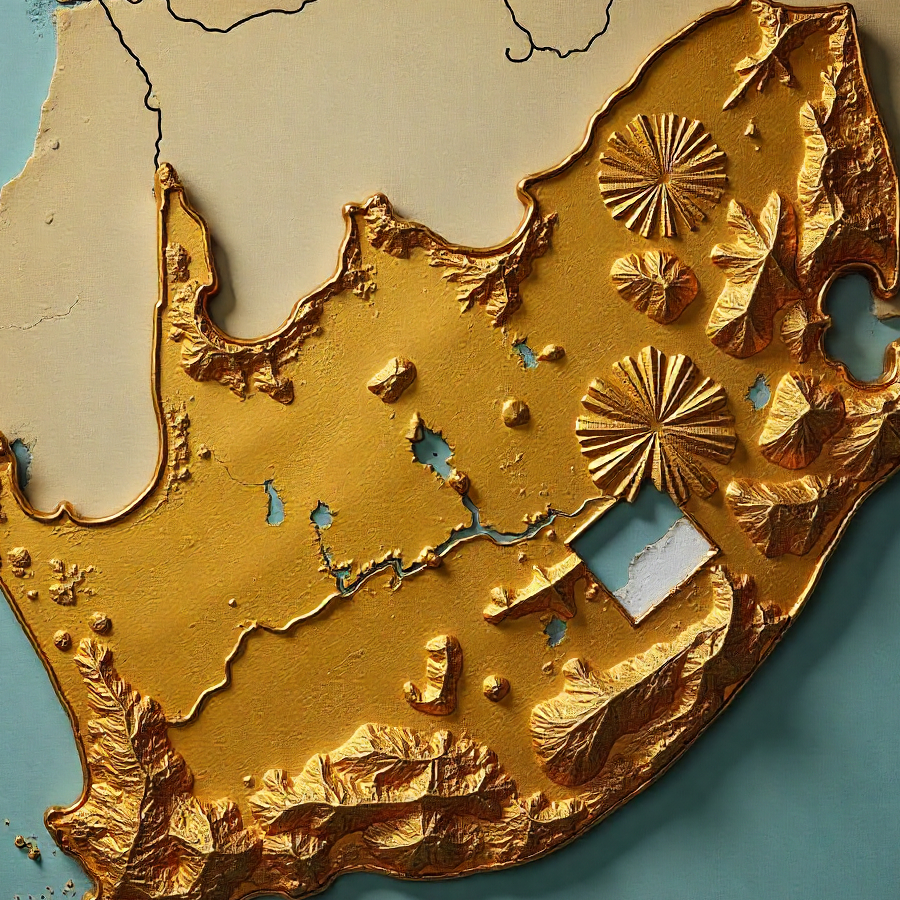
From Mines to Migration: Gold, Diamonds, and South Africa’s Legacy
Introduction: Gold, Diamonds, and Migration
The 19th-century discoveries of diamonds in Kimberley (1867) and gold in the Witwatersrand (1886) transformed South Africa. These discoveries created a global mining hub. They also triggered mass migration, particularly from neighboring countries like Lesotho, Mozambique, and Eswatini. By 2020, over 450,000 workers were employed in South Africa’s mines, many being migrants (World Bank, 2023).
These historical events shaped not only migration patterns but also health policies. They created a legacy of occupational disease, restricted labor rights, and healthcare inequities. Understanding this history is key to addressing current health challenges for migrants.
The Mineral Revolution and Labor Migration
The “Mineral Revolution” changed South Africa’s economy. The discovery of gold and diamonds required large numbers of workers. Mining companies and colonial authorities sought cheap, mobile labor.
To enforce this, the government implemented pass laws and built compounds. These measures restricted movement and reinforced racial segregation (SA History, 2025).
Migrant labor became central to mining operations. Workers came from Lesotho, Mozambique, and Eswatini under temporary contracts. Mining companies ensured labor supply while preventing permanent settlement (Migration Policy, 2024).
Health Impacts: Mining and Disease
Migrant miners faced hazardous working conditions. Exposure to dust and poor ventilation caused silicosis and tuberculosis (TB). TB rates in South African mines reach 2,500–3,000 cases per 100,000 workers. This is nearly ten times the World Health Organization’s threshold for emergency intervention (World Bank, 2023).
After leaving the mines, ex-workers often struggle to access healthcare. For example, ex-Malawian miners face bureaucratic obstacles when seeking compensation for lung disease (PMC, 2024). Limited cross-border coordination worsens the problem.
Policy Landscape: Past and Present
During apartheid, migration policies controlled labor and prioritized exploitation over health. Post-apartheid reforms improved rights and healthcare access. South Africa ratified the 2014 SADC Protocol on Employment and Labour, aiming to protect migrant workers. Yet, many regional agreements remain unimplemented (Public Health JHU, 2023).
Migrants continue to face discrimination in healthcare. A 2025 study revealed that medical xenophobia often blocks access to essential services (ScienceDirect, 2025).
Case Studies: Voices from the Field
Case 1: Malawian Ex-Miner
A Malawian miner returned home with chronic respiratory issues. Bureaucratic hurdles delayed his access to healthcare and compensation, despite clear links to his mining work (PMC, 2024).
Case 2: Lesotho Migrant Miner
A Lesotho miner contracted HIV while working in South Africa’s platinum mines. Returning home, he faced difficulty accessing antiretroviral therapy. Cross-border healthcare coordination was limited (Taylor & Francis, 2024).
Innovative Solutions
Several initiatives address migrant miners’ health challenges:
-
Southern Africa TB in the Mining Sector Initiative
This program reduces TB incidence by improving diagnosis, treatment, and prevention (World Bank, 2023). -
Partnership on Health and Mobility in the Mining Sector
Implemented by IOM, this project enhances health services for mobile miners (IOM South Africa, 2024).
These programs demonstrate that cross-border cooperation and mobile health services can mitigate long-standing health inequities.
Policy Recommendations
To improve outcomes for migrant miners:
-
Enhance Cross-Border Health Cooperation
South Africa and neighboring countries must coordinate health services and compensation systems. Target: 2026 implementation. -
Expand Occupational Health Services
Deploy mobile clinics in mining communities. Conduct regular screenings and provide preventive care. Target: 2025–2027. -
Strengthen Legal Protections
Ratify regional agreements, such as the SADC Protocol, to protect labor rights. Target: 2025–2026. -
Address Medical Xenophobia
Train healthcare providers to ensure equitable access. Target: 2025–2026. -
Raise Awareness
Educate migrants about their health rights through outreach campaigns. Target: 2025–ongoing.
Conclusion: Lessons from History
The gold and diamond discoveries shaped South Africa’s migration and health landscape. Migrant labor continues to face occupational hazards and healthcare barriers.
Policymakers, NGOs, and health systems must learn from this history. By enhancing cross-border cooperation, strengthening legal protections, and investing in targeted healthcare services, South Africa can improve migrant health outcomes. Inclusive policies today can prevent the perpetuation of inequities rooted in the 19th century.
References (15+ Credible Sources)
Recent Posts:
- What Skills and Expertise Do African Migrants Bring to South Africa’s Labour Market?
- How Do Remittance Costs from South Africa Compare to Other African Host Countries?
- Which African Countries Receive the Most Remittances from South African-Based Migrants?
- What Were the Major Migration Waves into South Africa During the Apartheid Era?
- How Has African Migration Contributed to South Africa’s Economic Growth Over the Past Decade?