
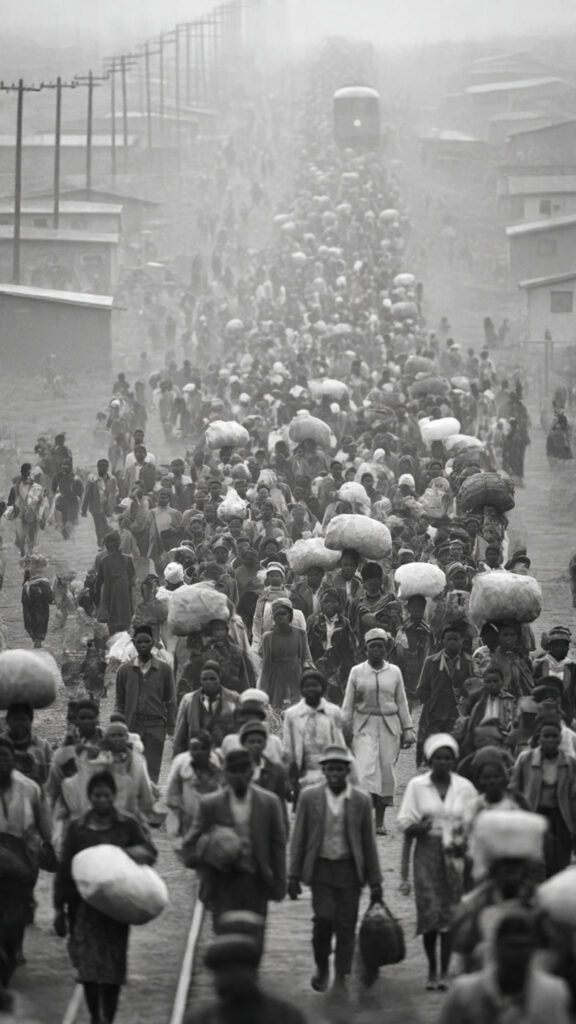
Migration Under Apartheid: Policies, Impacts, and Health Implications
Introduction: Migration Patterns During Apartheid
Between 1948 and 1994, South Africa’s apartheid government enforced strict policies that controlled migration. These policies aimed to maintain white minority rule and heavily restricted the movement of black South Africans and non-citizens. Consequently, they shaped the country’s demographics, labor market, and public health landscape.
For example, in the 1980s, tens of thousands of Mozambican migrant workers lived in overcrowded hostels near mines, struggling with poor sanitation and limited healthcare access (IOM, 2021).
Policy Frameworks and Migration Control
The “Two-Gate” System
The apartheid government applied a “two-gate” approach:
-
Front Gate: The government welcomed white Europeans and other “desirable” migrants who contributed to economic development.
-
Back Gate: African migrants entered the country primarily as laborers and faced strict restrictions.
Employers, such as mining companies and white-owned farms, often bypassed immigration laws to secure cheap labor (ScienceDirect, 1998).
Pass Laws and Influx Control
The government enforced Pass Laws, which required black South Africans to carry passbooks and restricted their presence in urban areas. Officials arrested individuals who violated these laws and, in many cases, forcibly removed them from cities (HRW, 1998).
Migration Flows and Their Impacts
Internal Migration
Despite restrictions, many black South Africans migrated internally in search of economic opportunities. The government confined them to “homelands,” but urban centers attracted workers, creating overcrowded settlements. These settlements lacked basic services, increasing vulnerability to infectious diseases (World Bank, 2007).
Cross-Border Migration
South Africa’s mining industry attracted workers from Mozambique, Malawi, Lesotho, and other neighboring countries. The government regulated this influx through labor agreements while mines imposed harsh conditions. Migrants had few rights and limited access to healthcare (IOM, 2021).
Health Implications of Migration Policies
Public Health Challenges
The apartheid policies affected public health in multiple ways:
-
Overcrowded Living Conditions: Migrant hostels and informal settlements lacked sanitation and healthcare services. These conditions increased the spread of tuberculosis and other infectious diseases.
-
Limited Healthcare Access: Migrants often received no formal medical care, worsening health disparities.
-
Mental Health Issues: Displacement and social exclusion caused significant psychological stress.
Case Study: Mozambican Migrant Workers
Mozambican miners in the 1980s lived in cramped hostels without adequate medical facilities. High rates of tuberculosis and other infections emerged. Stigma and restrictive policies prevented many from seeking treatment, amplifying health risks.
Post-Apartheid Migration and Health
After 1994, South Africa dismantled apartheid-era restrictions, but challenges persisted. Migrants continued to face:
-
Xenophobic Violence: Migrants, particularly from other African countries, experienced attacks despite legal protections.
-
Healthcare Barriers: Undocumented migrants still struggled to access healthcare.
-
Urbanization Pressures: Rapid urban growth strained hospitals and clinics in cities like Johannesburg, Durban, and Cape Town.
Policy Recommendations
To mitigate lingering effects of apartheid-era migration policies, stakeholders must:
-
Improve Healthcare Access: Ensure all residents, regardless of documentation, can access essential healthcare.
-
Promote Social Cohesion: Develop programs that encourage cooperation between local communities and migrants to reduce xenophobia.
-
Upgrade Living Conditions: Invest in sanitation and housing improvements in informal settlements.
-
Monitor Policy Impact: Regularly assess migration and health policies to identify gaps and adjust interventions.
Implementation Timeline: Short-term (0–2 years) focus on healthcare access and social programs; medium-term (2–5 years) on infrastructure upgrades; long-term (5+ years) on policy evaluation and adjustment.
Conclusion
Apartheid-era migration policies created lasting demographic, social, and health challenges in South Africa. Although the post-1994 government reformed laws, migrants continue to face barriers and vulnerabilities. Policymakers, NGOs, and healthcare providers must adopt inclusive strategies, invest in infrastructure, and strengthen community programs to improve health outcomes. Addressing these challenges requires urgent action to ensure equity and resilience in South Africa’s migration and health systems.
Recent Posts:
- How Has African Migration Contributed to South Africa’s Economic Growth Over the Past Decade?
- What Are the Main Challenges African Migrants Face When Sending Remittances from South Africa?
- How Much Money Do African Migrants Send Home from South Africa Annually?
- How do deportation policies in South Africa impact the human rights of migrant workers and their families?
- What are the challenges faced by skilled migrants navigating South Africa’s critical skills visa system and their workplace rights?