
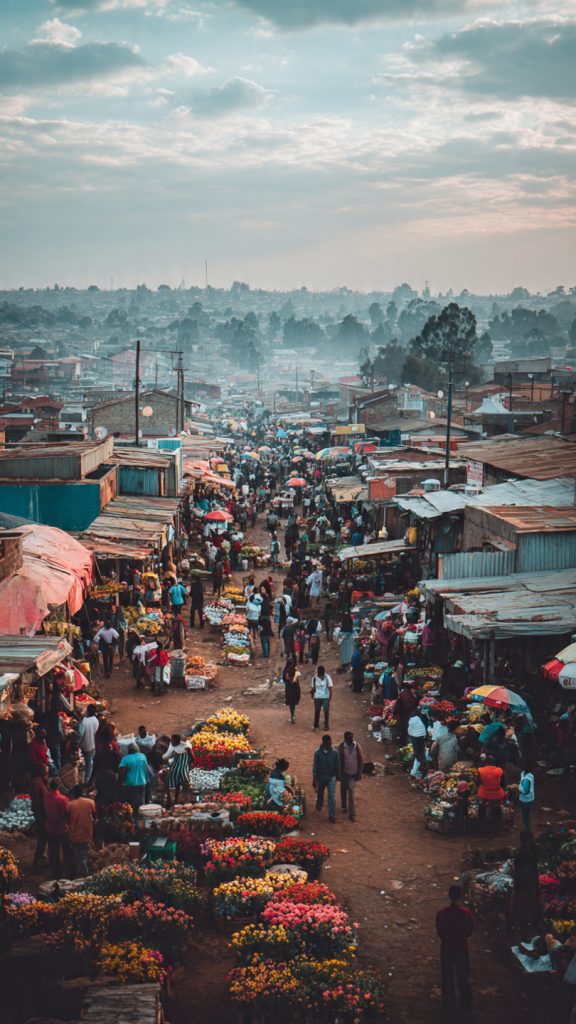
Informal Food Markets and Migrant Survival in South African Cities
Introduction: A Daily Struggle Hidden in Plain Sight
At 5 a.m. on a cold winter morning in Johannesburg’s inner city, Amina*, a 29-year-old Somali mother, arranges vegetables at her small pavement stall. She arrived in South Africa six years ago, hoping for stability. Yet rising food prices, unsafe living environments, and limited job options now shape her daily reality. Even so, her tiny stall feeds more than 150 households each week—many of them migrants who rely on affordable, accessible informal food markets to survive.
Across South Africa’s major cities—including Johannesburg, Cape Town, Durban, Pretoria, and Gqeberha—informal food markets serve as critical lifelines. They offer low-cost fresh produce, culturally familiar foods, flexible credit systems, and social support networks. These markets help thousands of African migrants cope with food insecurity, unemployment, and barriers to formal services.
Yet policymakers often overlook informal markets. Municipal by-laws, policing practices, and outdated regulations continue to marginalize informal traders, despite their essential role in urban nutrition and livelihoods. Because of these gaps, migrant communities remain vulnerable to hunger, chronic diseases, unsafe work conditions, and exploitation.
This article examines how informal food markets sustain migrant populations, highlights policy gaps, and outlines actionable reforms. It draws on recent evidence (2020–2025), South African policy documents, and real experiences shared by migrants, NGOs, and city officials.
Informal Food Markets: Essential Food Security Systems in Migrant Communities
Why Informal Markets Matter
Informal markets act as primary food access points for many migrants for several reasons:
-
Affordability: A 2023 Pietermaritzburg Economic Justice & Dignity (PMBEJD) report shows that informal outlets sell key foods up to 35% cheaper than supermarkets.
-
Flexible purchasing: Migrants often buy small quantities daily due to limited storage, unstable income, and overcrowded housing.
-
Cultural relevance: Informal traders stock African staples such as plantains, cassava flour, injera, cowpeas, and tilapia, often unavailable in major retail stores.
-
Proximity: Trading hubs in Marabastad (Pretoria), Yeoville (Johannesburg), Bellville (Cape Town), and South Beach (Durban) sit close to migrant residential clusters.
These advantages create an ecosystem that supports both nutrition and livelihoods. Yet the contribution of informal markets rarely appears in national food security strategies.
Current Policy Landscape and Gaps
National Policy Frameworks
Several policies mention informal trade, but few address migrant needs directly:
-
National Development Plan (NDP) 2030 acknowledges informal trading but lacks targeted support for migrant traders.
-
Integrated Food Security Strategy (IFSS) promotes household food security yet excludes informal markets as food system actors.
-
Municipal informal trading policies (e.g., City of Johannesburg 2021 Informal Trading Policy) attempt regulation, but inconsistent implementation creates barriers.
-
Immigration Act (2002) and Refugees Act (1998, amended 2017) govern documentation, yet delays and rejections push many migrants into informal work.
Key Policy Gaps
Although policies exist, several gaps persist:
-
Limited recognition of informal markets as food security assets
Government strategies often focus on agriculture and supermarkets, ignoring informal actors who feed millions. -
Restrictive municipal by-laws
Street traders constantly face confiscations, evictions, or fines, disrupting food access in poor neighbourhoods. -
Documentation barriers
Migrants lacking permits struggle to register trading stalls or access wholesale supply networks. -
Weak coordination between municipalities and social development departments
This leads to inconsistent enforcement and minimal support for migrant traders, despite their economic contribution. -
Lack of health and safety support
Informal traders often operate without sanitation, waste management, or basic infrastructure.
These gaps deepen urban inequalities and worsen food insecurity among vulnerable groups.
Food Security Trends in South African Cities (2020–2025)
Recent studies reveal worsening household food insecurity:
-
70% of low-income migrant households in Cape Town experience moderate to severe food insecurity (UCT African Centre for Cities, 2022).
-
Urban unemployment among migrants remains above 35%, pushing families toward low-cost informal markets (Stats SA, 2023).
-
Food inflation rose by 14% between 2022 and 2023, increasing reliance on street vendors (Stats SA CPI reports).
-
54% of African migrants in Johannesburg depend on informal markets at least five days a week (University of Johannesburg CSDA Study, 2024).
These numbers show that informal food markets are not marginal—they are central to survival.
Case Study 1: Congolese Families Surviving Through Bellville’s Informal Market
Bellville Transport Interchange in Cape Town serves as a food hub for Congolese, Somali, and Ethiopian migrants. Traders sell plantains, salted fish, cassava leaves, and beans sourced from Johannesburg wholesalers or imported informally through community networks.
During interviews conducted by a Cape Town-based NGO in 2023:
-
Migrant families said they “could not survive” without low-cost fresh produce sold by informal traders.
-
Several mothers highlighted the importance of vendors offering credit during emergencies.
-
Traders described harassment by law enforcement, saying confiscations pushed them “deeper into poverty.”
Despite these challenges, the Bellville market continues to anchor food security for thousands of households.
Case Study 2: Yeoville Market as a Social and Economic Hub for West African Migrants
Yeoville’s bustling market in Johannesburg provides affordable food and household goods for Nigerian, Congolese, Ghanaian, and Cameroonian migrants. Beyond commerce, it also acts as:
-
A cultural space where migrants access familiar foods.
-
A job hub, offering low-barrier opportunities for newcomers.
-
A support network where traders share information on housing, clinics, and legal aid.
However, traders frequently face police raids and permit disputes. Women traders—especially undocumented ones—reported higher risks of violence, bribery, and extortion.
Intersectional Realities: Who Benefits and Who Remains Vulnerable?
Women Migrants
Women make up a significant portion of informal traders. They often juggle caregiving roles, low income, and legal vulnerabilities. As a result, they rely heavily on informal credit systems and community markets. Yet they face heightened risks of harassment and gender-based violence while trading.
Undocumented Migrants
Without valid permits, many migrants cannot work formally. Informal markets become their only income source. Consequently, they face constant fear of arrest, extortion, and deportation.
Youth Migrants
Young migrants (18–30 years) often engage in informal market work due to limited education recognition and high unemployment. They require targeted entrepreneurship support and training.
Older Migrants
Older adults depend on informal markets because they cannot afford transportation to supermarkets or lack documentation to access social grants.
Understanding these intersecting vulnerabilities helps policymakers design inclusive solutions.
Public Health Implications of Informal Food Markets
Although informal markets improve food access, they also introduce challenges:
-
Limited WASH (water, sanitation, hygiene) infrastructure increases contamination risks.
-
Overcrowded spaces can contribute to infectious disease transmission, especially during outbreaks.
-
Lack of food safety support exposes both consumers and traders to health hazards.
-
Unregulated supply chains can make traceability difficult during health emergencies.
However, research shows that supportive regulation—not punitive enforcement—improves food safety while protecting livelihoods.
What Works: Promising Interventions and Community-Led Solutions
1. Cape Town’s Informal Trader Support Program (2022–2024)
The City of Cape Town piloted infrastructure upgrades in key trading markets, including Bellville and Wynberg. The initiative provided:
-
New trading bays
-
Water points
-
Improved waste management
-
Training on food handling
Early evaluations show improved hygiene and increased incomes.
2. Johannesburg’s Partnerships with Migrant Organizations
Local NGOs such as African Diaspora Health Network (ADHN) and Yeoville Market Association have partnered with the city to deliver:
-
Waste management education
-
Food safety workshops
-
Peer-to-peer business training
These partnerships strengthen trust and promote safer markets.
3. Community Savings Groups
Migrant communities in Durban and Pretoria run rotating savings (stokvel-style) groups. Members use these funds to buy stock in bulk, stabilizing prices and improving food access.
These successes show that inclusive, participatory models work best.
Policy Recommendations and Implementation Timeline
Recommendation 1: Recognize Informal Markets in National Food Security Strategies
Timeline: 6–12 months
-
Amend IFSS and NDP frameworks to include informal markets as key food system actors.
-
Establish interdepartmental working groups linking Health, Agriculture, Social Development, and municipal informal trading units.
Recommendation 2: Improve Regulatory Support and Reduce Harassment
Timeline: 3–6 months
-
Standardize municipal by-law enforcement.
-
Train metro police on rights-based approaches and anti-xenophobia guidelines.
-
Create clear, affordable permit systems.
Recommendation 3: Expand Infrastructure and Public Health Support
Timeline: 1–3 years
-
Provide clean water points, sanitation, waste disposal, and designated trading areas.
-
Offer free food safety and hygiene workshops, led jointly by Environmental Health Practitioners and migrant groups.
Recommendation 4: Strengthen Migrant Inclusion
Timeline: 12–24 months
-
Allow asylum seekers and refugees easier access to trading permits.
-
Align Home Affairs processes with municipal requirements to prevent documentation-related disruptions.
-
Support gender-sensitive market safety programs for women traders.
Recommendation 5: Invest in Data and Monitoring
Timeline: Ongoing
-
Fund city-level studies on food insecurity, migrant nutrition, and informal market economics.
-
Support academic–municipal research collaborations to evaluate reforms.
Conclusion: Building Inclusive Urban Food Systems for the Future
Informal food markets are more than trading spaces. They are cultural hubs, survival networks, and nutrition anchors for thousands of migrant families. They reduce hunger, generate livelihoods, strengthen social cohesion, and keep cities functioning every day.
Yet they continue to operate without meaningful recognition or support. To build inclusive urban food systems, policymakers must shift from punitive enforcement to collaborative governance. They must prioritize infrastructure, streamline permits, and work closely with migrant communities.
South Africa’s cities cannot achieve food security without informal markets—and informal markets cannot thrive without inclusive, evidence-based policies.
Now is the time for bold, coordinated action.
Recent Posts:
- Food Security and Coping Strategies Among Congolese Refugee Households in Cape Town
- Healthcare Access Barriers for Undocumented African Migrants in Gauteng Province: A Public Health Analysis
- Nutritional Transitions Among Zimbabwean Migrants in Johannesburg: From Traditional Diets to Urban Food Systems
- What Gender-Based Violence Prevention Strategies Are Needed for Female Migrants in Musina Transit Camps?
- How Do Overcrowded Living Conditions in Hillbrow Affect Disease Transmission Among Migrant Communities from SADC Countries?