
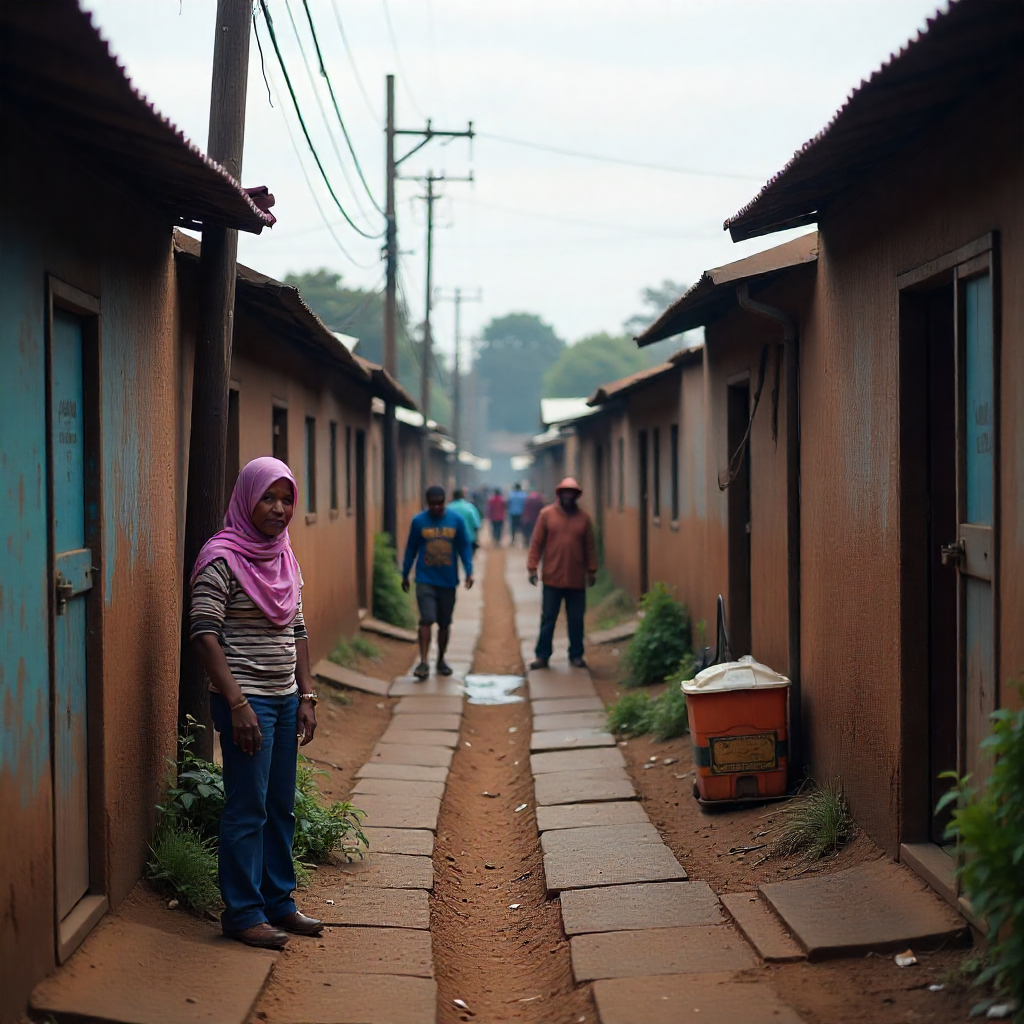
Overcrowding and Disease Transmission Among SADC Migrants in Hillbrow
Opening: A Dense Reality with High Stakes
Hillbrow, Johannesburg’s inner-city, is a microcosm of density, diversity—and vulnerability. Once a well-maintained apartment district, decades of neglect, high migration, and poverty have transformed parts of Hillbrow into overcrowded, under-serviced high-rises. Wikipedia+1 Research shows that more than half of dwellings in impoverished Johannesburg neighborhoods are overcrowded. BioMed Central For many cross-border migrants—particularly from SADC countries such as Zimbabwe, Mozambique, and Lesotho—Hillbrow is both refuge and risk.
Consider the example of an asylum-seeking family from Zimbabwe. They live in a cramped high-rise, sharing a single room with several other households. Sanitation is poor, and their pathway to care is strewn with bureaucratic and social obstacles. In this environment, when one family member contracts tuberculosis (TB) or respiratory infection, the disease’s domino effect is fueled by the very walls that house them.
The Policy Landscape: What Exists and What’s Missing
National and Municipal Frameworks
South Africa’s National Health Act (2003) guarantees access to public health services. In principle, this includes non-citizens. However, practical access remains uneven, especially for undocumented migrants. Impact Migration+1 The National Health Insurance (NHI) discussions (2019–2025) aim for universal coverage, but clarity on non-citizen entitlements—particularly the undocumented—is limited. Impact Migration
On the municipal level, the City of Johannesburg’s Department of Health has partnered with NGOs like Médecins Sans Frontières (MSF) to pilot services tailored for migrants in derelict inner-city buildings. MSF Southern Africa Yet, these efforts remain small-scale and constrained by resources.
Structural Gaps and Migrant Vulnerabilities
-
Housing: Many SADC migrants live in overcrowded, hijacked buildings or informal structures not accounted for in affordable housing programmes. SAMP
-
Healthcare Access Barriers: Discrimination, xenophobia, and bureaucratic gatekeeping persist in clinics. BioMed Central+1
-
Infrastructure Failure: Poor sanitation, waste management, and building maintenance exacerbate risk. Scribd+1
-
Data Deficit: Weak documentation and lack of disaggregated health data hamper targeted interventions for migrants.
Empirical Evidence: How Overcrowding Drives Illness in Inner-City Johannesburg
Syndemic Drivers of TB in Migrant Populations
A recent cross-sectional study in Johannesburg found that TB and HIV co-infection reached 56.1% among patients, with overcrowding and inadequate housing strongly associated with worse outcomes. PubMed+1 The authors highlight a “syndemic interaction” among behavioral risks (smoking, alcohol), structural vulnerabilities (overcrowding), and migration status.
Respiratory and Gastrointestinal Illnesses Linked to Crowding
In two low-income suburbs of Johannesburg (not far from Hillbrow), 57.6% of dwellings met the UN-Habitat definition of overcrowding. There was a clear association between crowded housing and respiratory infections, diarrhoea, and fevers. BioMed Central These findings strongly suggest that housing conditions directly influence disease burden.
Maternal and Adolescent Health Inequities
Research published in BMC Public Health shows that the Hillbrow primary health clinic—serving a large foreign-national clientele—had the lowest antenatal care attendance, lowest HIV testing rates, but among the highest HIV prevalence. PMC Barriers included fear, stigma, and discriminatory treatment from health workers.
Real-Life Stories (Anonymized)
-
“Amina,” a Mozambican mother
In her early 20s, undocumented, she lives in a four‐family flat in Hillbrow. She skipped antenatal visits: staff at the clinic demanded papers, and she feared being turned away. When her baby fell ill, she waited until the illness became severe. Without early monitoring, complications arose. -
“Thomas,” a Zimbabwean man living with HIV and latent TB
Sharing a one-room apartment with six other adults, Thomas struggled to adhere to his treatment. The overcrowding meant poor ventilation, making his dormitory-like space a fertile environment for TB transmission—and reactivation. -
“Esther,” a young Congolese woman
She resides in a hijacked building, where sanitation is unreliable: shared toilets, clogged drains, and intermittent water. After a bout of gastrointestinal illness, she realized her neighbours suffered too—but lacked access to basic care due to lack of documentation.
Intersectional Dimensions: Who Bears the Brunt?
-
Gender: Women migrants (especially pregnant and adolescent) face unique barriers to maternal health. PMC
-
Age: Children and adolescents in crowded households have greater exposure to respiratory and gastrointestinal pathogens.
-
Nationality/Documentation Status: Undocumented SADC migrants are disproportionately marginalized in housing, social services, and clinic access. SAMP
-
Socioeconomic Status: Poverty compounds risks—without stable income, families live in dilapidated buildings with poor sanitation.
-
Legal Status: Asylum seekers or undocumented migrants often avoid formal healthcare for fear of exposure, even when sick.
Structural Gaps & Policy Challenges
-
Housing Policy Doesn’t Account for Migrants
Affordable housing programs seldom include informal tenants or migrants without documentation. -
Healthcare Accessibility Is Unequal
While the NHI promises inclusivity, current implementation does not guarantee equal access for undocumented migrants. Xenophobia and bureaucratic gatekeeping still block entry. -
Service Delivery Under-Resourced
Pilots like the MSF–City of Johannesburg partnership are promising, but they are too small to cover all who need them. MSF Southern Africa -
Weak Monitoring & Data Collection
There’s a lack of disaggregated health data based on migration status, which makes it hard to tailor resource allocation.
Innovative Solutions & Promising Practices
1. MSF–City of Johannesburg Pilot (Inner-City Outreach)
The collaboration between MSF and the City Department of Health in derelict buildings provides mobile screening, translation services (refugee nurse interpreters), and capacity building for public clinics. MSF Southern Africa This model actively brings care to people where they live, reducing barriers to access.
2. Research & Community Institutions in Hillbrow
The Wits Reproductive Health and HIV Institute (WRHI), based in Hillbrow, exemplifies long-term resilient health infrastructure. QuickNews It runs the Esselen Street Clinic, sex worker services, and youth outreach programs—demonstrating how embedded health institutions can mitigate risk in high-density, migrant-rich settings.
3. Syndemic-Informed Healthcare
The syndemic research (TB, HIV, substance use, migration) in Johannesburg underscores the need for integrated healthcare—not just disease treatment but social and behavioral support, housing advocacy, and structural interventions. PMC
Policy Recommendations: A Roadmap to Change
Here are actionable recommendations, organized by stakeholder, with suggested timelines.
| Stakeholder | Action | Timeline |
|---|---|---|
| National Government (Department of Health, Housing, NHI Secretariat) | Clarify and legislate NHI entitlements for undocumented and documented migrants; explicitly include migrant communities in affordable housing initiatives. | 6–12 months: Draft clarifying regulation; 12–24 months: Integrate into NHI rollout. |
| City of Johannesburg Municipality | Scale up the MSF outreach model to all overcrowded inner-city buildings; invest in translation and cultural mediation services in public clinics. | 3–6 months: Needs assessment; 12 months: scale-up plan with budget. |
| Public Health Facilities & Clinics | Train healthcare workers in migrant-sensitive care; remove documentation barriers; adopt a syndemic care model combining TB, HIV, and social services. | 6–12 months: Sensitization training; 18 months: pilot syndemic service delivery. |
| NGOs & Community Organizations | Engage migrant communities in peer-led outreach, health education, and advocacy; support community-driven mapping of high-risk buildings. | 3 months: Establish peer teams; 9 months: community mapping and engagement. |
| Academia & Research Institutions | Conduct longitudinal studies to track health outcomes among SADC migrants in inner-city Johannesburg; push for inclusion of migration status in public health surveillance. | 6 months: design research protocols; 24–36 months: data collection and policy translation. |
Ethical Considerations & Limitations
-
Any intervention must respect migrants’ dignity and avoid stigmatization. Policies should not deepen exclusion.
-
Documentation status is sensitive: data collection must ensure confidentiality and avoid punitive consequences.
-
While Hillbrow is representative, other inner-city migrant hubs (like Yeoville, Rosettenville) also need tailored approaches.
-
Research gaps remain: more data on comorbidity (e.g., TB-HIV-diabetes) in migrant communities is urgently needed.
Conclusion: A Call to Action
Overcrowded living conditions in Hillbrow are not just a housing crisis—they are a public health crisis affecting cross-border migrants from SADC countries. High transmission risk for TB, HIV, respiratory, and gastrointestinal diseases thrives in these cramped, underserved environments.
Health policy makers must explicitly integrate migrant rights into the NHI and housing programs. City authorities must scale outreach models like those run by MSF and support cultural mediation. Healthcare providers must dismantle barriers and deliver integrated, syndemic care. NGOs and migrant-led groups should be central partners in outreach and advocacy. Researchers must commit to long-term engagement, distributing data that informs contextual policy.
Ending the cycle of illness in Hillbrow means reshaping how our systems view and serve migrants—not as marginal “others,” but as integral members of our urban health ecosystem. It’s not just a moral imperative; it’s smart public health.
Recent Posts:
- What Alternative Data Sources Can Track Real-Time Migration Movements Across the South Africa-Mozambique Corridor?
- Can Mobile Money Transfer Data Predict Migration Flows Between Johannesburg and Harare More Accurately Than Official Statistics?
- How Do Remittance Flows from South African Mines to Mozambique Change During Economic Recessions?
- What Sectors Are Experiencing Labor Shortages Due to Return Migration from South Africa to Lesotho and Eswatini?
- How Has Economic Insecurity in South Africa Changed Zimbabwean Migrants’ Job-Seeking Strategies Post-Pandemic?