
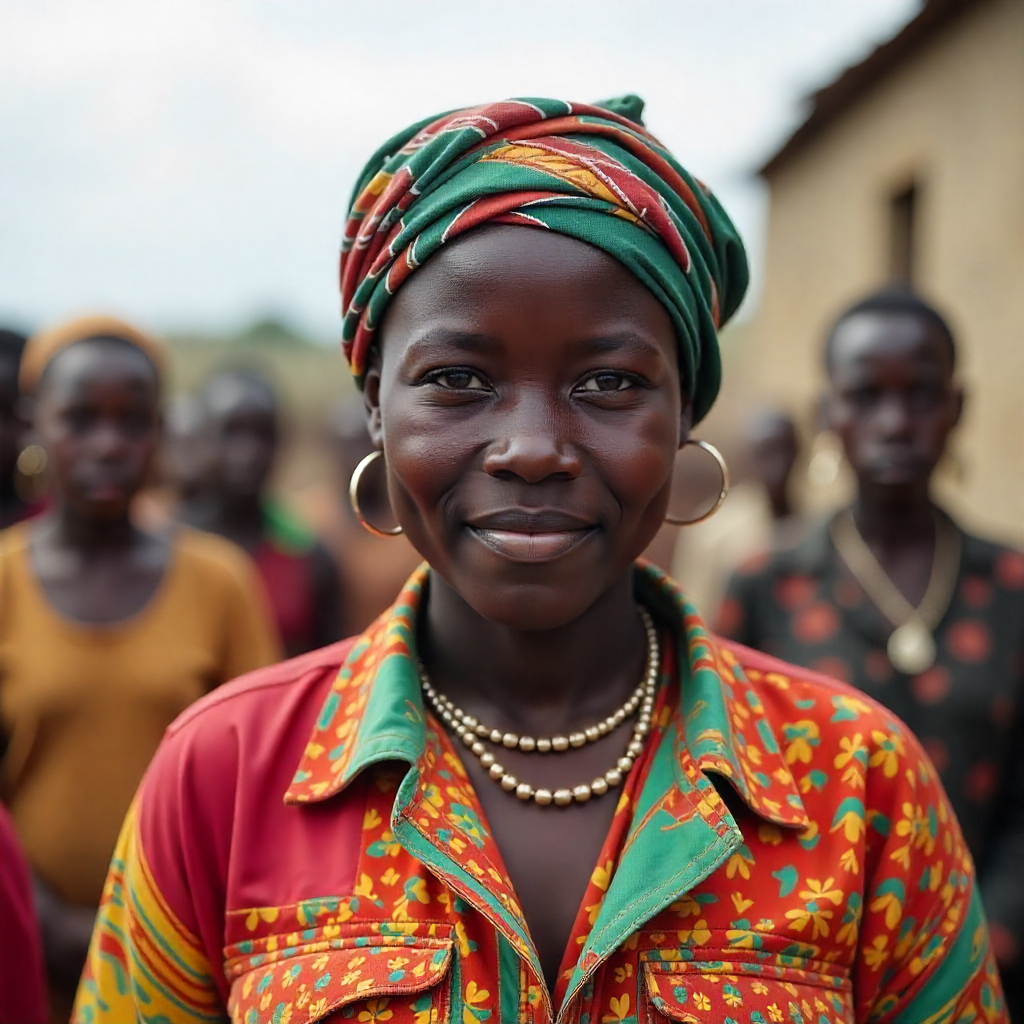
Political Instability in Eswatini
When Politics Push People Across Borders
In May 2021, Eswatini—Africa’s last absolute monarchy—erupted into protests demanding democratic reform. Initially peaceful, these demonstrations quickly turned violent. Consequently, over 80 people were killed, hundreds were injured, and thousands were displaced as security forces cracked down. By late 2023, sporadic unrest, youth unemployment exceeding 60%, and persistent governance tensions continued to destabilize the kingdom of 1.2 million people.
As a result, migration patterns shifted sharply. According to the International Organization for Migration (IOM, 2024), over 40,000 Emaswati crossed into South Africa in the 12 months following the initial protests—nearly double the pre-crisis average. Many sought work, education, or simply safety. However, South Africa’s overstretched urban systems and restrictive immigration frameworks struggled to absorb them.
Therefore, these movements reveal a fragile regional migration landscape, where political crises in one state ripple through others. Understanding this dynamic is vital for designing health and policy interventions that protect both migrants and host communities.
Political Turmoil and Migration Drivers in Eswatini
A Shrinking Political Space
Eswatini’s political environment remains tightly controlled. Political parties are banned, and dissent is met with repression. For instance, Human Rights Watch (2024) reports ongoing detentions of activists and journalists. Consequently, many young people, frustrated by lack of voice and opportunity, are leaving the country. Political violence has joined economic deprivation as a major migration driver.
Moreover, the 2021 unrest disrupted livelihoods and closed cross-border trade routes. Thousands of informal workers relied on these routes. Therefore, for many, migration became the only survival option.
Economic Stagnation and Youth Exodus
Eswatini’s economy contracted by 3.5% in 2022 (African Development Bank, 2023). Furthermore, COVID-19 deepened structural unemployment and poverty. Young people—especially men under 35—form the majority of new migrants. Many head to South Africa’s Mpumalanga and Gauteng provinces, where they work in farms, construction, or domestic labor.
However, the informal nature of this migration leaves most without documentation or access to social protection. Consequently, this invisibility increases vulnerability to exploitation, gender-based violence, and health risks.
Changing Migration Patterns: From Circular to Semi-Permanent
Traditionally, migration between Eswatini and South Africa followed a circular pattern tied to seasonal labor and family networks. Yet political instability has disrupted this rhythm. Since 2021, migrants have tended to stay longer in South Africa due to fear of returning home.
Indeed, UNHCR data (2024) shows a 40% rise in asylum applications from Eswatini nationals in South Africa since 2022. Nevertheless, few succeed due to the perception that Eswatini is “safe.” Therefore, many migrants remain undocumented, living in informal settlements around Johannesburg, eMalahleni, and Piet Retief.
Consequently, this shift from circular to semi-permanent migration strains public health systems and complicates regional coordination. Migrants’ uncertain legal status limits access to healthcare, housing, and education, thereby heightening disease risk.
Health Implications of Cross-Border Migration
Tuberculosis, HIV, and Access Gaps
Health access challenges are significant. According to South Africa’s Department of Health (2023), foreign nationals make up 9–12% of TB and HIV patients in border provinces. However, inconsistent documentation and fear of deportation prevent many Emaswati migrants from seeking care early.
For example, in Nkomazi Municipality, Mpumalanga—one of the main entry points—clinic data from 2022 revealed that migrant patients often delayed TB treatment by an average of three weeks compared to locals. As a result, transmission risk and treatment failure increase.
Similarly, HIV prevention suffers. Young female migrants working in domestic service or informal trading face higher exposure to sexual exploitation and transactional sex. NGOs such as Médecins Sans Frontières (MSF) have reported rising cases of gender-based violence and unintended pregnancies among migrant women since 2021.
Mental Health Under Strain
Furthermore, political trauma, displacement, and economic stress have triggered widespread mental health challenges. Interviews conducted by the Southern African Migration Programme (2024) found that many Emaswati migrants report anxiety, depression, and fear of discrimination in South African communities. Yet, mental health services remain scarce—especially for undocumented migrants.
COVID-19 Legacy and Vaccination Gaps
The COVID-19 pandemic further exposed inequalities. Because cross-border movement restrictions left thousands stranded, migrants were often excluded from vaccination campaigns. A 2023 WHO Africa Region assessment found vaccination coverage among non-citizens in South Africa was 18% lower than the national average. This exclusion reflects deeper governance gaps in inclusive health systems.
South Africa’s Policy Response: Between Obligation and Overload
Policy Frameworks and Gaps
South Africa’s Constitution guarantees emergency healthcare for all. Nevertheless, implementation remains inconsistent. The National Health Insurance (NHI) Bill (2023) promises universal coverage but lacks clear provisions for migrants and asylum seekers. Moreover, provincial health budgets—especially in Gauteng and Mpumalanga—are already strained.
Although the White Paper on International Migration (2017) envisioned a managed migration system, reforms have been slow. Consequently, asylum processing backlogs and deportation-focused rhetoric persist. Therefore, humanitarian organizations often fill the gap, providing essential health and legal aid in migrant-dense areas.
Municipal Pressures
Cities like Johannesburg and Tshwane have seen rising xenophobic tensions. Because host communities perceive competition over jobs, housing, and health services, local clinics face surging demand without additional funding. For instance, in 2024, the City of Johannesburg reported that foreign-born patients accounted for nearly one-third of visits in some inner-city clinics, yet provincial allocations did not reflect this reality.
Without coordinated regional planning, municipalities remain overwhelmed. Therefore, systemic interventions are critical.
Regional Dynamics and SADC’s Limited Leverage
The Southern African Development Community (SADC) recognizes migration as a development issue. Nevertheless, its frameworks remain mostly declarative. The SADC Labour Migration Action Plan (2020–2025) and the SADC Migration Health Policy Framework (2019) emphasize rights-based, coordinated responses. However, implementation depends on national political will.
Eswatini’s political isolation within the bloc further complicates regional diplomacy. Neighboring states, wary of interfering in internal affairs, have been slow to push for democratic reform. Consequently, humanitarian needs spill over borders while structural causes remain unaddressed.
Nonetheless, regional health cooperation mechanisms—like the Cross-Border TB Initiative (2018–2025)—offer useful models. Joint screening and treatment referral systems along the Mozambique–South Africa corridor have improved outcomes. Therefore, a similar model could be expanded to the Eswatini–South Africa border.
Voices from the Ground: Three Illustrative Examples
1. “Sipho,” a 26-year-old from Manzini, fled after his cousin was arrested during protests. He now works in construction in eMalahleni. Because he lacks a permit, he cannot access the local clinic. Consequently, he buys TB medication informally, risking drug resistance.
2. “Nomcebo,” a 33-year-old informal trader, lost her business during the unrest. She crossed into South Africa with her two children. They live in an informal settlement near Piet Retief, sharing a single tap with 20 families. Therefore, she avoids public clinics for fear of being reported to authorities.
3. “Thabo,” a South African nurse in Nkomazi, describes burnout: “We treat whoever walks in. However, we need more staff and funding. We can’t turn people away—it’s not ethical—but we get no support for the extra workload.”
These accounts reveal a human dimension often lost in policy discussions. Indeed, migration governance is a matter of survival, not just statistics.
Intersectional Challenges: Gender, Youth, and Documentation
Migration is not uniform. Women and girls face gender-specific risks, including sexual violence, unpaid labor, and barriers to reproductive health services. Undocumented youth often miss out on education and vaccination programs. Meanwhile, older migrants face isolation and lack of chronic disease management.
For example, a 2023 study by the African Centre for Migration & Society found that undocumented migrant women were 35% less likely to seek antenatal care than South African citizens. Therefore, intersectional vulnerabilities demand nuanced, inclusive policy responses.
Innovative Solutions and Emerging Good Practices
1. Cross-Border Health Partnerships
The Mpumalanga–Lubombo Health Corridor Project (2023), supported by IOM and SADC, has improved disease surveillance and referral systems between Eswatini and South Africa. Mobile clinics now serve border communities weekly, ensuring TB and HIV continuity of care for migrants.
2. NGO-Led Health Access Models
Organizations like Doctors Without Borders (MSF) and Sonke Gender Justice have piloted mobile legal-health units in migrant settlements. By integrating health screening, legal advice, and psychosocial support, these units improve outcomes. Consequently, such models could be scaled up through municipal partnerships.
3. Regional Early Warning Systems
The SADC Humanitarian and Disaster Risk Unit is developing a political instability–migration early warning system. It links socio-political data with migration monitoring to anticipate displacement trends. If operationalized by 2026, this system could help governments prepare proactive responses.
Policy Recommendations and Timelines
For Eswatini (Immediate–Medium Term)
-
Restore civic space by repealing emergency laws and engaging youth movements in reform dialogue (2025–2026).
-
Create livelihood programs for unemployed youth through small business grants and regional trade facilitation (2025–2027).
-
Rebuild community trust with independent human rights monitoring and reconciliation forums (2025 onward).
For South Africa (2025–2028)
-
Integrate migrants into NHI planning, with explicit funding for cross-border health users.
-
Strengthen municipal capacities in high-migrant areas by allocating conditional health grants based on population data.
-
Train healthcare workers on migrant rights and cultural competency.
For SADC and Regional Partners (2025–2030)
-
Operationalize the SADC Migration Health Policy Framework with measurable indicators.
-
Establish a regional migration health fund, supported by member states and development partners.
-
Expand cross-border health corridor models to all key migration routes.
For NGOs and Civil Society
-
Continue documenting rights violations and providing psychosocial support.
-
Build community advocacy networks linking migrant and host populations to reduce xenophobia.
These interventions must move beyond rhetoric. Consequently, financing, political will, and accountability mechanisms are essential.
Limitations and Research Gaps
Despite improved data from IOM and UNHCR, reliable figures on Eswatini migrants remain scarce. Many cross informally through porous borders. Therefore, future research should focus on quantifying migration-health interactions, especially among undocumented groups and women. Longitudinal studies could illuminate the impact of political instability on public health outcomes across the SADC region.
Conclusion: Toward a Humane and Coordinated Regional Response
Political instability in Eswatini has reshaped migration across Southern Africa, revealing the fragility of regional protection systems. Migrants move not only for economic reasons but to reclaim safety and dignity. Therefore, South Africa and its neighbors face a choice: either react to crises piecemeal or build coordinated, humane frameworks that recognize migration as integral to regional resilience.
Investing in inclusive health systems, rights-based governance, and regional solidarity is not charity—it is sound policy. For Eswatini’s displaced youth and South Africa’s overburdened clinics alike, decisive and compassionate action is urgently needed.
Recent Posts:
- Can Regional Integration Frameworks Help Balance Economic Inequalities Driving Migration from Malawi to South Africa?
- What Policy Solutions Could Reduce Xenophobic Violence Against Mozambican Migrants in South African Cities?
- How Can SADC Countries Address the Root Causes of Zimbabwean Economic Migration to South Africa?
- How Did Colonial Labour Recruitment Systems Establish Historical Migration Routes to South Africa?
- What Economic Impact Do Remittances Have on Development in Zimbabwe, Mozambique and Malawi?