
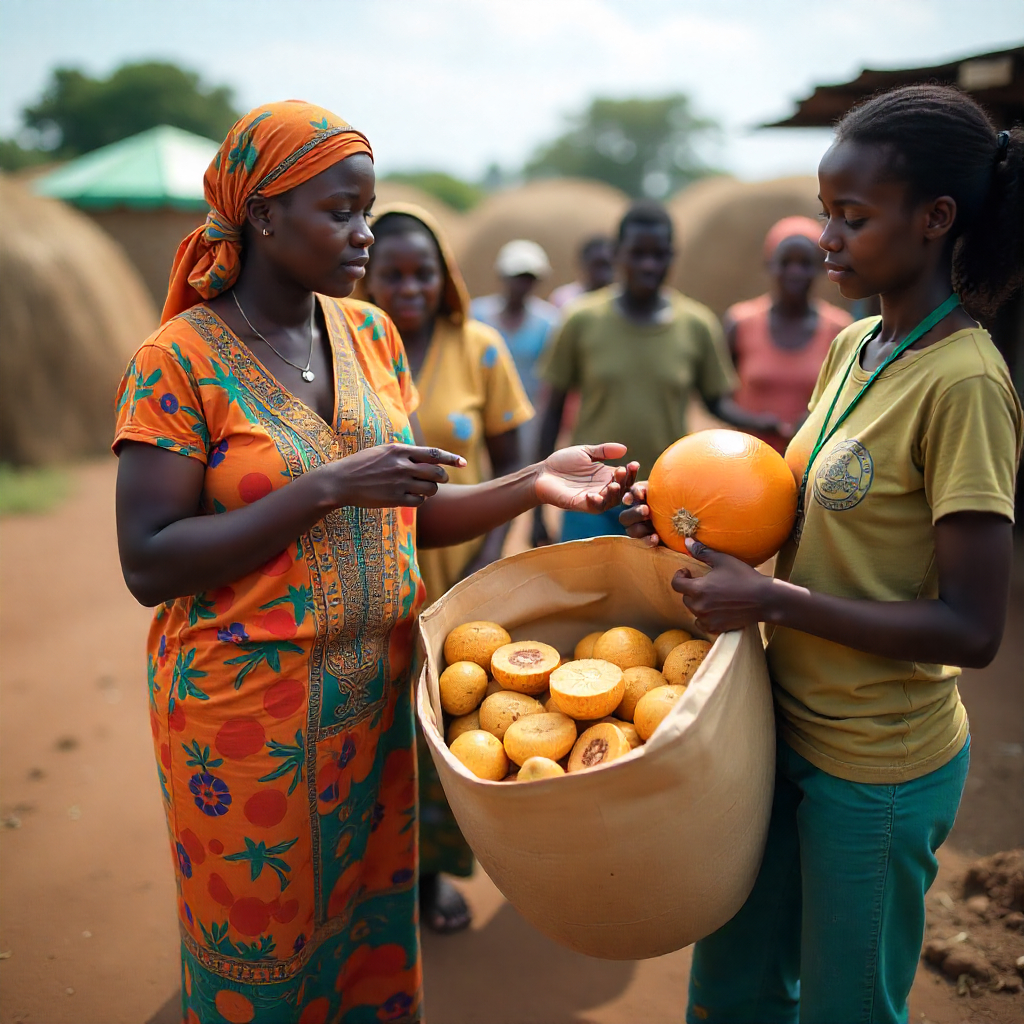
Food Insecurity Among African Migrants vs. Host Communities in South Africa
Opening: Hunger in the City — Migrants and Host Communities
In 2023, a striking statistic emerged: approximately 63.5 % of South African households — over 12 million households — were classified as food insecure. Institute of Development Studies+2South African Human Rights Commission+2
This number reflects a national crisis. Yet within this crisis, certain groups face greater vulnerabilities. Among them are African migrants — both internal and international — whose lived experience of food insecurity often exceeds that of many host-community households.
Take, for example, recently published research on migrant households in the Gauteng City‑Region (which includes Johannesburg) showing that migrant households are disproportionately likely to skip meals when compared to non‑migrant households. UPSpace Repository
Moreover, in urban contexts such as the city of Johannesburg, a 2023 study found that many migrants yearn for traditional leafy greens and fruit from their countries of origin — yet patchy supply chains, high prices, and loss of knowledge hinder their ability to access such nutritious foods. Human Sciences Research Council
These realities illustrate how food insecurity among migrants is not merely a reflection of national-level deprivation, but a distinct phenomenon shaped by intersectional vulnerabilities, structural barriers, and unequal access.
Scope of Food Insecurity in South Africa: Baseline for Host Population
To understand migrant vulnerabilities, it helps first to map the broader landscape of food insecurity among South African households.
-
According to the latest national surveys (2021–2023), about 19.7 % of households experienced moderate to severe food insecurity, while 8.0 % endured severe food insecurity. Statistics South Africa+1
-
However, using the broader measure of the Human Sciences Research Council (HSRC), researchers found that only 36.5 % of households could be considered “food secure,” leaving 63.5 % at some level of food insecurity (mild, moderate, or severe). Institute of Development Studies+2South African Human Rights Commission+2
-
Data show that female-headed households, households with low education levels, and those without stable income remain disproportionately affected. For instance, households where the head had “no schooling” registered food insecurity rates around 31.3 % in 2023 — compared to just 5.4 % for households with post-school education. Statistics South Africa+1
-
Rural provinces and traditional farming areas remain especially vulnerable. In provinces such as the Limpopo Province, over half of rural households were classified as severely food insecure in a recent survey. SpringerLink+1
These data underscore that widespread food insecurity exists across South Africa — and that many South African (host) households already face entrenched fragility.
Food Insecurity Among Migrants: Evidence and Patterns
More recent and focused research reveals that migrants — internal and international — often experience elevated levels of food insecurity, due to a mix of structural constraints, livelihood precarity, and social marginalization.
Key Evidence
-
Urban migrant households in Gauteng: A 2025 study of 13,616 randomly selected migrant households in the Gauteng City‑Region found that both internal and international migrant households had higher likelihoods of skipping meals when compared to non‑migrant households. UPSpace Repository
-
Among migrants, having part-time jobs — rather than stable full-time employment — increased the probability of food insecurity. UPSpace Repository
-
Access to government support (e.g., indigency grants, food parcels) correlated with higher probability of food insecurity, particularly among international migrants in the study sample. UPSpace Repository
-
Nutritional insecurity also matters. In Johannesburg, a 2023 HSRC-led study found that many migrants in both the central city and peripheral townships lacked access to traditional fruits and vegetables (TFVs) they consumed before migrating — because of erratic supply chains, high costs, and reduced know‑how around procurement and preparation. Human Sciences Research Council
-
A 2025 article on internal migrants from the Eastern Cape living in major metros (including Johannesburg and Cape Town) found that economic shocks from the COVID-19 pandemic — job losses, remittance reductions, livelihood disruptions — exacerbated food insecurity among this group. SciELO
What Distinguishes Migrant Vulnerability
Based on this evidence, we can identify structural and intersectional factors that make migrants more vulnerable relative to many host households:
-
Employment precarity and informal work: Many migrants rely on part‑time or informal jobs, which are unstable and often poorly paid — increasing the risk of meal skipping and inadequate food access.
-
Limited eligibility or access to social support: While some migrants may receive indigency or food‑parcel support, such assistance does not reliably secure food security; in fact, receipt of such social support correlated with higher food insecurity in the Gauteng study, suggesting under-resourced or inadequate support systems. UPSpace Repository
-
Nutritional & cultural dissonance: Migrants often seek traditional foods — both for nutrition and cultural continuity. Supply‑chain gaps, high costs and urban market dynamics make accessing those foods difficult, pushing them toward cheaper, less nutritious staples. Human Sciences Research Council+1
-
Intersectional burdens — documentation, origin, gender, social isolation: While many studies do not (for ethical or safety reasons) disaggregate by documentation status, the burden of social vulnerability magnifies when migrants are undocumented, isolated, or lack social networks. Female-headed migrant households, or migrants responsible for dependents, may face additional pressures given gendered labour markets and care burdens.
-
Shock sensitivity: Migrants — especially internal migrants displaced from rural provinces (e.g., Eastern Cape) — often rely on seasonal or casual work, remittances, or informal economies. Economic downturns, pandemics, or job losses reverberate through these livelihoods, quickly undermining food security. SciELO+1
In sum: migrant households face greater instability, less safety net protection, poorer dietary diversity, and higher sensitivity to shocks — intensifying food insecurity beyond what host households typically endure.
Gaps in Policy & Implementation: Why Food Insecurity Persists for Migrants
Despite the pervasiveness of food insecurity in South Africa, current policies and interventions do not sufficiently account for the specific vulnerabilities of migrant populations. Key gaps include:
1. Lack of data disaggregation by migration status
National surveys (e.g., those conducted by Statistics South Africa, GHS/HFIAS modules) rarely report findings separately for migrant households (internal or international). This data gap makes it difficult to quantify the full extent of migrant food insecurity and target interventions.
2. Inadequate social support frameworks for migrants
Social safety nets (indigency grants, food parcels, welfare) often have criteria — documentation, residency, citizenship — that exclude many migrants or render it difficult for them to access benefits. The correlation between receiving government aid and persistent food insecurity in migrant households (Gauteng study) suggests current support is insufficient or poorly structured for migrant contexts. UPSpace Repository+1
3. Nutritional neglect — limited access to culturally appropriate, nutritious foods
Food-security policies focus primarily on caloric sufficiency rather than dietary diversity or nutritional adequacy. Migrants’ demand for traditional leafy greens and fruits is often ignored, leaving them reliant on cheap, nutrient-poor staples — with long-term negative health implications. Human Sciences Research Council+1
4. Urban policy bias and structural inequalities in urban food systems
Urban food insecurity among migrants is exacerbated by high cost of living, spatial inequality, and inadequate infrastructure. Yet many food security and agriculture policies remain rural-focused and ignore the specific needs of urban migrants and informal workers. SpringerLink+1
5. Limited livelihood security and economic opportunities
Employment instability — high dependence on part-time/informal work — undercuts migrants’ ability to maintain consistent access to food. Policies to improve employment access for migrants remain weak or under‑enforced.
These gaps point to structural neglect of migrant-specific vulnerabilities in food-security planning and policy.
Illustrative, Anonymized Examples from Migrant Households
-
Case A: “Maria,” a woman from Eastern Cape living in a Johannesburg township. Maria moved to Johannesburg in 2021 seeking work. She works part-time, off-the-books, as a domestic cleaner. She receives occasional food parcels from a local NGO but still reports skipping meals 2–3 times a week. She shops at informal spaza shops. She longs for the leafy greens and traditional vegetables she used to eat back home — but those are too expensive or unavailable in city markets.
-
Case B: “Amadou,” a refugee from another African country living in Gauteng. He manages to find casual labour in construction. Because of delays in documentation, he cannot access social grants. When work dries up, he and his family reduce portion sizes, sometimes relying on two meals a day. They struggle to afford diverse foods; the diet becomes predominantly cheap staples like maize meal, oil, and sugar.
-
Case C: “Sibongile,” an internal migrant woman head of a female‑headed household. Originally from Limpopo, she now lives in a Johannesburg informal settlement with her two children. She lost her informal cleaning job during the COVID-19 pandemic. Despite registering at a municipal indigency office, aid never materialized. She now skips breakfast often to prioritize children’s meals, worrying about long-term nutritional and health consequences.
These experiences illustrate how food insecurity among migrants is not just about occasional hunger, but chronic, structural deprivation — compounded by precarious livelihoods, weak social safety nets, and limited access to nutritious, culturally appropriate foods.
Innovative Approaches and Promising Initiatives
Despite the challenges, there are emerging initiatives and promising policy pathways — particularly when interventions recognise migrants’ unique needs.
Urban agriculture and community gardens
Research from the Gauteng City‑Region (2025) suggests that promoting urban agriculture and inclusive access to land for migrant households could reduce dependence on unstable market supply chains. UPSpace Repository+1
Such small-scale urban farming or communal gardens — particularly around traditional leafy vegetables — can provide affordable, culturally acceptable, nutritious food.
Inclusion of traditional foods in urban food systems
The 2023 HSRC study in Johannesburg demonstrated both the demand and potential of traditional fruits and vegetables (TFVs) among migrants. Policy support for supply chains, informal markets, and cross-border trade in TFVs can help meet nutritional and cultural needs. Human Sciences Research Council
Social protection reforms to include migrants
Policymakers could revise indigency and food‑assistance eligibility criteria to explicitly include internal and international migrants, regardless of formal documentation — especially during economic shocks. NGOs and civil society organisations have called for such reforms in light of increasing urban food insecurity and rising poverty. Operation Hunger+1
Employment stabilisation and livelihood support
Efforts to formalise informal work, provide fair wages, and ensure stable employment for migrants — for example, through labour rights enforcement — can reduce food insecurity. Coupled with targeted skills training, such interventions could improve household resilience.
Area‑specific, culturally informed nutrition programmes
Food security interventions must integrate nutritional quality, not just caloric sufficiency. Community kitchens, subsidised access to nutritious foods, and distribution of traditional foods can help bridge the nutrition gap for migrant populations.
Recommendations: Who Should Do What — and When
| Stakeholder | Action | Timeline |
|---|---|---|
| National government (e.g., social development, agriculture, urban planning ministries) | Revise social protection eligibility to explicitly include migrants; integrate migrants into national food security strategies; adopt urban agriculture policies that allocate communal land for urban farming (including migrant households). | Short to medium term (within 12–24 months). |
| Municipal governments (e.g., Johannesburg, Gauteng metro) | Identify and allocate suitable urban land for community gardens; support informal markets; partner with NGOs to distribute culturally appropriate nutritious foods; include migrants in local food‑security planning forums. | Medium term (12–36 months). |
| NGOs, civil society, migrant organisations | Develop community‑led food cooperatives, urban gardens, and culturally appropriate nutrition initiatives; advocate for inclusive policy changes; document migrant food insecurity to build the evidence base. | Immediate and ongoing. |
| Researchers and academia | Conduct more disaggregated, migrant‑specific research on food security, dietary diversity, and nutritional outcomes; evaluate interventions (urban agriculture, community kitchens, social protection inclusion); integrate gender, age, documentation status into analysis. | Immediate and medium term (research cycles). |
| International partners (UN agencies, donors) | Provide technical and financial support for food security interventions targeting migrants; support community‑level urban agriculture and nutrition programmes; facilitate cross-border traditional food supply chains. | Medium term (12–36 months), aligned with migration & food security agendas. |
Conclusion: Towards an Inclusive Right to Food — Policy Imperative and Call to Action
South Africa’s food insecurity crisis affects millions — host households and migrants alike. But migrants suffer distinct, intersectional disadvantages: precarious livelihoods, weak social protections, limited access to culturally appropriate and nutritious foods, and heightened shock vulnerability.
Addressing this requires more than generic food‑security policies. It demands migrant‑sensitive, equity‑oriented, and culturally informed interventions. It demands that the right to food — enshrined in the moral and constitutional fabric of South Africa — become a lived reality for all residents, regardless of origin, documentation, or nationality.
Policymakers, municipal leaders, NGOs, and researchers must act — now. By investing in urban agriculture, expanding social protection, supporting inclusive food systems, and gathering robust data, we can begin to close the nutritional divide.
This is not only a moral imperative — it is a public health and social justice necessity. Without inclusive action, hunger and nutritional deprivation will remain entrenched among the most vulnerable.
Limitations and Research Gaps
-
Few nationwide data sets disaggregate by migration status — so the true scale of migrant food insecurity remains under‑known.
-
Evidence on dietary diversity and long-term nutritional outcomes among migrants is sparse.
-
The role of documentation status, informal labour markets, and social networks in mediating food security needs deeper qualitative and quantitative research.
-
More evaluation is needed on the effectiveness of urban agriculture or community-based nutrition interventions among migrant populations.
Addressing these gaps will strengthen both academic understanding and evidence-based policy responses.
Recent Posts:
- Chronic Disease Management Among Migrant Populations: Diabetes and Hypertension Care Access in Pretoria’s Migrant Communities
- Food Remittance Systems: How Somali Migrants Navigate Transnational Food Networks in South Africa
- The Impact of Xenophobia on Healthcare Utilization Among African Migrants in South African Public Clinics
- Maternal and Child Health Outcomes Among Mozambican Migrant Women in Border Communities
- Traditional Medicine Practices vs. Biomedical Healthcare: Health-Seeking Patterns of Malawian Migrants in Limpopo