
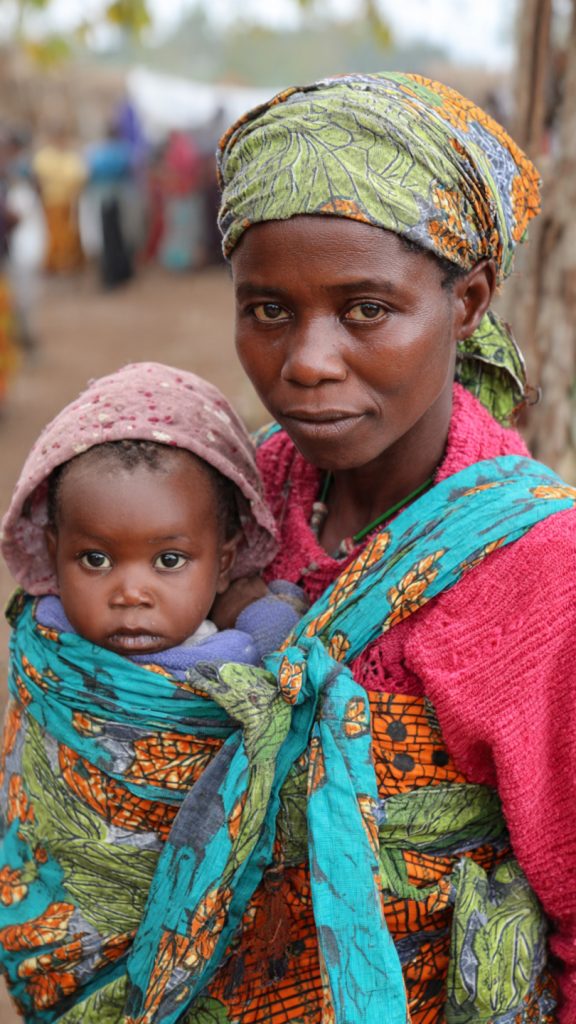
Maternal and Child Health Among Mozambican Migrants in Border Communities
Opening: A Border Story, A Human Cost
In a rural border community in northeastern South Africa — home to many former refugees and migrants from Mozambique — 4‑year-old Maria* died of a preventable illness after missing her routine immunisation. Her mother, a Mozambican migrant, lacked proper documentation, felt unwelcome at the local clinic, and feared being charged fees.
Maria’s death is not isolated. Historic cohort data from the Agincourt Health and Demographic Surveillance System reveal that children from Mozambican-origin households had nearly twice the rate of mortality in early childhood compared to local South African peers — an adjusted rate ratio (RR) of 1.91 during ages 1–5 years.
This disparity persists at the intersection of migration, poverty, gender, and systemic exclusion. As South Africa continues to host substantial immigration from Mozambique and other neighbouring countries, understanding maternal and child health (MCH) outcomes among migrant women — particularly in border and rural communities — is critical.
In this article, I analyse evidence (2020–2025), provide anonymised case studies, examine policy and service delivery gaps, highlight promising practices, and offer recommendations for policymakers, NGOs, and healthcare practitioners.
(Name changed to protect identity.)
Why Focus on Mozambican Migrant Women? Intersectional Vulnerabilities
Migrant flows from Mozambique remain significant, with women constituting over half of the immigrant population. Many engage in informal cross-border trade or seasonal labour. These women are often economically marginalised, have low household wealth, limited social protection, and may lack legal documentation — all intersecting with gender and age to amplify health vulnerabilities.
Migration disrupts social networks, severs traditional support systems, and increases risks of poor maternal and child health outcomes when services remain inaccessible or unwelcoming.
Focusing on Mozambican migrant women in border and rural contexts helps surface structural inequities and health risks often hidden in aggregated data.
What We Know (and Don’t): Empirical Evidence
Historic Data on Child Mortality
The Agincourt cohort study (1992–2000) showed no statistically significant difference in infant mortality between former Mozambican-origin and South African households (RR = 1.02). However, between ages 1–5, mortality was significantly higher among Mozambican-origin children (RR = 1.91, 95% CI 1.50–2.42).
Poverty, large household size, unstable settlement status, and maternal death contributed significantly. Health-service utilisation alone did not explain the difference, suggesting deeper structural and social determinants.
This pattern suggests long-term vulnerability in child survival beyond the neonatal period. Though the data are historic, they remain relevant for understanding legacy effects among Mozambican communities in South Africa.
Gaps in Recent Data
There is no publicly available, peer-reviewed study (2020–2025) disaggregating maternal and child health outcomes specifically among Mozambican migrant women in border or settlement communities.
Broad migrant health research often aggregates migrants from different countries, losing nuance by nationality and migration pathway (refugee, asylum seeker, economic migrant).
Surveillance systems and national surveys rarely record migration status, nationality, or documentation. As a result, migrant-specific MCH indicators — ANC attendance, skilled birth attendance, immunisations, child growth follow-up — remain largely invisible.
As noted in a regional migration-health strategy, lack of disaggregated data entrenches marginalisation.
Recent Evidence on Service Access
A 2023 qualitative study from the Eastern Cape (Buffalo City) found that migrant mothers faced barriers to child immunisation: language difficulties, interpersonal barriers, and challenges navigating administrative procedures.
During the COVID-19 pandemic, PMTCT services for mobile populations (including migrants) suffered disruptions. Healthcare providers reported challenges in follow-up, adherence, and retention.
Among migrant women, non-communicable diseases, especially hypertension, emerge as additional risks. While not directly MCH-related, elevated blood pressure in migrant women suggests broader maternal health vulnerabilities.
Origin Country Health Context: Mozambique
Understanding origin-country health risks matters for migrants’ baseline vulnerabilities.
-
Only 18.6% of Mozambican women received the full package of four essential services (≥4 ANC visits, lab tests, skilled birth attendance, and postnatal care).
-
Childhood anaemia remains high (~72.9% prevalence among children 6–59 months).
These vulnerabilities mean migrant women may arrive with poor maternal nutrition, anaemia, and suboptimal birth practices, compounding risks in South Africa.
Policy & Service Delivery Gaps in South Africa
Legal Framework — Right on Paper, Barriers in Practice
The National Health Act (2003) guarantees free primary health care for all, mandating access for pregnant and lactating women and children under six, regardless of nationality or immigration status.
Despite this, Gauteng Department of Health Circular 27 (2020) introduced policies that required undocumented migrants to pay full fees, effectively denying free care. Civil society challenged these practices in court.
In April 2023, the Gauteng High Court declared unlawful all policies denying free care to pregnant/lactating women and children under six, regardless of documentation. By October 2023, partial compliance was reported, but monitoring showed uneven implementation.
Service Delivery Barriers Beyond Policy
Even when legal entitlements exist, barriers remain:
-
Language and communication issues at clinics
-
Staff bias and unwelcoming attitudes
-
Mobility and unstable housing complicating follow-up
-
Poverty and food insecurity affecting maternal nutrition and child health
Legal reform is necessary but not sufficient; service design, social determinants, and inclusion must be addressed holistically.
Illustrative Case Profiles (2023–2025)
Ana, 22, Musina: Crossed for seasonal work, pregnant; clinic demanded documentation or payment → delivered at home; newborn missed immunisations and postnatal care.
Beatriz, 30, rural Limpopo: Accessed free maternal care but clinic lacked essential supplies → baby born underweight; missed growth monitoring.
Clara, 27, Gauteng: Mobile informal worker; fear of payment delayed ANC → second child needed intensive neonatal care; eventually received late care through NGO support.
These examples show how migration status, poverty, mobility, and lack of social support intersect to shape MCH outcomes.
Public Health and Human Rights Implications
Persistent disparities in ANC, skilled birth attendance, postnatal care, and immunisation risk increasing child morbidity and mortality — undermining equity goals.
Excluding migrants violates constitutional rights, national law, and international human rights obligations. Denied birth registration threatens lifelong access to health, education, and social protection.
Inaction perpetuates preventable deaths, inequities, and may fuel xenophobia and social fragmentation.
Promising Practices & Innovations
-
Legal advocacy and litigation: The 2023 High Court ruling demonstrates policy shift potential.
-
NGO facilitation: Support with registration, translation, birth registration, and follow-up improves care access.
-
Community-based primary healthcare models: Migrant-sensitive immunisation and outreach improve uptake.
-
Integrated maternal health services: Combining MCH with HIV/PMTCT and NCD screening supports mobile populations.
Recommendations
National Government / NDoH / Provincial DoHs: Mandate migration-sensitive MCH data, clear guidance on free care, and allocate funding for border clinics.
Provincial Health Departments: Develop “Migrant-Inclusive MCH Action Plans” with community consultation.
Healthcare Facilities & Providers: Train staff in cultural competence, establish migrant liaison officers or CHWs for follow-up and birth registration.
Civil Society & NGOs: Expand accompaniment programmes, monitor implementation, provide feedback.
Researchers / Academia: Conduct empirical studies on MCH outcomes for Mozambican and other migrant women.
International/Regional Partners: Support cross-border continuity of care, record transfer, and maternal nutrition initiatives.
Limitations & Research Gaps
-
Lack of recent, disaggregated data
-
Historic studies may not reflect urban/peri-urban migrant populations
-
Selection bias and under-reporting of births/deaths
-
Need for migration-sensitive health information systems
Conclusion: A Call to Action
Mozambican migrant women in South Africa remain deeply vulnerable. Historic data show elevated child mortality; contemporary reports reveal systemic barriers.
Addressing this requires multi-level reforms: enforce legal rights, embed inclusion in health systems, strengthen social determinants, and scale promising NGO and community interventions.
Researchers must fill evidence gaps, and international partners should support cross-border continuity. The time to act is now — for mothers, children, families, and South Africa’s vision of inclusive, equitable health for all.
Key References
-
Hargreaves JR, Collinson MA, Kahn K, et al. Childhood mortality among former Mozambican refugees and their hosts in rural South Africa. International Journal of Epidemiology. 2004;33(6):1271–1278. DOI: 10.1093/ije/dyh257 OUP Academic+2LSHTM Research Online+2
-
SECTION27. SECTION27 welcomes Court order confirming that all pregnant and lactating women and children under 6 must be provided with free health services at public hospitals. 17 April 2023. Link Section27
-
SECTION27. SECTION27 welcomes amended policy ensuring access to free health care for all pregnant mothers and young children and partial compliance by Gauteng Health with High Court order. 24 October 2023. Link Section27+1
-
Amnesty International / civil society reporting on ongoing challenges. South Africa: Civil society organisations condemn Gauteng health facilities’ defiance of laws and recent court order on free access to health care for pregnant women. Link Amnesty International South Africa+1
-
Studies from Agincourt HDSS on child mortality trends: e.g. Survived infancy but still vulnerable: spatial-temporal trends and risk factors for child mortality in rural South Africa (Agincourt), 1992–2007. BMC Public Health. 2012;12:665. Full text PMC open‑access link PMC
Recent Posts:
- Traditional Medicine Practices vs. Biomedical Healthcare: Health-Seeking Patterns of Malawian Migrants in Limpopo
- Mental Health Challenges and Help-Seeking Behaviors Among East African Migrants in Durban
- The Role of Informal Food Markets in Sustaining Migrant Communities Across South African Cities
- Food Security and Coping Strategies Among Congolese Refugee Households in Cape Town
- Healthcare Access Barriers for Undocumented African Migrants in Gauteng Province: A Public Health Analysis