
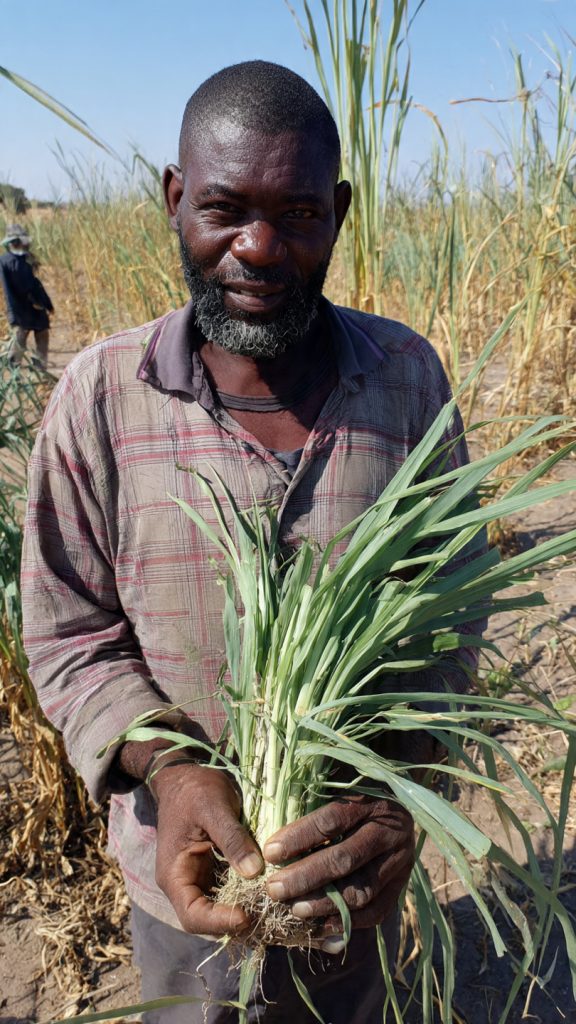
Namibian Farmers Bringing Drought‑Resistant Crops Across Borders
In the arid expanses between Tsumeb in northern Namibia and Thohoyandou in Limpopo Province, a new pattern of climate‑linked movement and agricultural innovation is emerging. Severe droughts and erratic rainfall, driven by climate variability, are forcing rural agricultural households to rethink what crops they grow, where they live, and how they sustain their families. Across Southern Africa, millions of smallholder farmers face rain‑fed farming systems that now fail more often than they succeed. In 2023–24, a severe El Niño drought contributed to Southern Africa’s worst hunger crisis in decades, affecting an estimated 27 million people and elevating malnutrition among children by millions. AP News
Amid these pressures, Namibian farmers — many from historically rural, marginalised communities — have begun to travel seasonally or migrate permanently across the border into South Africa. They bring with them seeds, farming know‑how, and a deep knowledge of indigenous drought‑resistant crops such as mahangu (pearl millet), sorghum, cowpea, and Bambara groundnut. These crops are not simply agricultural commodities: they embody survival strategies honed over generations in harsh drylands. MDPI
This post explores how drought‑risk migration and indigenous crop cultivation intersect with food and nutrition security, health, and rural livelihoods in South Africa. It identifies policy gaps, highlights empirical evidence from Limpopo, Johannesburg and Cape Town, shares anonymised real‑world experiences, showcases promising programs, and outlines clear policy recommendations with timelines.
Understanding the Climate–Agriculture–Migration Nexus
Climate Stress Is Driving Rural Livelihood Change
Climate change is intensifying drought, shortening rainy seasons, and raising temperatures across Southern Africa. Projections show that these trends will reduce the availability of arable land and increase the frequency of crop failure — especially for traditional staples like maize. ResearchGate
Farmers who depend on rain‑fed agriculture are especially vulnerable. Without irrigation or credit to invest in resilient inputs, many households face repeated losses. Some are abandoning farmland entirely. Research shows that worsening climatic conditions in agricultural production increase migration intentions among rural households. ResearchGate
This form of climate‑linked migration is often internal (from rural to urban areas) but increasingly transnational within SADC. People seek wage labour, social networks, and more secure food systems. When mobility occurs, it intersects with gender, age, nationality, and documentation status: women and youth often have less access to formal employment and social protection, while undocumented migrants confront barriers to services and markets.
Indigenous Crops: Science Meets Tradition
Drought‑Resistant Crops Are More Than Nostalgia
Indigenous crops — often termed “orphan” or underutilised crops — are adapted to local conditions. They perform well under water scarcity and low soil fertility. In South Africa’s arid and semi‑arid regions, species such as pearl millet, sorghum, cowpea, Bambara groundnut, and amaranth show innate drought tolerance and high nutritional value. MDPI+1
These crops also contribute to health and nutrition. Legumes like cowpea and Bambara groundnut are rich in plant‑based proteins, micronutrients (iron, zinc), and dietary fiber — essential in contexts facing rising food insecurity and malnutrition. MDPI
Yet despite their promise, indigenous crops have been sidelined. Government subsidies and agricultural extension favour commercial staples. Seed systems for traditional crops are fragmented, and urban consumers often overlook them due to perceptions about status and convenience. MDPI
South African Policy Framework: Gaps and Opportunities
What Policies Exist — and What’s Missing
South Africa has several frameworks that touch on climate adaptation, agriculture, and food security:
-
The Climate Smart Agriculture Strategic Framework (2018) acknowledges the need for adaptation measures but lacks clear implementation mechanisms targeting smallholder and indigenous cropping systems. OECD
-
South Africa ratified the International Treaty on Plant Genetic Resources for Food and Agriculture (2025), which mandates recognising farmers’ rights to seeds and equitable benefit‑sharing — a critical lever for community seed systems. Government of South Africa
At the same time, urban food security plans and health policy frameworks rarely integrate agricultural resilience or climate migration dynamics, leaving a siloed policy landscape.
The gap is clear: climate resilience policy often overlooks the social drivers of migration and health outcomes tied to food insecurity. Indigenous crop systems, despite their potential to safeguard nutrition and rural livelihoods, remain underprioritised in national planning.
Voices from the Field: Anonymised Case Studies
Case 1: “We Had to Move to Survive”
A 52‑year‑old Namibian farmer from the Kavango region describes three consecutive crop failures due to drought. “We planted mahangu and sorghum,” she says. “But when the rains did not come, there was nothing to eat.” Seasonal migration became a survival strategy. She moved to Limpopo for casual labour and brought seeds with her. Local South African farmers now trial her mahangu seeds because they survive when maize fails.
Case 2: Urban Resilience in Johannesburg
A young South African migrant from rural Limpopo shares how her family started a small garden in a Johannesburg informal settlement using drought‑resilient seeds sourced from contacts in Namibia. These crops now supplement household diets, improving nutrition diversity and reducing reliance on purchased staples.
Case 3: Smallholder Collective in Thohoyandou
In the Thohoyandou district, a group of smallholder farmers formed a collective to exchange seed and knowledge about indigenous crops. Through radio WhatsApp groups and local markets, they have established a micro‑value chain for sorghum and cowpea flour. Members report fewer crop losses and new income streams through small sales.
These examples illustrate that migration and crop knowledge exchange can act as adaptive strategies when supported by networks and local knowledge.
Evidence from South African Contexts
Limpopo and the Vulnerable Drylands
Limpopo is one of South Africa’s most drought‑prone provinces. Farmers here are transitioning from cattle and maize to goats, millet, and indigenous legumes because these alternatives survive better under heat and low rainfall. Financial Times
At the household level, smallholder farmers consistently report climate changes (hotter days, less rain) that directly disrupt crop growth and livelihoods. sajae.co.za
Urban Food Insecurity: Johannesburg and Cape Town
Urban centres face rising food prices as climate‑linked agricultural disruptions ripple through markets. In Cape Town, water scarcity crises have already cost thousands of agricultural jobs and pushed households into poverty. Wikipedia
Migrants dependent on informal labour and unstable housing are particularly vulnerable to rising food costs and nutrition deficits. This dual urban–rural vulnerability underscores the need for integrated policy responses.
Successful Models and Promising Programmes
Community Seed Banks and Farmer Networks
In Limpopo, Eastern Cape, and KwaZulu‑Natal, community seed banks supported by government and NGOs are preserving indigenous varieties, enabling farmers to save, share, and access drought‑resilient seeds. Government of South Africa
FAO–GEF Dryland Resilience Training in Namibia
Programs like the FAO–GEF Dryland Sustainable Landscapes Impact Program in Namibia train farmers in seed preservation and drought adaptations, linking traditional knowledge with scientific methods. These initiatives enhance household food security while conserving biodiversity. FAOHome
Agroecology Networks Across SADC
Regional movements promoting agroecology leverage indigenous crops to build resilient food systems. These networks connect farmers, researchers, and civil society to spread sustainable, low‑input practices appropriate for marginal environments. allAfrica.com
Actionable Recommendations
Below are specific, evidence‑based recommendations with implementation timelines for South African stakeholders:
1. Mainstream Indigenous Crops in National Policy
Timeline: 2026–2027
-
Expand the Climate Smart Agriculture Strategic Framework to include targets for indigenous crop adoption, seed system strengthening, and nutrition outcomes.
-
Integrate indigenous cropping strategies into national health and food security plans.
2. Scale Community Seed Networks
Timeline: 2026–2028
-
Support and expand community seed banks in rural and peri‑urban areas.
-
Provide grants and training for seed conservation, quality control, and distribution.
3. Support Cross‑Border Knowledge Exchange
Timeline: 2026–2027
-
Facilitate formal learning exchanges between Namibian and South African farmers.
-
Develop bilateral agreements under SADC on seed movement and indigenous knowledge recognition.
4. Link Agriculture, Nutrition, and Urban Food Security
Timeline: 2026–2029
-
Collaborate across Departments of Agriculture, Health, and Social Development to ensure nutrition‑sensitive agriculture programmes in urban settlements.
-
Subsidise drought‑resilient seed kits for vulnerable households.
5. Research and Monitoring System
Timeline: 2026–2030
-
Establish systematic climate–migration–health monitoring to track crop success, migration flows, and food security impacts.
-
Engage universities and research councils in interdisciplinary studies.
Conclusion: A Call to Action
Climate change is not a future threat — it is already reshaping agricultural systems, livelihoods, and migration patterns across Southern Africa. Indigenous drought‑resistant crops represent a powerful yet underutilised tool for adaptation. They offer a path toward resilient food systems, improved nutrition, and sustainable rural livelihoods if supported by coherent policies, robust seed systems, and inclusive institutions.
Policymakers must act now to integrate indigenous crop strategies into agricultural, health, and migration policies. Practitioners, NGOs, and community leaders must collaborate to scale seed networks, empower farmers, and strengthen cross‑border knowledge flows. Researchers must fill evidence gaps on climate migration and health outcomes tied to agricultural adaptation.
Together, these actions can help ensure that communities from Tsumeb to Thohoyandou do more than survive climate stress — they can thrive.
Recent Posts:
- Why Botswana’s Returning Migrants Are Ditching Chemicals and Going Back to the Old Ways
- The Kapenta Trail: How Labor Migration Created Southern Africa’s Most Unlikely Food Network
- Are Remittances Killing Rural Farming? What Malawian Villages Can Teach Us About Migration and Food Security
- The Lesotho Shepherds Who Became Gauteng’s Unexpected Organic Farming Pioneers
- From Machamba to Market Stall: Why Mozambican Farmers Are Following Their Tomatoes to Pretoria