
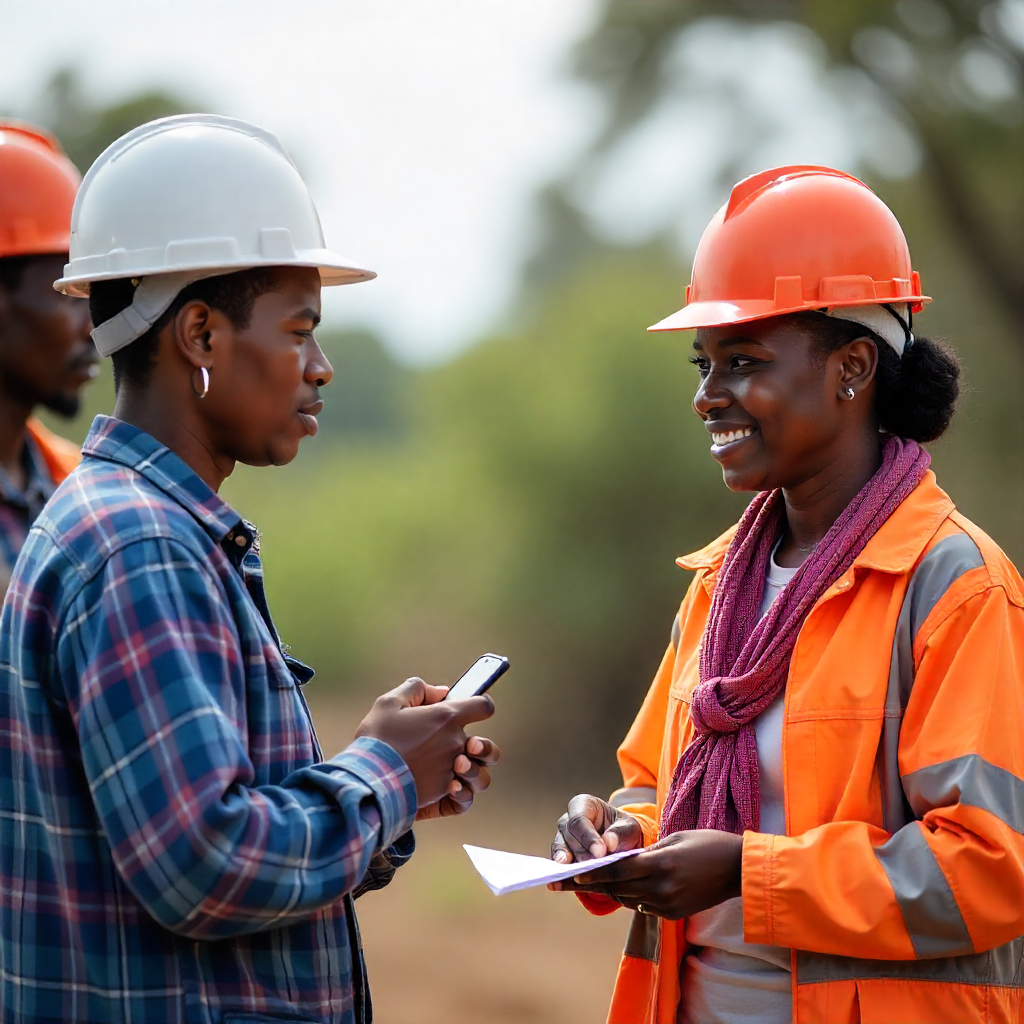
Creating Fair Labour Migration Frameworks in Southern Africa
The Human Face of Labour Migration
Labour mobility within the Southern African Development Community (SADC) is more than statistics — it’s people’s lives. According to Stats SA (2023), South Africa hosts millions of foreign-born individuals, many of whom work in insecure and informal settings.
Consider “M.” (anonymised), a 32-year-old Malawian woman working in Johannesburg’s domestic service sector. She lacks a written contract, safety gear, and access to healthcare for her children. When she fell ill, she avoided clinics for fear of dismissal and deportation. Her experience mirrors that of many others.
The SADC Status of Integration Report (2023) admits that migration in the region is characterised by “inadequate protection for migrant workers” and “weak data systems.” This raises an urgent question: how can SADC design fair, rights-based labour migration agreements that benefit both sending and receiving countries?
Policy Frameworks and Persistent Gaps
Existing SADC and National Frameworks
The SADC Labour Migration Action Plan (2020–2025) outlines priorities for better policy coordination, worker protection, and labour market participation. Some bilateral labour migration agreements (BLMAs) — such as Lesotho–South Africa and Zimbabwe–South Africa — attempt to formalise labour exchanges.
At the national level, South Africa operates through work visas like the General Work Visa and Critical Skills Visa, but its National Labour Migration Policy remains under development. Despite progress, implementation remains weak.
Core Policy Gaps
Several major issues persist:
-
Weak enforcement – Many outputs under the regional Action Plan remain “not completed.”
-
Inadequate data – Stats SA (2023) highlights the lack of reliable migration and health data.
-
Inconsistent rights protection – Access to social protection for migrants is patchy across SADC states.
-
Asymmetrical power – Sending states often lack negotiating leverage or institutional capacity.
-
Intersectional vulnerabilities – Gender, age, and documentation status shape exploitation risks.
-
Poor skills recognition – Qualifications earned in one country are rarely recognised in another.
-
Health exclusion – Migrant workers face occupational risks and limited access to healthcare.
Why Health and Labour Policy Must Converge
Fair labour migration is not only an economic issue — it’s a public health imperative. Migrant workers in precarious employment are more likely to experience injury, infectious diseases, and mental health distress. Delayed access to care affects both sending and receiving health systems.
Moreover, when migrants fall ill or return home injured, sending countries lose vital remittances and human capital. Conversely, receiving countries face higher health burdens and social tensions when migrants are marginalised.
Consequently, integrating health considerations into migration policy is essential for regional stability and sustainable development.
Labour Migration in South Africa’s Urban Economy
Concentration in Key Cities
Johannesburg, Tshwane, and eThekwini host most cross-border migrant workers. Stats SA (2023) reports that 55.6% of foreign-born informal workers contribute nothing to the Unemployment Insurance Fund, and 40.5% lack formal contracts.
Furthermore, health studies (SAMJ, 2023) show that while migrants may arrive in good health — the so-called healthy migrant effect — their working and living conditions quickly deteriorate.
Real-Life Examples
-
Case A: A 29-year-old Zimbabwean construction worker injured on site received no medical support and returned home disabled.
-
Case B: A 24-year-old Mozambican domestic worker in Tshwane works 60 hours weekly in crowded housing with no access to health screening.
-
Case C: A South African employer informally recruits Lesotho workers through brokers, resulting in fee exploitation and unsafe working cycles.
Each case demonstrates how weak regulation endangers health and fairness in cross-border employment.
Emerging Good Practices in the Region
Data and Governance Innovations
The IOM’s pilot study (2022) on labour migration data in South Africa, Zambia, and Zimbabwe revealed how stronger statistics can inform smarter policy. Likewise, some Lesotho–South Africa agreements now include skills recognition clauses — a step toward parity.
Gender and Rights-Based Policies
The SADC Labour Migration Action Plan stresses gender-sensitive policy design. Women migrant workers, especially in domestic and informal sectors, require tailored protection and access to reproductive health services.
Civil Society and Community Initiatives
In Johannesburg, NGOs have launched mobile health outreach and legal-aid programmes for migrant workers. These efforts, although small-scale, show how community-driven solutions can fill policy gaps while governments strengthen formal systems.
Practical Recommendations with Timelines
| Stakeholder | Key Action | Suggested Timeline |
|---|---|---|
| SADC Secretariat | Develop a model regional labour migration agreement covering recruitment, contracts, health access, and social protection. | End 2026 |
| Establish a Regional Labour Migration Data Platform linking national LMIS. | 2026–2028 | |
| Member States | Ratify and operationalise the SADC Protocol on Employment and Labour and Movement of Persons. | 2026 |
| South Africa (as receiving state) | Finalise and implement the National Labour Migration Policy with explicit migrant health and rights clauses. | Mid-2026 |
| Regulate employers to ensure written contracts and occupational health compliance. | 2026–2028 | |
| Expand health access for migrant workers regardless of documentation. | End 2026 | |
| Sending Countries | Negotiate gender-sensitive bilateral agreements with safe recruitment and reintegration provisions. | End 2026 |
| Establish reintegration and micro-enterprise schemes for returning workers. | 2027 onward | |
| Civil Society and Academia | Create regional migrant-worker networks and conduct mixed-method research on health and labour outcomes. | Launch 2026 |
Intersectional and Ethical Dimensions
Gender and Youth
Women face distinct risks such as harassment, wage theft, and limited mobility. Meanwhile, young migrants often lack awareness of their labour rights. Hence, pre-departure training and mentorship are crucial.
Documentation Status
Undocumented migrants are the most vulnerable. They avoid authorities, delay treatment, and rarely report abuse. Therefore, agreements must include safe-reporting channels and anti-retaliation clauses.
Health Rights and Human Dignity
Health access must be guaranteed irrespective of immigration status. A regional Migrant Health Compact, aligned with WHO and IOM guidance, could help standardise service delivery.
Ethical Data Use
Better data collection must respect confidentiality and avoid stigmatisation. Migrants should participate in research as partners, not subjects.
Ongoing Research Gaps
Although the IOM and Stats SA have improved data systems, significant gaps remain:
-
Limited disaggregated data by nationality, gender, and sector.
-
Sparse evidence on migrant health outcomes in informal and service industries.
-
Few evaluations of bilateral agreements’ health and economic impact.
-
Weak integration of gender and documentation variables in policy assessments.
Future research should prioritise these gaps to inform evidence-based agreements.
Building a Fair Future: Calls to Action
-
SADC and Governments: Finalise model agreements and ensure enforcement mechanisms.
-
Health Practitioners: Integrate migrant health into occupational and primary care strategies.
-
NGOs and Unions: Support rights awareness, safe recruitment, and peer health advocacy.
-
Researchers: Produce real-time evidence on how agreements affect worker well-being.
-
Employers: Adopt transparent hiring practices and invest in migrant safety and training.
Conclusion: Toward a Rights-Based SADC Labour Market
If SADC member states want migration to drive development rather than deepen inequality, rights and health must stand at the centre of labour mobility policy. South Africa, as the region’s main labour hub, can lead by example through transparent regulation, cross-border collaboration, and inclusion of migrant voices.
By 2026–2028, SADC can operationalise fair, gender-sensitive, and health-responsive agreements that benefit all. The region’s prosperity depends on how it treats its most mobile and most vulnerable workers.
Recent Posts:
- What Solutions Could Address the Brain Drain of Skilled Professionals from Zimbabwe and Zambia to South Africa?
- How Can Botswana’s Economic Success Model Be Replicated to Reduce Outward Migration Pressures in Southern Africa?
- What Role Can Remittances from South Africa Play in Reducing Economic Inequality in Lesotho?
- How Has Political Instability in Eswatini Influenced Migration Patterns and What Regional Interventions Are Needed?
- Can Regional Integration Frameworks Help Balance Economic Inequalities Driving Migration from Malawi to South Africa?