
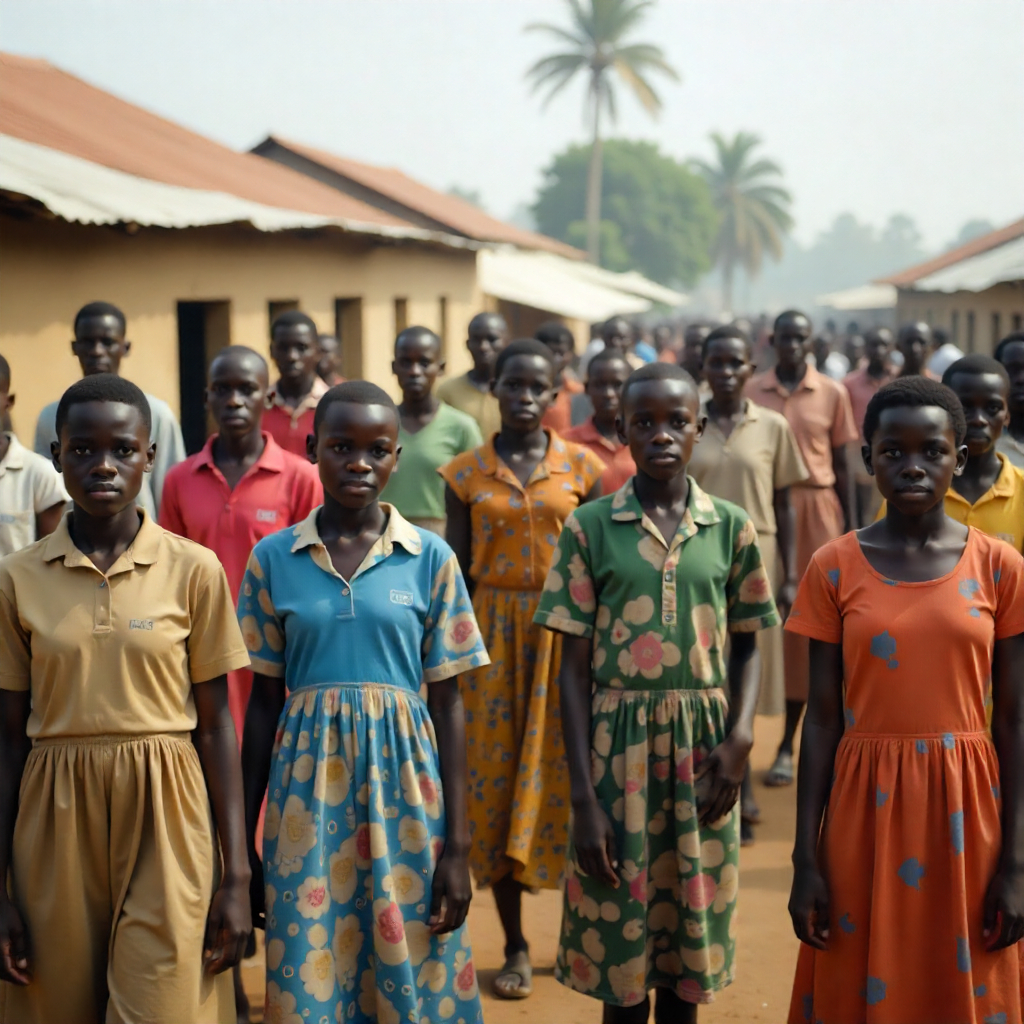
Economic Development Initiatives for Congolese Migrants
Opening: A Story of Choice and Opportunity
In the busy streets of Lubumbashi, Marie (a pseudonym) repairs mobile phones in a small workshop. She once planned to migrate to Johannesburg in South Africa. Instead, she accepted a local youth-skills training in digital repair and micro-enterprise support. Now she earns a modest living, supports her siblings, and sends remittances—all while staying near her family. Her decision illustrates a broader possibility: when viable livelihoods exist at home, migration becomes a choice rather than a necessity.
According to the 2023 migration profile for the Democratic Republic of the Congo (DRC), more than 64 % of citizens live on less than US $2.15 per day. Meanwhile, the United Nations estimated that about 1.68 million Congolese live abroad. In South Africa, Congolese nationals account for approximately 30 % of the refugee population according to 2023 statistics. These figures point to the urgency of creating alternatives to migration.
In this post, I explore how well-targeted economic development initiatives in the DRC could reduce the impetus for migration to South Africa, while also supporting health-system resilience, social protection, and regional equity. I combine policy analysis, empirical evidence, stakeholder voices, case studies, and actionable recommendations.
1. Economic and Policy Drivers of Congolese Migration
Economic Push Factors in the DRC
Despite its vast mineral wealth and arable land, the DRC remains one of the poorest countries globally. Conflict, weak infrastructure and governance deficits have limited job creation. Informal employment dominates—especially among youth—and many households live under severe poverty. Recent World Bank analysis notes that social protection programmes are evolving into platforms for entrepreneurship and local job creation.
Furthermore, young people often perceive migration as their only plausible path to income. Limited access to skills training, capital and markets amplifies this urgency. In addition, women and displaced persons face multiple intersecting vulnerabilities: gender discrimination, informal status, lack of documentation and weaker social networks.
Pull Factors into South Africa
South Africa offers a perceived land of opportunity. Its relatively diversified economy and established migrant networks make it attractive. At the same time, evidence from cities such as Johannesburg and Pretoria shows that many Congolese migrants end up in informal, low-wage jobs, often outside their original skills. An interview study found that qualified migrants from the DRC sometimes accept poorly paid work due to documentation constraints and discrimination. This mismatch has health and social consequences: precarious living, job insecurity, limited access to health services, and higher risks of infectious diseases such as TB and HIV.
Migration-Health Interface
From a public-health standpoint, unplanned international migration—with limited legal status—creates health risk vectors. Migrants often live in overcrowded housing, operate in informal economies with poor occupational protection, and access care late or inconsistently. For South African health systems, this adds pressure in destination cities. Therefore, reducing migration through viable local economic alternatives offers a dual benefit: improved livelihoods in origin communities and mitigated health burdens in destination settings.
2. South Africa’s Policy Context and Health-Migration Landscape
Access to Health for Migrants in South Africa
South Africa’s Constitution guarantees the right to emergency health care for everyone. However, the operational reality is complex. The National Health Insurance Act 20 of 2023 restricts asylum-seekers and undocumented migrants to emergency services and notifiable disease treatment. In practice, frontline workers act as informal gatekeepers, and regional variance in implementation remains. These gaps lead migrants to delay care, rely on informal providers or self-medicate—which increases risks not only for them but for the public health system.
Consequently, improved economic opportunities in origin countries like the DRC could reduce migration pressure and thereby relieve some of the tensions in South Africa’s health-system capacities.
Regional Policy and Coordination Gaps
The Southern African Development Community (SADC) emphasises free movement, regional integration and development. Yet practical linkages between migration policy, health policy and origin-country economic development are weak. For example, bilateral agreements often focus on migration control rather than job creation in origin countries. A 2024 SADC–IOM reaffirmation underscored migration governance but did not elaborate origin-country livelihood support. Such gaps undermine efforts to create sustainable alternatives to southward migration.
Intersectionality, Documentation and Equity
It is essential to apply an intersectional lens. Women migrants, youth (under 30), internally-displaced persons, and undocumented individuals face distinctive barriers in both origin and destination. Policies must avoid one-size-fits-all approaches. For instance, without documentation or legal status, youth cannot access formal training or credit—whether in the DRC or South Africa. Economic-development initiatives must therefore include inclusive entry points to reach these marginalised groups.
3. Empirical Evidence from Destination Cities
Studies undertaken in Johannesburg and Pretoria reveal patterns of downward occupational mobility among Congolese migrants. Migrants with tertiary education in the DRC frequently find themselves in informal sectors in South Africa—repair trade, casual trading, kiosk work. These jobs offer less stability, fewer social protections and limited access to health services.
NGO surveys from 2020-2024 indicate migrants live in crowded, low-sanitation housing, with limited access to occupational health and primary care. Migrants report erratic working hours and financial stress, which exacerbates mental health burdens and infective-disease transmission risk.
In this context, developing local economic opportunities in the DRC can contribute to reducing the social and health vulnerabilities of migrants. If individuals find viable livelihoods at home, fewer may elect to migrate under precarious conditions. In turn, this could ease pressure on destination-city health systems and improve equity for both origin and host communities.
4. Case Studies: Real Lives and Local Solutions
Jean – Youth Training in Lubumbashi
Jean, 22, from Lubumbashi planned to head to Johannesburg for construction work. A local NGO instead trained him in solar-panel installation and provided micro-credit for equipment purchase. He now installs solar lighting in peri-urban neighborhoods and hires two assistants. His income stabilised, he remains near family, and the migration plan was shelved.
Key insight: Youth-skills training aligned to market demand can retain young people locally and deliver economic value.
Amina – Women-Led Agribusiness in Goma
Amina, 30, widow and internally displaced, joined a women’s agribusiness cooperative supported by a DRC–Rwanda cross-border initiative. Her group processes beans and maize for local markets and generates steady income. She chose to focus locally instead of migrating south.
Key insight: Gender-sensitive agribusiness models empower women, especially displaced persons, and shift livelihood options closer to home.
Pierre – Reintegration After Migration to South Africa
Pierre, 40, spent two years in Johannesburg working informally as a mechanic. He returned to the DRC after persistent health problems, job instability and lack of documentation. With support from a mining-services firm in Kinshasa, he restarted his career and now runs a workshop supplying local mines.
Key insight: Reintegration programmes that link returnees to formal local employment can convert migration into circular migration, skill accumulation and local economic value.
5. Promising Economic Initiatives to Keep People Home
Digitalisation & Youth Skills
The Inclusive Digitalization in Eastern and Southern Africa (IDEA) programme includes the DRC and is funded by the World Bank and partners. It allocates ~$400 million in credit and €100 million from AFD to increase broadband access, train youth (50 % female) and build digital infrastructure in underserved communities. The aim is clear: create a digitally-enabled workforce and stimulate innovation locally.
SME Development and Entrepreneurship
The Small‑Medium Enterprise Development and Growth Project (PADMPME) in the DRC supported over 6,000 entrepreneurs and created nearly 15,000 jobs from 2018 to 2024. It especially targeted women and youth. These outcomes show entrepreneurship support can shift local economies and reduce migration pressure.
Cross-Border Trade & Infrastructure
Recent EU-funded cross-border projects between DRC and Uganda (worth €25 million) aim to facilitate trade, improve infrastructure, and stabilise border-economies. By lowering logistics costs and building transport links, these initiatives enhance local economic integration and create alternatives to long-distance migration.
Health-Integrated Economic Planning
It is vital to embed health outcomes in economic programmes. For example, the DRC’s Eastern Recovery Project (STEP) mobilised investments in human capital and infrastructure in vulnerable areas. When economic-development programmes include social-protection and health-components, they strengthen community resilience and reduce migration push-factors.
6. Policy Recommendations & Implementation Timeline
The following recommendations are organised by stakeholder group, with a three-year timeline.
A. DRC Government & Local Authorities
Year 1: Map migration-outflow hotspots (e.g., Haut-Katanga, South Kivu) and identify market-aligned sectors (digital repair, renewable energy, agribusiness).
Year 1-2: Launch youth-skills academies offering short courses in solar-energy installation, IT repair, agribusiness entrepreneurship; give priority to women, displaced youth, informal-sector workers.
Year 2-3: Provide seed grants and micro-loans, link trainees to regional markets and value chains.
Monitoring: Annual tracking of job uptake, migration intentions, and basic health indicators (clinic visits, insurance enrolment).
B. South African Government & SADC Partners
Year 1: Recognise migration-health-development linkages explicitly in policy.
Year 2: Establish a regional development fund (under SADC) to invest in origin-country livelihood programmes in the DRC.
Year 3: Joint evaluation of outcomes: reduced irregular migration, improved health equity both in origin and destination.
C. NGOs, Donors & Community Organisations
Year 1: Conduct participatory research among Congolese youth and women to understand aspirations, mobility drivers, opportunity gaps.
Year 1-2: Pilot enterprise hubs offering mentorship, business registration assistance and market-linkages; include undocumented and displaced persons.
Year 2-3: Scale successful models, ensure gender and age-inclusion, publish findings for learning across the region.
Cross-cutting: Health, Gender & Documentation
-
Ensure all programmes incorporate gender-sensitive design: childcare support, mentorship for women entrepreneurs, training adapted for displaced youth.
-
Address documentation barriers: design simplified registration systems or mobile-money platforms so undocumented persons gain access.
-
Integrate health-services links into economic-development programmes: e.g., include occupational health training, HIV/TB screening, and mobile clinics in entrepreneurship hubs.
7. Limitations & Research Gaps
Despite promising initiatives, longitudinal evidence linking livelihood programmes to reduced migration and improved health outcomes remains limited. Conflict and insecurity—especially in eastern provinces—continue to push migration independently of economic opportunity. Moreover, migration decisions are not purely economic: social networks, education aspirations, family strategies and personal agency matter significantly. Further research is needed to track: (i) how local livelihoods alter migration intentions, (ii) the health-outcomes of staying vs migrating, and (iii) gender-specific pathways linking empowerment to reduced mobility.
8. Conclusion and Calls to Action
Addressing the southward migration of Congolese nationals to South Africa demands more than path-control: it requires inclusive economic transformation in the DRC—one that generates decent work, connects to regional value chains, embeds health and gender equity and strengthens local agency.
When local economic opportunities flourish, migration becomes option-not-obligation. This shift has dual benefits: healthier, more stable origin communities and reduced migration-health pressure in South-African urban systems.
Policymakers: Integrate origin-country livelihood creation into migration and health frameworks.
NGOs / Donors: Invest in multi-sector programmes linking employment, education and health with inclusion of women, youth and displaced persons.
Researchers: Conduct longitudinal studies on how local development impacts migration and health dynamics.
Local communities: Engage in designing and owning solutions that meet their aspirations and context.
If aligned momentum begins now, within three years we can start seeing measurable shifts: fewer risky migrations, stronger local economies and healthier communities across the DRC-South Africa migration corridor. Ultimately, we aim not to stop mobility—but to empower people to decide to stay, with dignity, security and opportunity.
Recent Posts: