
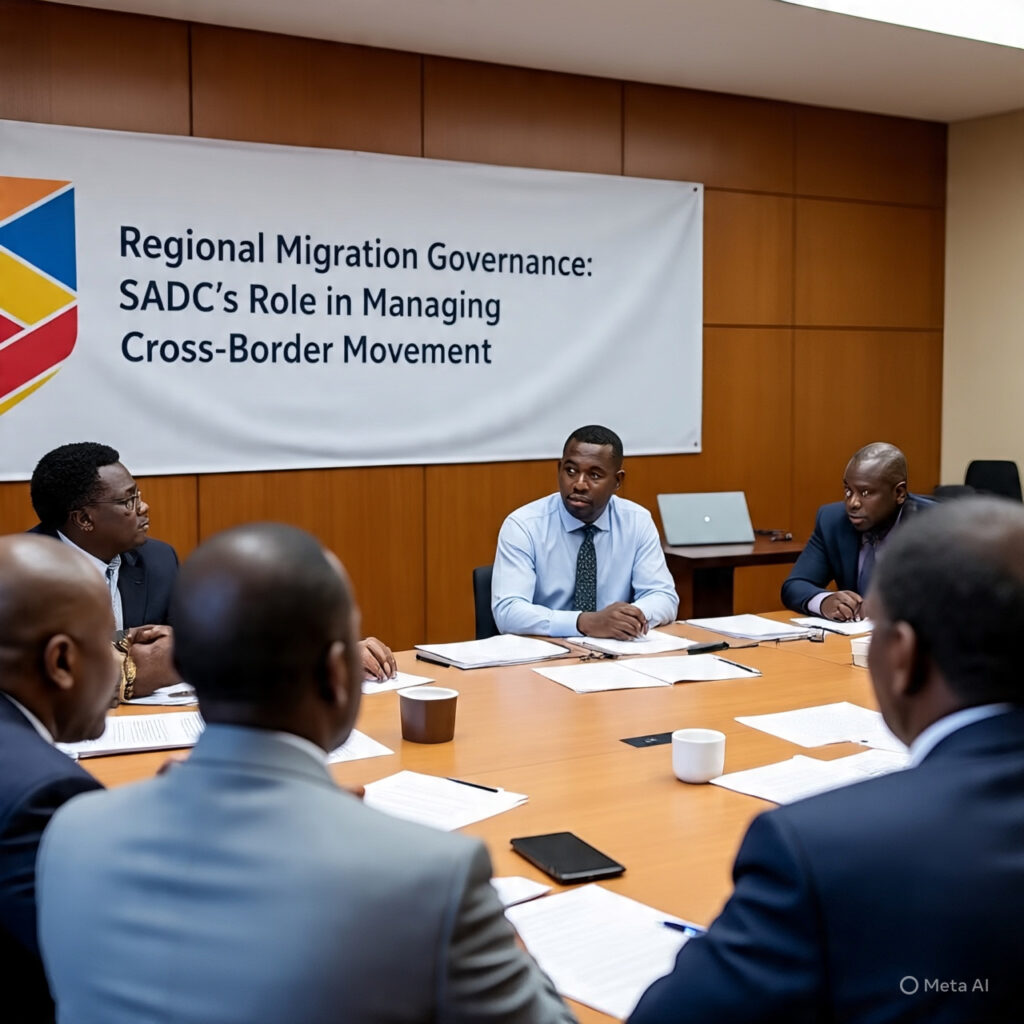
SADC Regional Migration Governance
Examining health policy implications of regional cooperation frameworks and free movement protocols
Opening: The Health Implications of Cross-Border Movement
When 28-year-old Maria crossed from Zimbabwe into South Africa seeking treatment for drug-resistant tuberculosis, she encountered a complex web of regional policies that would determine not only her access to healthcare but also the broader public health response across the Southern African Development Community (SADC). Migration to and from countries in Southern Africa is driven largely by economic opportunities, political instability and environmental hazards, yet the health dimensions of this movement remain inadequately addressed within regional governance frameworks.
Recent data reveals that approximately 4.2 million people are estimated to be international migrants within the SADC region, representing nearly 1.2% of the total population. However, the prevalence of internal migration, which is largely labour related, far exceeds that of cross-border movement, with the most recent population census indicating 5% of the population had moved within the country in the 5 years preceding the census. This mobility presents significant challenges and opportunities for regional health systems, particularly as SADC member states work toward implementing protocols for free movement while managing health security concerns.
The intersection of migration and health within SADC’s governance framework reveals critical gaps in policy coordination, implementation challenges, and missed opportunities for regional health integration. As South Africa implements its National Health Insurance (NHI) system and commits to universal health coverage, including for migrant and mobile groups, understanding how regional migration governance affects health outcomes becomes increasingly urgent.
SADC’s Regional Migration Framework: Policy Architecture and Health Implications
The Protocol Landscape
The Southern African Development Community has developed a comprehensive framework for migration governance, anchored by several key protocols and policies. SADC places great importance to migration governance and has over the years made strides by designing and implementing tailored protocols, policies and programmes that were meant to harmonise processes and interventions in migration governance. These include the Protocol on the Facilitation of Movement of Persons (2005).
The Protocol on the Facilitation of Movement of Persons, adopted in 2005, represents SADC’s flagship initiative for regional integration through enhanced mobility. However, its implementation has been severely constrained. Full implementation is lagging; not all members have signed it, and only seven have ratified and domesticated it (below the required threshold for it to enter into force – the last ratification was in 2019). This implementation deficit has profound implications for health policy coordination and cross-border health service delivery.
Labour Migration and Health Worker Mobility
The Labour Migration Action Plan (2020-2025) adopted through the Employment and Labour Sector seeks to protect and safeguard the rights and welfare of migrant workers, yet health considerations remain inadequately integrated into these frameworks. The plan’s focus on skills transfer and labour demand matching overlooks the health workforce implications of regional mobility.
South Africa’s experience illustrates these complexities. In 2001, it stated that it would not recruit foreign health workers in the SADC region except under intergovernmental or bilateral agreements. This policy reflects concerns about brain drain but also highlights the absence of comprehensive regional health workforce planning.
Recent developments suggest renewed momentum for regional cooperation. The Joint Tripartite Technical Committee Meeting of SADC convened in Johannesburg from November 19–21, 2024, ushering in crucial decisions for labour and employment transformation across the region. However, health sector coordination remained limited in these discussions.
Current Implementation Challenges and Policy Gaps
Documentation and Access Barriers
The current SADC migration framework creates a two-tiered system of access to healthcare services. Non-South Africans are either subject to the same means-test hospital fees, or they are subject to the highest fees (if undocumented and not from SADC). This differential treatment undermines regional integration goals while creating public health vulnerabilities.
Key implementation challenges include:
Inconsistent Documentation Requirements: Despite SADC protocols, member states maintain varying documentation requirements that affect healthcare access. Documented migrants from SADC countries may receive preferential treatment, but bureaucratic barriers often prevent proper documentation.
Limited Cross-Border Health Information Systems: The absence of integrated health information systems across SADC member states prevents continuity of care and comprehensive disease surveillance. Patients like Maria often restart treatment protocols when crossing borders, reducing treatment effectiveness and increasing drug resistance risks.
Fragmented Emergency Response Coordination: Recent health emergencies, including COVID-19, revealed significant gaps in regional health coordination. Border closures disrupted essential health services for mobile populations while undermining regional integration commitments.
Policy Coherence Deficits
Analysis of South African government policy documents reveals substantial gaps in migration-health policy integration. A National Health Insurance Bill commits the South African public health system to universal health coverage, including for migrant and mobile groups, yet operational guidelines remain unclear about how this commitment aligns with SADC protocols.
The Migration Dialogue for Southern Africa (MIDSA), established in 2000, provides a platform for regional consultation but lacks binding mechanisms for health policy coordination. This institutional weakness perpetuates fragmented approaches to migration health governance.
Case Studies: Lessons from Implementation
Case Study 1: Cross-Border TB Treatment in Limpopo Province
Sarah, a 34-year-old teacher from rural Limpopo, developed symptoms of tuberculosis while visiting family across the border in Zimbabwe. Upon returning to South Africa, she faced bureaucratic delays in accessing treatment due to questions about where her TB exposure occurred. The Limpopo Department of Health, working with SADC health protocols, eventually established a cross-border case management system.
This case illustrates both challenges and innovations in regional health governance. The initial delays reflect poor policy coordination, while the eventual solution demonstrates potential for regional cooperation. The case contributed to developing standardized cross-border TB treatment protocols that now serve as a model for other provinces.
Case Study 2: Maternal Health Services in Cross-Border Communities
The border community of Beitbridge-Musina sees daily cross-border movement for maternal health services. Women from Zimbabwe often seek antenatal care in South Africa but return home for delivery, creating challenges for continuity of care. Local health facilities developed informal cooperation mechanisms, sharing patient information and coordinating care despite the absence of formal protocols.
This grassroots cooperation demonstrates the potential for regional health integration while highlighting policy gaps. The success of informal mechanisms suggests that formal regional protocols could significantly enhance health outcomes with appropriate institutional support.
Case Study 3: Regional Response to Cholera Outbreaks
The 2018-2019 cholera outbreak in Zimbabwe tested regional health cooperation mechanisms. Despite SADC health protocols, the regional response was fragmented, with each country implementing unilateral border health measures. However, subsequent evaluation led to improved regional disease surveillance coordination and joint response protocols.
This case demonstrates the tension between national health security concerns and regional integration commitments. The eventual development of joint protocols illustrates learning from crisis experience, though preventive coordination remains weak.
Successful Regional Migration Management Models
The East African Community Health Cluster
The East African Community’s health cooperation framework offers instructive lessons for SADC. The EAC established a health cluster approach that integrates migration health considerations into regional health planning. Key innovations include:
-
-
- Regional Health Insurance Portability: EAC citizens can access healthcare services across member states with their national health insurance, reducing barriers for mobile populations.
- Harmonized Health Worker Registration: Regional certification mechanisms facilitate health worker mobility while maintaining quality standards.
- Integrated Disease Surveillance: Real-time information sharing systems enable coordinated responses to health emergencies.
-
ECOWAS Free Movement and Health Integration
The Economic Community of West African States demonstrates advanced integration of migration and health policies. The ECOWAS protocol on free movement includes specific provisions for healthcare access, supported by:
-
-
- Regional Health Development Agency: Coordinates health policies across member states with specific attention to migration health.
- Cross-Border Health Zones: Designated areas with simplified healthcare access procedures for border communities.
- Regional Health Emergency Response: Integrated systems for managing health emergencies that affect mobile populations.
-
Nordic Council Health Cooperation
The Nordic Council’s approach to health cooperation in the context of high mobility offers lessons for SADC. Despite different economic contexts, the Nordic model demonstrates how political commitment can overcome technical barriers to health cooperation.
Key elements include binding commitments to healthcare access for all Nordic citizens, integrated health information systems, and regular policy coordination mechanisms. The Nordic experience suggests that political will is often more important than technical capacity in achieving regional health integration.
Innovative Solutions and Best Practices
Technology-Enabled Health Integration
Recent technological developments offer opportunities for enhancing SADC health cooperation. Mobile health platforms can facilitate cross-border continuity of care, while blockchain technology could enable secure sharing of health information across borders.
Digital Health Passports: Several SADC countries are exploring digital health documentation that could facilitate healthcare access across borders while maintaining security standards.
Telemedicine Networks: Cross-border telemedicine initiatives are emerging in border regions, enabling specialist consultation across national boundaries.
Mobile Health Insurance: Technology platforms are being developed to enable health insurance portability across SADC member states.
Community-Based Cross-Border Health Services
Grassroots initiatives in border communities demonstrate the potential for community-driven health cooperation. These initiatives often succeed where formal government programs struggle, suggesting the importance of community ownership in regional health integration.
Cross-Border Health Committees: Community structures that coordinate health services across borders, often addressing gaps in formal healthcare provision.
Traditional Health Practitioner Networks: Traditional healers often maintain cross-border practices that could be formalized and integrated with modern healthcare systems.
Community Health Worker Exchange: Programs that enable community health workers to provide services across borders, particularly in remote border areas.
Regional Health Financing Mechanisms
Innovative financing mechanisms could address resource constraints that limit regional health cooperation. Options include:
SADC Health Solidarity Fund: A regional pooling mechanism to support health services for mobile populations and cross-border health emergencies.
Cross-Border Health Insurance: Regional insurance schemes that provide coverage across member states, reducing financial barriers to healthcare access.
Health Development Bonds: Regional financial instruments to fund cross-border health infrastructure and service delivery systems.
Evidence-Based Recommendations and Implementation Timelines
Immediate Actions (0-12 months)
Establish SADC Health Migration Task Force: Create a dedicated technical working group to coordinate migration health policies across member states. This task force should include representatives from health ministries, migration agencies, and civil society organizations.
Implementation Timeline: Task force establishment by month 3, first policy recommendations by month 8, pilot program design by month 12.
Develop Regional Health Emergency Response Protocols: Building on COVID-19 experience, establish binding protocols for coordinated health emergency responses that account for mobile populations.
Implementation Timeline: Protocol drafting by month 6, member state consultation by month 9, adoption by month 12.
Launch Cross-Border Health Information Pilot: Select 2-3 high-mobility corridors for piloting integrated health information systems that enable continuity of care across borders.
Implementation Timeline: Site selection by month 2, system design by month 6, pilot launch by month 10.
Medium-Term Reforms (1-3 years)
Integrate Health Provisions into Movement Protocols: Revise the Protocol on Facilitation of Movement of Persons to include specific health cooperation provisions and healthcare access guarantees.
Implementation Timeline: Legal analysis completed year 1, member state negotiations year 2, protocol amendment adoption year 3.
Establish Regional Health Insurance Portability: Develop mechanisms for health insurance recognition across SADC member states, starting with public health insurance schemes.
Implementation Timeline: Feasibility study year 1, bilateral agreements year 2, regional framework year 3.
Create Cross-Border Health Zones: Designate border areas with simplified healthcare access procedures and integrated service delivery.
Implementation Timeline: Site identification year 1, infrastructure development year 2, operational launch year 3.
Long-Term Transformation (3-5 years)
Establish SADC Health Integration Framework: Develop comprehensive regional health cooperation framework that fully integrates migration considerations into health system planning.
Implementation Timeline: Framework development years 3-4, phased implementation beginning year 5.
Launch Regional Health Workforce Mobility Program: Create mechanisms for ethical health worker recruitment and training that addresses regional health workforce needs while preventing harmful brain drain.
Implementation Timeline: Program design year 3, pilot implementation year 4, full operation year 5.
Implement Regional Disease Surveillance System: Establish integrated surveillance systems that track disease patterns and health outcomes across mobile populations.
Implementation Timeline: System design year 3, phased implementation years 4-5, full operation by year 5.
Stakeholder-Specific Calls to Action
For Health Policy Makers
Health ministries across SADC must prioritize migration health in policy development and budget allocation. Specific actions include:
-
-
- Allocate dedicated budget lines for migration health services and cross-border cooperation
- Establish migration health focal points within health ministries
- Participate actively in regional health cooperation mechanisms
- Develop national migration health strategies aligned with regional frameworks
-
For Healthcare Providers
Healthcare facilities and providers in high-mobility areas should adapt service delivery models to address migration-related health needs:
-
-
- Implement cultural competency training for staff serving migrant populations
- Develop referral mechanisms for cross-border cases
- Participate in professional networks that span borders
- Advocate for policy reforms that support migrant health access
-
For NGOs and Civil Society Organizations
Non-governmental organizations play crucial roles in advocacy, service delivery, and policy monitoring:
-
-
- Document migration health challenges and advocate for policy reforms
- Provide direct health services where government systems are inadequate
- Build cross-border partnerships to address migration health comprehensively
- Monitor implementation of regional protocols and hold governments accountable
-
For Development Partners and International Organizations
International organizations should align support with regional integration goals:
-
-
- Fund regional health cooperation initiatives rather than fragmented national programs
- Support capacity building for regional health institutions
- Facilitate knowledge sharing between regions with successful migration health integration
- Advocate for increased political commitment to regional health cooperation
-
Addressing Research Gaps and Future Directions
Critical Research Needs
Migration Health Epidemiology: Comprehensive studies of health patterns among mobile populations in SADC are lacking. Research should examine how migration affects disease prevalence, healthcare utilization, and health outcomes.
Policy Implementation Analysis: Systematic evaluation of existing regional protocols’ implementation is needed to understand barriers and identify successful approaches.
Economic Impact Assessment: Analysis of the economic implications of migration health policies, including costs and benefits of regional health cooperation.
Community Perspective Research: Studies examining migration health from the perspectives of mobile populations themselves, including barriers, preferences, and needs.
Methodological Considerations
Research in this field faces significant challenges including mobile population sampling difficulties, cross-border data collection complexities, and ethical considerations in studying vulnerable populations. Future research should:
-
-
- Develop innovative methodologies for studying mobile populations
- Establish cross-border research partnerships
- Ensure research benefits the communities being studied
- Integrate quantitative epidemiological data with qualitative community perspectives
-
Knowledge Translation Priorities
Research findings must be translated into actionable policy recommendations. Priority areas include:
-
-
- Evidence-based policy briefs for government decision-makers
- Practice guidelines for healthcare providers
- Community education materials about health rights and services
- Advocacy toolkits for civil society organizations
-
Conclusion: Toward Integrated Regional Health Governance
A Critical Juncture for Regional Integration
The Southern African Development Community stands at a critical juncture in regional integration. Recent high-level dialogues, particularly those held on February 12, 2025, at the margins of the 38th African Union Summit, have signaled a decisive shift toward eliminating barriers to regional mobility. However, this transformation must include comprehensive attention to health implications if it is to succeed sustainably.
Evidence of Policy Gaps and Opportunities
The evidence presented demonstrates that current SADC migration governance frameworks inadequately address health dimensions of cross-border movement. Policy gaps, implementation challenges, and coordination deficits create vulnerabilities for mobile populations while undermining regional health security. Yet examples of successful cooperation, innovative solutions, and emerging opportunities suggest pathways toward more effective regional health integration.
A Roadmap for Coordinated Action
The path forward requires coordinated action across multiple levels and stakeholders. Immediate steps must focus on establishing institutional mechanisms for regional health cooperation while addressing urgent gaps in emergency response coordination. Medium-term reforms should integrate health provisions into existing migration protocols while developing new mechanisms for cross-border health service delivery. Long-term transformation demands comprehensive regional health integration that recognizes migration as a permanent feature of the Southern African landscape.
Success Factors and Critical Dependencies
Success will depend on political commitment from member state governments, sustained engagement from civil society organizations, and continued support from development partners. Most importantly, it will require centering the voices and needs of mobile populations themselves in policy development and implementation.
The Stakes and the Promise
The stakes are high. Failure to address migration health adequately will undermine regional integration goals while perpetuating health inequities. Success, however, could position SADC as a global leader in migration health governance while improving health outcomes for millions of people across the region.
A Call for Urgent Action
The time for action is now. Regional health integration cannot wait for perfect political conditions or complete technical solutions. Incremental progress, sustained commitment, and learning from experience can build momentum toward the comprehensive regional health cooperation that Southern Africa needs and deserves.
References
-
-
- Southern African Development Community. (2020). SADC Develops Regional Migration Policy Framework. SADC Secretariat.
- Migration Data Portal. (2024). Migration Data in the Southern African Development Community (SADC).
- Southern African Development Community. (2020). SADC Adopts New Labour Migration Action Plan to Promote Skills Transfer and Match Labour Supply and Demand for Regional Integration.
- International Labour Organization. (2025). Transforming labour and employment in Southern Africa: a look at the latest SADC developments.
- Horn Review. (2025). Breaking Borders: SADC’s Visa-Free Transformation and the Future of African Mobility.
- Africa Visa Openness. (2024). Southern African Development Community (SADC) – Africa Visa Openness Report.
- Kollapan, S., et al. (2015). Health worker migration from South Africa: causes, consequences and policy responses. Human Resources for Health, 13(92).
- Ginsburg, C., et al. (2021). Internal migration and health in South Africa: determinants of healthcare utilisation in a young adult cohort. BMC Public Health, 21(1).
- Hunter-Adams, J., et al. (2023). An analysis of migration and implications for health in government policy of South Africa. International Journal for Equity in Health, 22(1).
- Sonke Gender Justice. (2021). What does the law say about migrants and refugees accessing healthcare in South Africa?
- Scalabrini Centre. (2023). Migrant and Refugee Access to Public Healthcare in South Africa.
- Southern African Migration Programme. (2017). Migrants’ Right to Health in Southern Africa.
- International Organization for Migration. (2020). Migration Dialogue for Southern Africa (MIDSA).
- African Union. (2020). Migration and Health: From Policy to Practice Study Report.
- Southern African Migration Management Project. (2020). SADC’s Labour Migration Action Plan (2020-2025).
-
Note: This analysis acknowledges limitations in available data on migration health outcomes and calls for enhanced research and monitoring systems. The recommendations presented are based on available evidence but require adaptation to specific country contexts and continued refinement based on implementation experience.