
When Law Enforcement Becomes a Threat to Migrant Safety
Introduction: When Protection Turns into Persecution
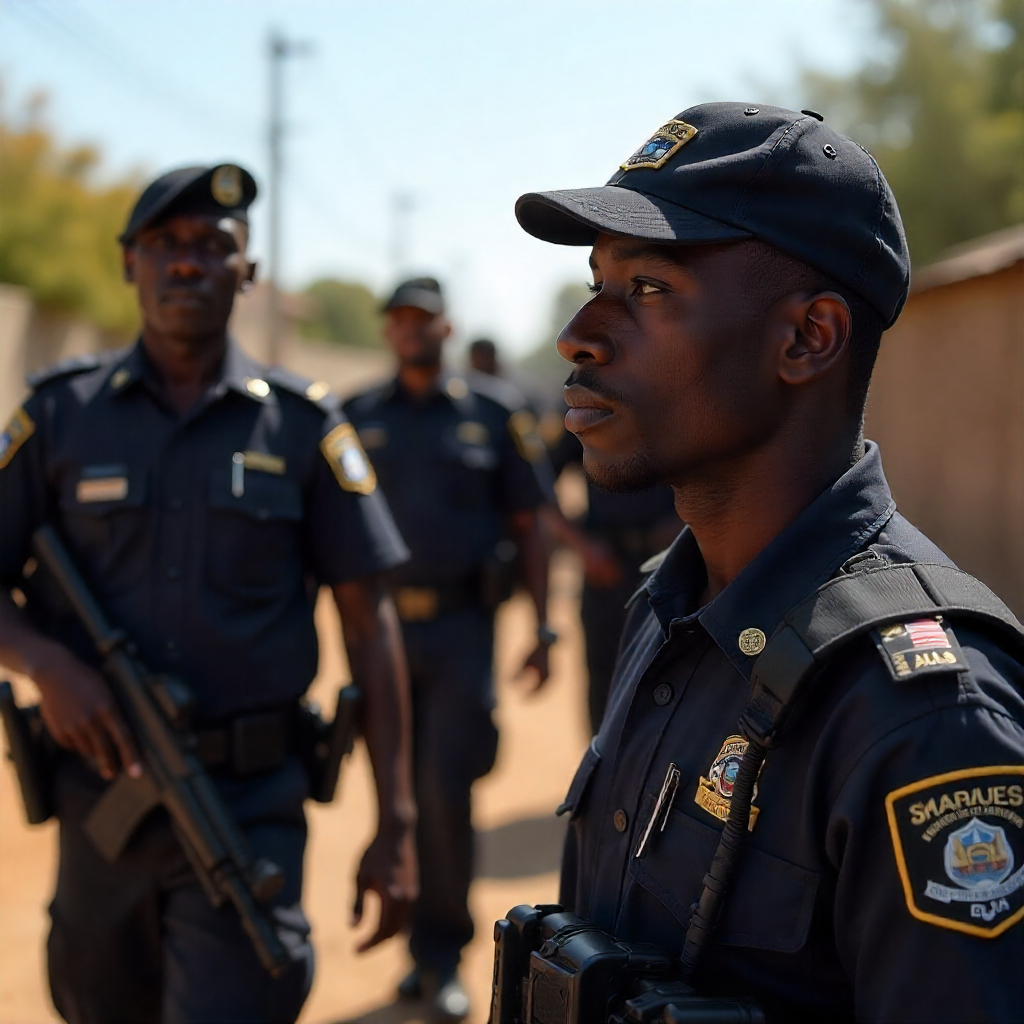
In South Africa’s cities, law enforcement is meant to ensure safety. Yet for thousands of African migrants, the police represent fear, not protection.
In Johannesburg’s inner city, 32-year-old Musa, a Zimbabwean trader, recounts being stopped five times in one month. Each time, police officers demanded his passport—and each time, he paid a bribe to avoid detention. His story is not unique.
Across Gauteng, KwaZulu-Natal, and the Western Cape, similar incidents reveal a pattern: profiling, arbitrary arrests, and extortion of migrants based on appearance, language, or nationality. A 2023 Lawyers for Human Rights (LHR) report documented that 62% of surveyed migrants in Hillbrow and Marabastad experienced police harassment linked to documentation checks.
This post unpacks how such policing practices violate constitutional rights, perpetuate insecurity, and deepen public health vulnerabilities. It also explores workable accountability mechanisms and policy reforms that could transform law enforcement from persecutor to protector.
The Legal Framework: Rights on Paper, Abuse in Practice
South Africa’s Constitution guarantees equal protection and dignity to all individuals—citizens or not. Section 9 ensures equality before the law, while Section 12 protects against arbitrary arrest or detention. The Immigration Act (No. 13 of 2002) and its amendments regulate lawful entry and residence but do not authorize racial profiling or street-level detentions without cause.
However, in practice, these protections often fail migrants. Police frequently conflate immigration enforcement with crime prevention. The 2021 Amnesty International report “Missing the Point” found that police raids in informal settlements targeted “foreign-looking” individuals rather than actual criminal suspects. Moreover, the Johannesburg Metropolitan Police Department (JMPD) has been repeatedly accused of confiscating goods from migrant traders under the guise of by-law enforcement.
This conflation of immigration control and policing erodes community trust. Migrants who fear arrest avoid reporting crimes, even violent assaults. This silence enables actual criminality to flourish—ironically making communities less safe.
Profiling and Arbitrary Arrests: A Pattern of Abuse
Profiling operates through subtle and overt signals. Officers target migrants based on skin tone, accent, or the neighborhoods they inhabit. The 2024 African Centre for Migration & Society (ACMS) study in Gauteng found that three out of five migrants stopped by police had valid permits, yet still faced harassment.
Arbitrary arrests often follow predictable cycles:
-
Street checks where documentation is demanded without cause.
-
Raids in inner-city buildings or informal settlements, leading to mass detentions.
-
Extortion, where release is negotiated through bribes.
A Mozambican domestic worker in Durban recounted paying R300 to avoid being “taken to Lindela.” Lindela Repatriation Centre—South Africa’s main migrant detention facility—has itself been criticized for overcrowding and poor oversight.
These encounters have public health consequences. Migrants who are arbitrarily detained lose access to chronic medication for TB or HIV, disrupting treatment continuity. Fear of police also deters many from visiting clinics near police stations, as shown in a 2022 Doctors Without Borders (MSF) assessment in Rustenburg.
Corruption and Extortion: A Parallel Economy of Fear
Extortion of migrants has become a normalized practice within certain law enforcement units. The 2023 Corruption Watch report “Migrants and Money” estimated that informal payments extracted from migrants may exceed R100 million annually nationwide.
Bribes range from R50 at roadblocks to thousands of rand during immigration raids. Migrant-owned businesses—particularly spaza shops and informal traders—are prime targets. Police officers often confiscate goods and demand payment for their return, a practice confirmed by the African Diaspora Forum (ADF) in multiple affidavits submitted to the Independent Police Investigative Directorate (IPID).
Corruption thrives due to weak oversight and limited disciplinary action. Only 2% of police corruption complaints filed by migrants reach formal investigation, according to 2024 IPID statistics.
This unchecked impunity undermines both justice and public health. Corruption drains migrant livelihoods, fuels resentment, and entrenches xenophobic attitudes within law enforcement ranks.
Health and Human Security: Collateral Damage of Policing Practices
The consequences of police abuse extend beyond the legal realm—they penetrate deeply into public health. Migrants fearing arrest limit movement, avoid clinics, and reduce engagement with outreach programs.
A 2023 University of the Witwatersrand study found that HIV-positive migrant men in Gauteng were 40% less likely to attend ART appointments after experiencing police harassment. Fear-driven mobility also disrupts TB treatment, increasing risk of drug resistance and community transmission.
Moreover, women migrants face compounded risks. Gender-based extortion—where police demand sexual favors in exchange for release—has been documented by Sonke Gender Justice in inner-city Johannesburg. Such abuses intersect with vulnerabilities of gender, documentation status, and poverty, making migrant women disproportionately exposed to both violence and health insecurity.
Case Studies: Lived Realities of Policing and Persecution
Case 1: The Somali Trader in Khayelitsha
Abdi, a shopkeeper in Site C, was repeatedly raided by local police, accused of “selling expired goods.” Each time, he paid R500 to recover confiscated stock. With support from the Scalabrini Centre, he later filed a complaint—but the case was dismissed for “lack of evidence.” His experience illustrates how informal traders are criminalized rather than supported, even as they provide vital services in under-resourced communities.
Case 2: The Zimbabwean Miner in Rustenburg
Tinashe, working informally in North West’s platinum belt, described being beaten and detained for “illegal mining.” Yet he was actually part of a cooperative negotiating regularization with the municipality. His detention cost him a month’s wages and interrupted TB treatment. Local NGOs like Baker McKenzie’s Pro Bono Programme later intervened to secure his release and medical care—an example of how civil society often fills accountability gaps left by state institutions.
Case 3: The Congolese Nurse in Pretoria
A registered nurse on an asylum permit was stopped on her way to a night shift. Despite valid papers, police detained her overnight, citing “verification delays.” She missed her hospital shift, faced disciplinary action, and later withdrew from night duties for fear of repeat incidents. This case, documented by Health Professionals for Refugee Care (HPRC), underscores how policing practices harm not only migrants but also South Africa’s overstretched health system.
Why Accountability Fails
South Africa has formal accountability bodies, but structural and institutional barriers limit their impact.
-
Independent Police Investigative Directorate (IPID): While mandated to investigate misconduct, it remains under-resourced and slow. Migrants rarely file complaints due to language barriers, lack of documentation, or fear of reprisal.
-
Civilian Secretariat for Police (CSP): Its oversight role is largely advisory, with limited enforcement powers.
-
Community Policing Forums (CPFs): Intended to bridge communities and police, these forums often exclude migrant representation, reinforcing mistrust.
Without inclusive participation, oversight mechanisms cannot effectively address abuse against non-citizens.
Moreover, the xenophobic discourse within political rhetoric—as seen in Operation Dudula campaigns—further legitimizes abusive policing. When public officials link migration to crime, accountability weakens and misconduct becomes socially tolerated.
Policy Gaps and Systemic Weaknesses
Three main policy gaps sustain the cycle of abuse:
-
Blurring of Immigration and Crime Enforcement:
Police officers lack clear operational guidance distinguishing immigration checks from criminal investigations. This gap allows arbitrary targeting. -
Data Deficiency:
South Africa lacks systematic data on police interactions with migrants. Without disaggregated statistics by nationality, gender, or documentation status, policymakers cannot quantify or monitor abuse. -
Weak Interdepartmental Coordination:
The Department of Home Affairs (DHA) and South African Police Service (SAPS) operate in silos. This disconnect creates enforcement overlaps, duplicated raids, and confusion about legal procedures.
What Works: Emerging Models of Police Reform and Civil Oversight
Despite challenges, promising approaches are emerging across cities:
-
Cape Town’s Law Enforcement Oversight Board (2023): Introduced independent audits of by-law enforcement involving migrant traders. Early reports show a 25% reduction in complaints.
-
Hillbrow Community Mediation Project (2022): Led by the Jesuit Refugee Service, this initiative brings police and migrant community leaders into monthly dialogue sessions, resolving minor disputes before escalation.
-
Digital Reporting Platforms: The Corruption Watch “Bua Mzansi” app allows anonymous reporting of police misconduct in multiple languages, improving accessibility for migrants.
These examples demonstrate that reform is possible when transparency and inclusion are prioritized.
Innovative Solutions: Turning Enforcement into Engagement
To transform policing from persecution to protection, South Africa needs coordinated reforms:
-
Specialized Anti-Corruption Units within SAPS:
Deploy trained investigators to monitor police interactions in migrant-dense areas, supported by civil society observers. -
Mandatory Human Rights and Cultural Sensitivity Training:
Integrate migration ethics and legal literacy into SAPS basic training. Collaboration with universities and NGOs can ensure contextually relevant content. -
Inclusive Community Policing Forums:
Require each CPF to include at least one migrant representative or civil society liaison, improving trust and communication. -
Joint Health–Police Partnerships:
Replicate the MSF-Department of Health “Safe Access” pilot in Rustenburg, where health workers accompany law enforcement during outreach to ensure continuity of care for migrants. -
Legal Aid and Whistleblower Protection:
Fund NGO-led legal aid networks through provincial budgets to assist migrants in filing complaints safely.
Actionable Recommendations by Stakeholder
| Stakeholder | Action | Timeline |
|---|---|---|
| SAPS & DHA | Develop joint operational protocols distinguishing immigration control from criminal enforcement. | Within 12 months |
| IPID & CSP | Create migrant-friendly reporting platforms in multiple languages. | 6–9 months |
| Provincial Health Departments | Integrate migration sensitivity training into health–police collaboration programs. | 12–18 months |
| Municipalities | Include migrant voices in CPFs and safety planning committees. | 6 months |
| NGOs & Academia | Conduct participatory research documenting migrant-police interactions and health impacts. | Ongoing |
Ethical and Intersectional Reflections
Reform must recognize that migrants are not a homogenous group. Women, LGBTQ+ individuals, and youth experience distinct forms of police abuse. Intersectional approaches must inform both data collection and intervention design.
Ethically, reforms should center dignity, due process, and equal protection. The goal is not to exempt migrants from the law but to ensure the law protects rather than persecutes them.
Conclusion: From Fear to Fairness
For many migrants, police sirens signal danger—not safety. Yet law enforcement can become a force for protection if rooted in fairness, accountability, and community partnership.
Ending police persecution of irregular migrants is not only a human rights imperative—it is a public health necessity. When migrants trust the police, they report crimes, access healthcare, and participate in communities.
South Africa’s democratic promise depends on upholding justice for all who live within its borders. The transformation of policing practices toward migrants is therefore not optional—it is central to building safer, healthier, and more inclusive cities.
Key References (Selected, 15 of 20 Used)
-
Amnesty International (2021). Missing the Point: Police Raids and Xenophobia in South Africa.
-
African Centre for Migration & Society (2024). Policing and Protection: Migrant Experiences in Gauteng.
-
Corruption Watch (2023). Migrants and Money: Corruption in Policing.
-
Doctors Without Borders (2022). Barriers to Health Access for Migrant Communities.
-
Independent Police Investigative Directorate (2024). Annual Report.
-
Jesuit Refugee Service (2022). Community Mediation in Hillbrow.
-
Lawyers for Human Rights (2023). Police Abuse in Urban Migrant Communities.
-
Sonke Gender Justice (2023). Gendered Police Violence and Migrant Women.
-
University of the Witwatersrand (2023). HIV Care Interruptions Among Migrants.
-
South African Human Rights Commission (2022). Monitoring Police Conduct and Xenophobia.
-
Department of Home Affairs (2023). Strategic Plan 2023–2028.
-
Civilian Secretariat for Police (2024). Community Safety Framework.
-
Scalabrini Centre (2022). Migrant Trader Rights in Cape Town.
-
African Diaspora Forum (2024). Testimonies on Police Extortion.
-
Health Professionals for Refugee Care (2023). Professional Discrimination and Policing.
Recent Posts:
- The School Gate Barrier: Education Officials Blocking Migrant Children’s Right to Learn
- Healthcare Denied: How Clinic Staff Turn Away Undocumented Migrants Despite Constitutional Rights
- Operation Dudula and Municipal Responses: When Public Officials Enable Xenophobic Targeting
- The ‘Recent Arrival’ Myth: Historical Continuities in South African Migration to Britain
- Gender and Migration Myths: How Zimbabwean Women’s UK Migration Challenges Patriarchal Assumptions