
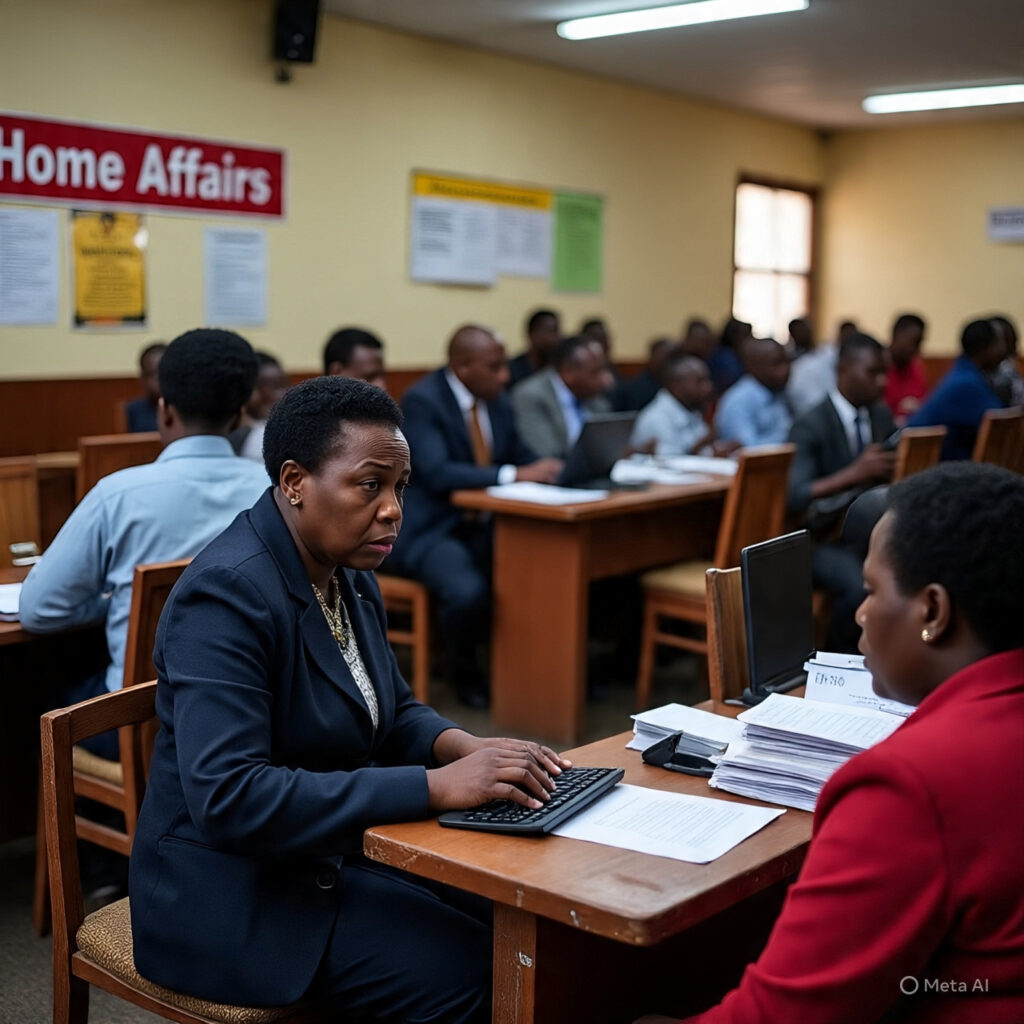
Administrative Failures and Migration Backlogs
Introduction: The Human Cost of Bureaucratic Delays
In South Africa, the Department of Home Affairs (DHA) plays a pivotal role in managing immigration, asylum, and refugee services. However, systemic inefficiencies and administrative backlogs have led to significant challenges for migrants, particularly asylum seekers and refugees. As of mid-2025, over 300,000 visa applications were pending, exacerbating the precarious situation of many individuals Nehanda Radio.
These delays have profound implications for public health, as undocumented migrants often face barriers to accessing healthcare services. This blog post delves into the root causes of these backlogs, their impact on health outcomes, and proposes actionable solutions to address these systemic issues.
The Genesis of Backlogs: Policy Gaps and Administrative Challenges
Asylum Seeker Permit Delays
The Refugee Reception Offices (RROs) have remained closed to new asylum seekers since March 2020, a measure initially implemented during the COVID-19 lockdown. While some services have resumed for South African citizens, refugees and asylum seekers continue to face restricted access AfricanLII.
A notable case is that of a Burundian mother of four who applied for asylum in 2008. Despite appealing the rejection of her application in the same year, she continues to await the outcome of her appeal over 17 years later Lawyers for Human Rights. This prolonged uncertainty not only affects her legal status but also her ability to access essential services, including healthcare.
Special Permit Program Challenges
The Zimbabwe Exemption Permit (ZEP) program, which allowed Zimbabwean nationals to reside and work in South Africa, has faced significant challenges. As of September 2025, the validity of ZEP permits was extended until November 29, 2025, following a court ruling Immigration Specialists. However, the impending expiration of these permits has created uncertainty for thousands of individuals, many of whom have integrated into South African communities and rely on stable legal status for employment and access to services.
Digital Transformation and Capacity Building
The DHA’s Strategic Plan for 2025–2030 outlines a vision for digital transformation to enhance service delivery. However, progress has been slow, with fragmented data systems and siloed agencies hindering effective implementation Department of Home Affairs+1. The lack of a unified digital platform for processing applications contributes to delays and inefficiencies, further burdening an already overstretched system.
The Health Implications: A Public Health Crisis in the Making
The administrative delays and uncertainties faced by migrants have direct consequences on public health. Access to healthcare services is a fundamental right, yet migrants often encounter numerous barriers, including:
-
Legal and Documentation Challenges: Without valid permits, migrants may be denied access to public health services, leading to untreated medical conditions and the potential spread of infectious diseases.
-
Financial Constraints: Many migrants work in the informal sector without health insurance, making private healthcare unaffordable.
-
Psychosocial Stress: The uncertainty surrounding legal status can lead to mental health issues, including anxiety and depression, which are often exacerbated by limited access to care.
A study on migrant resilience during the COVID-19 pandemic highlighted how migrants in South Africa managed to cope with heightened vulnerabilities, providing insights into addressing health inequities experienced by this population PMC.
Case Studies: Real-Life Experiences
Case Study 1: A Congolese Family in Tshwane
A Congolese family residing in Tshwane applied for asylum in 2019. Due to administrative backlogs, their application has not been processed, leaving them in a state of limbo. The parents struggle to find stable employment, and their children face challenges in accessing education. The family’s health deteriorates due to stress and inadequate nutrition, underscoring the interconnectedness of legal status, socioeconomic stability, and health outcomes.
Case Study 2: A Zimbabwean Entrepreneur in Johannesburg
A Zimbabwean national who has been operating a small business in Johannesburg under the ZEP program faces uncertainty as the permit’s expiration approaches. Without a clear path to regularize his status, he risks losing his livelihood and access to healthcare services. His situation reflects the broader challenges faced by many migrants who have contributed to the economy but remain in precarious legal standing.
Innovative Solutions: Learning from Successful Programs
Several initiatives have demonstrated success in addressing the challenges faced by migrants:
-
The Lesotho Exemption Permit (LEP) Extension: The South African Department of Home Affairs announced an extension of the LEP until May 28, 2027, providing stability for Lesotho nationals residing in South Africa Lesotho Government. This proactive approach can serve as a model for other programs.
-
Digital Public Infrastructure (DPI) Initiatives: The Department of Science and Innovation’s Digital Public Infrastructure (DPI) strategy aims to consolidate digital resources across government agencies, enhancing service delivery and reducing inefficiencies Carnegie Endowment.
Recommendations for Policy Makers and Stakeholders
To address the systemic issues contributing to administrative backlogs and their impact on health outcomes, the following actions are recommended:
-
Immediate Reopening of Refugee Reception Offices: Facilitate the processing of new asylum applications to reduce backlogs and provide clarity for applicants.
-
Regularization Pathways for Migrants: Develop clear pathways for migrants, including those under the ZEP program, to regularize their status, ensuring access to healthcare and other services.
-
Investment in Digital Infrastructure: Accelerate the implementation of the DHA’s digital transformation plan, focusing on creating a unified platform for processing applications and sharing data across agencies.
-
Community-Based Health Initiatives: Support NGOs and community organizations in providing healthcare services to migrants, particularly in underserved areas.
-
Monitoring and Evaluation: Establish mechanisms to monitor the implementation of these recommendations and evaluate their impact on reducing health disparities among migrants.
Conclusion: A Call to Action
The administrative failures within the Department of Home Affairs have far-reaching implications, particularly in the realm of public health. By addressing these systemic issues through targeted policy interventions and collaborative efforts, South Africa can create a more inclusive and equitable environment for all residents, regardless of their legal status.
References
-
South African Department of Home Affairs. (2025). Strategic Plan 2025–2030. Retrieved from https://www.dha.gov.za/images/AnnualReports/DHA-STRATEGIC-PLAN-25-30.pdf
-
United Nations High Commissioner for Refugees. (2024). South Africa Country Operations Profile. Retrieved from https://www.unhcr.org/us/where-we-work/countries/south-africa
-
Mukumbang, F. C., et al. (2025). Using the resilience theory to understand and address migrant health inequities in South Africa. PMC. Retrieved from https://pmc.ncbi.nlm.nih.gov/articles/PMC11969881/
-
Department of Science and Innovation. (2025). Digital Public Infrastructure: A Practical Approach for Africa. Retrieved from https://carnegieendowment.org/research/2025/02/digital-public-infrastructure-a-practical-approach-for-africa
-
South African Department of Home Affairs. (2025). Addendum to Strategic Plan for 2020/25 & Annual Performance Plan. Retrieved from https://www.dha.gov.za/images/PDFs/APP_Adendum_digital.pdf
-
Lesotho Government. (2025). Extension of Lesotho Exemption Permit. Retrieved from https://www.gov.ls/development/republic-of-south-africaextends-lesotho-exemption-permit/
-
South African Government. (2022). Implementation Programme for the National Digital and Future Skills Strategy. Retrieved from https://www.gov.za/sites/default/files/gcis_document/202203/digital-and-future-skillsimplementation-programmefinal.pdf
-
UNHCR. (2025). South Africa Country Operations Profile. Retrieved from https://www.unhcr.org/us/where-we-work/countries/south-africa
-
South African Government. (2025). White Paper on National Labour Migration Policy for South Africa. Retrieved from https://www.gov.za/sites/default/files/gcis_document/202505/52747gen3234.pdf
-
South African Government. (2025). Digital Public Infrastructure: A Practical Approach for Africa. Retrieved from https://carnegieendowment.org/research/2025/02/digital-public-infrastructure-a-practical-approach-for-africa
-
South African Government. (2025). Strategic Plan 2025–2030. Retrieved from https://www.dha.gov.za/images/AnnualReports/DHA-STRATEGIC-PLAN-25-30.pdf
-
South African Government. (2025). Addendum to Strategic Plan for 2020/25 & Annual Performance Plan. Retrieved from https://www.dha.gov.za/images/PDFs/APP_Adendum_digital.pdf
-
South African Government. (2025). Implementation Programme for the National Digital and Future Skills Strategy. Retrieved from [https://www.gov.za/sites/default/files/gcis_document/202203/digital-and-future-skillsimplementation-programmefinal.pdf](https://www.gov.za
Recent Posts:
- Police or Persecutors? When Law Enforcement Targets Irregular Migrants Instead of Protecting Them
- The School Gate Barrier: Education Officials Blocking Migrant Children’s Right to Learn
- Healthcare Denied: How Clinic Staff Turn Away Undocumented Migrants Despite Constitutional Rights
- Operation Dudula and Municipal Responses: When Public Officials Enable Xenophobic Targeting
- The ‘Recent Arrival’ Myth: Historical Continuities in South African Migration to Britain