
Migrant Children’s Educational Rights
Opening: A Child at the Gate
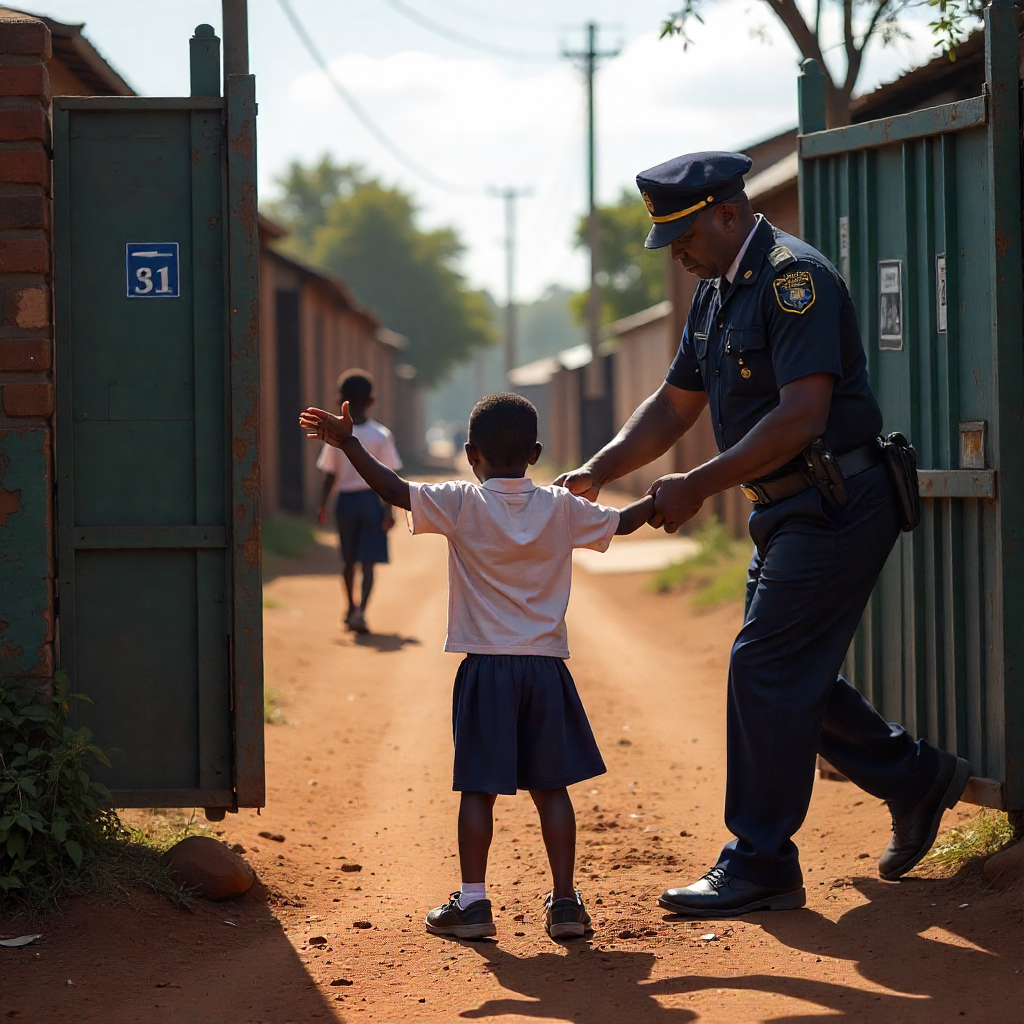
At 7:30 a.m. in Johannesburg’s inner city, Blessing, a 10-year-old from Zimbabwe, waits outside a public primary school with her mother. They’ve been turned away three times. The principal insists on a South African birth certificate or permanent residence permit — documents Blessing’s family doesn’t have. Like thousands of migrant children, Blessing stands at the gate of opportunity but is denied entry.
Recent reports from SECTION27 and the Centre for Child Law estimate that over 250,000 children in South Africa are excluded from school each year due to documentation issues. Most are from Zimbabwe, Mozambique, Malawi, and the DRC. Yet, the South African Schools Act (1996) and the Constitution (Section 29) guarantee every child’s right to basic education — regardless of nationality or documentation status.
This contradiction between law and practice has become a persistent barrier at the school gate. It is both a human rights and public health crisis.
1. The Legal Foundation: What the Law Actually Says
The South African Schools Act (SASA) No. 84 of 1996 mandates that every child residing in South Africa “must attend school from the first school day of the year in which such learner turns seven.” The Admission Policy for Ordinary Public Schools (1998) reinforces this by stating that no learner may be refused admission due to lack of documentation.
Further, the Constitution of South Africa (Section 29(1)(a)) guarantees the right to a basic education — a right that is immediately realizable, not subject to progressive realization or available resources. The Department of Basic Education’s (DBE) 2019 circular explicitly instructs schools to admit undocumented learners and assist them to obtain documentation later.
In theory, the law is clear. In practice, many schools continue to demand birth certificates, study permits, or refugee papers before enrollment. This administrative rigidity contradicts both the Constitutional Court’s 2021 judgment in Centre for Child Law and Others v Minister of Basic Education — which affirmed the right of undocumented children to education — and South Africa’s obligations under the UN Convention on the Rights of the Child.
2. Documentation Demands vs. Children’s Rights
Despite legal clarity, schools often impose bureaucratic hurdles. Admission officials cite provincial education directives or fears of audit penalties for “unverified” learners. Some schools fear losing funding tied to verified learner numbers in the Learner Unit Record Information and Tracking System (LURITS).
This tension between administrative compliance and constitutional rights creates an exclusionary system. For migrant families navigating complex immigration paperwork, these demands become impossible barriers.
Research by Scalabrini Centre of Cape Town (2023) found that 68% of migrant parents in Gauteng and Western Cape experienced documentation-related admission delays, and 40% of undocumented children were denied outright enrollment.
Gender and age further compound vulnerability. Adolescent girls who drop out face heightened risks of early marriage, transactional sex, and unplanned pregnancy. Boys often turn to informal labor or street work, perpetuating cycles of poverty and social marginalization.
This is not only an education issue. It is a public health concern — exclusion from school increases exposure to violence, substance abuse, and mental health challenges.
3. The Human Cost: Real Stories from the Field
Case 1: Limpopo Border Schools
In Musina, teachers report that many Zimbabwean children live with relatives while parents work across the border. Without local documentation, schools often reject them. NGOs like Save the Children South Africa have stepped in, negotiating temporary enrollment agreements. Yet, these solutions depend on individual principals’ discretion — not consistent policy enforcement.
Case 2: Inner-City Johannesburg
In Hillbrow, a Congolese mother described visiting four schools before finding one willing to accept her child using only a clinic card as proof of residence. Even then, her son could not be registered in the national system and was excluded from school nutrition and textbook programs.
Case 3: KwaZulu-Natal’s Refugee Learners
Durban schools near the Congolese and Burundian migrant communities often require a valid study permit. Advocacy by the KZN Refugee Council and Lawyers for Human Rights led to a 2022 memorandum with the provincial DBE office allowing “conditional admission.” Still, implementation remains inconsistent across districts.
These cases reflect how local discretion, misinformation, and systemic bias shape educational access more than national law.
4. Policy Analysis: Where Implementation Fails
4.1 Fragmented Governance
South Africa’s education system operates through provincial departments. While the DBE sets policy, provinces control admissions and resource allocation. This decentralized system leads to uneven policy implementation. For example, Gauteng’s online admissions platform often rejects undocumented children automatically, while Western Cape allows manual processing.
4.2 Lack of Accountability Mechanisms
Few consequences exist for schools that contravene policy. Parents rarely challenge decisions due to fear of deportation or stigma. Provincial oversight units are understaffed, and DBE monitoring reports seldom disaggregate data by nationality or documentation status.
4.3 Administrative Digital Exclusion
Digital admission systems, intended to streamline processes, often reinforce exclusion. Without ID numbers, migrant children cannot complete online applications. This has led to “paper queue” systems outside schools, where parents wait overnight hoping for manual registration.
4.4 Xenophobia and Implicit Bias
Educator training rarely includes migration sensitivity. As a result, some officials hold prejudiced views about migrants “burdening” local schools. This subtle xenophobia manifests in dismissive language or arbitrary refusals.
A Human Rights Watch (2024) study found widespread xenophobic bias among school officials in Gauteng, with one principal quoted saying, “We must prioritize South Africans first.” This mindset undermines constitutional commitments to equality and dignity.
5. Evidence from Major Cities: Scope of the Problem
Across South Africa’s metropolitan areas, the exclusion of migrant learners mirrors broader inequality patterns:
-
Johannesburg: SECTION27’s 2023 audit of 100 schools found that one in three undocumented children had been denied admission.
-
Cape Town: The Scalabrini Centre reports 3,500 undocumented learners at risk of being dropped from the system during LURITS verification in 2022.
-
Durban: The KwaZulu-Natal Refugee Council noted over 1,200 cases of denied or delayed school entry between 2021–2023.
-
Pretoria: Inner-city schools face overcrowding, leading principals to use documentation as an informal filter to manage numbers.
These data points illustrate how policy gaps, digital systems, and attitudes intersect to sustain exclusion — especially in urban migrant-dense districts.
6. Schools Doing It Right: Models of Inclusion
Amid these challenges, some schools demonstrate that inclusion is possible with leadership and compassion.
6.1 Hillbrow Primary School (Johannesburg)
Partnering with Doctors Without Borders (MSF) and African Diaspora Forum, the school accepts undocumented children using affidavits and clinic cards. Staff receive regular training on migration sensitivity. As a result, attendance improved by 30% among migrant learners, and dropouts declined significantly.
6.2 Zonnebloem Girls’ Primary (Cape Town)
The school collaborates with the Scalabrini Centre to support documentation applications for learners. It also established a multilingual parent committee to bridge communication gaps between educators and migrant families.
6.3 Durban North Secondary School
With NGO support, this school implemented a “conditional admission” model that allows children to learn while parents pursue documentation. The approach aligns with DBE policy yet respects administrative needs.
These schools show that local initiative and NGO partnerships can bridge gaps even before national reforms materialize.
7. Innovative Solutions and Emerging Practices
-
Community Documentation Support Desks:
NGOs like Jesuit Refugee Service have piloted documentation desks in schools to help parents navigate Home Affairs procedures. This approach reduces administrative burden and builds trust. -
Digital Inclusion Workarounds:
The Gauteng Education Department’s 2024 pilot project now allows foreign ID placeholders on its e-admissions portal. Early data show a 15% increase in migrant enrollment. -
Migration-Sensitive Teacher Training:
The University of the Witwatersrand’s School of Education introduced modules on migration, xenophobia, and inclusive schooling. Graduates report greater confidence in handling diverse classrooms. -
Policy Reform Advocacy:
Civil society coalitions like Equal Education and Consortium for Refugees and Migrants in South Africa (CoRMSA) are lobbying for clear national admission guidelines, simplified verification processes, and dedicated funding for undocumented learners.
8. Recommendations and Implementation Timeline
| Stakeholder | Action Steps | Timeline |
|---|---|---|
| Department of Basic Education (DBE) | Issue an updated national directive reaffirming undocumented children’s right to enrollment, with monitoring indicators tied to provincial performance. | Within 6 months |
| Provincial Education Departments | Integrate documentation flexibility into digital systems; train district officials on migration-sensitive practices. | 6–12 months |
| School Governing Bodies (SGBs) | Adopt inclusive admission policies, establish parent liaison committees, and track admission equity. | Ongoing |
| Department of Home Affairs | Streamline birth registration and issue temporary learner numbers. Prioritize migrant children in backlog clearance. | 12–18 months |
| NGOs & Civil Society | Expand legal aid and awareness campaigns, monitor compliance, and document exclusion cases for policy advocacy. | Continuous |
| Researchers & Universities | Conduct intersectional studies linking education exclusion to health and social outcomes. Disseminate findings through DBE workshops. | Next 2 years |
9. Ethical Sensitivity and Intersectional Perspectives
When discussing migrant education, we must avoid framing children as burdens or statistics. Each case involves intersecting vulnerabilities — gender, nationality, socioeconomic status, trauma, and documentation status. Girls from single-parent households face compounded exclusion. Unaccompanied minors risk exploitation when denied school entry.
Ethically, advocacy must center children’s voices. Participatory research and storytelling initiatives — such as Sonke Gender Justice’s “Children on the Move” project — help policymakers hear directly from those affected.
10. Conclusion: Re-Opening the Gate
Every morning, countless children like Blessing stand before closed school gates across South Africa. The law is on their side — yet systemic inertia, bias, and bureaucracy persist. Denying education to any child undermines national development goals, deepens inequality, and contradicts South Africa’s human rights commitments.
Education is not a privilege for citizens; it is a right for all children within the country’s borders. Schools that welcome migrant learners show that inclusion is achievable with courage, compassion, and accountability.
For South Africa to live up to its constitutional promise, every gate must open — not only in law, but in practice.
Selected Sources (2020–2025)
-
South African Schools Act No. 84 of 1996
-
Admission Policy for Ordinary Public Schools (1998)
-
Department of Basic Education Circular 1 of 2019
-
Centre for Child Law and Others v Minister of Basic Education and Others [2021] ZACC 33
-
Constitution of the Republic of South Africa, 1996 (Section 29)
-
SECTION27. (2023). Barriers to Basic Education for Undocumented Children in Gauteng.
-
Scalabrini Centre of Cape Town. (2023). School Access Report.
-
Human Rights Watch. (2024). Let Them Learn: Migrant Children and Education in South Africa.
-
Equal Education. (2022). Education Rights Monitoring Report.
-
Save the Children South Africa. (2022). Children on the Move Programme Report.
-
CoRMSA. (2023). Migration and Education Policy Brief.
-
Jesuit Refugee Service. (2024). Inclusive Schooling Initiative Evaluation.
-
Wits School of Education. (2024). Migration and Pedagogy Curriculum Pilot.
-
KwaZulu-Natal Refugee Council. (2023). Access to Education Case Documentation.
-
Department of Home Affairs. (2025). Birth Registration and ID Backlog Report.
Recent Posts: