
African Migration and Urbanization in Johannesburg: Policy, Health, and Social Implications
Introduction: Migration and the Changing Face of Johannesburg
Johannesburg is South Africa’s economic powerhouse. It has become one of the most prominent migrant-receiving cities in Africa. In 2022, South Africa hosted over 4 million international migrants. Johannesburg absorbed the largest proportion (UN DESA, 2022). About 70% of migrants in the country now live in Gauteng province. Johannesburg serves as the key economic hub (Stats SA, 2023). Migrants from Zimbabwe, Mozambique, Malawi, Nigeria, and the Democratic Republic of Congo (DRC) form a large part of the labor force. They dominate construction, domestic work, retail trade, and informal economies (Crush et al., 2021).
Migration drives urban growth. It fuels economic activity but also strains housing, infrastructure, and health systems. This post explores how migration and urbanization connect in Johannesburg. It highlights policy gaps, health challenges, and solutions.
Migration and Urban Growth Dynamics
Johannesburg’s population has expanded quickly. Between 2016 and 2022, growth averaged 2.5% per year, compared to the national average of 1.3% (Stats SA, 2022). Migration is a key driver. Migrants often settle in informal settlements and inner-city areas. These include Hillbrow, Yeoville, Rosettenville, and Orange Farm. Housing is overcrowded, and municipal services remain overstretched (Landau, 2021).
Migration and urbanization in Johannesburg connect through three main dimensions:
- Spatial Concentration: Migrants cluster in low-income areas. This reinforces inequalities in housing, healthcare, and sanitation.
- Economic Contribution: Migrants strengthen Johannesburg’s informal economy. Spaza shops, hair salons, and markets run by migrants sustain urban livelihoods (Amisi & Ballard, 2022).
- Public Health Pressure: Overcrowding raises risks of tuberculosis (TB), HIV, and COVID-19 (Vearey et al., 2021).
Health Policy Landscape
South Africa’s Constitution and the National Health Act (2003) guarantee healthcare access for all. In practice, many migrants—especially the undocumented—face systemic barriers.
Key Policies
- National Health Insurance (NHI) Bill (2019–2025) aims for universal health coverage. Yet, it remains unclear on undocumented migrants.
- Refugees Act (1998, amended 2020) gives refugees healthcare rights. However, implementation often fails.
- Gauteng City-Region Observatory (2021–2024) reports reveal poor municipal planning for migrants.
Policy Gaps
- Healthcare workers frequently demand documents before treatment. This excludes migrants (Médecins Sans Frontières, 2022).
- City housing and sanitation plans rarely include migrants. This deepens overcrowding.
- Reliable data on migrant health is scarce. Policymakers lack strong evidence (Vearey & Modisenyane, 2022).
Empirical Evidence from Johannesburg
- Healthcare Access: In 2022, the African Centre for Migration & Society found that 40% of undocumented migrants in Johannesburg were denied healthcare.
- Disease Burden: Inner-city TB incidence remains among the highest in Gauteng. Overcrowding worsens it (National TB Survey, 2022).
- Housing Pressure: Informal settlements such as Diepsloot and Orange Farm continue to expand. Since 2020, 60% of new arrivals are cross-border migrants (City of Johannesburg, 2023).
Case Studies
Hillbrow’s Healthcare Strain
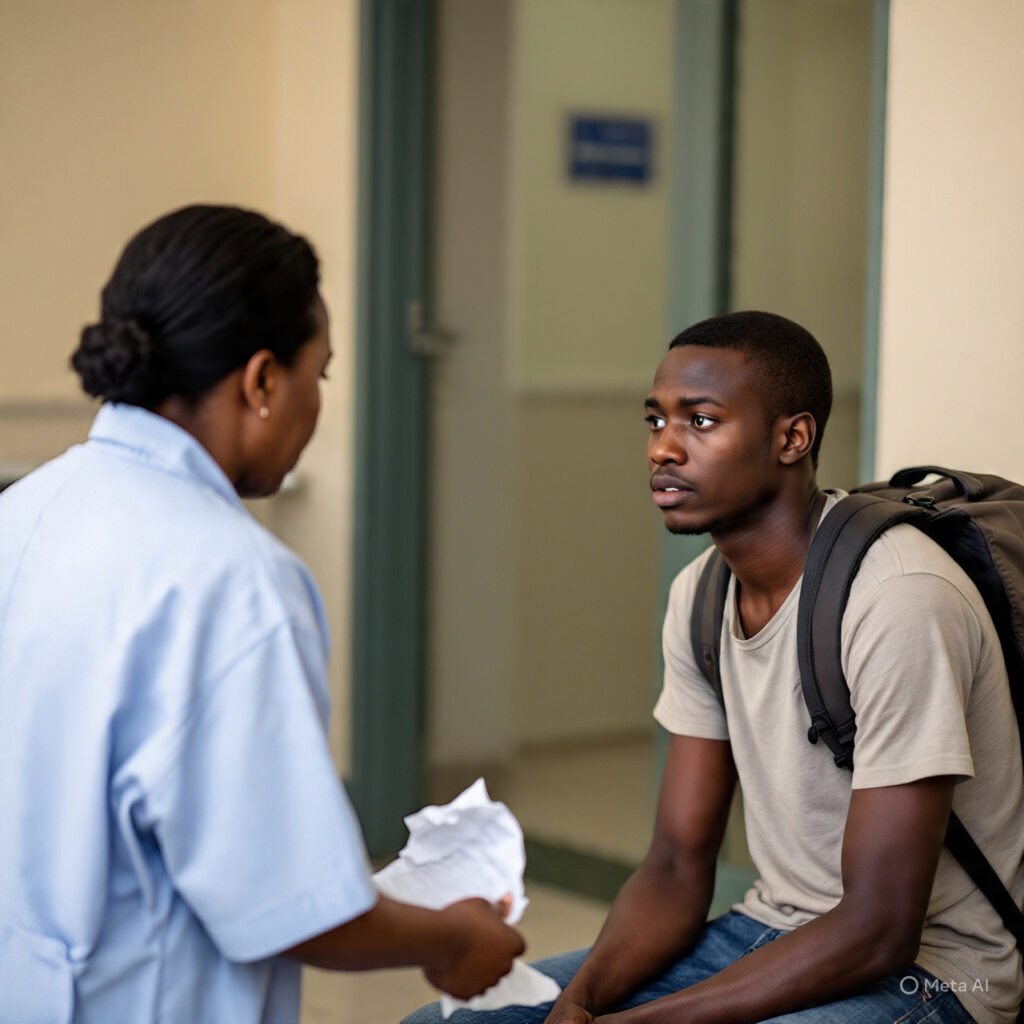
Hillbrow hosts many Zimbabwean and Mozambican migrants. HIV prevalence is high. Clinics like Hillbrow Community Health Centre are overwhelmed. Migrants report being turned away due to lack of documents. Women suffer the most, facing both gender-based violence and lack of maternal care.
Orange Farm’s Informal Expansion
Orange Farm, Johannesburg’s largest informal settlement, has grown rapidly. Malawian and Congolese migrants settled there since 2020. Overcrowding, poor sanitation, and waste mismanagement increase diarrheal disease. Child malnutrition rates rise. NGOs provide vital healthcare and food support.
Spaza Shops and Urban Resilience
In Yeoville, migrant-owned spaza shops thrive. They keep food affordable and support the local economy. However, owners face xenophobic violence and police harassment due to weak regulation.
Intersectional Vulnerabilities
- Gender: Migrant women face high risks of violence and exclusion from reproductive care.
- Age: Migrant youth struggle with limited access to education, which blocks integration.
- Nationality: Zimbabweans face more healthcare denial. Somalis often endure xenophobic attacks.
- Documentation: Undocumented migrants remain the most excluded from housing and healthcare.
Innovative Solutions
- Community Health Workers (CHWs): NGOs like MSF train migrants as CHWs. They provide education and referrals.
- Urban Integration Projects: GCRO pilots inclusive planning in Diepsloot. Migrants join local governance.
- Mobile Clinics: City partnerships with NGOs deploy mobile health services in migrant-heavy areas.
- Peer Advocacy: Groups like the African Diaspora Forum (ADF) push for reforms and report abuses.
Actionable Recommendations
National Policymakers (2025–2030)
- Amend the NHI Bill to include undocumented migrants.
- Create a National Migration and Health Data System for evidence-based decisions.
City of Johannesburg Officials (2025–2027)
- Add migration considerations to Integrated Development Plans (IDPs).
- Expand mobile clinics in migrant-dense neighborhoods.
NGOs and Civil Society (2025–2028)
- Scale up community health worker programs.
- Develop gender-sensitive interventions for migrant women.
Academic Researchers (2025–2030)
- Run longitudinal studies on migration, health, and urbanization.
- Explore intersectional vulnerabilities by gender, nationality, and documentation.
Conclusion
Migration and urbanization shape Johannesburg together. Migrants bring economic vitality yet face exclusion in housing and healthcare. Policy blind spots, weak data, and discrimination deepen inequalities. The way forward lies in inclusive health and housing policies, better data systems, and migrant participation in decision-making. Johannesburg can turn migration into a driver of sustainable urban growth rather than inequality.
References
- UN DESA. (2022). International Migrant Stock 2022.
- Stats SA. (2022). Mid-year Population Estimates.
- Stats SA. (2023). Gauteng Migration Trends Report.
- Crush, J., Chikanda, A., & Skinner, C. (2021). Informal Migrant Economies in South African Cities.
- Landau, L. (2021). Urban Migration and Johannesburg’s Developmental Challenges.
- Amisi, B., & Ballard, R. (2022). Migrant Economic Contributions in Johannesburg.
- Vearey, J., de Gruchy, T., & Kamndaya, M. (2021). Urban Health, Migration, and Informal Settlements in Gauteng.
- Constitution of South Africa (1996).
- National Health Act (2003).
- National Health Insurance (NHI) Bill (2019).
- Refugees Act (1998, amended 2020).
- Médecins Sans Frontières. (2022). Barriers to Healthcare for Migrants in Johannesburg.
- Vearey, J., & Modisenyane, M. (2022). Migration and Health Data Gaps in South Africa.
- South African National TB Prevalence Survey. (2022).
- City of Johannesburg. (2023). Informal Settlement Expansion Report.
- Gauteng City-Region Observatory (GCRO). (2023). Inclusive Urban Planning Models.
- African Centre for Migration & Society (ACMS). (2022). Migrant Healthcare Access Study.
- African Diaspora Forum (ADF). (2023). Advocacy Reports on Migrant Rights.