
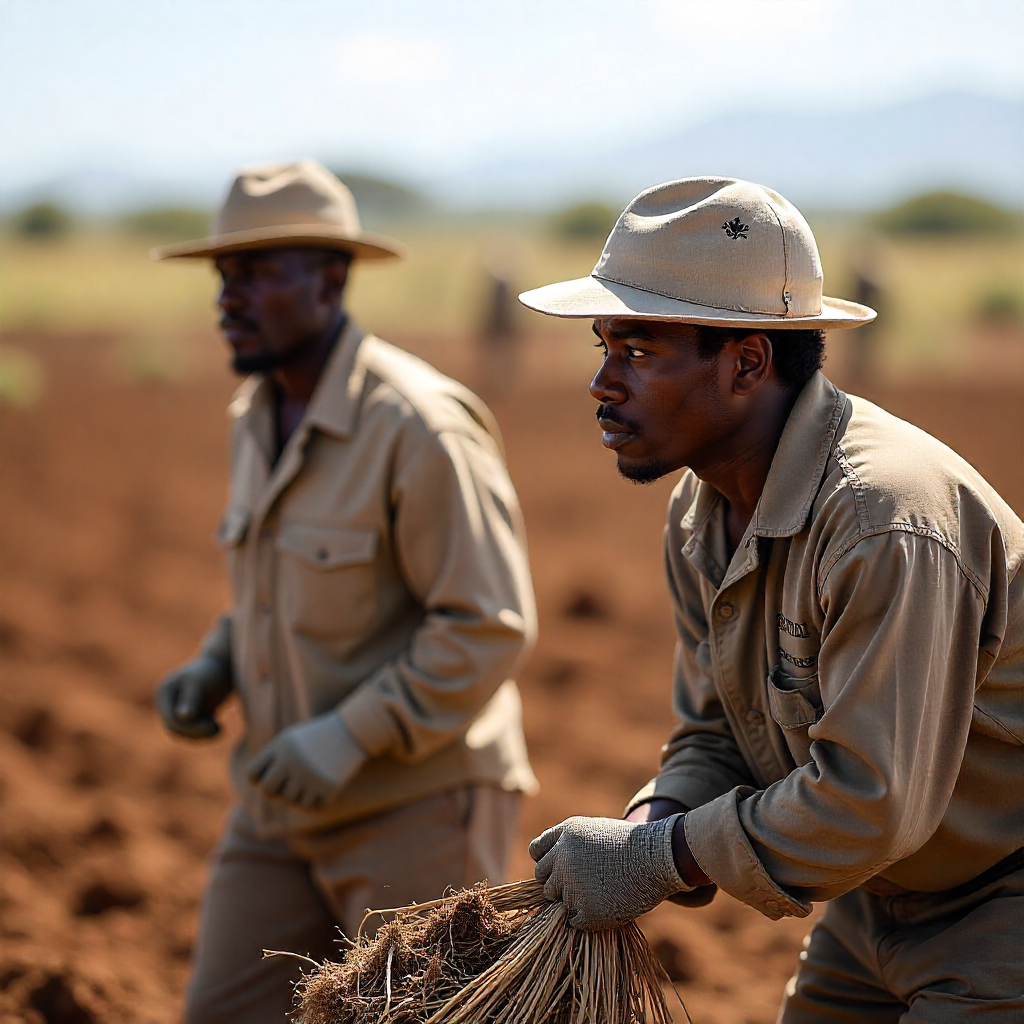
Undocumented Migrant Workers in South Africa
Introduction: The Invisible Backbone of South Africa’s Economy
South Africa’s agriculture and mining industries rely heavily on migrant labour. Yet, behind this economic contribution lies a hidden crisis. Undocumented migrant workers—primarily from Zimbabwe, Mozambique, Malawi, and Lesotho—face severe human rights violations that threaten their health, safety, and dignity.
In 2023, the International Labour Organization (ILO) estimated that nearly one in three agricultural and mining workers is a foreign national, with a significant proportion undocumented (ILO, 2023).
Consider Tinashe, a Zimbabwean farmworker in Limpopo. He earns less than R80 a day and works 12-hour shifts without protective gear. Because he fears deportation, he cannot report abuse. His experience mirrors thousands of others who sustain South Africa’s food and mining economy while remaining invisible in labour protection frameworks.
Legal and Policy Landscape: Rights on Paper, Not in Practice
South Africa’s Constitution (1996) guarantees fundamental human rights to “everyone” within its borders, regardless of nationality (South African Government, 1996). Nevertheless, undocumented migrants are routinely excluded in practice.
Several frameworks, including the Labour Relations Act (1995), Basic Conditions of Employment Act (1997), and Occupational Health and Safety Act (1993), theoretically cover all workers. However, enforcement mechanisms rarely reach migrant-dense workplaces.
In 2021, the Department of Employment and Labour (DEL) launched a national inspection drive across farms in Mpumalanga and Limpopo. The findings revealed widespread wage theft, child labour, and unsafe working conditions among undocumented workers (DEL, 2022). Yet, prosecutions remain rare due to limited capacity and employer intimidation tactics. Consequently, laws that should protect migrants often fail in practice.
Major Human Rights Violations
1. Exploitative Labour Practices
Undocumented workers often face extreme exploitation, including unpaid wages, no overtime pay, and denial of leave. For example, in 2022, Human Rights Watch (HRW) documented farmworkers in the Western Cape earning below the legal minimum wage of R27.58 per hour. In some cases, employers paid workers in food rather than cash (HRW, 2022).
Mining operations mirror these abuses. According to Amnesty International, undocumented miners—especially in artisanal and small-scale operations—are coerced by illegal syndicates and deprived of basic rights (Amnesty International, 2023).
2. Unsafe and Unhealthy Working Conditions
Farmworkers frequently handle pesticides without protective clothing, exposing them to respiratory illnesses and chemical burns. Research published in the South African Medical Journal (SAMJ) found that pesticide poisoning incidents occur three times more often among undocumented farmworkers than among documented employees (SAMJ, 2022).
In mining, undocumented “zama-zamas” operate in abandoned shafts with little ventilation. The South African Human Rights Commission (SAHRC) has repeatedly highlighted fatalities, injuries, and lack of emergency response for these workers (SAHRC, 2021). Consequently, unsafe working environments compound the health risks faced by migrant labourers.
3. Gender-Based Violence and Sexual Exploitation
Women migrant workers endure compounded risks. Studies from the African Centre for Migration & Society (ACMS) reveal that female farmworkers often face sexual harassment and coercion by supervisors, particularly when seeking employment or wages (ACMS, 2023). Moreover, women in mining are vulnerable to sexual violence from both colleagues and syndicate enforcers. Fear of deportation prevents many from reporting these abuses, perpetuating cycles of impunity.
Health Impacts: A Hidden Public Health Crisis
Limited Access to Healthcare
Although Section 27 of the Constitution and the National Health Act (2003) guarantee access to emergency healthcare, undocumented workers often encounter administrative barriers or xenophobic attitudes at clinics. A Médecins Sans Frontières (MSF) study (2023) found that 46% of undocumented farmworkers delayed seeking care due to fear of arrest or deportation (MSF, 2023).
Occupational Diseases and Mental Health
Mining exposes undocumented workers to silicosis, tuberculosis (TB), and other respiratory diseases, while overcrowded on-site hostels heighten infection risks. Statistics South Africa reported that TB prevalence among mining communities is six times the national average (Stats SA, 2024).
Additionally, long working hours, isolation, and abuse contribute to high levels of anxiety and depression. NGOs such as Sonke Gender Justice have documented widespread mental distress among migrant men unable to send remittances due to wage theft (Sonke Gender Justice, 2023).
Structural Drivers and Policy Gaps
Weak Enforcement and Corruption
Labour inspectors are under-resourced and frequently obstructed by employers. Some farm owners confiscate passports or threaten deportation to suppress complaints (DEL, 2023). As a result, many abuses remain unreported and unpunished.
Fragmented Intersectoral Coordination
The Department of Health, Home Affairs, and Employment and Labour each have roles in migrant protection. Unfortunately, siloed implementation leads to fragmented responses. Consequently, urgent cases of abuse or health emergencies are often delayed (HSRC, 2022).
Exclusionary Immigration Policies
Policies like the White Paper on International Migration (2017) prioritize border control over human rights protection. The absence of temporary labour migration frameworks leaves undocumented workers in perpetual precarity (DHA, 2023).
Recent Posts:
- How Can Migrant Workers in South Africa Report Labour Exploitation and Abuse Without Fear of Deportation?
- What Legal Protections Exist for Foreign Workers in South Africa under the Labour Relations Act and Immigration Act?
- Ubuntu vs Xenophobia: Reframing Migration Discourse from Political Leadership
- Training Public Officials on Migrant Rights: A Blueprint for Institutional Change
- Regularization Pathways: Why South Africa Needs a Comprehensive Migration Amnesty Program