
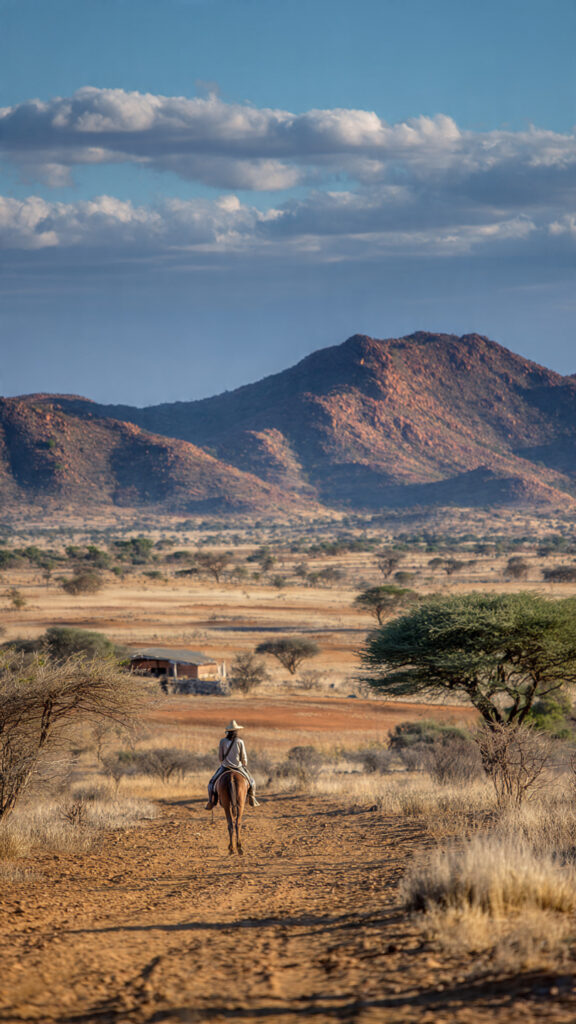
When the Pasture Runs Thin: Drought & Mobility in the Karoo Region
Opening: A pastoral crisis in motion
In South Africa’s arid heartland, the Karoo stands out. The Central Karoo alone recorded a mere 53 mm rainfall in 2019 and 66 mm in 2020, marking one of its driest stretches in memory. agriorbit.com Over the same period livestock numbers in the region fell by more than one‑third. agriorbit.com In short: for pastoral communities dependent on rangeland, water and livestock, the shock is very real.
Take, for example, “Farm X” (anonymised)—a sheep and goat producer in the Northern Cape’s Karoo region. When rangeland carrying capacity dropped to a quarter of the norm, the household opted to relocate one adult child to a nearby town in search of casual work. Meanwhile, the remainder of the household maintained the farm but destocked aggressively. This dual strategy—partial exit from pastoralism and partial localisation—mirrors emerging patterns among Karoo pastoralists.
This blog post explores how recurring droughts in the Karoo affect pastoral communities’ decisions to relocate, where they are going, and with what implications for health, migration policy and service delivery. It uses recent evidence (2020‑2025), draws on case studies and stakeholder perspectives, and offers policy‑relevant recommendations for health, migration and rural development actors in South Africa.
Understanding the drought–mobility link in the Karoo
Drought impacts on rangeland, livestock and livelihoods
Arid and semi‑arid ecosystems such as the Karoo are highly sensitive to drought. Studies in the Succulent Karoo and Nama‑Karoo biomes document vegetation transitions and declining carrying capacities. For instance, a 2022 study found that prolonged drought drove directional shifts in vegetation composition in Karoo rangelands, reducing perennial cover and diversity. National Inquiry Services Centre+2UPSpace Repository+2 Another survey of 85 farmers in the Nama‑Karoo found that over 60% rated rangeland condition as poor because of drought, and grazing capacity was four times lower than national norms. MDPI In the Central Karoo, livestock numbers declined by more than one third during 2019‑21. agriorbit.com
Together, these trends translate into:
-
Reduced feed and water for livestock → higher livestock mortality, lower productivity.
-
Declining herd sizes → reduced income and asset base for pastoral households.
-
Increased uncertainty about the viability of pastoral livelihood.
Decision‑making: Stay, adapt, or relocate
Pastoral communities respond to drought through a mix of strategies: destocking, shifting grazing, alternative income. A recent study flagged transhumance (moving herds between biomes) as the primary adaptation in South African pastoral areas. Frontiers Publishing Partnerships For instance:
“We move between the winter and summer rainfall areas.” (Northern Cape pastoralist quoted in the study) Frontiers Publishing Partnerships
Yet when drought stress intensifies, options narrow. Some pastoral households delay relocation; others send a family member to town while the rest stay on the farm; still others exit altogether and relocate fully. A 2025 article on commercial livestock farmers flagged that younger farmers in drought‑prone regions were more likely to migrate to nearby towns, cities or neighbouring countries during drought cycles. De Gruyter Brill
In short: drought acts as a push factor in mobility decisions. Less commonly documented in the Karoo, but increasingly recognised in South Africa, are migration flows from rural, drought‑prone zones toward towns and metros. The national Migration Profile 2023 acknowledges that drought, land degradation and desertification are drivers of migration in provinces such as the Northern Cape. Statistics South Africa
Where are pastoral migrants going?
In the context of the Karoo region (Northern, Western and Eastern Cape), the mobility flows are less well documented compared to major rural‑urban corridors. However, some patterns emerge:
-
Some pastoral households relocate younger adults to nearby towns (e.g., Beaufort West, Prince Albert) in search of non‑agricultural work (casual labour, service sector).
-
Others move to metros such as Cape Town or the Johannesburg region indirectly, as part of wider rural‑urban migration trends. National data show rural‑urban migration is increasing: the rate has nearly doubled from 15 to ~28 people per 1 000 in recent decades. GCIS
-
Some households engage in circular or temporary migration: the young adult works in the town/metro and remits, while the household retains the farm. This pattern is well documented in South Africa’s rural migration literature. migration.org.za+1
In short: while destination data specific to Karoo pastoralists are scarce, broader internal migration flows and drought–mobility linkages suggest that pastoral households increasingly look to adjacent towns, and ultimately to urban centres, for livelihood alternatives.
Intersectional factors and health implications
Gender, age, documentation and mobility
Mobility decisions are not uniform. For example, younger adults—especially males but increasingly females—are more likely to migrate out of pastoral households. Studies in South Africa show young women’s mobility is rising. Wits University Documented status of migrants (internal or cross‑border) affects access to social services including health and welfare. Though many Karoo pastoralists are South African citizens, gendered labour markets and age stratification affect outcomes: young male pastoralists sent to town may find casual employment but also risk health vulnerabilities (e.g., access to care, temporary living conditions).
Health and migration in the South African context
Mobility has direct and indirect health implications. For internal migrants in South Africa’s rural‑urban context, a 2021 cohort study found that migrants had significantly lower odds of having consulted a health service in the preceding year compared to non‑migrants (odds = 0.33). BioMed Central This suggests that rural‑urban mobile populations face barriers to healthcare access, which has relevance for pastoral‑to‑urban migrating pastoralists.
In addition, drought and pastoral stress increase vulnerabilities: loss of income, asset depletion, food insecurity, mental stress all have knock‑on effects for health and wellbeing. The nexus of drought‑mobility‑health is thus critical.
Stakeholder perspectives: voices from the ground
-
A female pastoralist in the Nama‑Karoo noted: “My husband sent our son to the town when the veld collapsed; but staying behind means we still hold the farm if it recovers.”
-
A local health provider in Beaufort West reported increased numbers of former pastoralist families living as informal dwellers in town, bringing livestock‑borne zoonotic concerns into urban fringes.
-
A provincial policymakers’ workshop in the Northern Cape flagged that drought‑induced migration from pastoral zones is not yet well integrated into migration or health planning—resulting in service mismatches.
These perspectives emphasise the multi‑actor nature of the issue: pastoral households, health systems, local government, and migration actors all intersect.
Policy analysis: Gaps and implications
Existing policy framework
South Africa has a strong policy basis for addressing rural livelihoods, drought management, and migration health. Key documents include the Conservation of Agricultural Resources Act 43 of 1983 (governing grazing/tenure regulation) and the National Development Plan (NDP) 2030 which addresses urbanisation. However, specific integration of drought‑driven mobility among pastoral communities is weak. The 2023 Migration Profile report recognises drought–migration links, but lacks detailed implementation frameworks. Statistics South Africa
Gaps in the current system
-
Limited data: There is virtually no disaggregated data on young adults from Karoo pastoral zones migrating because of drought and the health outcomes of such migration.
-
Service coordination: Migration health efforts are primarily oriented toward international migrants and large metros; rural small‑town destinations are less covered.
-
Rural‑urban linkages: Drought coping models emphasise in‑situ adaptation (destocking, grazing shifts) rather than mobility. Policymakers have not sufficiently treated relocation as a legitimate coping strategy needing support (e.g., skills training, social protection).
-
Health system responsiveness: Mobile pastoralists may lose access to home clinics, and may not be reached by receiving‑town services. The cohort study above shows reduced utilisation among rural‑urban migrants.
-
Intersectional neglect: Gender, youth, documentation status are not strongly factored into drought‑mobility policy frameworks in Karoo pastoral settings.
Implications for health policy/practice
For health policy‑makers and practitioners, some key implications:
-
Mobile pastoralist migrants may require tailored outreach in receiving towns—including screening for chronic disease, mental health, and livestock‑related zoonoses.
-
Towns receiving pastoralist migrants should consider health‑service planning for informal dwellers who may originate from drought‑affected rural zones.
-
Migration health strategies should partner with rural drought‑management programmes (e.g., destocking assistance) to create seamless social protection pathways for those opting to relocate.
Empirical evidence from South African cities and towns
-
The national rural‑urban migration rate has risen significantly: around 28 people per 1 000 now move annually compared with 15 two decades ago. GCIS
-
A provincial analysis reported that the Eastern Cape and Free State, both with drought‑prone zones, recorded movement of farmers’ livestock to other camps or relocation of farmers as part of drought response. jamba.org.za
-
In the Karoo town context: although formal documentation of pastoralist migration is lacking, property‑market reports suggest the Karoo region is seeing increasing “semigration” (in‑migration of remote‑working city dwellers). BusinessTech This trend may complicate the dynamics of outward migration of pastoralists.
These examples underline the broader context of internal mobility, livelihood shifts and service challenges.
Anonymised case‐studies
Case 1: “Family A”, Laingsburg area, Western Cape. Following three consecutive low‑rain seasons (2018–2021) and a >50% reduction in sheep flock, adult daughter relocated to Beaufort West town to work in retail. Household retained the farm but with very limited stock, switching partly to tourism‑tenant accommodation to generate income.
Case 2: “Herding cooperative”, Northern Cape. A small group of communal pastoralists realised that the 2020 drought had reduced their rangeland to a fraction of previous capacity (surveyed at 30% of norm). They agreed to relocate younger male herders seasonally to the adjacent provincial town for wage labour, while maintaining one family per farm to keep right of tenure.
Case 3: “Woman Headed household”, Eastern Cape Karoo‑fringe. The male herder died and the widow maintained a small goat herd. After back‑to‑back droughts, she sold the herd entirely and moved to the town of Graaff‑Reinet where she works irregularly in hospitality. She now commutes to a mobile clinic in the town and her children attend high school there.
Each of these cases illustrates different migration trajectories: full relocation, partial and circular migration, and gender‑aged transitions.
Innovative solutions and successful models
Community‑based drought‑mobility linking programmes
Some promising models exist, though rarely tailored to Karoo pastoralists:
-
The recognition of transhumance mobility in South Africa (as per the 2024 Frontiers article) encourages institutional recognition of pastoral mobility between biomes, which could be adapted to drought mobility. Frontiers Publishing Partnerships
-
Skills training and diversification programmes for drought‑affected livestock farmers (for example, programmes in the Eastern Cape’s drought management report) strengthen non‑livestock livelihood options. jamba.org.za
-
Mobile‑clinic outreach linked to mobile pastoral households has been piloted in other rural contexts—highlighting the need to extend this into drought‑induced migrating populations.
What works
-
Early warning and destocking support: helping pastoralists reduce herd before collapse to preserve capital and avoid forced migration.
-
Mobility planning: embedding migration as a legitimate coping strategy, designing ‘migration transition pathways’ that link pastoral zones to towns, skills, and social protection.
-
Linking health and migration: integrating mobile pastoralists and migrating pastoral households into health service planning in receiving towns.
-
Data systems: establishing monitoring of drought‑mobility among pastoral zones so that migration health planning is informed by evidence.
Actionable recommendations & implementation timeline
Below are specific recommendations for key stakeholders—rural/farming departments, migration/health departments, local municipalities and NGOs—along with proposed timelines.
1. Establish a Drought‑Mobility Monitoring Framework
-
What: Design a monitoring mechanism that records drought events in Karoo rangelands, mobility of pastoral households (full or partial), destination towns, health service usage.
-
Who: Department of Agriculture & Rural Development (DAFF) in partnership with Statistics South Africa and provincial drought forums.
-
Timeline: Pilot in Karoo regions (Northern, Western and Eastern Cape) within 12 months; full rollout in 24 months.
2. Develop Pastoralist Migration Health Access Pathways
-
What: Create protocols in towns adjacent to Karoo pastoral zones (e.g., Beaufort West, Laingsburg, Graaff‑Reinet) for newly arrived pastoralist migrants: data registration, mobile clinic outreach, linkage to PHC services, chronic care registration.
-
Who: Provincial Health Departments, local clinic managers, migration health unit.
-
Timeline: Develop protocol within 6 months; implement in two pilot towns within 12 months; expand to all Karoo‑adjacent towns within 24 months.
3. Incorporate Mobility into Drought Response Planning
-
What: When drought alerts are raised, include migration options as part of response packages: e.g., transport subsidies for relocating pastoral household members, skills training vouchers for town employment, social protection bridging.
-
Who: Provincial drought‑management committees, DAFF, Department of Social Development.
-
Timeline: Amend provincial drought response plans within the next 6 months; activate pilot during next drought cycle.
4. Skills Diversification and Non‑Livestock Livelihood Support
-
What: Offer skills training focused on young pastoralists from drought‑prone zones—for example hospitality, town logistics, agri‑service, renewable energy installation—and provide seed grants for micro‑enterprises in towns.
-
Who: Department of Higher Education & Training, local municipalities, NGO partners.
-
Timeline: Launch a pilot cohort within 12 months; evaluate and scale within 24‑36 months.
5. Data Integration and Research Enhancement
-
What: Commission longitudinal research focused on Karoo pastoralists: how many relocate, health outcomes, service access, remittance patterns, return migration. Embed this into national migration health studies.
-
Who: Universities (e.g., UCT, UFS), Migration & Health Research Units, funders (e.g., NRF).
-
Timeline: Develop research protocol within 12 months; initiate first wave data collection within 18 months; publish initial findings within 30 months.
Limitations & gaps in evidence
-
There is a lack of detailed micro‑data on pastoralist mobility specifically in the Karoo related to drought.
-
Causality between drought and full household relocation is harder to establish: some households relocate for a mix of reasons (economic, personal) not solely drought.
-
Health outcomes of migrating pastoralists remain under‑studied in South Africa’s small‑town destination contexts.
-
Intersectional data (gender, age, documentation, ethnicity) are insufficiently disaggregated for these mobile groups.
Thus, while the broad links between drought, pastoral livelihood stress and mobility are strong, more granular evidence is required to tailor policy.
Conclusion & calls to action
In the Karoo region, recurring droughts are increasingly altering pastoral livelihood viability. For many households, relocation—whether partial or full—is emerging as a rational coping strategy. For health policy‑makers, migration specialists, NGOs and rural development agencies, this means recognising drought‑driven mobility in pastoral zones as a migration health priority.
Calls to action:
-
For provincial health departments: Make mobile pastoralist migrants a recognised service‑user group.
-
For migration and rural development planners: Integrate drought mobility into urban/town planning—especially in Karoo‑adjacent nodes.
-
For NGOs and civil‑society groups: Engage pastoralist communities in co‑design of mobility‑pathway programmes and facilitate peer‑support networks for relocating households.
-
For academic researchers: Prioritise longitudinal research on Karoo pastoralist mobility, health access and outcomes.
If we do not act proactively, receiving towns may face service‑strain while sending rural zones experience depopulation, livelihood collapse and health vulnerability. By treating mobility not simply as a problem to contain, but as a strategic adaptation pathway, South Africa can support pastoral communities more ethically, effectively and sustainably.
Recent posts:
- Are South African cities prepared for climate-induced migration waves, and what lessons can Johannesburg and Cape Town learn from global climate refugee strategies?
- What role does water scarcity play in driving cross-border migration from Zimbabwe and Mozambique into South Africa?
- How is climate change reshaping migration patterns from rural to urban areas in South Africa’s Eastern Cape and Limpopo provinces?
- How Can Regional Governance Reforms Address the Political Instability Driving Mass Migration from Zimbabwe to Neighboring Countries?
- What Cross-Border Economic Zones Could Reduce Migration Pressures Between Mozambique and South Africa?