
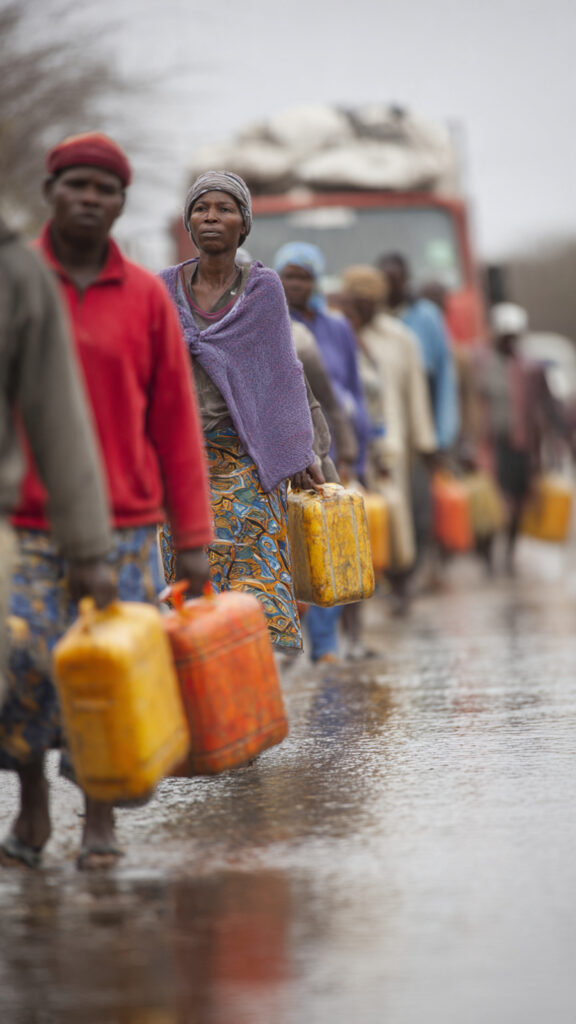
Water Scarcity and Cross-Border Migration: Health Policy Implications for South Africa
When the Land Runs Dry: Water Scarcity as a Migration Driver
In 2024, over 50% of people leaving Matabeleland South, Zimbabwe, cited repeated drought as a key push factor. The Africa Climate Mobility Initiative estimates 200,000–800,000 Southern Africans may migrate by 2050 due to climate impacts, including water scarcity. South Africa’s Zimbabwe migration corridor recorded more than 35,000 crossings in July 2024, with 92% along the southward route.
These movements create pressing challenges for migration health. Understanding how water scarcity drives migration and affects health systems is critical. This post examines evidence from Zimbabwe and Mozambique, explores health consequences in South African cities, highlights policy gaps, presents real-world case studies, and recommends actionable solutions.
The Mechanisms of Water-Scarcity-Driven Migration
Livelihood Collapse and Food Insecurity
Declining water availability disrupts agriculture and livestock. Farmers face repeated crop failure, livestock death, and diminished income. In Chipinge, Zimbabwe, local governance struggles exacerbate water scarcity, leaving households with few coping options. Families often migrate when survival in place becomes impossible.
Economic pressures amplify the problem. Crop failure leads to debt and food insecurity. Households must weigh migration against staying in place with limited resources. Women and children bear disproportionate burdens. They manage household water collection, care for sick family members, and navigate food shortages.
Social and Environmental Push Factors
Water scarcity contributes to broader social instability. Drought affects education, increases child labour, and heightens health risks. Historical migration networks further enable movement to South Africa. For instance, the Limpopo River, typically a natural boundary, dries during droughts, making cross-border migration easier.
Intersectional factors shape who migrates. Young men often leave first to secure work. Women and children follow or remain behind, depending on household strategy. Older adults sometimes stay until environmental stress forces relocation.
Water Scarcity Context in Zimbabwe and Mozambique
Rural Zimbabwe
National data indicate that 35% of rural households lacked adequate water even before recent droughts. Many households travel more than 0.5 km daily to access water. Urban centres, such as Harare, also face intermittent municipal supply. Residents sometimes go months without safe water, creating vulnerability to disease.
Mozambique
Mozambique also experiences significant water stress, particularly in the Save–Buzi basin. Climatic models classify large areas of Mozambique under high water stress. Water scarcity interacts with poverty, inadequate infrastructure, and governance gaps. For many households, migration becomes the only viable adaptation strategy.
Linking Water Scarcity to Migration into South Africa
While internal migration is common, cross-border flows are significant. South Africa receives many migrants fleeing water scarcity in Zimbabwe and Mozambique. Data from the International Organization for Migration (IOM) highlight increasing Zimbabwe-to-South Africa flows via the Beitbridge border crossing.
Migrants’ decisions reflect multiple factors: environmental stress, livelihood loss, social networks, and safety. Vulnerabilities vary by documentation status, gender, and age. Undocumented migrants face higher risks during travel and upon arrival. Women and children often confront additional health risks and limited access to resources.
Health Implications for Migrants in South Africa
Urban and Provincial Evidence
High migration areas, such as Limpopo and Johannesburg, report that 40–60% of clinic patients are non-citizens. Health facilities experience strain due to increased demand, language barriers, and cultural differences. Undocumented migrants may delay care due to fear of deportation or medical xenophobia.
Migrants from water-scarce areas often carry pre-existing health risks. Malnutrition, diarrhoeal disease, dehydration, and psychosocial stress are common. Overcrowded housing and informal settlements exacerbate these conditions. Chronic diseases, such as asthma or diabetes, are poorly managed in migrant populations due to irregular access to care.
Intersectional Vulnerabilities
Gender and age further shape health outcomes. Women migrants may face reproductive health risks and gender-based violence. Children and older adults experience compounded vulnerability. Migrants with limited documentation face barriers to accessing public health services.
Real-World Case Studies
-
“M” – Matabeleland South, Zimbabwe
A 32-year-old mother migrated with her teenage son after a borehole failed repeatedly. They walked three days across the dry Limpopo River to reach Musina, Limpopo. Now living in a township shack, she fears her son’s asthma will worsen due to poor sanitation and overcrowding. -
“T” – Save–Buzi Basin, Mozambique
A 45-year-old man lost his cattle during a prolonged dry season. He migrated to Johannesburg through a friend network, sending money back home. Living without reliable water access and with an expired permit, he cannot access free healthcare. -
“N” – Zimbabwean youth
A 19-year-old left his village after onion crops failed due to irrigation water scarcity. He now lives in an informal settlement in Cape Town, working in the informal sector. Fear of deportation prevents him from seeking care despite recurrent diarrhoeal illness.
These cases illustrate how water scarcity at origin, migration, and precarious living conditions intersect to create health vulnerabilities.
Policy Analysis: Gaps and Challenges
Legal and Policy Frameworks
South Africa’s Refugees Act (1998) and Constitution (Section 27) provide migrants and refugees access to basic healthcare. Universal Health Coverage principles also apply. Regional water agreements, such as cross-border transfers from Zimbabwe to Musina, show recognition of water stress as a driver of migration.
Policy Gaps
-
Evidence gap: Few studies link water-scarcity-driven migration to migrant health outcomes in South Africa.
-
Access barriers: Undocumented migrants often face payment requirements and medical xenophobia.
-
Intersectional neglect: Policies rarely consider gender, age, documentation, or country of origin.
-
Integration gap: Water scarcity is rarely integrated into migration and health strategies.
-
Health system strain: Clinics in high-migration areas lack resources to accommodate sudden influxes.
-
Sector disconnect: Water, health, and migration policies often operate in isolation.
Innovative Solutions and Successful Programs
Cross-Border Water Agreements
A 2024 treaty between South Africa and Zimbabwe transfers 41 megalitres/day of treated water to Musina. While not migrant-focused, it reduces push-factors in origin communities.
Community-Based Initiatives
NGOs in Zimbabwe have created “water adaptation halls” for women and youth, pairing water management with livelihood diversification. Programs report 60% female participation and 10% youth involvement.
Migrant-Inclusive Health Outreach
Some South African clinics run mobile outreach targeting migrants. Services include water-sanitation education, chronic disease screening, and referral support. These programs improve access for high-risk populations.
Multi-Sector Policy Dialogues
Regional platforms, such as the Africa Climate Mobility Initiative, bring together experts in water governance, migration, and health to coordinate responses to climate-induced migration.
Actionable Recommendations
National Government (South Africa)
-
6 months: Commission a national study on water-scarcity-driven migration and health outcomes.
-
12 months: Update healthcare access policies to explicitly include migrants from water-scarce regions.
-
18 months: Integrate migration health into national water-security strategies, including health-impact assessments.
-
Ongoing: Monitor clinics in high-migration districts and allocate resources proactively.
Provincial Health Systems (Limpopo, Gauteng)
-
3 months: Implement migrant-sensitive intake procedures in clinics.
-
9 months: Partner with community organizations to deliver health education and water-safety programs.
-
24 months: Launch mobile outreach targeting newly arrived migrants from water-scarce regions.
NGOs and Migrant Organizations
-
6 months: Map migrant flows and document health and water access needs.
-
12 months: Build peer-support networks focused on health, water, and livelihood skills.
-
18 months: Pilot livelihood diversification programs to reduce forced migration.
Researchers and Academics
-
12 months: Conduct mixed-methods studies linking water scarcity to cross-border migration and health outcomes.
-
24 months: Publish policy briefs and toolkits highlighting intersectional vulnerabilities.
-
Ongoing: Monitor climate-mobility trends in the SADC region and refine health system preparedness models.
Conclusion and Call to Action
Water scarcity drives migration from Zimbabwe and Mozambique into South Africa. Migrants often face precarious conditions and health vulnerabilities. Policymakers, practitioners, and NGOs must integrate water, migration, and health policy.
Action steps:
-
National government: Embed migration health into water and migration strategies.
-
Provincial health systems: Make clinics migrant-inclusive and responsive.
-
NGOs: Build peer-support networks and link origin-region resilience with destination health access.
-
Researchers: Fill evidence gaps on the water scarcity-migration-health nexus.
Immediate action can transform an emerging public health challenge into an inclusive system. Migration is inevitable, but policy responses can protect health, uphold rights, and reduce preventable suffering.
- How is climate change reshaping migration patterns from rural to urban areas in South Africa’s Eastern Cape and Limpopo provinces?
- How Can Regional Governance Reforms Address the Political Instability Driving Mass Migration from Zimbabwe to Neighboring Countries?
- What Cross-Border Economic Zones Could Reduce Migration Pressures Between Mozambique and South Africa?
- How Can South Africa’s Immigration Policies Be Reformed to Support Regional Economic Development While Managing Migration?
- What Economic Development Initiatives Could Keep Congolese Migrants Closer to Home Rather Than Traveling to South Africa?