
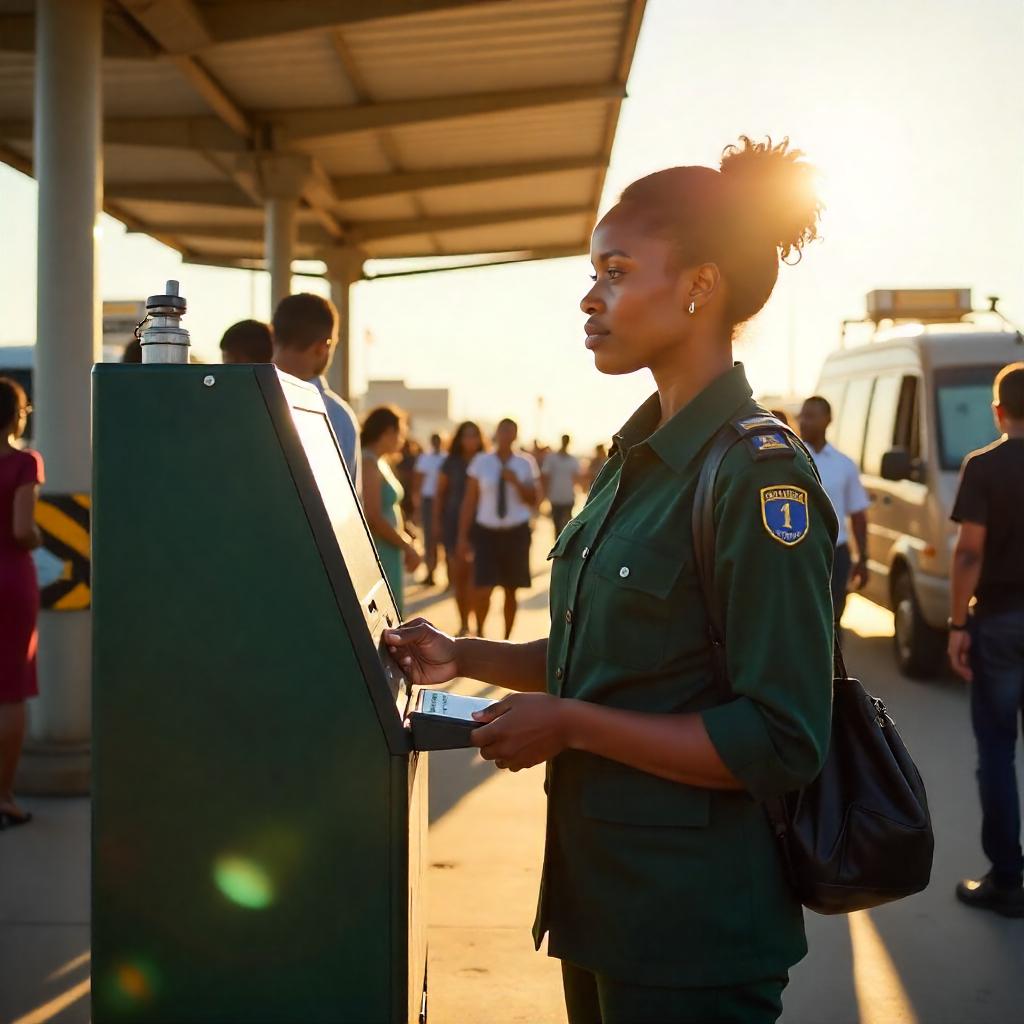
Drones, Data, and Disease Control: Rethinking South Africa’s Border Security
Opening: Case Study & Key Statistics
In the festive season of 2024/25, South Africa’s Border Management Authority (BMA) deployed drones and body-worn cameras at ports of entry. These tools enabled officials to prevent 215 % more illegal cross-border movements compared to the previous festive period (thestar.com.my). During the Easter 2025 operations, officials stopped 6,253 illegal crossings, 63 % more than Easter 2024, thanks to night-vision drones, AI surveillance, and enhanced controls (dha.gov.za).
These figures highlight major gains in border security. However, they also show how migration health intersects with border control. Officials must manage not only smuggling and illegal crossings but also infectious disease importation, continuity of care, and outbreak detection.
For example, in the first quarter of 2024/25, BMA staff refused entry to 42 people for health reasons and flagged 24 suspected malaria cases for further assessment (sowetanlive.co.za). These outcomes show how border technology influences both migration management and public health.
Policy & Institutional Framework: What SA Has in Place
South Africa guarantees the right to health under Section 27 of the Constitution. The National Health Insurance Bill reinforces the state’s obligation to extend coverage to “all residents, including migrants and mobile populations” (equityhealthj.biomedcentral.com).
The Border Management Authority (BMA), launched on 1 April 2023, consolidated immigration, agriculture, environment, and health functions at 72 ports of entry. While ministries retain policy roles, the BMA handles operational duties (gov.za).
Port health teams screen travellers, enforce vaccination requirements, and coordinate with hospitals during outbreaks. South Africa also aligns its border health protocols with the International Health Regulations (IHR) (gov.za).
Gaps and Challenges
Despite progress, several weaknesses persist:
-
Weak Screening Tools
Officials rely heavily on thermal scanners. Evidence shows these tools miss many infected travellers, especially asymptomatic or pre-symptomatic cases (migrationhealthresearch.iom.int). -
Documentation Barriers
Migrants often arrive without vaccination records or medical documentation. Hospitals in Pretoria report that immigrant children present with lower immunisation coverage and more severe illness due to these barriers (pmc.ncbi.nlm.nih.gov). -
Poor Data Integration
Health systems rarely link border health records with clinics. Migrants frequently lose continuity of TB or HIV treatment when they move between provinces (citizen.co.za). -
Privacy Concerns
Drones, AI, and biometric systems collect sensitive data. Without oversight, officials risk violating POPIA privacy protections. -
Unequal Resources
Border posts in remote areas often lack trained health staff, diagnostics, or reliable referral pathways.
Evidence from Cities and Border Districts
-
Pretoria (Gauteng): Hospitals reported that immigrant children often arrive late, sicker, and under-immunised compared to South African peers (pmc.ncbi.nlm.nih.gov).
-
Border Malaria Posts: Researchers found that staff shortages and poor supplies undermine malaria surveillance along South Africa’s borders (malariajournal.biomedcentral.com).
-
COVID-19 Border Readiness: The Health Systems Trust observed that SOPs varied widely across ports, and many staff lacked adequate training (archive.cdc.gov).
Vignettes
-
Maria, 12 years old (Zimbabwe → Beitbridge): Officials admitted her after temperature screening but failed to capture her asthma history. She later struggled to access medication in Johannesburg.
-
Ahmed, 33 years old (Mozambique → Limpopo): He overstayed his permit and lost access to ART refills because clinics required documentation. His HIV treatment lapsed, worsening his health.
Innovative Solutions
-
Drones and AI: Officials now detect night crossings and fence breaches with drones (sanews.gov.za).
-
Body-Worn Cameras: These devices improve accountability and provide digital evidence.
-
Traceable Immigration Stamps: Each stamp now carries a unique officer ID, reducing fraud (timeslive.co.za).
-
Mpox Preparedness (2024): Officials screened travellers, collected health declarations, and referred suspected cases (gov.za).
Policy Recommendations
-
Upgrade Health Screening
Train staff to use rapid diagnostic tests and multilingual questionnaires.
Timeline: 6–12 months. -
Integrate Health and Immigration Records
Build secure, interoperable systems that link border health data to provincial clinics.
Timeline: 12–24 months. -
Guarantee Access Regardless of Documentation
Update policy so hospitals cannot deny essential care to undocumented migrants.
Timeline: 12 months. -
Protect Data and Privacy
Create strict oversight for drones, biometrics, and AI.
Timeline: 6–18 months. -
Strengthen Border Infrastructure
Hire and train more port health officers in remote posts.
Timeline: 24–36 months. -
Evaluate Impact
Commission studies on whether border tech improves migrant health outcomes.
Timeline: start within 12 months.
Conclusion
South Africa’s new border technologies already reduced illegal crossings and improved outbreak preparedness. Yet, without strong links to health systems, many migrants still lose treatment continuity and face privacy risks. Policymakers must pair technology with health safeguards, rights protections, and stronger infrastructure.
South Africa can build a border management system that is both secure and humane, but only if it commits to integration, oversight, and sustained investment.
Recent Posts: