
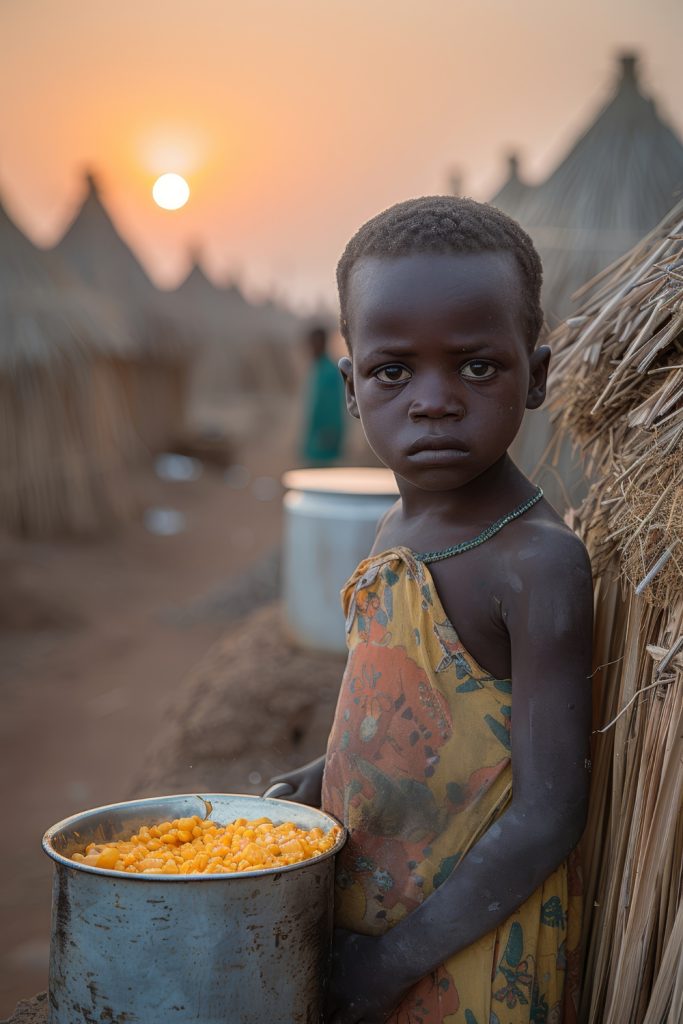
A Crisis Unfolding: Children at the Center of Climate Hunger
In southern Madagascar, hunger has become a daily reality. Consecutive droughts have devastated harvests and forced thousands of families to make impossible choices. According to the World Food Programme, more than 2 million people in southern Madagascar faced acute food insecurity in 2025, while hundreds of thousands of children suffer from severe malnutrition. Clinics in drought-affected districts report rising admissions for wasting and stunting.
For many families, migration appears to be the only survival strategy.
Consider the case of “Aina,” a nine-year-old girl from the Androy region. Her family once relied on maize and cassava farming. However, repeated droughts destroyed their crops. After months of food shortages, her mother joined relatives traveling toward Mozambique in search of seasonal farm work. Aina now lives with an elderly aunt. She eats one meal per day and has missed school for several months.
Stories like Aina’s illustrate a broader regional trend. Climate-driven hunger increasingly pushes families—and sometimes children alone—to cross borders within the Southern African Development Community (SADC). As migration routes expand toward Mozambique and South Africa, health systems across the region face new pressures.
Therefore, policymakers must understand how climate shocks, malnutrition, and migration intersect. Without coordinated action, the region risks worsening child health outcomes and deepening humanitarian crises.
Climate Change and Food Insecurity in Southern Madagascar
Southern Madagascar has long experienced fragile rainfall patterns. However, climate change has intensified drought cycles and prolonged dry seasons. As a result, agricultural production has collapsed in several districts.
Between 2020 and 2024, rainfall levels in parts of the Androy and Anosy regions dropped well below historical averages. Consequently, farmers lost multiple harvest seasons. Livestock deaths increased sharply, while food prices surged.
The Food and Agriculture Organization reports that climate variability and soil degradation have reduced staple crop yields by up to 60 percent in some communities. Meanwhile, limited irrigation infrastructure and chronic poverty leave households highly vulnerable.
Children suffer the greatest consequences. According to UNICEF, over half of children in southern Madagascar experience chronic malnutrition, one of the highest rates globally.
Malnutrition also weakens immune systems. As a result, children become more vulnerable to infections such as diarrhea, respiratory diseases, and malaria. Health clinics often lack supplies and trained staff, which further complicates treatment.
Because local coping strategies have collapsed, migration has become a survival mechanism.
Migration as a Survival Strategy
Families rarely migrate suddenly. Instead, migration often unfolds in stages.
First, households sell livestock or household goods. Next, adults travel to nearby towns in search of work. Finally, entire families move across borders when local opportunities disappear.
Migration routes from southern Madagascar often lead toward Mozambique and occasionally to South Africa, where migrants hope to find employment in agriculture, construction, or informal trade.
The International Organization for Migration reports growing regional mobility linked to climate stress. In many cases, children migrate with caregivers or remain behind in unstable households.
Several factors increase children’s vulnerability during migration:
-
Lack of legal documentation
-
Limited access to healthcare while traveling
-
Risk of exploitation and trafficking
-
Interruption of schooling
-
Exposure to malnutrition and disease
These risks grow when migration occurs through informal channels. Unfortunately, most climate-driven migration in the region remains undocumented.
Health System Pressures in Mozambique and South Africa
Cross-border migration has significant public health implications for receiving countries. Health facilities near migration corridors often experience sudden increases in patient loads.
Clinics in northern Mozambique, particularly in Cabo Delgado and Nampula provinces, have reported higher demand for pediatric services among migrant families. Healthcare providers note increased cases of malnutrition, dehydration, and vaccine-preventable illnesses.
Similarly, urban health facilities in South Africa face growing pressure. Migrant families frequently travel toward economic centers such as Johannesburg, Durban, and Cape Town.
South Africa’s constitution guarantees access to emergency healthcare for everyone. Moreover, the National Health Act (2003) and National Health Insurance (NHI) policy proposals recognize the need for equitable health access.
However, practical barriers persist. Undocumented migrants often fear discrimination or deportation. Language barriers also complicate service delivery. Consequently, many families delay treatment until illnesses become severe.
Healthcare providers in Johannesburg clinics, particularly in migrant-dense neighborhoods like Hillbrow and Yeoville, report rising demand for maternal and child health services. NGOs frequently step in to bridge gaps in nutrition support and documentation assistance.
Policy Gaps Within the SADC Region
Despite regional commitments, policy responses to climate-driven migration remain fragmented.
The Southern African Development Community promotes regional cooperation on migration and disaster risk management. However, few policies specifically address climate-induced displacement.
Three key gaps persist:
1. Lack of Legal Recognition for Climate Migrants
International refugee law does not classify climate-related displacement as a protected category. Therefore, families fleeing drought rarely qualify for asylum.
Without legal status, migrants struggle to access healthcare, education, and employment.
2. Weak Cross-Border Health Coordination
Health systems rarely share surveillance data across borders. Consequently, outbreaks of malnutrition or infectious diseases often go undetected until they escalate.
Stronger regional monitoring systems could improve early response.
3. Limited Child-Focused Protection Mechanisms
Many migration policies overlook children traveling independently or with extended relatives. As a result, vulnerable minors may fall outside existing protection frameworks.
Case Examples From the Region
Example 1: Migrant Families in Northern Mozambique
An NGO operating in northern Mozambique documented rising numbers of Malagasy families seeking seasonal agricultural work. Many children arrived underweight and required nutritional support.
Local clinics lacked therapeutic feeding supplies. However, partnerships with humanitarian organizations improved access to ready-to-use therapeutic foods.
Example 2: Urban Migrant Children in Johannesburg
A community health worker in Johannesburg described a case involving two siblings from Madagascar living in informal housing with relatives. Both children showed signs of moderate malnutrition and had incomplete vaccination records.
Through collaboration between a migrant health NGO and municipal clinics, the children received catch-up immunizations and nutrition counseling.
Example 3: Cross-Border Informal Migration
Researchers documented informal maritime migration routes between Madagascar and Mozambique. Migrants often travel on small fishing vessels without safety equipment.
During these journeys, children face dehydration, illness, and physical danger.
Innovative Programs Addressing Climate Migration
Although challenges persist, several initiatives offer promising solutions.
Community Nutrition Programs
Organizations such as Doctors Without Borders have expanded community-based treatment for severe acute malnutrition in southern Madagascar. These programs train local health workers to detect early signs of malnutrition.
As a result, children receive treatment before complications develop.
Regional Climate Adaptation Initiatives
Agricultural resilience programs led by the World Bank and FAO support drought-resistant crops and water conservation systems.
These interventions strengthen food security and reduce forced migration pressures.
Migrant Health Support Networks
South African NGOs provide health navigation services for migrant families. These initiatives help patients understand their rights and connect them with clinics.
Consequently, migrants access care earlier and avoid severe complications.
Policy Recommendations
Addressing climate-driven migration requires coordinated regional action.
Immediate Actions (0–2 Years)
Governments should expand nutrition screening programs in drought-affected districts. Mobile clinics can reach remote communities and detect child malnutrition early.
Health departments should also train frontline workers to provide culturally sensitive care for migrants.
Medium-Term Actions (2–5 Years)
SADC member states must strengthen cross-border health surveillance systems. Shared data platforms would allow governments to monitor migration-related health risks.
In addition, policymakers should expand legal pathways for temporary labor migration. Such frameworks could reduce unsafe migration routes.
Long-Term Strategies (5–10 Years)
Long-term solutions require climate adaptation investments in vulnerable regions. Governments should prioritize drought-resistant agriculture, water infrastructure, and livelihood diversification.
At the same time, regional migration policies must recognize climate displacement as a growing reality.
Research Gaps and Limitations
Despite increasing attention to climate migration, significant knowledge gaps remain.
First, reliable data on child migration within the SADC region remains limited. Informal migration routes complicate accurate measurement.
Second, few studies examine long-term health outcomes among climate-displaced children. More research could inform targeted interventions.
Finally, policymakers need stronger evidence on the effectiveness of cross-border health collaborations.
A Call to Action for Policymakers and Health Systems
Climate change is transforming migration patterns across southern Africa. Madagascar’s hunger crisis highlights the urgent need for coordinated responses.
Health systems cannot address these challenges alone. Instead, governments, NGOs, and regional organizations must collaborate.
Policymakers should prioritize child-focused migration policies, strengthen nutrition programs, and invest in climate resilience. Meanwhile, healthcare providers must ensure that migrants—regardless of documentation status—receive essential care.
Without decisive action, thousands of children risk falling through the cracks of fragmented policies and overstretched health systems.
However, with coordinated leadership and evidence-based solutions, the region can protect vulnerable children and build more resilient health systems.
Key Sources
-
World Food Programme Hunger Reports (2024–2025)
-
UNICEF Child Nutrition Data (2024–2025)
-
Food and Agriculture Organization Climate and Agriculture Reports
-
International Organization for Migration Migration Trends in Southern Africa
-
World Bank Climate Adaptation in Madagascar
-
Southern African Development Community Regional Migration Policies
-
South African National Health Act (2003)
-
South African National Health Insurance Policy (2023 update)
-
Doctors Without Borders Malnutrition Reports
-
African Development Bank Climate Resilience Studies
Recent Posts:
- SADC’s Climate Orphans: What Happens to Children When Parents Migrate Due to Environmental Disasters?
- Lesotho’s Disappearing Snow, Disappearing Children: Climate Migration from the Mountain Kingdom
- When the Limpopo Dries Up: Child Migrants Crossing Southern Africa’s Climate-Changed Borders
- Cyclone Freddy’s Legacy: How Climate-Induced Displacement is Creating a Generation of Stateless Children in Malawi and Mozambique
- From Masvingo’s Dried Rivers to Musina’s Streets: Mapping Zimbabwe’s Child Climate Migration Routes