
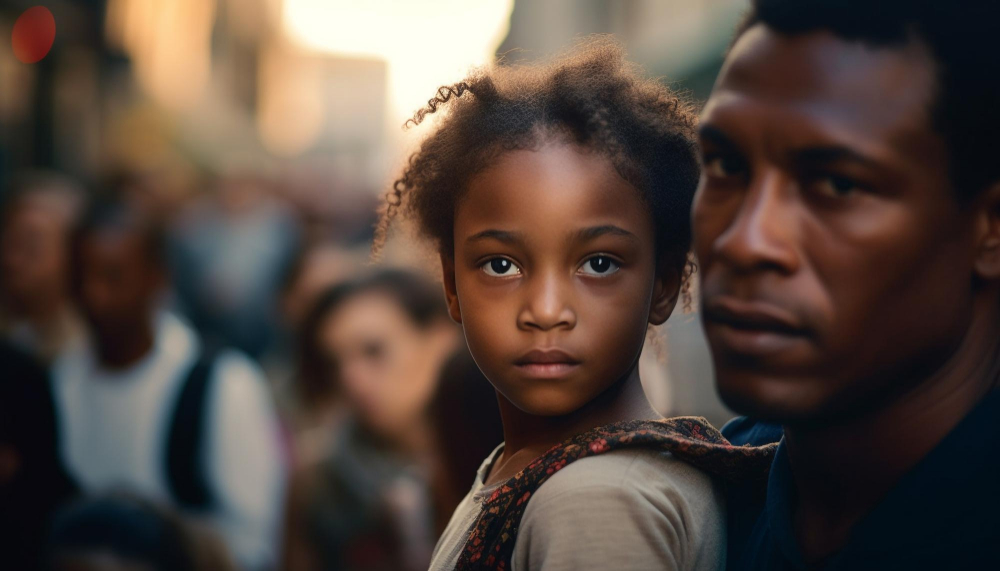
The Hidden Cost of Climate Migration
Nomsa is five years old. She lives with her grandmother in rural KwaZulu-Natal, South Africa, about two hours from the nearest clinic. Eight months ago, her mother moved to Durban after repeated droughts destroyed the family’s maize crop. Meanwhile, her father works seasonal construction jobs in Johannesburg and returns home only four times a year.
As a result, Nomsa has not had a routine health check in 18 months.
Last month, she developed a fever and persistent cough. Her grandmother waited three days before walking to the clinic because transport was expensive and the journey was long. By the time Nomsa received treatment, her pneumonia had progressed significantly. She survived, but doctors expect lasting respiratory complications.
Unfortunately, Nomsa’s story is not unique.
Across Southern Africa, millions of children grow up separated from parents who migrate for climate-related economic survival. According to recent estimates from the International Organization for Migration and UNICEF (2023–2024), climate-driven migration separates roughly 4.3 million children from parents each year across SADC countries.
These children are often described as “climate orphans.” Their parents are alive, yet economic and environmental pressures force families to live apart. As a result, children remain in rural communities while parents search for work elsewhere.
Despite the scale of the issue, national health systems rarely identify or support these children.
The consequences are profound. Climate migration is accelerating across Southern Africa. At the same time, evidence shows that prolonged parental separation negatively affects child health, nutrition, and mental wellbeing. Yet many policy frameworks still treat climate-affected children as invisible. They are neither migrants nor traditional orphans. Instead, they fall between policy categories and outside most social protection systems.
This growing gap demands urgent attention.
Understanding the Crisis: Climate Migration and Family Separation
Environmental Stress Across Southern Africa
Southern Africa is experiencing unprecedented environmental pressure. Between 2015 and 2023, droughts affected more than 42 million people across SADC countries, particularly in Zimbabwe, Zambia, and South Africa. At the same time, severe flooding in Mozambique, Malawi, and Zambia displaced another 8.7 million residents.
In addition, rising temperatures are steadily reducing agricultural productivity. Studies suggest crop yields in rural communities decline by 2–4 percent annually due to changing rainfall patterns and extreme weather.
Because many households rely on small-scale farming, these environmental shifts directly threaten livelihoods.
Consequently, climate migration has become a common survival strategy.
Rural families increasingly send working-age adults to urban areas in search of income. Mothers often find employment in domestic work or informal trading. Fathers may move into construction, mining, or seasonal agricultural labor. Older siblings sometimes leave school early to work in factories or urban service sectors.
In some cases, entire families relocate. However, far more often adults migrate while children remain behind in rural communities.
Grandparents—especially grandmothers—frequently become primary caregivers.
South Africa receives the largest share of migrants within the region. Between 2021 and 2023, the Department of Home Affairs recorded approximately 2.1 million documented economic migrants from SADC countries living in the country. When undocumented migration is considered, the number is significantly higher.
Importantly, climate pressures increasingly influence these movements. The International Organization for Migration reported that 34 percent of recent SADC migrants to South Africa identified climate change as a primary or significant driver of migration, compared with only 18 percent in 2015.
Why Children Stay Behind
Parents rarely leave children behind by choice. Instead, the decision reflects difficult economic realities.
First, childcare in urban areas is expensive and often inaccessible for migrant workers. Second, housing costs in cities frequently exceed migrants’ wages. Third, families worry that moving children will disrupt schooling.
Legal barriers also play a role. Children without proper documentation may struggle to enroll in schools or access services in destination cities or across borders.
As a result, many parents decide that children should remain in their home communities.
In these situations, grandparents commonly assume caregiving responsibilities. Cultural norms across many Southern African communities support this arrangement. Grandmothers, in particular, are widely viewed as trusted caregivers for young children.
However, these arrangements also create challenges.
Many older caregivers have limited financial resources. Some struggle with chronic health problems that make caregiving physically demanding. Others lack the health literacy needed to identify early symptoms of illness.
Gender dynamics further influence migration patterns. Women working in domestic employment often earn wages that cannot support children in urban settings. Similarly, men working in mines or construction frequently live in shared accommodations unsuitable for families.
Research from the Dumasani Institute (2022) identified three common migration patterns in climate-affected communities across KwaZulu-Natal, Limpopo, and the Eastern Cape:
-
Temporary circular migration, where one parent travels for seasonal work
-
Single-parent migration, where one parent relocates permanently while the other or a grandparent cares for the children
-
Sequential migration, where both parents eventually relocate after an initial migration period
Each pattern reshapes household structures and caregiving arrangements.
The Health Crisis: What the Evidence Shows
Scientific research increasingly links parental migration to poorer health outcomes among children left behind.
A systematic review published in The Lancet Planetary Health (2023) analyzed 47 studies across Sub-Saharan Africa. The findings revealed consistent patterns affecting climate-separated children.
First, infectious disease risk increases significantly. Children living apart from migrant parents experience 31 percent higher rates of respiratory infections, 27 percent more diarrheal disease, and 43 percent higher malaria risk.
Second, nutrition outcomes worsen. When mothers migrate for work, stunting rates increase between 18 and 24 percent, even when families receive remittances.
Third, mental health problems become more common. Studies estimate that 34–41 percent of climate-affected children experience symptoms of anxiety or depression linked to prolonged parental absence.
Finally, healthcare access declines sharply. Compared with children living with both parents, left-behind children receive 42 percent fewer preventive health services and 31 percent fewer curative health services.
Several factors explain these patterns.
Separated parents cannot easily recognize early signs of illness. Meanwhile, grandparents may delay healthcare visits due to financial constraints, long travel distances, or unfamiliarity with health systems.
Remittances are often intended to support healthcare. However, transportation costs, clinic waiting times, and competing household needs frequently prevent that money from reaching health facilities.
In addition, female-headed rural households face structural disadvantages. Across climate-affected areas of Southern Africa, 45–52 percent of households are now led by women, many of whom must manage childcare, agriculture, and household responsibilities simultaneously.
These pressures make consistent healthcare access difficult.
Recent Posts:
- Lesotho’s Disappearing Snow, Disappearing Children: Climate Migration from the Mountain Kingdom
- When the Limpopo Dries Up: Child Migrants Crossing Southern Africa’s Climate-Changed Borders
- Cyclone Freddy’s Legacy: How Climate-Induced Displacement is Creating a Generation of Stateless Children in Malawi and Mozambique
- From Masvingo’s Dried Rivers to Musina’s Streets: Mapping Zimbabwe’s Child Climate Migration Routes
- Cyclone-Driven Child Labor: How Climate Disasters in Eastern Zimbabwe are Feeding Exploitation Networks