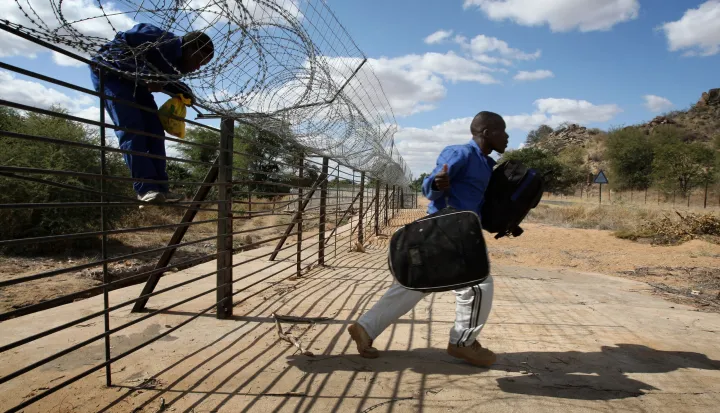
xenophobia

language barriers, cultural competency, South African healthcare, African migrants, healthcare access, linguistic diversity, cultural misunderstandings, migration health, health policy, public health, xenophobia, discrimination, healthcare workers, interpretation services, multilingual healthcare, community health workers, maternal health, emergency care, patient safety, medical interpreters, health equity, universal health coverage, National Health Insurance, healthcare communication, cross-border migrants, refugee health, undocumented migrants, healthcare rights, cultural safety, health system strengthening, primary healthcare, emergency departments, medical errors, patient satisfaction, health outcomes, Johannesburg, Cape Town, Durban, Gauteng Province, Western Cape, KwaZulu-Natal, Groote Schuur Hospital, Chris Hani Baragwanath Hospital, Zimbabwean migrants, Somali refugees, Congolese migrants, Mozambican migrants, Nigerian migrants, Ethiopian migrants, gender barriers, documentation status, mental health, pediatric care, maternal mortality, antenatal care, reproductive health, chronic disease management, infectious diseases, tuberculosis, HIV/AIDS, healthcare utilization, treatment adherence, appointment compliance, emergency room visits, hospital readmissions, healthcare costs, cost-effectiveness, return on investment, policy implementation, healthcare financing, training programs, capacity building, technology solutions, artificial intelligence, video interpreting, remote interpretation, cultural competency training, medical education, nursing education, health professional licensing, performance indicators, quality improvement, patient feedback, healthcare governance, intersectional factors, vulnerable populations, human rights, constitutional rights, health legislation, National Health Act, Ubuntu philosophy, community partnerships, NGO collaboration, civil society, advocacy, research gaps, longitudinal studies, evidence-based practice, best practices, scalability, sustainability, accountability mechanisms, stakeholder engagement, implementation timelines, monitoring and evaluation

Language Barriers and Cultural Competency in South African Healthcare for African Migrants

 Language Barriers  in South African Healthcare Introduction: When Words Fail, Lives Are at Risk In the sprawling maternity ward of Groote Schuur Hospital in Cape Town, Amina*, a 26-year-old Somali refugee, grips her partner’s hand. Her contractions intensify rapidly. However, she speaks limited English and no Afrikaans or isiXhosa. Meanwhile, the attending nurse grows frustrated […]

Language Barriers and Cultural Competency in South African Healthcare for African Migrants Read More »

African migrants, South Africa, healthcare access, undocumented migrants, documentation status, public health system, emergency care, National Health Act, Section 27, migrant health rights, xenophobia, National Health Insurance, NHI, asylum seekers, refugee health, MSF, Scalabrini Centre, PHM-SA, health policy, urban health disparities, intersectionality, maternal health, legal barriers, civil society, migrant-focused interventions, Johannesburg, Cape Town, Durban, Tshwane, Zimbabwean Exemption Permit, ZEP, migrant children, LGBTQ+ migrants, healthcare discrimination, migrant health coordinators, health system accountability, indigence policy, policy-practice gap, ethical healthcare, migrant integration, health equity.

Navigating the Maze: How Documentation Status Determines Healthcare Access for African Migrants in South Africa

Migrant Healthcare Access   Introduction: A Fractured Path to Care In 2023, Fatou, a 32-year-old pregnant woman from Senegal, arrived at a clinic in Johannesburg with severe abdominal pain. Despite presenting at a public health facility, she was turned away because she could not produce a valid asylum seeker permit. Hours later, she suffered a

Navigating the Maze: How Documentation Status Determines Healthcare Access for African Migrants in South Africa Read More »

African migrants, healthcare exclusion, South Africa, public health paradox, universal health coverage, tuberculosis transmission, HIV/AIDS, communicable diseases, xenophobia, medical xenophobia, health systems, migration health, healthcare access, health equity, health policy, National Health Insurance, constitutional rights, refugee health, asylum seekers, undocumented migrants, health security, disease surveillance, drug-resistant tuberculosis, healthcare providers, frontline workers, health economics, cost-benefit analysis, emergency treatment, preventive care, regional health, Southern African Development Community, cross-border health, health disparities, social determinants of health, vulnerable populations, human rights, health justice, inclusive healthcare, residence-based coverage, citizenship-based exclusion, health system strengthening, epidemic control, outbreak management, contact tracing, community transmission, population health, migrant-inclusive policies, healthcare rationing, resource allocation, moral distress, healthcare ethics, policy implementation, institutional barriers, documentation requirements, informal healthcare exclusion, alternative healthcare seeking, health-seeking behavior, urban health, rural health, provincial health systems, Gauteng healthcare, Western Cape health, Limpopo health, border health, construction workers, informal settlements, overcrowded housing, occupational health, gender and migration, women migrants, children migrants, elderly migrants, chronic diseases, mental health, maternal health, reproductive health, PrEP access, antiretroviral therapy, treatment adherence, loss to follow-up, healthcare continuity, health insurance, out-of-pocket payments, financial barriers, language barriers, cultural barriers, health literacy, community health workers, non-governmental organizations, civil society, advocacy, health activism, research methodology, mixed methods, epidemiological analysis, ethnographic research, participatory research, health economics modeling, surveillance data, health information systems

The Public Health Paradox: The Unintended Consequences of Excluding Migrants from Healthcare in South Africa

The Public Health Crisis We’re Creating: Why Excluding Migrants from Healthcare Threatens Us All Picture this screnario on Migrants Healthcare in South Africa: A Zimbabwean construction worker in Johannesburg develops a persistent cough. He knows it could be tuberculosis—TB is endemic in his home region—but he’s terrified to seek treatment. He’s heard the stories from

The Public Health Paradox: The Unintended Consequences of Excluding Migrants from Healthcare in South Africa Read More »

Migration securitisation, border control, xenophobia, Immigration Act, Refugees Act, deportation, detention, asylum seekers, undocumented migrants, Border Management Authority, Operation Fiela, national security, migration policy, threat perception, Department of Home Affairs, xenophobic violence, spatial control, migration management, illegal foreigners, border enforcement, immigration policing, African migrants, social exclusion, sovereignty, foreign nationals, biometric identification, militarized borders, criminalization of migration, migration control, refugee reception offices, mobility control, nation-state, social cohesion, exclusionary practices, state sovereignty, scapegoating, state violence, migration governance, refugee protection, documentation challenges, spatial segregation, forced removals, constitutional rights, human security, regional integration, SADC, identity documents, regularization, smart borders, migration law enforcement, anti-immigrant sentiment, othering, state talk, refugee status determination, migrant labor, apartheid legacy, freedom of movement, integration policy, state of exception, law enforcement, corruption, informal settlements, migration discourse, illegal immigration, Lindela Detention Centre, state capacity, humanitarian protection, service delivery, labor migration, population control, migrant rights, citizenship

The Securitisation of Migration Governance in South Africa

South Africa and Securitisation of Migration Governance South Africa has become a significant destination for migrants from across Africa and beyond since its transition to democracy in 1994. As one of the continent’s most developed economies, it has attracted people seeking better economic opportunities, as well as those fleeing political instability and conflict. However, the

The Securitisation of Migration Governance in South Africa Read More »

Migration Policies • Regional Integration • Free Movement Protocols • Border Management • Refugee Protection • Climate Migration • Labor Mobility • Diaspora Engagement • Remittances • Brain Drain • Human Trafficking • Migrant Rights • ECOWAS Protocol • AU Migration Policy Framework • Irregular Migration • Migration Data • Return and Reintegration • Rural-Urban Migration • Youth Migration • Gender and Migration • Xenophobia • Identity Documentation • Migration Diplomacy • Humanitarian Corridors • Migration-Development Nexus • Forced Displacement • Internal Displacement • Mixed Migration • Circular Migration • Migration Governance Indicators • Capacity Building • Migration Compacts • Bilateral Agreements • Cross-Border Cooperation • Migration Determinants • Pastoral Migration • Migration and Security • Externalization of Borders • Migration Governance Architecture • Migration Corridors • Visa Regimes • Detention Practices • Migration and Trade • Skill Recognition • Social Protection • Seasonal Migration • Post-Colonial Migration Patterns

What is the state of African Migration Governance in South Africa.

African Migration Governance in South Africa: Challenges and Developments in the SADC Region South Africa remains the primary destination for migrants within the Southern African Development Community (SADC) region, hosting the largest number of international migrants in Africa. This position has placed significant pressure on South Africa’s migration governance frameworks, which have undergone substantial reform

What is the state of African Migration Governance in South Africa. Read More »