
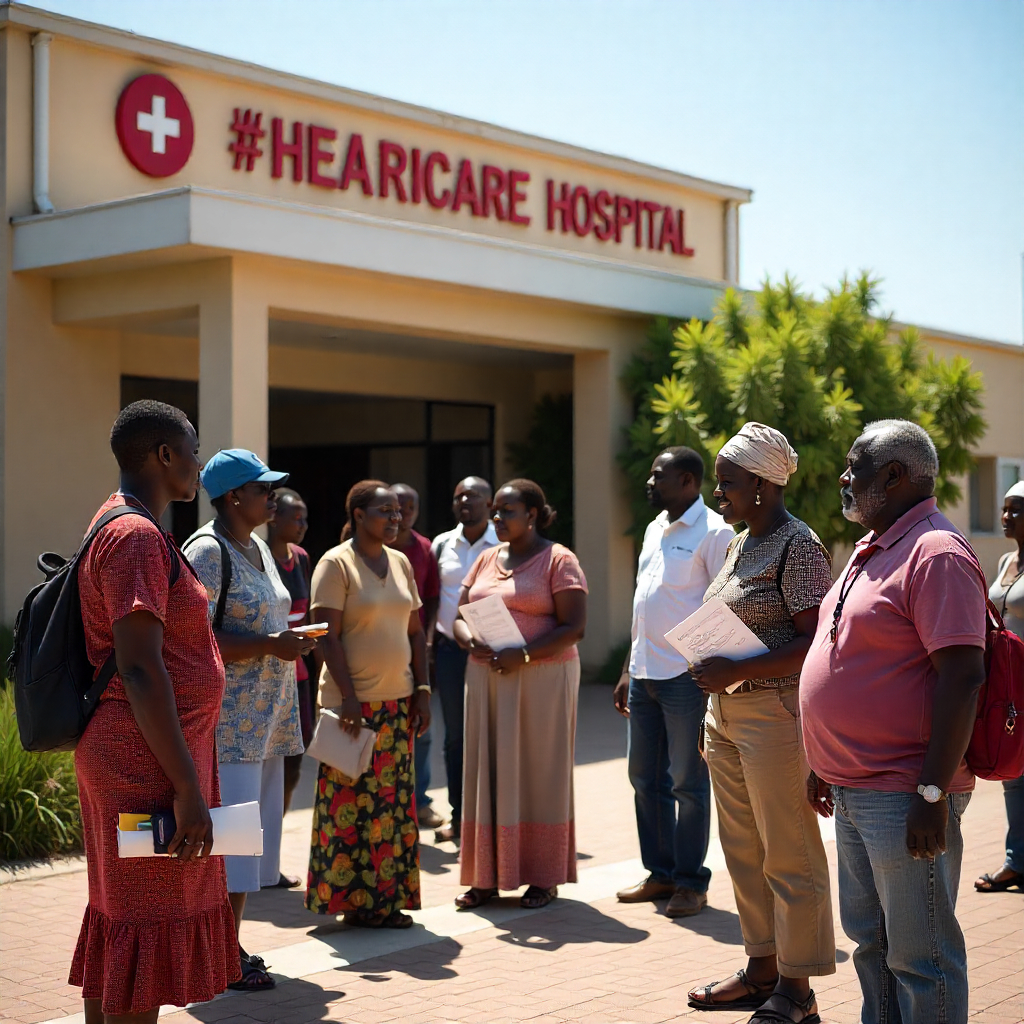
Migrant Healthcare Access
Introduction: A Fractured Path to Care
In 2023, Fatou, a 32-year-old pregnant woman from Senegal, arrived at a clinic in Johannesburg with severe abdominal pain. Despite presenting at a public health facility, she was turned away because she could not produce a valid asylum seeker permit. Hours later, she suffered a miscarriage at home. Fatou’s story is not an isolated case; it is emblematic of the structural and systemic barriers that many African migrants face when trying to access healthcare in South Africa.
South Africa hosts an estimated 4 million migrants, of which approximately 1.5 million are from other African countries (UN DESA, 2022). Many of these migrants live in major urban areas such as Johannesburg, Cape Town, Durban, and Tshwane. Their access to healthcare is largely determined by their documentation status, which affects whether they are deemed eligible for free or subsidized services in the public health system.
Policy Landscape: Rights Versus Reality
The South African Constitution (Section 27) guarantees everyone the right to access healthcare services, including reproductive healthcare. The National Health Act (Act No. 61 of 2003) also supports universal access. Moreover, the 2007 “Guidelines for the Management of Foreign Patients in South Africa” affirm that all individuals, regardless of legal status, are entitled to emergency care.
However, in practice, a 2021 report by the South African Human Rights Commission (SAHRC) highlighted widespread discrimination against undocumented migrants in public health facilities. The 2019 Circular 1/2/2 from the National Department of Health (NDoH) further muddied the waters by instructing facilities to charge undocumented migrants the highest fee category, unless they can prove indigence — a process few can navigate without legal assistance.
Gaps Between Policy and Practice
Ambiguity and Misinterpretation
Health workers often misinterpret policies due to inconsistent guidance from national and provincial health departments. A 2022 Médecins Sans Frontières (MSF) study in Tshwane found that 68% of interviewed clinic staff were unaware of the constitutional obligation to treat everyone equally.
Fear and Mistrust
Undocumented migrants frequently avoid public facilities due to fear of arrest, deportation, or mistreatment. This is compounded by language barriers and xenophobic attitudes.
Administrative Barriers
Lack of standardised ID verification processes leads to arbitrary denial of services. Even documented migrants report being refused care due to unfamiliarity with permits like the Zimbabwean Exemption Permit (ZEP) or asylum documents.
Empirical Evidence from Major Urban Centres
Johannesburg (Gauteng)
The Wits University African Centre for Migration & Society (ACMS) 2023 survey showed that 54% of migrant respondents had been denied healthcare in the previous 12 months due to documentation issues.
Cape Town (Western Cape)
A 2022 study by the Scalabrini Centre found that 43% of migrants reported being charged unaffordable fees at public clinics despite qualifying for subsidized care.
Durban (KwaZulu-Natal)
Research by the Health Justice Initiative (HJI) in 2023 highlighted routine denial of maternal care to undocumented women, resulting in increased maternal morbidity.
Real Cases: Humanizing the Data
- Emmanuel, a 45-year-old refugee from the DRC with hypertension, was denied medication refills in Cape Town because his asylum seeker permit had expired by a week. He collapsed days later and was admitted to Groote Schuur Hospital in critical condition.
- Grace, a 19-year-old Zimbabwean, gave birth on the floor of a clinic in Umlazi after nurses initially refused her admission, citing her lack of a valid passport.
- Abdi, a Somali trader in Hillbrow, reported avoiding clinics entirely and relying on informal private providers due to repeated verbal abuse at public facilities.
Innovative Solutions and Good Practices
MSF Clinics (Tshwane and Johannesburg)
Provide free primary healthcare services to undocumented migrants and advocate for more inclusive public sector policies.
Scalabrini Centre Legal Clinic (Cape Town)
Offers legal aid to migrants denied healthcare and conducts training for health workers on migrant rights.
People’s Health Movement (PHM-SA)
Engages in community mobilisation and policy advocacy, pushing for full implementation of universal healthcare principles under the National Health Insurance (NHI) Bill.
Policy Recommendations and Timelines
Standardised Training for Health Workers (6–12 months)
Mandate annual training on migrant health rights for all public healthcare staff, tied to continuing professional development (CPD) requirements.
Clear National Guidelines on Migrant Healthcare Access (6 months)
Update and disseminate a binding national directive clarifying that all migrants are entitled to free primary and emergency care, regardless of documentation.
Establishment of Migrant Health Focal Points (12–18 months)
Place trained migrant health coordinators in provincial health departments to monitor compliance and serve as liaison officers.
Partnerships with Civil Society (Ongoing)
Integrate CSOs into district health planning forums to ensure migrant voices are included in service design and delivery.
Monitoring and Evaluation Framework (12 months)
Develop an M&E system to track healthcare access disparities by documentation status, gender, and nationality.
Intersectional Considerations
Undocumented women face heightened barriers to sexual and reproductive health services. Children born to undocumented migrants struggle to access immunization and early childhood health interventions. LGBTQ+ migrants often encounter compounded discrimination. Policies must be intersectional, addressing layered vulnerabilities.
Ethical Sensitivity and Protection
Policymakers and health workers must avoid reinforcing harmful narratives about migrants as “burdens.” Ethical care requires confidentiality, cultural competence, and anti-xenophobia sensitisation.
Conclusion: From Policy to Practice
While South Africa’s legal framework upholds the right to healthcare for all, implementation remains fractured. Documentation status continues to be a gatekeeper to health services, with grave consequences for individuals and public health outcomes. By closing the gap between policy and practice through training, legal clarity, community partnerships, and accountability mechanisms, the country can move toward a more inclusive health system.
Calls to Action
- Policymakers: Amend Circular 1/2/2 and implement migrant-sensitive NHI regulations.
- Health Departments: Roll out mandatory migrant health training within the next year.
- NGOs: Expand legal aid and healthcare access programs for undocumented migrants.
- Researchers: Conduct longitudinal studies on health outcomes by documentation status.
- Healthcare Providers: Uphold ethical obligations and report rights violations.
References
- UN DESA (2022). International Migration Report.
- South African Constitution, Section 27.
- National Health Act No. 61 of 2003.
- SAHRC (2021). Report on Access to Healthcare for Migrants.
- National Department of Health Circular 1/2/2 (2019).
- MSF (2022). Barriers to Healthcare Access for Migrants in Tshwane.
- ACMS (2023). Migrant Access to Health in Johannesburg.
- Scalabrini Centre (2022). Healthcare Access Survey, Cape Town.
- HJI (2023). Maternal Health Outcomes Among Migrants in KZN.
- People’s Health Movement SA (2023). NHI and Migrant Health.
- Groote Schuur Hospital Patient Records (2023, anonymised case).
- PHM-SA (2022). Migrant Health Training Manual.
- Scalabrini Legal Services (2024). Annual Report.
- Wits ACMS Policy Brief (2022). Migrant Health Policy Gaps.
- SAMRC (2021). Migrant Health and Urban Inequities Report.
Related Post: