
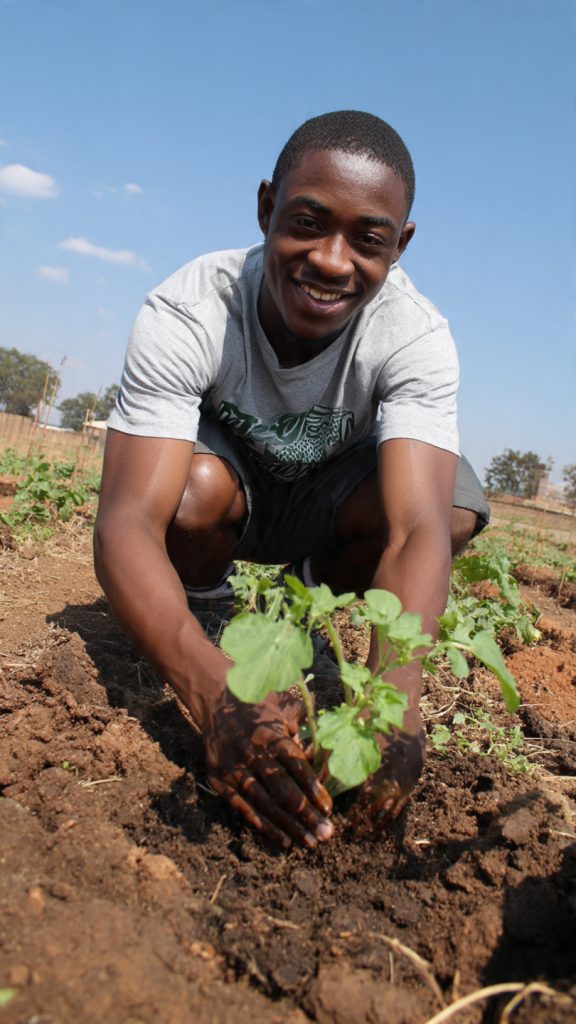
From Wage Labor to Permaculture: Reverse Migration to Rural Farms
Opening: A New Trend in Migration
For decades, young people in Southern Africa moved to cities, shaping economic and health systems. Cities offered jobs, education, and services in Johannesburg, Cape Town, Durban, and Gqeberha.
However, a new pattern is emerging. Some youth are returning to rural areas to build sustainable agricultural careers. Agriculture employment grew by 3.2 % in 2023, showing potential for youth-led rural opportunities. (harvestsa.co.za)
Linamandla Maphosela (26) returned to Dutywa to grow vegetables. He blends traditional knowledge with modern marketing skills. His story highlights how young professionals embrace reverse migration to rural farms.
1. Understanding Reverse Migration
1.1 Why Youth Return
Urban life can be unstable. Many young people face short-term jobs, high living costs, and stress. Consequently, rural areas appear more sustainable and purpose-driven.
Reports show youth return with education, digital skills, and entrepreneurial ideas. (farmersmag.co.za) They often view farming as a business opportunity rather than a fallback.
Moreover, technology helps. Mobile apps, e-commerce platforms, and precision farming tools make rural enterprises competitive. These tools attract youth back to villages and small towns.
1.2 Agriculture as a Career Choice
Farming is increasingly seen as a viable career. Some youth choose it for income, sustainability, and purpose. (africanfarming.com)
In addition, climate change encourages resilient livelihoods. Regenerative agriculture and permaculture reduce risks from extreme weather. They also support environmental protection and food security.
2. Health and Rural Wellbeing
2.1 Food Security and Nutrition
Returning youth strengthen local food systems. When communities grow food locally, diets improve, and processed food reliance drops.
Rural life may also lower stress compared to city living, improving mental health. Evidence links food sovereignty and community involvement with overall wellbeing.
2.2 Health Workforce Implications
Youth in rural areas can strengthen local health systems. They may join community health programs or promote nutrition education. Integrating agriculture with health services enhances preventive care and resilience.
3. Policy Landscape: Support and Gaps
3.1 Government Programs
DALRRD runs rural development programs, including land reform, youth funding, and agriculture support. (gov.za)
The Land Bank Youth Fund provides loans and grants to young farmers. (landbank.co.za)
3.2 Challenges
Land access remains unequal. Bureaucracy discourages young entrepreneurs.
Infrastructure limits growth. Roads, broadband, and irrigation are often lacking, making rural businesses less competitive.
Social perceptions also affect youth. Many still view farming as low-status. Extension services often favor large commercial farms, leaving youth innovators unsupported. (link.springer.com)
4. Evidence from South Africa
4.1 Youth Participation
Studies in Eastern Cape show youth engage in micro-agriculture and community gardens. (mdpi.com)
These gardens also improve community cohesion and nutrition. In urban areas, youth use gardens as hubs for income and social interaction. (allafrica.com)
4.2 Sector Growth
Youth received nearly 11 % of Land Bank loans, reflecting rising participation. (harvestsa.co.za) Agricultural employment is increasing despite stagnation in other sectors.
5. Stories from the Field
-
Naledi (27, Free State) left Johannesburg due to burnout. She bought family land and grows organic vegetables, selling online and through a cooperative.
-
Sipho (30, Eastern Cape) returned to support the family farm. He uses digital marketing to run a vegetable co-op for local retailers.
-
Tsholofelo (28, Western Cape) left a tech contract and adopted permaculture to grow herbs and host workshops. Social media expands both sales and community impact.
These examples show youth return for economic opportunity, wellbeing, and community engagement.
6. Innovative Models
-
Government Programs: Agri-Hubs connect production with processing and markets. Youth loans reduce entry barriers.
-
NGO Initiatives: Mentorship and training programs teach business and climate-smart agriculture.
-
Permaculture Networks: NGOs provide workshops on regenerative farming and eco-friendly practices.
7. Recommendations
Policymakers
-
Simplify land allocation (0–18 months).
-
Expand infrastructure: roads, broadband, irrigation (0–36 months).
-
Strengthen rural health services (0–24 months).
-
Tailor loans to small-scale and organic farms (0–12 months).
-
Collect data on urban-to-rural migration and health (0–18 months).
NGOs
-
Offer blended agriculture, business, and health training (0–12 months).
-
Develop cooperative and digital marketplaces (0–18 months).
-
Build multi-sector alliances for youth development (0–24 months).
Researchers and Donors
-
Fund longitudinal studies on migration, livelihoods, and health (0–36 months).
-
Evaluate pilot programs for scalability (0–24 months).
8. Intersectional Considerations
-
Gender: Women face barriers in land, finance, and decision-making.
-
Age: Youth under 35 need mentorship, training, and funding.
-
Nationality: Migrants may face legal and land restrictions.
-
Health: Rural services must support physical, mental, and reproductive health.
9. Limitations
-
Large-scale data on urban-to-rural migration is limited.
-
Health outcomes of returnees are under-researched.
-
Economic sustainability of smallholder models requires more study.
Conclusion
Young South Africans are returning to rural areas with skills, purpose, and ambition. They view agriculture as a career, business, and pathway to wellbeing.
Policymakers, NGOs, and researchers must act. By reducing barriers, strengthening services, and supporting youth innovation, Southern Africa can build rural communities that are economically strong, sustainable, and socially resilient.