
Comparing Migration Pathways
Introduction
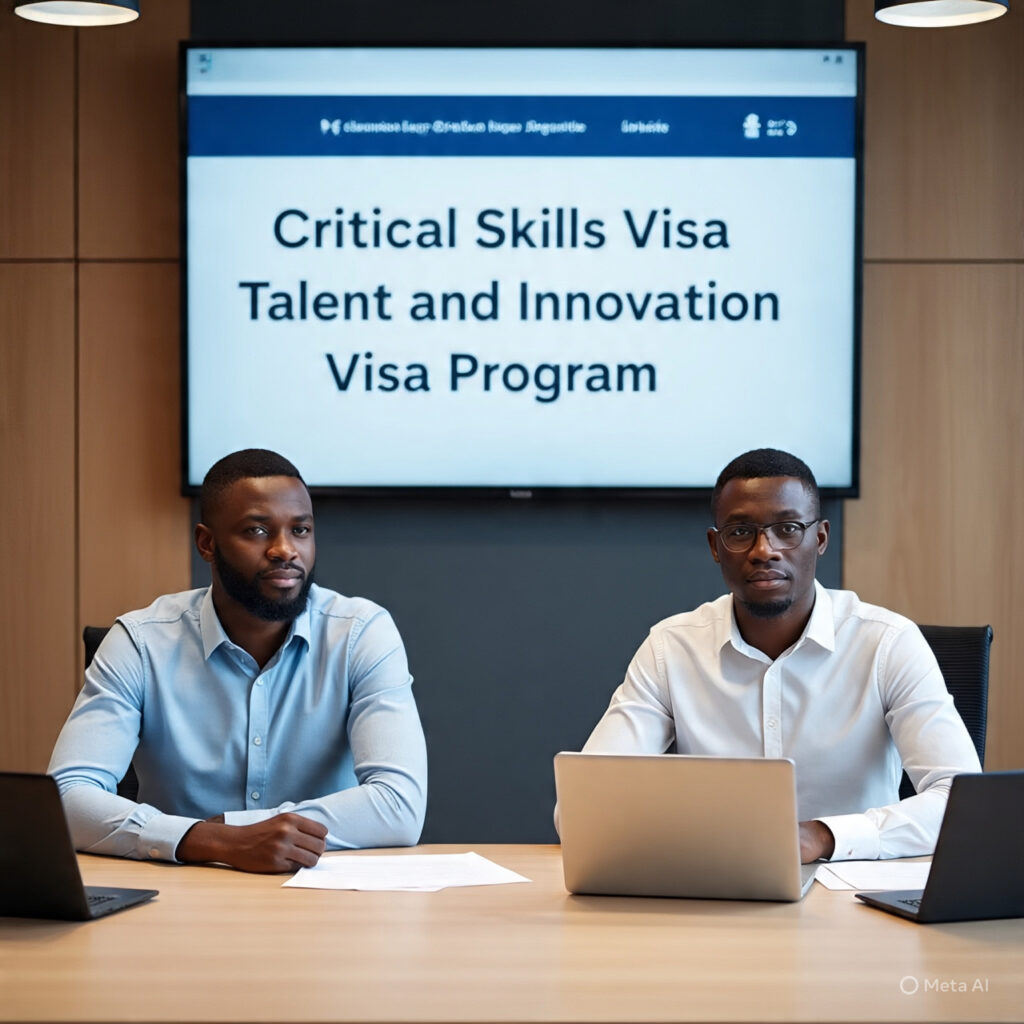
In 2024, South Africa faced a significant shortage of healthcare professionals, with over 30% of public hospitals in Johannesburg and Cape Town reporting critical gaps in medical staffing. Meanwhile, Nigeria struggles with retaining skilled innovators, particularly in health technology and digital solutions. Consequently, both countries have developed targeted visa programs—South Africa’s Critical Skills Visa and Nigeria’s Talent and Innovation Visa Program—to attract foreign expertise and address national skill shortages.
Understanding how these programs operate, their impact, and their limitations is therefore vital for health policymakers, public health practitioners, NGOs, and researchers working on migration and health workforce planning. In this analysis, we examine both visa programs and highlight their implications for the healthcare sector, offering evidence-based recommendations for improvement.
South Africa’s Critical Skills Visa
South Africa’s Critical Skills Visa is designed to attract foreign professionals whose expertise aligns with occupations listed on the national Critical Skills List. Updated periodically by the Department of Home Affairs, the list currently prioritizes fields such as healthcare, engineering, information technology, and scientific research. Notably, medical practitioners, nurses, and specialized healthcare workers are prominently featured, reflecting the country’s urgent health workforce needs (Department of Home Affairs, 2023).
Policy Analysis
Importantly, the visa framework is grounded in the Immigration Act (Act 13 of 2002) and the National Labour Migration Policy. While it provides a legal pathway for skilled professionals, several challenges remain. First, bureaucratic delays can significantly prolong application processing. Second, the high documentation and qualification recognition requirements may discourage potential applicants. Third, pathways for family reunification are limited. Collectively, these gaps can undermine the program’s potential to strengthen healthcare delivery and exacerbate inequities, particularly for migrant women or older healthcare professionals (Xpatweb, 2022).
Empirical Evidence
In Johannesburg, Cape Town, and Durban, foreign-trained medical professionals contribute substantially to the healthcare system. For example, a recent survey indicated that up to 35% of doctors in major public hospitals were foreign-trained, largely through the Critical Skills Visa. These professionals often fill gaps in rural or underserved urban hospitals where local recruitment is insufficient. Consequently, the visa program plays a crucial role in maintaining healthcare service delivery (Xpatweb, 2022).
Case Example
Consider Dr. Amina*, a Nigerian-trained trauma surgeon who relocated to Johannesburg under the Critical Skills Visa in 2023. Her placement in a tertiary public hospital reduced wait times for trauma surgeries by 20% in her unit. Moreover, her integration was facilitated by mentorship programs and professional networks, demonstrating that structured support enhances the effectiveness of the program.
Innovative Solutions
To further strengthen the visa program, South Africa could:
-
Implement structured mentorship programs to accelerate integration of foreign-trained healthcare workers.
-
Simplify visa processes to reduce delays and administrative burdens.
-
Expand family reunification policies to make South Africa a more attractive destination for skilled migrants.
Nigeria’s Talent and Innovation Visa Program
In contrast, Nigeria’s Talent and Innovation Visa Program targets highly skilled individuals in innovation, technology, and entrepreneurship. The program aims to bolster economic diversification and foster innovative solutions, including in healthcare technology. However, unlike South Africa’s program, it does not specifically target traditional healthcare professions (Africanews, 2020).
Policy Analysis
While the program supports Nigeria’s economic development strategy, integration challenges persist. First, there is limited awareness among potential applicants. Second, institutional support for professional integration is weak. Third, incentives for healthcare-focused innovations remain minimal (Chaman Law Firm, 2020). Consequently, the full potential of the program, especially in addressing health sector needs, remains underutilized.
Empirical Evidence
In Lagos and Abuja, the program has attracted software developers, engineers, and health-tech entrepreneurs. For instance, several telemedicine initiatives led by returning diaspora members have improved access to healthcare in rural regions. Nevertheless, the overall impact on the traditional health workforce is modest, highlighting a gap between innovation-driven approaches and workforce needs.
Case Example
Mr. Chijioke*, a software developer, returned from the U.S. under the Talent and Innovation Visa Program. He launched a telemedicine platform connecting rural clinics with urban specialists. Consequently, his work improved access to healthcare services in underserved regions, demonstrating the potential of innovation-driven visas to enhance health outcomes indirectly.
Innovative Solutions
To maximize impact on healthcare, Nigeria could:
-
Partner with medical institutions to attract healthcare professionals into the program.
-
Offer grants and incentives for health-tech innovations.
-
Facilitate collaborations between technology experts and healthcare practitioners.
Comparative Analysis
| Aspect | South Africa: Critical Skills Visa | Nigeria: Talent and Innovation Visa |
|---|---|---|
| Targeted Sectors | Broad: healthcare, engineering, IT | Primarily innovation, tech, entrepreneurship |
| Focus on Healthcare | High | Low; emerging through health-tech innovation |
| Integration Support | Mentorship, professional networks | Limited; needs institutional support |
| Family Reunification | Possible but bureaucratic | Not explicitly addressed |
| Impact on Health Sector | Significant, addresses staffing gaps | Emerging, potential through innovation |
Clearly, South Africa’s visa prioritizes healthcare integration, whereas Nigeria’s program focuses on innovation with potential spillovers for health.
Recommendations
-
Enhance Integration Programs: Develop structured mentorship and orientation programs for foreign-trained healthcare professionals.
-
Streamline Visa Processes: Reduce administrative burdens and processing delays.
-
Promote Family Reunification: Simplify policies to attract long-term skilled migrants.
-
Targeted Outreach: Increase awareness among healthcare professionals about visa opportunities.
-
Support Health Innovation: Encourage collaboration between tech innovators and medical institutions for health system strengthening.
Conclusion
South Africa’s Critical Skills Visa and Nigeria’s Talent and Innovation Visa Program represent strategic approaches to addressing skill shortages, yet differ in focus and impact. South Africa effectively integrates foreign-trained healthcare workers, while Nigeria fosters innovation that can indirectly improve health outcomes. By implementing targeted reforms, both countries can enhance workforce capacity, improve health service delivery, and leverage migration as a tool for national development.
Call to Action
-
Policymakers: Revise visa policies to optimize skilled migrant integration.
-
Healthcare Institutions: Develop pathways for foreign-trained professionals.
-
NGOs and International Organizations: Support technical integration and skills recognition.
-
Skilled Professionals: Explore visa opportunities to contribute to health system strengthening.
References
-
Department of Home Affairs, South Africa. (2023). Immigration Act: Critical Skills List. PDF
-
Africanews. (2020). Nigeria’s New Visa Policy. Link
-
Xpatweb. (2022). Critical Skills Survey. Link
-
Chaman Law Firm. (2020). Immigration Policy in Nigeria. Link
-
Department of Home Affairs, South Africa. (2025). Strategic Plan 2025–2030. PDF
-
Ey.com. (2023). South Africa updates the Critical Skills List. Link
-
Fragomen.com. (2025). Nigeria: New Visa Categories. Link
Recent Posts:
- Bilateral Migration Agreements: South Africa’s Relationships with Neighboring Countries on Movement and Labor
- Urban Migration and Settlement: How Internal and Cross-Border Movement Shapes South African Cities
- The Impact of COVID-19 on South African Border Controls and Regional Migration Patterns: A Health Policy Perspective
- Regional Integration vs Border Security: Balancing Free Movement with National Security Concerns
- Undocumented Migration: Understanding the Causes, Consequences, and Policy Responses in South Africa