
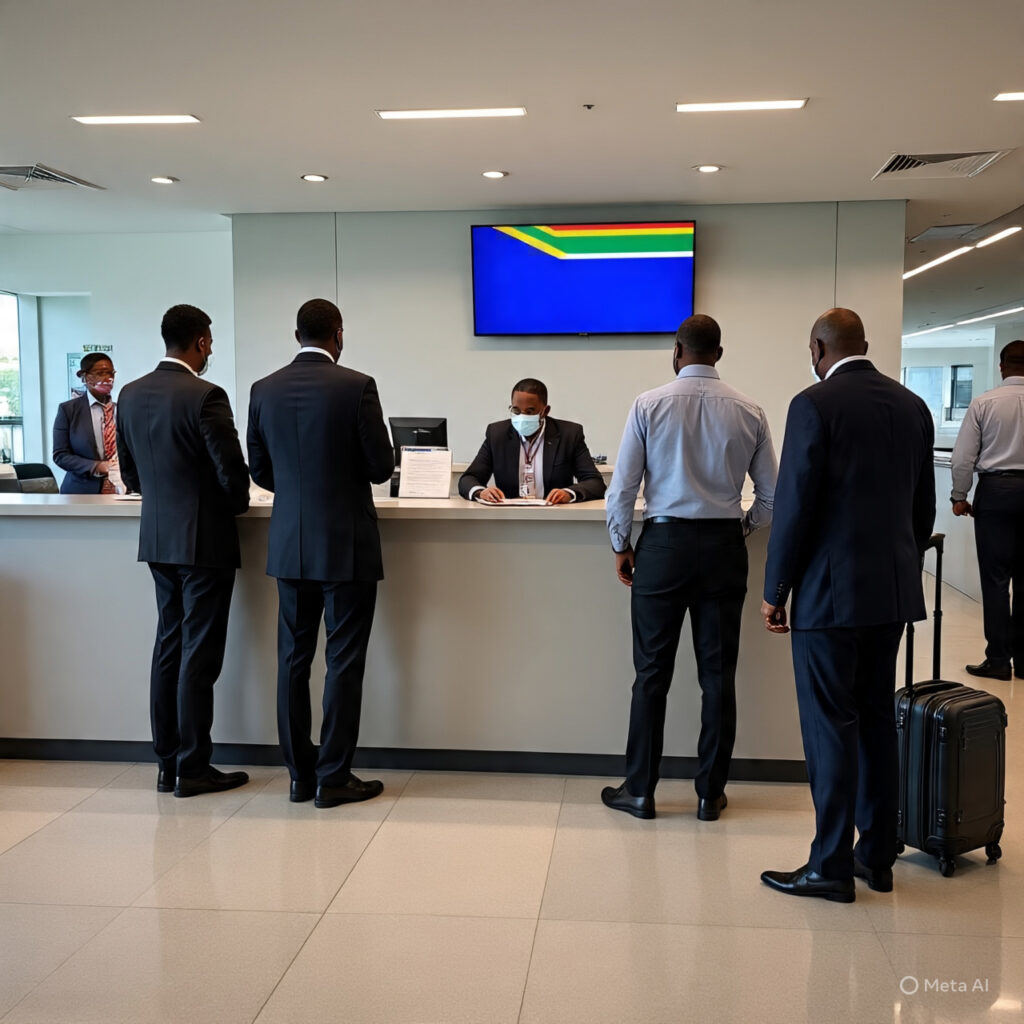
Navigating South Africa’s Immigration Framework
A Human Face to the Policy: A Case and Statistics
In late 2023, a pregnant Zimbabwean woman tried to cross into South Africa through a rural land port of entry. Officials detained her for nearly 48 hours. During this time, she developed serious complications because health screening and medical admission took too long. Eventually, authorities transferred her to a hospital far from the border, but only after her condition worsened.
This story reflects a bigger reality. Border Management Authority records show that between 2022 and 2024, South Africa’s ports of entry experienced an increase in both documented and undocumented migrants. The Zimbabwe and Mozambique borders carried the highest pressure. At the same time, asylum applications piled up, leaving many applicants waiting for years. According to recent studies, 37.2% of cross-border migrants seeking care at primary health clinics in Gauteng had no documentation. Most of them were asylum seekers, refugees, or holders of temporary permits.
South Africa’s Immigration and Border Policy Landscape
To understand South Africa’s approach, we must look at the major laws and frameworks shaping immigration and border control.
Border Management Authority Act, 2020
The Border Management Authority (BMA) regulates South Africa’s borders. It manages ports of entry, combats smuggling and trafficking, and enforces health screenings. Regulations issued in 2025 expanded the operational structure of the border guard, aiming to improve coordination.
Immigration Act and Amendments
The Immigration Act defines who may enter, work, or stay in South Africa. It also regulates deportation and detention. Importantly, Section 42 of the Amendment Act requires state institutions to confirm a person’s status but also prevents them from denying emergency or basic services guaranteed under the Constitution.
Refugees Act and 2019 Regulations
The Refugees Act protects asylum seekers and refugees, granting rights to work, study, and access medical services. Authorities can withdraw refugee status if individuals seek consular services from their home country.
National Health Insurance (NHI) Act, 2023
The NHI Act promises universal health coverage. It guarantees access for South African citizens, permanent residents, refugees, inmates, and children. However, the Act restricts undocumented migrants to emergency and communicable disease care, creating tension with earlier laws that offered broader protections.
White Paper on Citizenship, Immigration, and Refugee Protection (2024)
This White Paper proposes merging three separate laws into one framework. While it seeks efficiency, critics warn that it may restrict asylum seekers’ rights to work, study, and access services.
One-Stop Border Posts (OSBPs) Policy, 2022
South Africa adopted a One-Stop Border Post model to modernize major crossings like Beit Bridge and Lebombo. The goal is to streamline immigration, customs, and health checks. The government plans to complete the first six major OSBPs by 2025.
How Health Rights Intersect with Border Control
South Africa’s Constitution guarantees everyone the right to health care services, including reproductive health, and forbids the denial of emergency treatment. The National Health Act of 2003 goes further, requiring free primary health care for pregnant women, lactating mothers, children under six, and emergency cases regardless of nationality.
The Department of Health reaffirmed this in a 2007 circular, confirming that refugees and asylum seekers—even without permits—qualify for basic care, including HIV treatment. These protections remain on paper, but practice often tells a different story.
Persistent Gaps and Challenges
Although the legal framework looks comprehensive, gaps and inconsistencies weaken implementation.
Inconsistent Application of Laws
Many healthcare providers misunderstand migrants’ entitlements. Some clinics and hospitals wrongly demand documentation before offering maternal or child health care. These errors worsen in rural and border areas.
Bureaucratic Delays
Home Affairs struggles with backlogs in processing asylum claims and renewals. Applicants wait years, creating uncertainty and forcing many into undocumented status. The BMA also faces staffing shortages and uneven infrastructure rollouts.
Securitisation of Migration
Authorities increasingly frame migrants as threats to security or public health. This approach criminalises migration and discourages migrants from seeking care due to fear of arrest or deportation. Facilities like Lindela Repatriation Centre highlight these challenges, with inadequate health provision for detainees.
Limited NHI Coverage for Migrants
The NHI Act restricts access for undocumented foreigners. It guarantees only emergency and communicable disease care, leaving chronic illnesses, maternal health, and child health under-served.
Overlooked Intersectional Vulnerabilities
-
Gender: Migrant women face barriers to prenatal and postnatal care.
-
Age: Children of undocumented parents often lack birth certificates.
-
Nationality and Documentation: Refugees, asylum seekers, and undocumented migrants experience different levels of access.
-
Geography: Urban centres like Johannesburg face overburdened clinics, while border towns often lack adequate health facilities.
Evidence from South African Cities
Transitioning from policy to reality, city-level evidence shows how migrants experience the system.
-
Johannesburg (Gauteng): Studies found 37% of cross-border migrants at primary health care clinics lacked documentation. Most stayed in the country for less than one year and struggled with continuity of care.
-
Cape Town (Western Cape): Migrants reported “medical xenophobia.” Pregnant women and children often faced refusal of care unless they paid upfront or produced documents.
-
Border Towns (Beit Bridge, Lebombo): Long delays, limited health screening, and lack of emergency care dominated. Although OSBP upgrades promise improvements, informal crossings remain neglected.
Case Studies: Migrants on the Ground
Case A: Maria, Pregnant and Undocumented in Limpopo
Maria crossed from Zimbabwe to join her family. A rural clinic asked her for an asylum permit before antenatal care. When she failed to provide it, the clinic referred her to a hospital that demanded upfront payment. She delayed care until complications forced an emergency C-section.
Case B: Joseph, Asylum Seeker in Johannesburg
Joseph waited two years for his asylum status to be resolved. He lived with hypertension and diabetes but often left clinics empty-handed because he could not renew his permit in time. A preventable stroke left him partially disabled.
Case C: Lerato, Child Without Documents in Cape Town
Lerato’s parents never registered her birth because they feared deportation. Without a birth certificate, Lerato struggled to access immunisations and basic care. A treatable infection turned severe because treatment was delayed.
Promising Solutions Already in Action
Despite obstacles, South Africa has seen innovative solutions.
-
Mobile Health Clinics: NGOs run mobile clinics in Gauteng and Western Cape, bringing care directly to migrant communities. These clinics bypass documentation barriers and provide maternal, HIV, and vaccination services.
-
Rights Awareness Campaigns: Civil society groups such as the Scalabrini Centre and Sonke Gender Justice educate migrants about their health rights through workshops and multilingual pamphlets.
-
Policy Monitoring: NGOs and human rights groups document cases of medical xenophobia and push for corrective action from provincial health departments.
-
Border Post Modernisation: The OSBP initiative integrates immigration, customs, and health screenings, reducing delays and boosting emergency response capacity.
Recommendations and Timelines
To move forward, South Africa must turn policy into practice.
National Government
-
Harmonise laws by finalising the 2024 White Paper and safeguarding migrant health rights.
-
Adjust NHI regulations to include maternal, child, and chronic care for all migrants.
-
Fully equip border posts with medical staff, ambulances, and labs.
-
Digitise asylum and permit systems to cut backlogs.
Timeline: 6–24 months
Provincial and Local Authorities
-
Train healthcare staff on migrant rights and anti-discrimination.
-
Create clear guidelines for clinics on emergency, maternal, and child care.
-
Expand mobile health outreach to informal settlements and border communities.
Timeline: 12–36 months
Civil Society and NGOs
-
Strengthen monitoring and reporting of rights violations.
-
Scale up legal aid and rights education.
-
Partner with government to test inclusive health models.
Timeline: 12–24 months
Researchers and Academics
-
Generate disaggregated data on migrant health outcomes.
-
Evaluate the impact of BMA implementation and NHI rollout.
-
Study chronic disease and mental health among undocumented migrants.
Timeline: 12–36 months
Research Gaps That Need Urgent Attention
-
Limited data on chronic disease outcomes for undocumented migrants.
-
Few longitudinal studies on asylum delays and health impacts.
-
Under-researched areas: migrant mental health, language barriers, and the effects of recent policy reforms.
Conclusion: From Paper to Practice
South Africa has a strong legal foundation that, if implemented effectively, could protect migrants’ health and rights. Yet contradictions between laws, bureaucratic delays, restrictive NHI provisions, and intersectional vulnerabilities continue to undermine access.
Calls to Action:
-
The government must close legislative gaps, modernise border health services, and expand NHI inclusivity.
-
Health authorities must ensure non-discrimination at clinics and hospitals.
-
NGOs must continue monitoring, advocacy, and service innovation.
-
Researchers must generate robust evidence to shape future reforms.
If stakeholders act together within the next two years, South Africa can move closer to achieving equitable health care for migrants, stronger disease control at borders, and progress toward true universal health coverage.
Recent Posts:
- What is the connection between African migration and urbanization in Johannesburg?
- What are the Economic Impacts of African Migration in South Africa?
- How Does African Migration Affect South Africa’s Urban Landscapes?
- Economic Integration Strategies: How Migrants Can Boost South Africa’s Growth
- Documentation and Legal Pathways: Creating Accessible Immigration Processes