
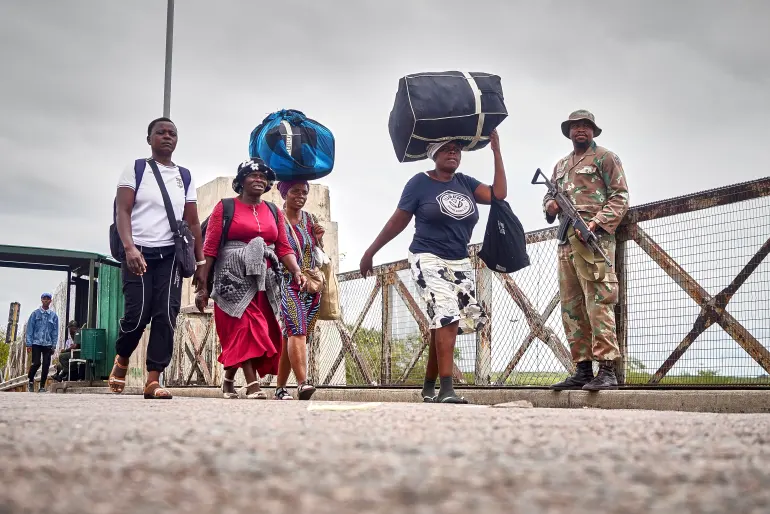
Zimbabwean Migration Patterns
Introduction: The Fluidity of Zimbabwean Migration
Zimbabwean migration to South Africa has long been characterized by a fluid interplay of temporary and permanent intentions. This complexity challenges simplistic categorizations and underscores the need for nuanced policy responses. In 2025, an estimated 911,981 Zimbabweans reside in Southern Africa, with a significant portion in South Africa Migrants & Refugees Section.
Political and Economic Drivers of Migration
Economic Collapse in Zimbabwe
Zimbabwe’s economic instability, marked by hyperinflation and unemployment, has driven many to seek livelihoods elsewhere. The promise of better economic opportunities in South Africa often leads to initial temporary migration, which can evolve into long-term settlement due to unforeseen circumstances.
Political Uncertainty
Political instability and human rights concerns in Zimbabwe compel individuals to migrate. While some intend to return, the lack of improvement in the home country often results in prolonged stays abroad.
Health Implications of Migration
Access to Healthcare
Migrants, especially those without legal documentation, face barriers to accessing healthcare services in South Africa. This includes discrimination, language barriers, and financial constraints.
Mental Health Challenges
The stress of migration, coupled with uncertainty about the future, contributes to mental health issues among Zimbabwean migrants. The 2023–2030 Mental Health Policy in South Africa, while progressive, does not adequately address the needs of migrants PMC.
Case Studies
Case Study 1: “Tariro’s Journey”
Tariro migrated to South Africa seeking employment opportunities. Initially, she intended to stay temporarily, but due to economic hardships at home, she has been in South Africa for over five years. Without legal documentation, she faces challenges accessing healthcare services.
Case Study 2: “Tendai’s Return”
Tendai returned to Zimbabwe after several years in South Africa. He found the economic situation unchanged and is considering migrating again, highlighting the cyclical nature of migration patterns.
Policy Gaps and Recommendations
Policy Gaps
-
Lack of Recognition of Migrant Realities: Current policies often fail to acknowledge the complex and evolving nature of migrant intentions.
-
Inadequate Healthcare Access: Migrants face significant barriers to accessing healthcare services, exacerbating health vulnerabilities.
Recommendations
-
Policy Reform: Develop migration policies that recognize the fluidity of migrant intentions and provide pathways for regularization.
-
Healthcare Access: Ensure that all migrants, regardless of documentation status, have access to essential healthcare services.
-
Mental Health Support: Implement programs that address the mental health needs of migrants, including counseling and support services.
Innovative Solutions
Solution 1: “Health for All Migrants”
A pilot program in Johannesburg provides free healthcare services to undocumented migrants. This initiative has improved health outcomes and reduced the spread of communicable diseases.
Solution 2: “Migrant Integration Centers”
These centers offer legal assistance, language classes, and mental health support, facilitating smoother integration of migrants into South African society.
Actionable Recommendations with Implementation Timelines
| Recommendation | Timeline | Responsible Parties |
|---|---|---|
| Policy Reform | 6–12 months | Department of Home Affairs, Parliament |
| Healthcare Access Expansion | 3–6 months | Department of Health, NGOs |
| Mental Health Program Development | 3–6 months | Department of Health, Mental Health Organizations |
| Establishment of Migrant Integration Centers | 12–18 months | Local Municipalities, NGOs |
Conclusion: A Call to Action
The dichotomy of temporary versus permanent migration is an oversimplification that does not capture the realities faced by Zimbabwean migrants in South Africa. Policymakers, healthcare providers, and NGOs must adopt a more nuanced approach that recognizes the fluidity of migration intentions and addresses the associated health and social challenges.
References
-
Idemudia, E. S. (2013). Migration challenges among Zimbabwean refugees before and after arrival in South Africa. PMC.
-
Mukumbang, F. C. (2025). Using the resilience theory to understand and address the challenges faced by Zimbabwean migrants in South Africa. PMC.
-
Walker, R. (2025). A Whole-of-Route Policy Analysis in South Africa, Kenya, and Zimbabwe. PMC.
-
Ginsburg, C. (2021). Internal migration and health in South Africa: determinants of healthcare utilization. BMC Public Health.
-
Okunade, S. K. (2024). Addressing irregular migration into South Africa. Taylor & Francis Online.
-
Harerimana, A. (2025). Medical xenophobia and healthcare exclusion of refugees and migrants in South Africa. ScienceDirect.
-
Vearey, J. (2021). Global health (security), immigration governance, and the politics of migration in South Africa. PMC.
-
Afrobarometer. (2025). For many Zimbabweans, emigration holds promise of economic opportunity. Afrobarometer.
-
Ndlovu, S. (2015). A Case Study of Zimbabwean Emigrants in South Africa. SAGE Journals.
-
Mbeve, O. (2020). Migrants’ resilience during the upheaval towards COVID-19 in South Africa. SAGE Journals.
-
Mutambara, V. M. (2023). Agency and adaptation among Zimbabwean migrant domestic workers in South Africa. SAGE Journals.
-
Crush, J., & Williams, V. (2018). Zimbabwean migration into Southern Africa: new trends and responses. Migration Policy Series.
-
Carciotto, S. (2018). The Regularization of Zimbabwean Migrants: A Case of South Africa. Center for Migration Studies.
-
Moyo, F., & Masiyiwa, G. (2019). Zimbabwean Migrants Return Home, Sacrifice Opportunity After Attacks in South Africa. Global Press Journal.
-
Hirsch, A. (2024). South-Africa-Country-Study – Migration trends. NSI.